


TL;DR:
- Finish thickness influences tone, with thinner finishes allowing more resonance.
- Polyurethane provides durability and low maintenance, while nitrocellulose offers vintage character and better tone.
- Oil and shellac finishes offer natural feel and maximum resonance but require more upkeep and delicate handling.
Choosing a guitar finish feels straightforward until you’re standing in a shop, torn between a gleaming gloss polyurethane body and a matte nitrocellulose neck that feels like bare wood. Experts still debate which finish sounds best, and manufacturers use wildly different approaches depending on price point, tradition, and target player. The finish on your guitar affects far more than looks. It shapes tone, influences how the instrument feels in your hands, determines how well it survives touring or humidity, and decides how much upkeep you’ll need to do. This guide cuts through the noise and gives you a clear, practical framework for understanding every major finish type.
Table of Contents
- Key criteria for choosing a guitar finish
- Popular types of guitar finishes and their pros and cons
- Comparison table: How do the main guitar finishes stack up?
- Situational recommendations: Which finish fits your style and environment?
- A guitarist’s perspective: Why the ‘best’ finish is personal
- Find your perfect guitar finish at MusicStreet
- Frequently asked questions
Key Takeaways
| Point | Details |
|---|---|
| Finish affects tone | A thinner finish means more resonance and a more open sound, while thick poly dampens vibration. |
| Durability versus maintenance | Poly finishes resist damage better; oil and nitro require more care but reward touch and sound. |
| Climate matters | Poly withstands humidity better, while nitro and oil need stable conditions. |
| Choose for style and play | Let your playing habits and aesthetic preferences guide your choice for the ideal finish. |
Key criteria for choosing a guitar finish
Before comparing specific finishes, it helps to understand what you’re actually evaluating. Finish choice involves several competing priorities, and knowing which matters most to you makes the decision much easier.
Tone and resonance sit at the top of most players’ lists. As a general principle, finish thickness affects resonance in a measurable way. Thicker coatings can restrict how freely the wood vibrates, while thinner ones allow the body to move more naturally. The finish impact on tone is real: poly is thicker and dampens slightly, while nitro and oil finishes are thinner and more acoustically open. That said, other factors like tonewoods, construction, and hardware often have a bigger overall influence. Understanding how woods shape tone alongside finish choice gives you the full picture.
Here are the key criteria to weigh up:
- Protection: How well does the finish guard against moisture, knocks, and temperature swings?
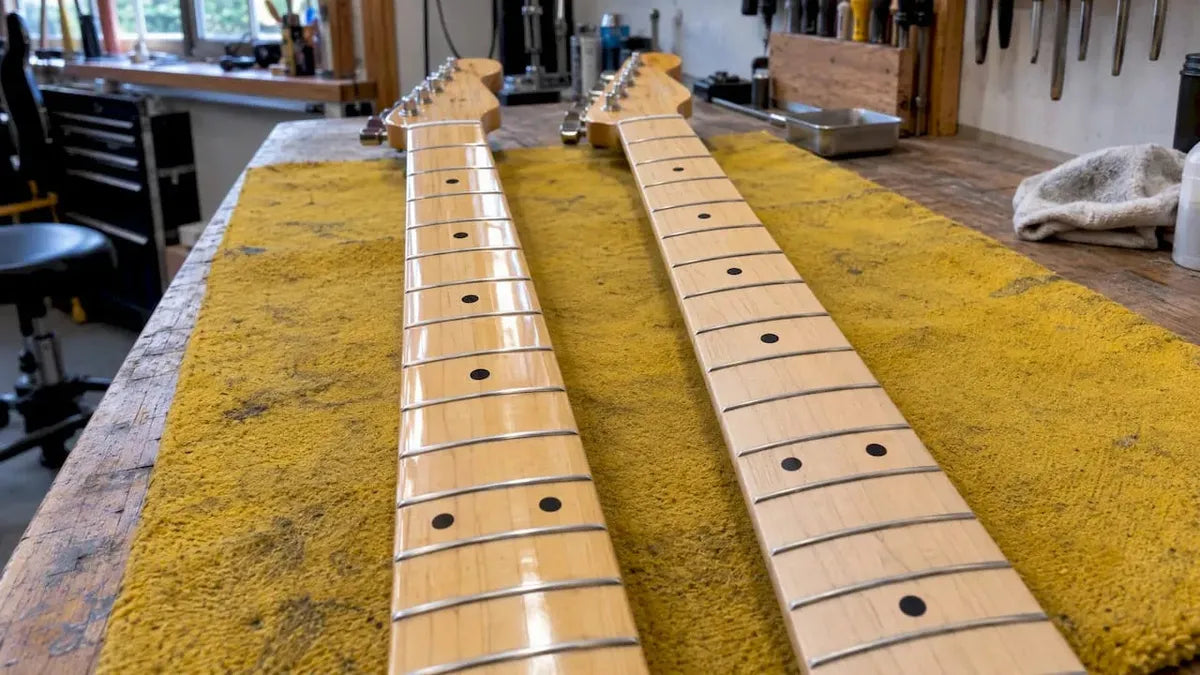
- Feel: Does it feel slick and glassy under your hand, or warm and natural like bare wood?
- Aesthetics: Does the finish enhance grain visibility, add colour depth, or offer a vintage aged look?
- Maintenance: How often will you need to clean, touch up, or re-apply?
- Tone: Does the coating allow the wood to breathe and resonate freely?
Pro Tip: If you gig regularly in humid venues or travel frequently, prioritise protection and durability over maximum resonance. A finish that holds up on the road is worth more than marginal tonal gains you may never notice through a PA.
Popular types of guitar finishes and their pros and cons
Now that you have a framework, here’s how each major finish type performs across those criteria.
Polyurethane and polyester are the workhorses of modern production guitars. These finishes are sprayed on in thick layers, cure hard, and provide excellent protection against moisture, scratches, and impact. They’re easy to buff to a mirror shine and require minimal upkeep. The trade-off is that the coating can slightly dampen resonance compared to thinner alternatives. They suit players who want a reliable, low-maintenance instrument that looks pristine for years.
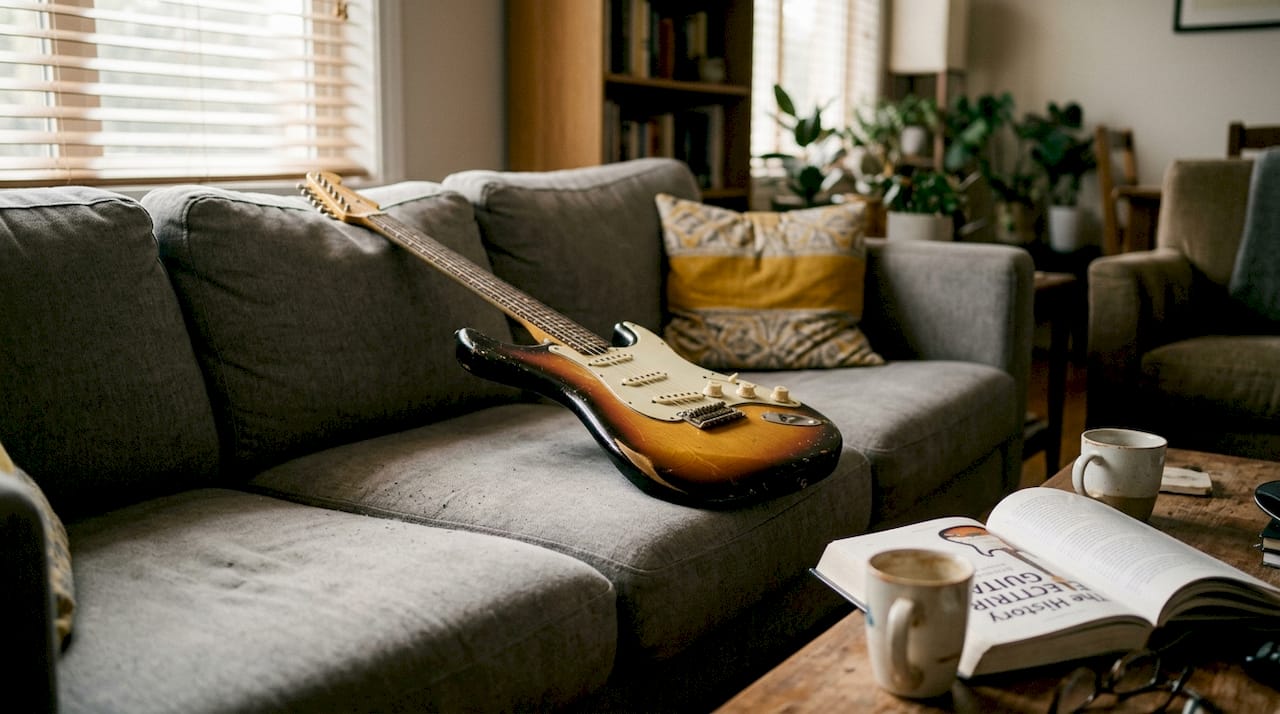
Nitrocellulose lacquer is the finish of vintage guitars and boutique builders. It’s applied in thin coats, dries slowly, and continues to harden and shrink over decades. This thinness allows the wood to vibrate more freely, contributing to that open, airy tone associated with older instruments. Nitro also ages beautifully, developing checking (fine cracks), yellowing, and wear patterns that many players find deeply attractive. The downside is sensitivity to heat, humidity, and certain plastics or rubber that can chemically react with the finish.
Oil finishes such as Tru-Oil and Danish oil take a completely different approach. Rather than sitting on top of the wood, they penetrate the grain and cure inside the fibres. As noted in the high-end finish guide, oil finishes provide minimal protection but maximum resonance and natural feel, and they require regular maintenance. The tactile experience is unlike anything else: the wood feels alive under your fingers, with no barrier between you and the grain.
Shellac and French polish represent the pinnacle of traditional finishing. Applied by hand with a pad in dozens of thin layers, French polish produces an extraordinarily thin, luminous finish that lets the wood sing. It’s used on fine classical and acoustic guitars. The catch is fragility: shellac is vulnerable to moisture, alcohol, and heat, and repairs require specialist skill.
Here’s a quick summary of pros and cons:
- Polyurethane/polyester: Durable, low-maintenance, consistent appearance. Slightly dampens tone.
- Nitrocellulose: Resonant, ages attractively, vintage character. Sensitive to environment and chemicals.
- Oil finish: Maximum feel and resonance, natural look. Needs frequent touch-ups, minimal protection.
- Shellac/French polish: Incredibly thin and resonant, stunning aesthetics. Fragile, specialist repair.
Pro Tip: Oil finishes feel extraordinary but suit players who enjoy the ritual of regular upkeep. If you want a low-fuss instrument, explore custom finish options in poly or nitro instead.
Comparison table: How do the main guitar finishes stack up?
With the individual profiles in mind, a side-by-side comparison makes the differences immediately clear. As established, thinner finishes enhance tone by allowing better wood vibration, while thicker poly coatings offer superior durability. The table below maps each finish against the criteria that matter most.
| Criteria | Polyurethane/Polyester | Nitrocellulose | Oil finish | Shellac/French polish |
|---|---|---|---|---|
| Tone impact | Slight dampening | Open, resonant | Very open | Maximum resonance |
| Durability | Excellent | Moderate | Low | Very low |
| Maintenance | Very low | Low to moderate | High | Very high |
| Feel | Glassy/smooth | Smooth, ages naturally | Bare wood feel | Silky, very natural |
| Aesthetics | High gloss, consistent | Vintage, ages with character | Natural, matte | Luminous, ultra-thin |
| Best climate | Humid or variable | Stable, dry | Stable | Stable, controlled |
| Typical use | Production guitars, gigging | Boutique, vintage reissues | Specialist builds | Classical, acoustic |
Stat to note: Finish thickness can noticeably affect wood resonance, which is why boutique builders often go to considerable effort to apply the thinnest possible coats.
The table reveals some clear patterns. Poly stands out for tone vs durability trade-offs where durability wins. Nitro and oil lead on resonance and feel. Shellac is in a category of its own: extraordinary in the right hands and the right environment, but impractical for most gigging musicians. Use this table as a quick reference when you’re comparing instruments in person or online.
Situational recommendations: Which finish fits your style and environment?
Knowing the finishes is one thing. Knowing which one fits your life is another. Here’s how to match finish type to real-world playing situations.
Player profiles and recommended finishes:
- Regular gigging musician: Polyurethane or polyester. These finishes handle knocks, temperature swings, and sweaty venues without complaint.
- Vintage tone enthusiast: Nitrocellulose lacquer. The tonal openness and ageing character are exactly what you’re after, provided you store the guitar carefully.
- Wood-feel purist or home player: Oil finish. If you play mostly at home and love the sensation of bare wood, the maintenance investment pays off in feel and resonance.
- Classical or fingerstyle acoustic player: Shellac or French polish. These instruments often prioritise acoustic projection above all else, and the ultra-thin finish serves that goal perfectly.
- Player in a humid or variable climate: Poly is your friend. As noted regarding humid climates and poly, poly provides a stronger moisture barrier, while nitro is sensitive to temperature and humidity changes.
“Nitro finishes can react to temperature and humidity, so are best suited to stable environments.”
Aesthetics also play a role that’s easy to underestimate. A worn, checking nitro finish on a vintage-style guitar tells a story. A flawless gloss poly body looks sharp under stage lights. Neither is wrong. The question is which visual identity matches your playing persona.
For players who want to explore finish effects in detail before committing, reading up on specific products is worthwhile. And once you’ve chosen, following solid maintenance tips will keep any finish looking and performing its best for years.
A guitarist’s perspective: Why the ‘best’ finish is personal
Here’s the honest truth: there is no objectively superior guitar finish. Every option involves a compromise, and the right choice depends entirely on your priorities.
We’ve seen players obsess over nitro for tonal reasons, only to find the maintenance anxiety outweighs the sonic benefit. We’ve also seen gigging musicians fall in love with an oil-finished neck because the bare-wood feel transformed how they played, despite the upkeep involved. Tone matters, but so does feel, and so does the way a guitar looks after five years of real use.
Boutique luthiers and major manufacturers both use a variety of finishes deliberately. There’s no consensus at the top of the industry, which tells you something important: context determines quality. A well-applied poly finish on a production guitar can sound and feel wonderful. A poorly applied nitro finish on an expensive boutique instrument can be a disappointment.
If you’re considering customising a guitar’s look, think about what you want the instrument to be in ten years, not just what it looks like today. Wear, ageing, and feel evolve over time, and the finish is central to that journey.
Find your perfect guitar finish at MusicStreet
Understanding guitar finishes is only the beginning. The real test is getting an instrument in your hands and feeling the difference for yourself.

At MusicStreet, we stock a wide range of electric, acoustic, and bass guitars across all major finish types, from high-gloss poly production models to boutique nitro-finished instruments. Whether you’re shopping online or visiting our store in Huntingdon, Cambridgeshire, our team can help you find the right combination of tone, feel, and aesthetics for your playing style. Browse our shop premium guitars selection or read our finishes explained guide for deeper insight before you buy. We’re here to make sure you leave with the right guitar, not just a good one.
Frequently asked questions
Which guitar finish gives the best tone?
Thinner finishes like nitrocellulose or oil allow wood to resonate more freely, producing a more open tone than thick poly finishes. However, tonewoods and construction also play a significant role.
Are oil finishes durable enough for regular use?
Oil finishes provide minimal protection but exceptional resonance and feel, making them best suited to home players or those willing to commit to frequent maintenance.
Is nitrocellulose lacquer or polyurethane better in humid climates?
Poly finishes offer a stronger moisture barrier and handle environmental changes better; nitro is more sensitive to humidity and temperature fluctuations.
Do guitar finishes affect long-term value?
Vintage-style finishes like nitrocellulose can increase desirability by ageing attractively over time, while poly finishes maintain a more consistent appearance throughout the instrument’s life.




Share:
Understanding neck joints: the guitarist's guide to construction
The Best Portable Busking Amp? Kinsman KAA70 Acoustic Amp