

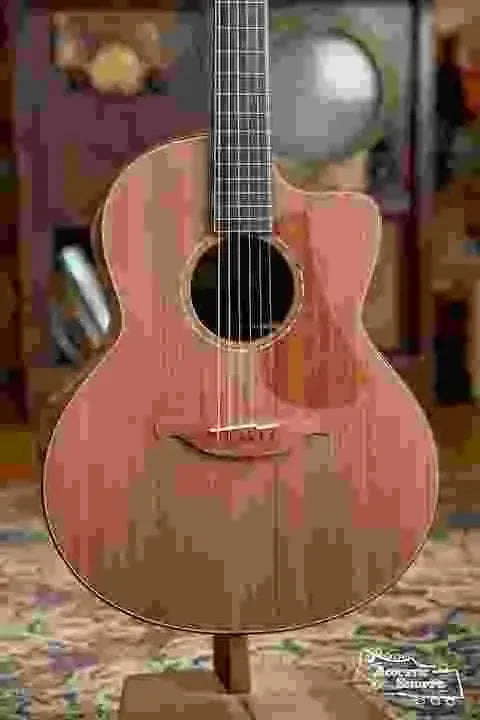
A guitar cutaway provides easier access to high frets and improves playing comfort.
Venice and Florentine are the main cutaway types, differing in shape and upper fret access.
The tonal impact of a cutaway is minimal; playability benefits outweigh slight resonance loss.
The cutaway on a guitar is one of those features that looks like a style choice but is actually doing serious structural and functional work. Many players, especially those new to buying guitars, assume it is simply there to give the instrument a sleeker silhouette. In reality, it is one of the most practical design decisions a luthier can make, shaping how you access the neck, which notes you can reach comfortably, and even how the guitar sits in your hands. This guide covers exactly what a cutaway is, the main types available, how it affects your playing and tone, and how to decide whether you actually need one.
Table of Contents
Key Takeaways
| Point | Details |
|---|---|
| Cutaway improves access | A cutaway is designed to let your hand reach high frets more easily. |
| Type affects playability | Venetian and Florentine cutaways offer different fret access and visual styles. |
| Tone changes are subtle | Any tonal impact is usually far less than the effect of woods or bracing. |
| Choose for your style | Select a cutaway or not based on how you play and whether you need upper fret access. |
Defining the cutaway: what it really is
At its most basic level, a guitar cutaway is precisely what it sounds like: a section of the body that has been cut away. More specifically, as defined by Wikipedia), it is “an indentation carved into the upper bout of the guitar body adjacent to the neck, designed to provide easier access to the upper frets.” That upper bout is the curved section of the body closest to the headstock, and without any modification it naturally blocks your fretting hand from reaching the higher fret positions comfortably.
Understanding guitar body shapes helps put this in context. A traditional dreadnought acoustic, for example, has a full, symmetrical body with no cutaway, which means your hand is physically limited once you try to push beyond around the 12th to 14th fret. Add a cutaway and suddenly frets 15 through 20 become reachable without awkward contortion.
On electric guitars, cutaways perform the same role but the stakes are often higher because lead players regularly solo in the upper registers. Without that indentation, reaching the 19th or 22nd fret cleanly is a genuine physical struggle on a full-bodied instrument.
Here is what a cutaway actually gives you in practice:
-
Comfortable access to frets above the 12th position
-
Reduced hand strain when playing solos or high melodic lines
-
Greater versatility across different playing styles
-
Better visual connection between your hand and the fretboard
“The cutaway is not decoration. It is an engineering decision that changes the physical relationship between the player and the upper register of the neck.”
Debunking the myth that it is purely cosmetic matters, because some buyers actively avoid cutaways based on aesthetic preference without realising they may be ruling out a feature that would genuinely improve their daily playing experience.
Types of cutaways: Venetian, Florentine, and variations
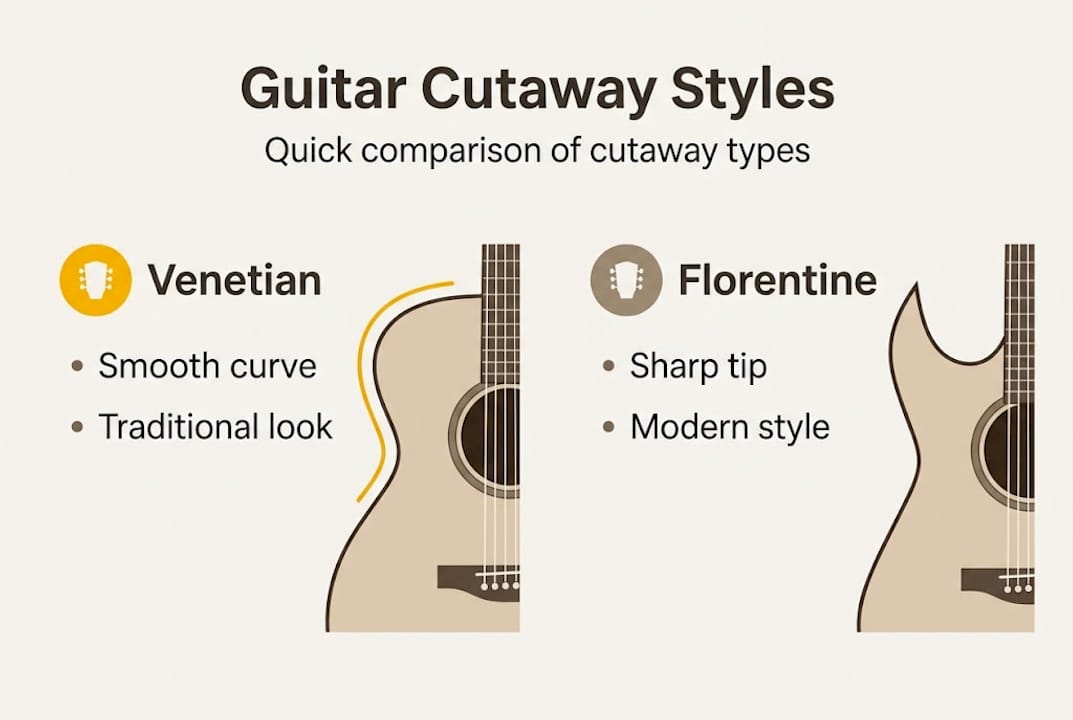
Not all cutaways look or function identically. Once you start comparing guitars side by side, you will notice that the shape of the cutaway itself varies quite significantly. The two main types) are the Venetian and the Florentine, and they differ in both appearance and practical performance.
The Venetian cutaway features a smooth, rounded curve where the body meets the neck. It flows gently and looks elegant, which is why it dominates the acoustic guitar market. It is also easier to construct, making it the more common choice across mid-range instruments.
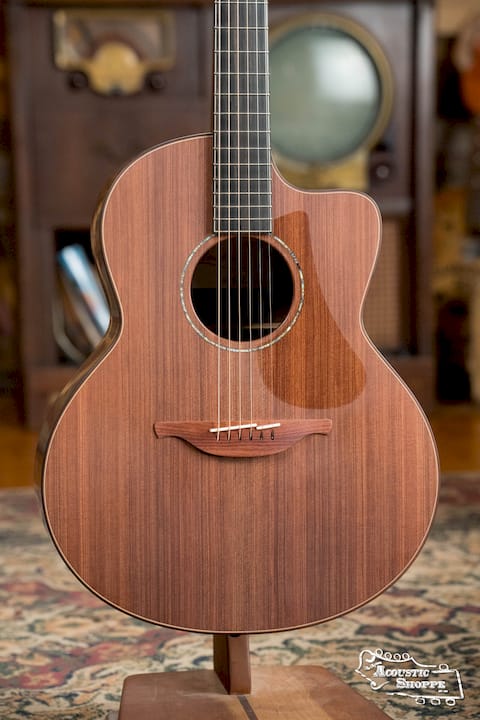
The Florentine cutaway, by contrast, comes to a sharp, pointed tip. It has a more angular, almost aggressive look and is frequently seen on archtop jazz guitars and certain electric models. Because of its pointed shape, it allows the player’s hand to push slightly further up the neck, offering marginally deeper upper fret access) than its rounded counterpart. However, the Florentine is considerably more complex to craft, which often pushes up the cost of instruments that feature it.
| Feature | Venetian cutaway | Florentine cutaway |
|---|---|---|
| Shape | Rounded, smooth curve | Sharp, pointed tip |
| Upper fret access | Good | Greater |
| Construction difficulty | Moderate | High |
| Common use | Acoustic and semi-hollow | Archtop and jazz electric |
| Aesthetic | Classic, elegant | Bold, angular |
Understanding how neck shapes and cutaways interact is also worth considering. A slim neck profile combined with a Florentine cutaway can make upper-register soloing feel almost effortless. For most players buying an acoustic with a cutaway, the Venetian option delivers more than enough access without the premium price tag that comes with Florentine construction.
Single vs double cutaway: designs and player benefits
Beyond the shape of the cutaway itself, the format matters too. A single cutaway) removes material from one side only, typically the bass side, giving access to higher frets while preserving more of the original body mass. This is the standard configuration on most cutaway acoustics, semi-hollow electrics, and classic designs like the Gibson Les Paul.
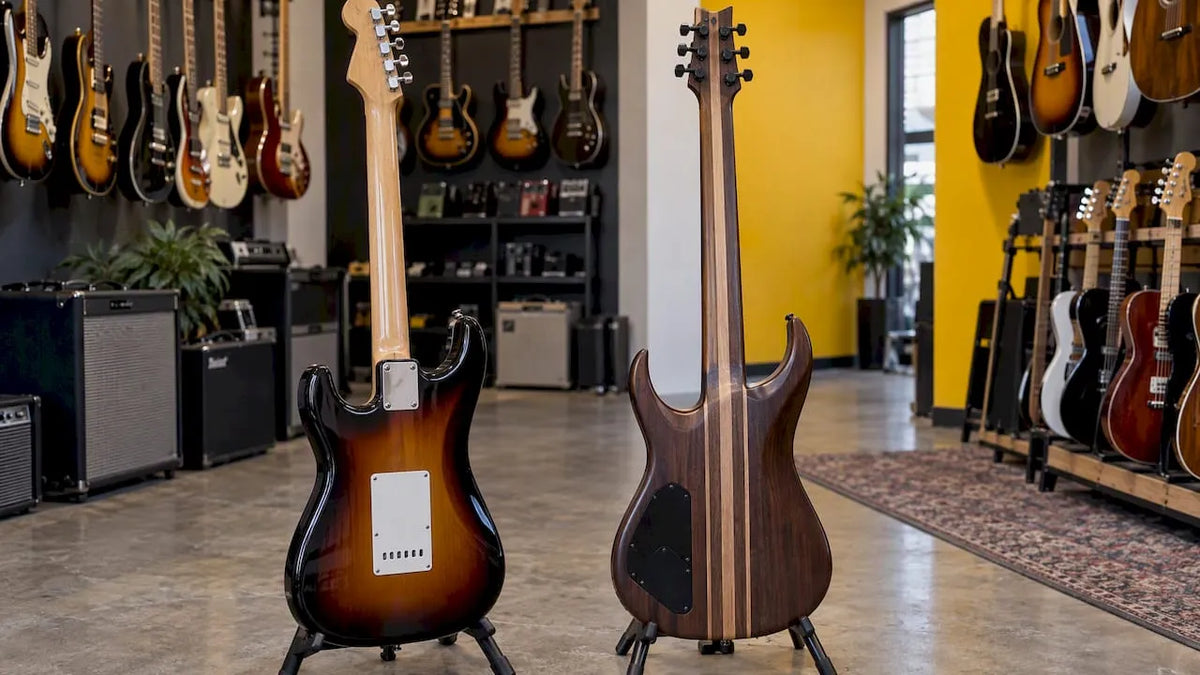
A double cutaway removes material from both sides of the body. The Fender Stratocaster and Gibson SG are textbook examples. This format offers thumb access and balance) in addition to fret reach, making high-position playing feel particularly natural. It also tends to shift the weight distribution slightly, which some players find more comfortable over long sessions.
| Design | Fret access | Body mass | Common on |
|---|---|---|---|
| Single cutaway | Upper frets, one side | More retained | Acoustic, Les Paul style |
| Double cutaway | Upper frets, both sides | Less retained | Stratocaster, SG, PRS style |
Here are the most common scenarios where each design shines:
-
Single cutaway: Blues lead players, jazz musicians, and anyone who favours a warmer, fuller body tone with moderate upper fret access.
-
Double cutaway: Hard rock and metal players who regularly solo above the 15th fret, or anyone who wants a lighter feel and greater physical freedom at the top of the neck.
-
Acoustic single cutaway: Singer-songwriters who occasionally venture into lead territory without sacrificing the resonance of a larger body.
-
Double cutaway electric: Fusion and progressive players who need rapid, unrestricted movement across the entire fretboard.
Pro Tip: When choosing between double cutaway electrics and single cutaway models, pick up both and play the same phrase on the highest frets. Your hand will tell you immediately which format suits your natural technique, far more reliably than any specification sheet.
Exploring the range of electric guitar varieties available at different price points can also help you match the cutaway format to your broader instrument choice.
Playability, tone, and myths: what does a cutaway really change?
This is where the debate among guitarists tends to get heated. Walk into any forum and you will find passionate arguments that cutaways ruin the tone of an acoustic guitar. The reality is more nuanced and, frankly, more reassuring if you are drawn to a cutaway model.
On the playability side, the benefits are real and measurable. Easier access to guitar action and feel at high fret positions directly affects your ability to execute clean bends, hammer-ons, and melodic runs above the 12th fret. For lead players, this is not trivial.
On the tonal side, the picture is far less dramatic. As Wikipedia notes), cutaways “primarily enhance playability over tone; tonal differences are subtle and often overshadowed by woods and bracing.” More importantly, MDPI research on guitar body modifications confirms that “no rigorous empirical studies confirm major sound impacts from cutaways alone; variations in damping and soundboard show minimal perceptual differences.”
Common myths worth dismissing:
-
“Cutaways kill resonance” — The reduction in body mass is small and its tonal impact is largely inaudible in real playing conditions.
-
“Non-cutaway acoustics always sound better” — Wood species, bracing pattern, and build quality have a far greater influence on tone.
-
“You only need a cutaway if you’re advanced” — Even intermediate players benefit from easier upper fret access during practice.
“The tonal difference between a cutaway and a non-cutaway of the same model is, for most players in most settings, genuinely imperceptible.”
Purists who prefer non-cutaway guitars are not wrong to do so, but their preference is often rooted in tradition and aesthetics rather than a demonstrable acoustic advantage. Personalising playability through setup, strings, and technique will move the needle far more than avoiding a cutaway.
When to choose (or avoid) a cutaway: practical guidance
Now that the facts are clear, here is how to apply them to your own buying decision.
Choose a cutaway if you:
-
Regularly play lead lines or solos above the 12th fret
-
Enjoy jazz, fusion, or progressive styles that demand high-register access
-
Play both rhythm and lead and want one guitar to handle both roles
-
Are building your first electric and want maximum fretboard freedom
Consider avoiding a cutaway if you:
-
Focus primarily on strumming or fingerpicking in open or cowboy chord positions
-
Prize the fullest possible acoustic resonance above all else
-
Play exclusively in lower register positions
Established brands) like Gibson, Taylor, and Yamaha include cutaways extensively across their performance models precisely because working musicians demand upper fret access. That is a strong signal about the practical value of the feature.
Pro Tip: Before committing, try the same model in both cutaway and non-cutaway versions if the manufacturer offers both. Pay attention to how the guitar setup feels at high fret positions rather than focusing on any perceived tonal difference. Your hands will give you a more honest answer than your ears will in a short test.
If you are exploring custom guitar benefits, many luthiers can also incorporate a cutaway into bespoke builds, giving you both the tonal character you want and the physical access your playing demands.
Our take: what players should really consider with cutaways
After working with thousands of players across all skill levels, we have noticed something consistent: the cutaway debate is almost always won in person, never online. Players who spend twenty minutes agonising over forum posts about tonal loss pick up a cutaway guitar, play a run at the 17th fret, and immediately understand the point.
Most players overestimate the tonal sacrifice and underestimate the playability gain. The practical reality is that if your music ever takes you above the 12th fret, even occasionally, a cutaway makes that journey more comfortable and more confident. That matters enormously for your development as a player.
The players who genuinely benefit from avoiding a cutaway are usually committed acoustic purists with a very specific sound in mind. For everyone else, the theoretical resonance loss is just not worth the physical limitation. Personalising your instrument for how you actually play, rather than how you imagine you might play, is always the smarter starting point.
Find your perfect guitar at MusicStreet
If this guide has clarified what you are looking for, the next step is getting your hands on the right instrument. At MusicStreet, we stock a wide range of cutaway and non-cutaway guitars from trusted brands, available to browse online or try in person at our store in Huntingdon, Cambridgeshire.

Our team can walk you through the differences first-hand, help you compare models side by side, and arrange a professional setup so that whichever guitar you choose plays exactly as it should. Whether you are buying your first guitar or adding a specialist instrument to your collection, explore our full range and let us help you make the right call with confidence.
Frequently asked questions
Does a cutaway affect guitar tone?
Empirical research confirms that cutaways have minimal perceptible effect on tone for most players, with wood species and bracing construction making a far greater difference to your overall sound.
What is the difference between Venetian and Florentine cutaways?
Venetian cutaways are rounded and smooth, while Florentine cutaways) have a sharp, pointed tip that allows slightly deeper access to the upper frets, though they are more complex and costly to build.
Why do some guitars have two cutaways?
Double cutaways) remove material from both sides of the body, providing access to high frets on either side and improving balance, making them particularly suited to lead playing on solid-body electrics.
Should a beginner choose a cutaway guitar?
If you plan to play solo or lead parts high on the neck, a cutaway will make learning those positions considerably easier, while rhythm-focused beginners may find a non-cutaway acoustic offers a slightly fuller, more resonant sound for chord work.




Share:
Guitar upgrades: 5 essential changes for better sound
Solid Top vs Laminate: Which Guitar Construction Is Right for You?