
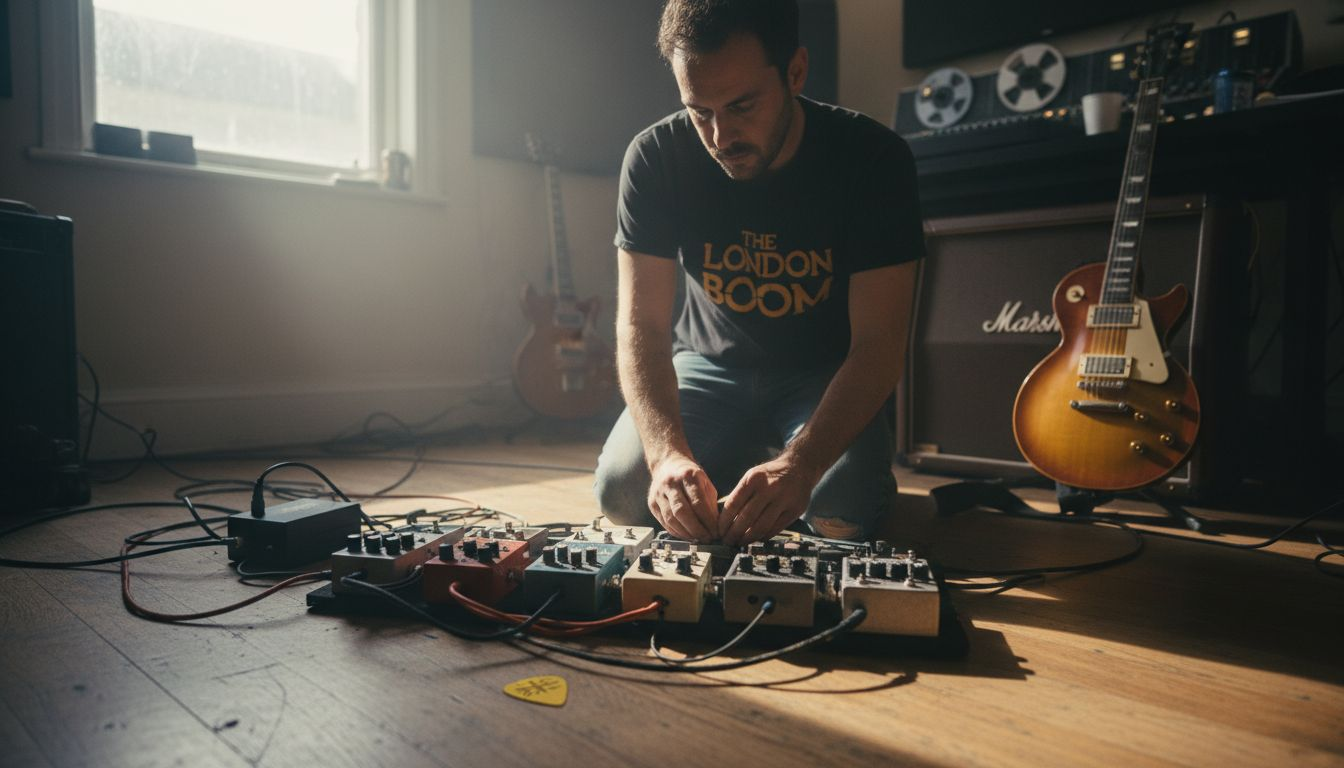
Dialling in your signature guitar tone can feel overwhelming with so many pedals, features, and effect types to choose from. Every gig, studio session, or bedroom jam brings new challenges, whether you want to develop lush ambient textures, classic rock crunch, or polished studio clarity. But with the right knowledge, you can shape your sound exactly the way you imagine it.
This guide will give you clear, actionable insights on choosing and using the most powerful pedals for classic rock, live performance, and modern creative sound design. You will discover how each effect works, what to look for when buying, and the proven techniques that make a real difference to your playing. Get ready to unlock those professional guitar sounds and learn why the right pedal can transform your tone today.
Table of Contents
- Choosing the Right Overdrive for Classic Rock Tones
- Best Delay Pedals for Atmospheric Live Sound
- Versatile Reverb Pedals for Depth and Texture
- Top Compression Pedals for Studio-Quality Clarity
- Essential Modulation Pedals for Creative Effects
- Innovative Multi-Effect Units for Modern Performance
- Expert Tips for Integrating Pedals into Your Setup
Quick Summary
| Takeaway | Explanation |
|---|---|
| 1. Choose the Right Overdrive Pedal | Selecting an overdrive pedal is essential for achieving classic rock tones that inspire nuanced expression. |
| 2. Understand Delay Parameters | Grasping delay settings enhances atmospheric soundscapes, allowing you to create complex sonic textures. |
| 3. Explore Reverb Techniques | Experimenting with reverb can add depth and emotional touch to your musical performance. |
| 4. Utilise Compression Effectively | Compression helps manage dynamics, ensuring clarity and professionalism in your guitar sound. |
| 5. Master Pedal Integration Principles | Effective pedal arrangement and signal flow are crucial for achieving the best tonal results in performance. |
1. Choosing the Right Overdrive for Classic Rock Tones
Unlocking the perfect classic rock tone begins with selecting the right overdrive pedal. These powerful sonic tools transform your guitar’s signal, adding warmth, grit, and harmonic complexity that defined legendary rock sounds.
Overdrive pedals are essential for guitarists seeking to recreate the rich, saturated tones of classic rock pioneers. They work by pushing your amplifier’s preamp section into natural distortion, simulating the sound of a tube amp breaking up at high volumes. Understanding how these pedals function is crucial for crafting authentic rock sounds.
When hunting for the ideal overdrive, consider your specific tonal requirements. Some pedals like the best overdrive models for classic rock offer different characteristics tailored to specific rock subgenres. The Ibanez Tube Screamer remains a stalwart choice, providing a mid-boosted tone perfect for blues and classic rock lead lines.
Key factors to evaluate include gain structure, tone control, and responsiveness to your playing dynamics. A quality overdrive pedal should respond organically to your guitar’s volume and picking intensity, allowing nuanced expression from clean to crunch.
Recommended Overdrive Characteristics for Classic Rock:
- Smooth, musical distortion
- Responsive dynamics
- Clear note definition
- Vintage voiced circuitry
Pro tip: Always test an overdrive pedal with your specific guitar and amplifier setup, as pedal performance can vary dramatically between different equipment combinations.
2. Best Delay Pedals for Atmospheric Live Sound
Creating mesmerising soundscapes requires more than just talent your delay pedal is the secret weapon for transforming ordinary guitar parts into extraordinary sonic journeys. Atmospheric live sound demands a sophisticated approach to time based effects.
Delay pedals offer musicians unprecedented control over sound repetition and texture. Types of delay pedals range from analog warmth to digital precision each delivering unique sonic characteristics perfect for crafting immersive live performances.
Key Delay Parameters for Atmospheric Sounds:
- Time settings
- Feedback control
- Modulation depth
- Tap tempo functionality
- Preset memory options
Understanding delay parameters allows guitarists to create everything from subtle echo effects to complex rhythmic patterns. Digital delays provide pristine repeats with precise control while analog models offer warmer organic tones that breathe natural musicality into your performance.
Professional musicians recognise that atmospheric sounds are about creating depth and dimension. A great delay pedal becomes an instrument in its own right blurring the lines between your guitar and ambient soundscapes.
Recommended Atmospheric Delay Techniques:
- Use longer delay times for ambient textures
- Experiment with feedback for self oscillating effects
- Combine multiple delay settings for complex layers
- Match delay time to song tempo
Pro tip: Always test your delay pedal’s settings during soundcheck to ensure the venue acoustics complement your chosen effects.
3. Versatile Reverb Pedals for Depth and Texture
Reverb pedals are the sonic paintbrushes of modern guitar playing transforming raw sound into immersive musical landscapes. These remarkable devices add spatial dimension and emotional depth to every note you play.
Modern reverb technology has evolved dramatically offering guitarists unprecedented control over ambient sound textures. Top reverb pedals for 2025 demonstrate incredible versatility from vintage hall sounds to complex atmospheric environments.
Critical Reverb Pedal Features:
- Multiple reverb algorithms
- Precise decay controls
- Modulation options
- Programmable presets
- Expression pedal compatibility
Understanding reverb means recognising how different algorithms create distinct sonic spaces. Spring reverb emulates vintage amplifier sounds while hall and plate reverbs provide expansive ambient textures. Modern digital reverb pedals allow musicians to craft everything from subtle room reflections to enormous cinematic soundscapes.
Professional guitarists know that a great reverb pedal is more than an effect its an instrument that can transform your entire sonic palette. Choosing the right reverb means understanding your musical context and desired emotional expression.
Reverb Application Techniques:
- Layer subtle reverb for depth
- Use longer decay for atmospheric passages
- Experiment with pre delay settings
- Match reverb type to musical genre
Pro tip: Always dial in your reverb settings during soundcheck to understand how the pedal interacts with the specific acoustic environment of your performance venue.
4. Top Compression Pedals for Studio-Quality Clarity
Compression pedals are the unsung heroes of guitar tone transforming uneven playing dynamics into polished professional sound. These remarkable devices act as sonic sculptors evening out your signal and delivering studio-grade clarity.
Understanding compression means recognising how best guitar compression pedals can dramatically improve your playing. They work by reducing the volume of loud signals while boosting quieter sounds creating a more balanced and controlled tone.
Critical Compression Pedal Parameters:
- Sustain control
- Attack and release settings
- Threshold levels
- True bypass functionality
- Tone shaping capabilities
Professional guitarists use compression to achieve multiple sonic goals. From smoothing out fingerpicking techniques to creating punchy rhythm sounds these pedals provide remarkable versatility. They help eliminate unwanted volume fluctuations and enhance note definition ensuring every nuance of your playing sounds intentional.
The right compression pedal can transform your guitar sound from amateur to professional grade. By carefully managing dynamic range you can achieve increased sustain smoother transitions and more consistent output across different playing techniques.
Compression Application Strategies:
- Start with moderate compression settings
- Adjust threshold to match playing style
- Use sparingly for natural dynamics
- Experiment with different attack times
Pro tip: Always test your compression pedal with different guitars and playing techniques to understand its unique character and find the most musical settings for your specific sound.
5. Essential Modulation Pedals for Creative Effects
Modulation pedals are the secret weapon for guitarists seeking to transform ordinary sounds into extraordinary sonic landscapes. These remarkable devices manipulate your guitar signal creating mesmerising textures that push musical boundaries.
Innovative modulation pedals in 2025 represent a quantum leap in creative sound design. They blend multiple effect types allowing musicians to generate complex soundscapes that were previously impossible.
Core Modulation Pedal Categories:
- Chorus effects
- Vibrato circuits
- Phaser modules
- Tremolo generators
- Advanced hybrid modulators
Understanding modulation means recognising how subtle signal manipulation can create profound sonic experiences. These pedals work by introducing controlled variations in pitch amplitude or time creating movement and depth in your guitar tone.
Professional musicians view modulation as an instrument of musical expression not just an effect. From gentle chorusing to radical sound transformations these pedals offer unprecedented creative potential allowing guitarists to craft unique sonic signatures.
Modulation Technique Strategies:
- Layer multiple modulation effects
- Experiment with subtle settings
- Combine different modulation types
- Use expression pedals for dynamic control
Pro tip: Always record and analyse your modulation settings to understand how different combinations interact and create unexpected sonic textures.
6. Innovative Multi-Effect Units for Modern Performance
Multi-effect units represent the Swiss Army knife of modern guitar performance transforming complex sound design into intuitive musical expression. These powerful devices condense multiple effects into a single streamlined platform.
Top performance effect units in 2025 offer unprecedented sonic versatility combining digital precision with analogue warmth. Musicians can now access sophisticated sound manipulation techniques with unprecedented ease and immediacy.
Critical Multi-Effect Unit Features:
- Comprehensive preset libraries
- Real time parameter control
- MIDI synchronisation
- Flexible routing options
- Intuitive user interfaces
Professional guitarists understand that modern multi-effect units are far more than simple digital processors. They represent complete sonic laboratories capable of generating complex textures that adapt seamlessly to different musical contexts.
The evolution of multi-effects technology means musicians can now craft intricate soundscapes with minimal technical knowledge. From subtle ambient textures to radical sound transformations these units provide creative musicians unprecedented sonic potential.
Multi-Effect Deployment Strategies:
- Build custom effect chains
- Explore preset configurations
- Understand signal routing principles
- Experiment with parameter interactions
Pro tip: Always map your multi-effect unit’s most critical parameters to expression pedals for dynamic real time sound manipulation.
7. Expert Tips for Integrating Pedals into Your Setup
Crafting the perfect guitar tone is an art form that requires strategic pedal integration. Understanding how to arrange and connect your effects can transform a good sound into an extraordinary musical experience.
Mastering essential tips for electric guitar pedals begins with comprehending signal flow and pedal order. Your signal chain determines how each effect interacts creating a complex sonic landscape.
Critical Pedal Integration Principles:
- Understand signal chain hierarchy
- Match impedance requirements
- Consider true bypass versus buffered designs
- Manage power supply effectively
- Select appropriate cable lengths
Professional guitarists recognise that pedal order dramatically influences your overall tone. Typically volume and compression pedals work best early in the chain while modulation and time based effects sound clearest towards the end.
A well designed pedalboard is more than just a collection of effects. It represents a carefully curated sonic toolkit that responds dynamically to your musical intentions allowing unprecedented creative expression.
Pedal Setup Strategies:
- Create logical effect progression
- Use isolated power supplies
- Invest in quality patch cables
- Experiment with alternative routing
Pro tip: Always test your entire pedal chain with headphones before live performance to identify potential noise or signal degradation issues.
| Main Topic | Details | Key Takeaways |
|---|---|---|
| Choosing Overdrive Pedals | Selecting the right overdrive pedal enriches your guitar tone with warmth and harmonic depth. | Key characteristics to prioritize include smooth distortion and responsive dynamics. |
| Delay Pedals for Atmospheric Sounds | Delay pedals create echoes and textures adding depth to performances. | Experiment with settings like time, feedback, and modulation. |
| Utilising Reverb Effects | Reverb pedals simulate acoustic environments for depth and texture. | Adjust decay and algorithm settings for tailored results. |
| Compression Pedals | These balance volume discrepancies and enhance tone clarity. | Use moderate settings and fine-tune based on playing style. |
| Modulation Pedals | Add dynamic effects such as chorus, phaser, and tremolo. | Subtle application often yields sophisticated sonic results. |
| Multi-Effects Units | Combine multiple effects in a single, adaptable device. | Explore preset libraries and real-time adjustments for versatility. |
| Integrating Pedals in Your Setup | Pedal order and arrangement affect tonal outcomes. | Plan signal chains to optimise overall sound quality. |
Elevate Your Guitar Tone with Expert Solutions from MusicStreet
Finding the perfect guitar pedal to capture classic rock warmth or to craft immersive atmospheric soundscapes can be challenging without hands-on experience and guidance. Whether you are searching for that smooth overdrive, versatile reverb, pristine compression, or innovative multi-effect unit, the right choice shapes your tone and expression. Key concepts like gain responsiveness, delay feedback, modulation layering, and pedal integration must align perfectly with your guitar and amplifier setup to unlock your true musical potential.

At MusicStreet, we understand these challenges and offer a curated selection of new and pre-owned pedals along with expert advice to guide your decision. Explore our comprehensive range and benefit from personalised setup services, ensuring every effect responds naturally to your playing style. Experience the confidence of thorough professional inspection, free UK delivery on qualifying orders, and ongoing support designed to help you create that distinctive guitar sound. Start transforming your tone today with trusted solutions from MusicStreet. Visit our online store to browse our latest pedal collections and learn about essential tips for electric guitar pedals that will elevate your performance.
Frequently Asked Questions
How do I choose the right overdrive pedal for classic rock?
To choose the right overdrive pedal for classic rock, consider factors like gain structure, tone control, and dynamic responsiveness. Start by testing different models with your guitar and amplifier to find one that suits your unique sound preferences.
What are key features to look for in a delay pedal for atmospheric sounds?
When looking for a delay pedal, focus on parameters like time settings, feedback control, and modulation depth. Evaluate how each setting interacts with your music by experimenting with different delay types during practice sessions.
How can I effectively integrate multiple pedals into my setup?
To effectively integrate multiple pedals, understand the signal chain hierarchy and arrange them for optimal sound clarity. Experiment with the arrangement and test your entire pedalboard with headphones to identify any potential noise issues before performing live.
What should I consider when selecting a reverb pedal for depth and texture?
Consider the types of reverb algorithms offered, decay controls, and modulation options when selecting a reverb pedal. Test various settings during soundchecks to find the perfect balance for your musical style and venue acoustics.
How can modulation pedals enhance my guitar tone?
Modulation pedals can enhance your guitar tone by adding depth and character through effects like chorus, phaser, or tremolo. Experiment with layering different modulation effects to discover unique textures and dynamics that complement your sound.


Share:
used electric guitars
Best Advice for New Guitar Players