


Most British electric guitar enthusiasts agree that a unique finish turns an ordinary instrument into a true expression of personal style and artistry. Custom finishes go far beyond looks, with expert techniques influencing both sound quality and durability. In fact, a carefully crafted finish can mean the difference between a muted tone and an instrument that truly sings. This guide explores how the right finish elevates a British guitar’s appearance and musical potential, helping players achieve a signature identity.
Table of Contents
- What Custom Guitar Finishes Mean
- Types And Techniques For Guitar Finishing
- How Professional Custom Finishing Works
- Pros, Cons, And Effects On Tone
- Costs, Common Pitfalls, And Maintenance
Key Takeaways
| Point | Details |
|---|---|
| Custom Finishes Enhance Identity | Custom guitar finishes allow musicians to express their individuality while also influencing the instrument’s tonal characteristics. |
| Finish Type Impacts Performance | The choice of finishing technique affects both durability and sound, with lighter finishes often promoting better resonance. |
| Professional Input is Crucial | Consulting with a professional ensures that aesthetic and acoustic properties are optimally realised during the finishing process. |
| Maintenance is Key | Different finishes require specific care approaches to maintain their integrity and protect the guitar’s long-term value. |
What Custom Guitar Finishes Mean
Custom guitar finishes represent a nuanced artform where musicians transform their instruments from standard factory models into personalised expressions of musical identity. Beyond mere aesthetic enhancement, these specialised finishes impact both the visual character and tonal qualities of an electric guitar, creating a unique intersection between artistic design and sonic performance.
At its core, a custom guitar finish involves carefully selected treatments applied to an instrument’s wooden body and surfaces. These treatments range from sophisticated paint techniques like nitrocellulose lacquer to more complex processes such as hand-rubbed oil finishes, boutique guitar craftsmanship techniques that elevate an instrument from standard production to individualised masterpiece. Professional finishers understand that each layer of coating influences not just appearance, but also the guitar’s resonance, sustain, and overall tonal complexity.
The primary motivations behind custom finishes extend well beyond simple visual personalisation. Musicians seek these specialised treatments to achieve specific tonal characteristics, protect their instrument’s wooden construction, and express individual artistic sensibilities. Some finishes can subtly dampen or enhance certain frequency ranges, while others provide critical protection against humidity, temperature variations, and physical wear. Professional guitarists often view their instrument’s finish as an integral component of its musical voice rather than just a decorative element.
Craftsman’s Tip: When considering a custom guitar finish, always consult with a professional who understands both the aesthetic and acoustic implications of different coating techniques to ensure your instrument’s optimal performance and appearance.
Types and Techniques for Guitar Finishing
Guitar finishing techniques represent a sophisticated blend of artistic expression and scientific precision, offering musicians a rich palette of options to personalise their instruments. High-end acoustic guitar craftsmanship demonstrates the intricate relationship between finish selection and instrument quality, with each technique contributing unique characteristics to the guitar’s aesthetic and sonic profile.
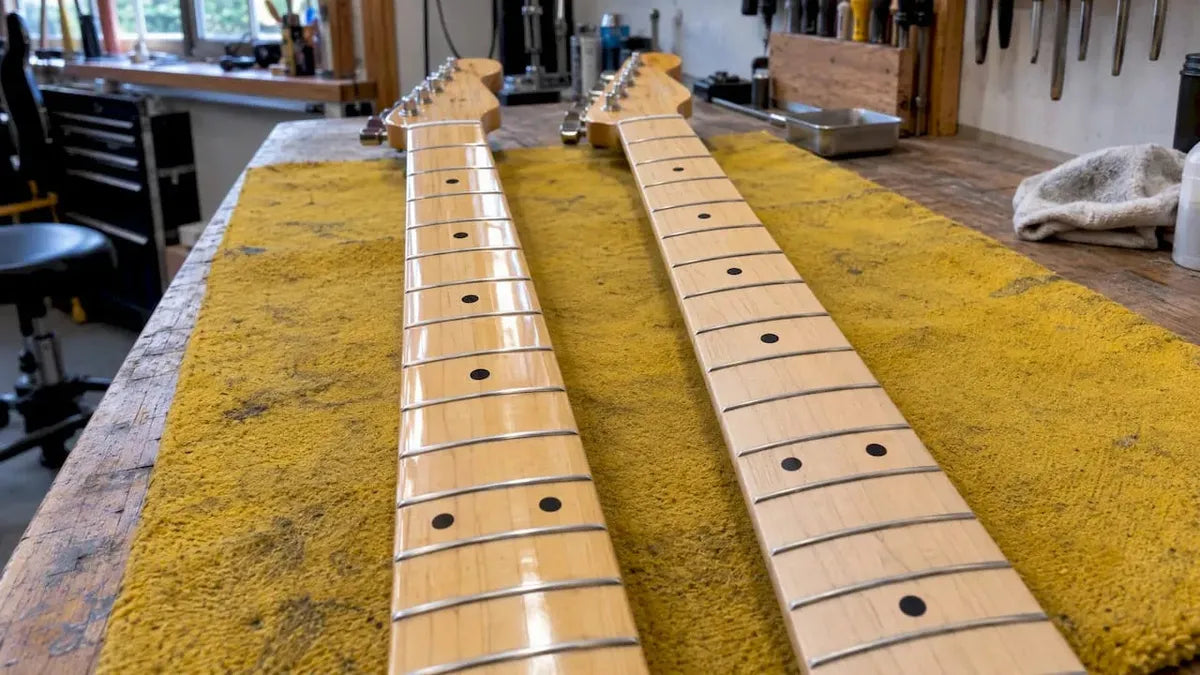
The primary guitar finishing techniques encompass several distinct approaches, each with nuanced implications for sound and appearance. Nitrocellulose lacquer remains a classic choice among purists, prized for its thin application that allows wood to resonate more freely. Polyurethane finishes offer superior durability and protection, creating a robust surface that resists scratches and environmental damage. More specialised techniques like hand-rubbed oil finishes provide a natural, minimalist approach that enhances the wood’s inherent grain and character.
Musicians and luthiers carefully consider multiple factors when selecting finishing techniques. The coating’s thickness, application method, and composition directly influence the instrument’s tonal characteristics, with thinner finishes typically allowing greater sound resonance. Factors such as humidity resistance, aesthetic preferences, and long-term maintenance requirements also play crucial roles in determining the most appropriate finishing technique for a specific instrument.

Workshop Tip: Always test finish samples on similar wood types to understand how different techniques might interact with your specific guitar’s materials and acoustic properties.
How Professional Custom Finishing Works
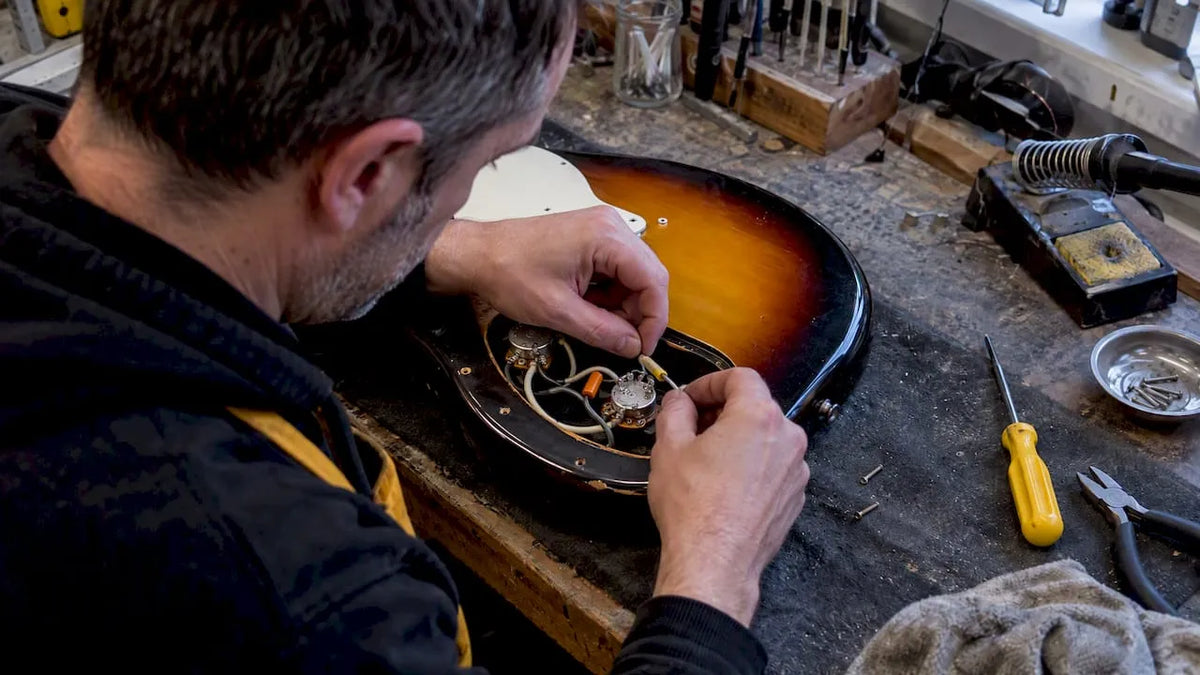
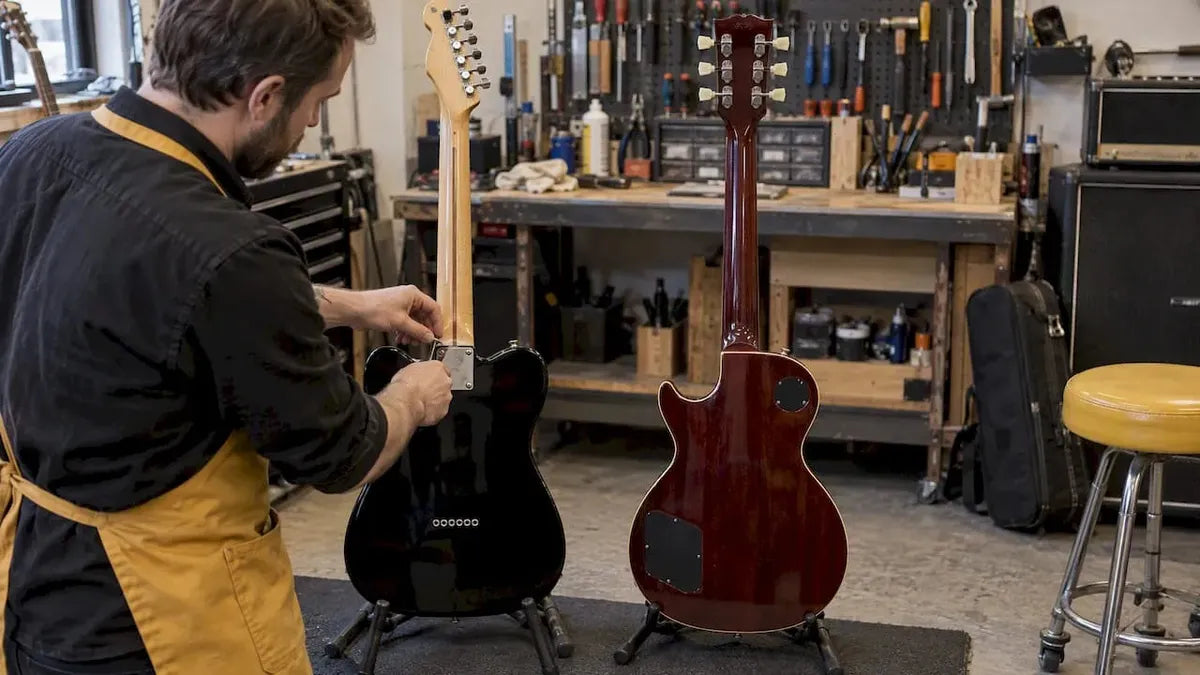
Professional custom guitar finishing represents a meticulous craft that transforms raw instruments into personalised musical masterpieces through sophisticated techniques and expert craftsmanship. Specialised UK guitar workshops employ intricate processes that blend technical precision with artistic innovation, ensuring each instrument receives individualised treatment that enhances both its aesthetic appeal and sonic capabilities.
The professional finishing process typically involves several critical stages, beginning with comprehensive body preparation. Surface preparation is paramount, requiring skilled technicians to carefully sand and smooth the guitar’s wooden surface, removing imperfections and creating an ideal foundation for finishing. Modern professionals utilise advanced techniques like 2K polyester and vintage-style nitrocellulose lacquer, each offering distinct advantages in durability, resonance, and visual character. The application method demands extraordinary skill, with technicians carefully controlling spray gun techniques, layer thickness, and curing conditions to achieve optimal results.
Beyond technical execution, professional custom finishing involves deep collaborative engagement between the luthier and musician. Clients can specify unique aesthetic elements such as metallic flakes, custom colour transitions, or specialised effects that reflect personal style and musical identity. Professional finishers consider multiple factors during the process, including the instrument’s intended playing environment, musical genre, and long-term maintenance requirements. Each finishing decision involves balancing aesthetic preferences with functional considerations like moisture resistance, durability, and potential impact on the guitar’s tonal characteristics.
Workshop Insight: Always discuss your precise requirements and aesthetic vision thoroughly with the professional finisher to ensure your custom guitar reflects both your personal style and performance needs.
Pros, Cons, and Effects on Tone
Guitar finishes represent a nuanced compromise between sonic performance, aesthetic appeal, and long-term instrument protection. Different finish types dramatically influence an instrument’s tonal characteristics through their unique material properties, creating complex interactions between coating and wood that musicians must carefully consider.
The most prominent finish types each present distinct advantages and limitations. Nitrocellulose lacquer offers exceptional tonal transparency, allowing wood vibrations to resonate more freely and producing a brighter, more responsive sound profile. However, this finish remains relatively fragile, susceptible to scratching and wearing more quickly than modern alternatives. Polyurethane finishes, conversely, provide superior durability and protection, creating a robust surface that shields the instrument from environmental fluctuations but potentially dampening some of the guitar’s natural acoustic characteristics.

Here’s a comparison of popular guitar finish types and their practical implications:
| Finish Type | Durability | Tone Impact | Maintenance Needs |
|---|---|---|---|
| Nitrocellulose Lacquer | Vulnerable to wear | Enhances resonance, bright sound | Requires delicate care |
| Polyurethane | Highly resistant | Slightly dampens resonance | Tolerates routine cleaning |
| Hand-Rubbed Oil | Moderate durability | Preserves natural wood tone | Needs regular reapplication |
| 2K Polyester | Very robust | Can restrict vibration | Requires specialist attention |
Musicians and luthiers must balance multiple competing priorities when selecting a guitar finish. Factors such as playing style, performance environment, maintenance capabilities, and personal aesthetic preferences all intersect in this complex decision. Vintage-inspired musicians might prioritise tonal openness and traditional techniques, while touring professionals may require more robust protection against physical wear and environmental challenges. The finish’s thickness, application method, and chemical composition each contribute subtle yet meaningful variations to the instrument’s ultimate sonic performance.
Workshop Wisdom: Consider your specific playing context and sonic requirements when selecting a guitar finish, understanding that each option represents a carefully negotiated compromise between protection, appearance, and tonal character.
Costs, Common Pitfalls, and Maintenance
Custom guitar finishing represents a significant investment that demands careful financial and practical considerations. Custom finish costs vary dramatically based on complexity and technique, with professional applications ranging from modest investments to substantial financial commitments depending on the desired aesthetic and technical requirements.
The landscape of guitar finishing involves multiple potential pitfalls that can compromise both aesthetic and functional quality. Amateur refinishing attempts frequently result in uneven coating, tone dampening, and irreversible damage to the instrument’s wooden structure. Professional finishers understand the nuanced techniques required to achieve optimal results, carefully controlling layer thickness, application method, and curing conditions. Different finish types present unique challenges: nitrocellulose lacquer demands extraordinary precision and is prone to environmental sensitivity, while polyurethane requires specific application techniques to prevent bubbling or uneven coverage.
The following table summarises common pitfalls in DIY guitar finishing and how professionals avoid them:
| Pitfall | DIY Risk | Professional Solution |
|---|---|---|
| Uneven Coating | Patchy appearance | Controlled layer application |
| Tone Dampening | Excessive finish thickness | Precision thinning techniques |
| Wood Damage | Irreversible splintering | Expert sanding methods |
| Environmental Sensitivity | Prone to humidity changes | Correct curing and sealing |
Maintenance strategies differ significantly across various finish types, requiring musicians to develop specialised care approaches. Delicate finishes like French polish demand gentle cleaning with specific microfibre cloths and minimal environmental exposure, whereas more robust synthetic finishes tolerate more aggressive maintenance protocols. Climate control, careful handling, and periodic professional assessment become critical for preserving the finish’s integrity and the instrument’s long-term value. Musicians must balance aesthetic preferences with practical maintenance requirements, understanding that each finish type represents a complex compromise between protection, appearance, and sonic performance.
Workshop Wisdom: Invest in professional consultation and periodic maintenance to protect your custom guitar finish, recognising that preventative care is invariably more cost-effective than extensive restoration.
Elevate Your Guitar’s Style and Sound with Expert Support
Custom guitar finishes present a unique challenge for musicians who want to balance aesthetic beauty with optimal tonal performance. Whether you seek the delicate resonance of nitrocellulose lacquer or the robust protection of polyurethane, understanding the impact of different finishes can feel overwhelming. At MusicStreet, we recognise the importance of personalised instruments that truly reflect your musical identity and playing needs.

Discover our carefully curated selection of electric, acoustic, and bass guitars—each inspected and set up by professionals who understand the nuances of finish types and their influence on sound. Benefit from expert advice, ongoing support, and competitive pricing by visiting MusicStreet. Explore our latest pre-loved and hot new guitars to find the perfect match that combines style and tone. Take the next step in your musical journey now by trusting a boutique, customer-focused service dedicated to helping you achieve the ideal custom finish effect both on and beyond the fretboard.
Frequently Asked Questions
What are custom guitar finishes?
Custom guitar finishes are specialized treatments applied to an instrument’s body, enhancing both the visual aesthetic and tonal qualities of the guitar, allowing musicians to express their unique identity.
How do different types of finishes affect a guitar’s sound?
Different finishes, such as nitrocellulose lacquer, polyurethane, and hand-rubbed oil, have various impacts on tonal characteristics. Nitrocellulose allows for greater resonance, while polyurethane offers durability but may slightly dampen sound.
What factors should I consider when choosing a custom finish for my guitar?
When selecting a custom finish, consider the desired aesthetic, durability, protective characteristics, tonal impact, and maintenance requirements to ensure the finish complements your musical style and performance needs.
What common pitfalls should I avoid in DIY guitar finishing?
Common pitfalls in DIY guitar finishing include uneven coating, excessive finish thickness that dampens tone, and potential wood damage. It’s advisable to seek professional assistance to avoid these issues and achieve the best results.
Recommended
- How to Choose the Ultimate Guitar? | MusicStreet
- Craftsmanship of High-End Acoustic Guitars
- What makes the ultimate guitar? | MusicStreet
- Crafting Your Signature Tone: Tips to Emulate Guitarists
- Face Framing Extensions: Enhancing Shape and Style






Share:
Guitar Body Types Explained: Choosing Your Ideal Fit
Guitar Lessons for Beginners