


Upgrading your guitar’s electronics can feel confusing if you are unfamiliar with terms like potentiometers and wiring, but many Huntingdon hobbyists soon discover these components are at the heart of their sound. Whether you want smoother volume changes or brighter tones for classic rock, understanding guitar pots unlocks custom possibilities right at your fingertips. This guide unpacks the basics so you can confidently tackle DIY modifications and enjoy every tweak to your unique setup.
Table of Contents
- Guitar Pots And Wiring Explained Simply
- Common Types Of Pots And Wiring Setups
- How Pots And Wiring Affect Guitar Tone
- Upgrading Pots: Choosing The Best Fit
- Common Pitfalls And DIY Safety Tips
Key Takeaways
| Point | Details |
|---|---|
| Understanding Potentiometers | Potentiometers control volume and tone, allowing guitarists to modify their sound effectively. Choosing the right resistance value is crucial for tonal quality. |
| Wiring Configurations | Different wiring setups can create various tonal effects, enabling musicians to achieve a wide range of sounds. Understanding these configurations enhances musical expression. |
| Pot Selection for Upgrades | Selecting the appropriate pots based on resistance values and physical dimensions is essential for maintaining sound quality. Ensure compatibility with existing wiring during upgrades. |
| DIY Caution | Precision in measurements and soldering techniques is vital when modifying guitar electronics to avoid damage and ensure reliable performance. Create a static-free workspace for safety. |
Guitar Pots And Wiring Explained Simply
Guitar electronics might seem complicated, but understanding potentiometers and wiring is simpler than most musicians realise. Guitar electronics fundamentals reveal these components are crucial for shaping your instrument’s sound and performance.
At their core, potentiometers (or pots) are variable resistors that control volume and tone by adjusting electrical signal strength. They work like precision volume knobs, allowing guitarists to fine-tune their sound:
- Control signal flow between pickups and output
- Adjust volume levels smoothly
- Enable precise tone modifications
- Determine signal resistance characteristics
Different pot resistance values significantly impact your guitar’s tonal range. Lower resistance pots (250K) work brilliantly with single-coil pickups, while higher resistance pots (500K) complement humbucker configurations. Wiring configurations determine how these electrical pathways interact, ultimately defining your instrument’s sonic personality.
Understanding wiring isn’t just technical—it’s about artistic expression. Switches and pots collaborate to create multiple pickup combinations, allowing musicians to transition between crisp, bright tones and warm, rich sounds with a simple adjustment.
Pro tip: Always use quality potentiometers and take your time during installation to ensure precise electrical connections.
Common Types Of Pots And Wiring Setups
Guitar potentiometers come in a fascinating array of configurations, each designed to provide musicians with unique tonal possibilities. Guitar pot variations reveal a complex world of electrical customisation that can dramatically transform an instrument’s sound.
The most common pot types include:
- Full-size pots (standard 24mm diameter)
- Mini pots (smaller 15mm diameter)
- Push-pull pots with switching capabilities
- Split-shaft and solid-shaft designs
- Linear and logarithmic resistance curves
Each pot type offers distinct advantages for different guitar styles and playing techniques. Full-size pots provide more stable mounting and robust construction, while mini pots allow for compact installations in guitars with limited control cavity space. Push-pull pots represent a particularly clever design, enabling musicians to add additional tonal variations by pulling and pushing the volume knob.
Wiring configurations further expand a guitarist’s sonic palette. Different wiring setups can create series, parallel, and split-coil connections, allowing for nuanced tone shaping. Some advanced configurations even permit phase-switching and series/parallel pickup combinations, giving players unprecedented control over their instrument’s sound.
Pro tip: When replacing pots, always match the new potentiometer’s resistance and taper to your guitar’s original specifications to maintain optimal tone.
Here is a quick comparison of common guitar potentiometer types and their ideal applications:
| Pot Type | Typical Use | Key Advantage |
|---|---|---|
| Full-size (24mm) | Most electric guitars | Robust and stable |
| Mini (15mm) | Compact/control-limited axes | Fits small cavities |
| Push-pull | Coil-splitting mods | Added tone options |
| Linear taper | Tone controls | Consistent sweep |
| Audio taper | Volume controls | Natural response |
How Pots And Wiring Affect Guitar Tone
The intricate world of guitar electronics reveals how subtle changes in potentiometers and wiring can dramatically transform an instrument’s sonic character. Guitar electronics fundamentals demonstrate that tone is not just about pickups, but also about how electrical components interact.
Potentiometer characteristics play a crucial role in shaping guitar tone:
- Resistance values impact signal brightness
- Pot tapers control volume and tone response
- Different values suit various pickup types
- Capacitor pairings filter specific frequencies
Most guitarists understand that pot resistance directly influences tone quality. For instance, single-coil pickups typically work best with 250K ohm pots, which slightly darken the signal and reduce harsh high frequencies. Humbucker pickups, conversely, pair well with 500K ohm pots, delivering a brighter, more articulate sound with increased high-end definition.
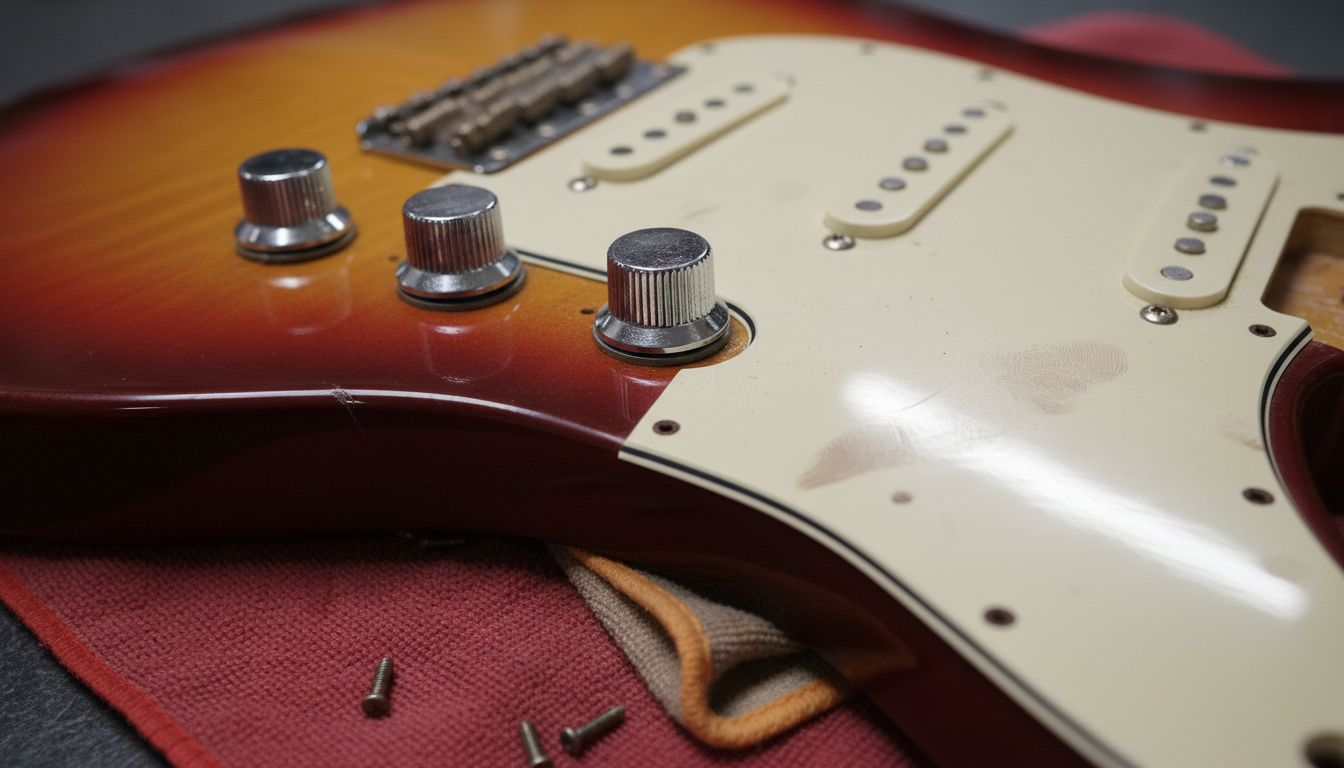
Wiring configurations add another layer of tonal complexity. The way pickups are connected—whether in series, parallel, or using split-coil arrangements—can radically alter the guitar’s sound. Advanced wiring techniques allow musicians to create unique tonal palettes, from warm, vintage-style sounds to crisp, modern tones with enhanced clarity and punch.
Pro tip: Experiment with different pot values and wiring configurations using a cheap practice guitar before modifying your primary instrument.
The following table summarises how different pot values and wiring affect typical guitar pickups:
| Pickup Type | Recommended Pot Value | Resulting Tone |
|---|---|---|
| Single-coil | 250K | Warmer, less treble harshness |
| Humbucker | 500K | Brighter, enhanced clarity |
| P90 | 500K | Balanced, more definition |
| Active | 25K | Maintains full frequency |
Upgrading Pots: Choosing The Best Fit
Selecting the right potentiometers can transform your guitar’s sonic performance, making pot selection critical for musicians seeking precise tonal control. Understanding the nuanced characteristics of different pot types is essential for any serious guitar modification enthusiast.
Key considerations when upgrading guitar potentiometers include:
- Resistance values (250K, 500K)
- Audio taper vs linear configurations
- Physical pot body size
- Shaft length and type
- Push-pull functionality
- Compatibility with existing wiring
The physical dimensions of potentiometers matter significantly. Full-size pots (24mm diameter) offer more stable mounting and superior durability compared to mini pots (15mm diameter). While mini pots can fit into compact control cavities, they often compromise structural integrity and long-term reliability.
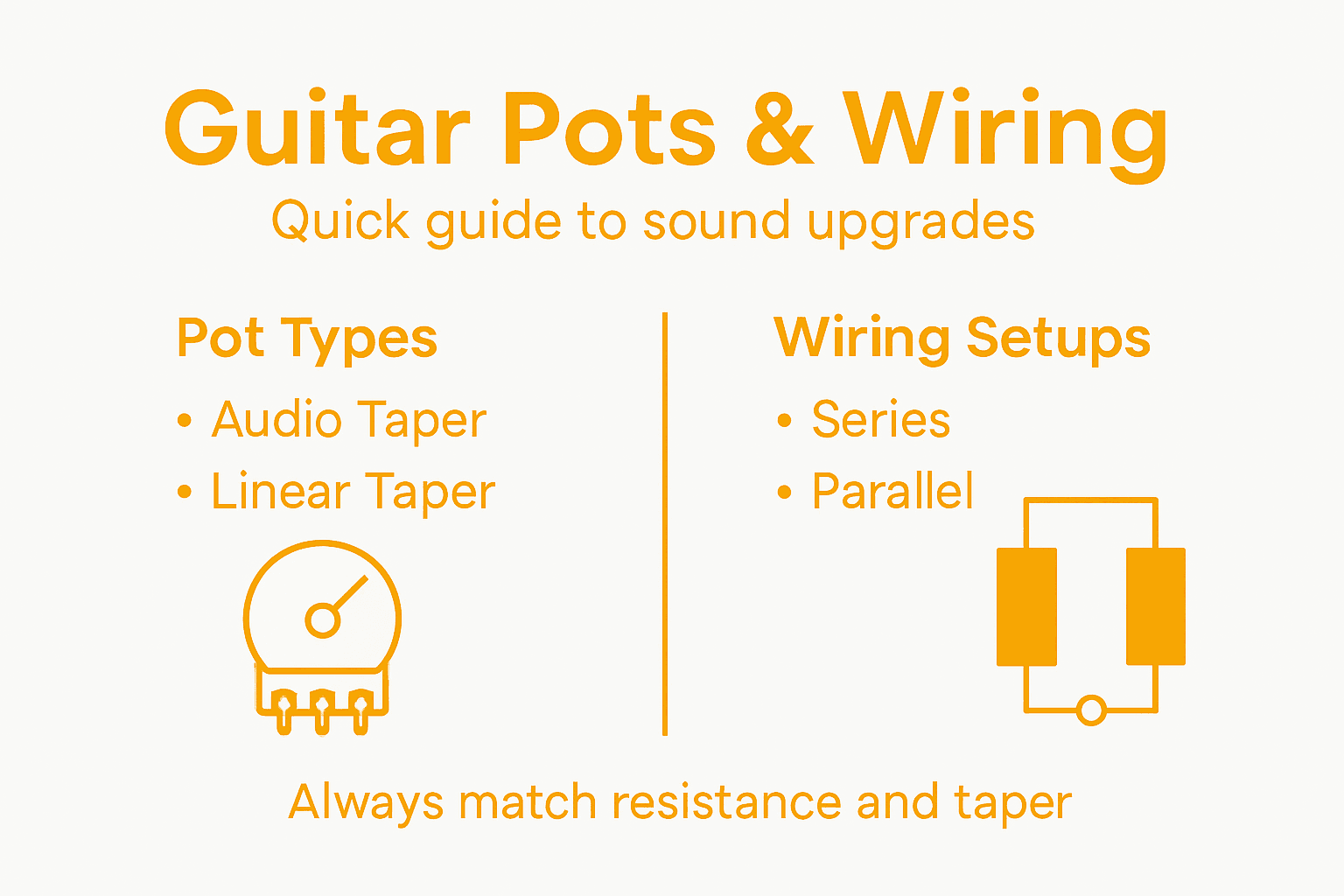
Audio taper pots provide smoother volume and tone transitions, making them preferable for most guitar modifications. These pots respond more naturally to human hearing characteristics, allowing more nuanced control across the volume range. Musicians can choose between standard audio taper designs and specialized push-pull pots that offer additional switching capabilities for expanded tonal versatility.
Pro tip: Always measure your guitar’s existing pot cavity and compare shaft specifications before purchasing replacement potentiometers.
Common Pitfalls And DIY Safety Tips
Guitar electronics modifications require precision and careful attention to detail. Guitar wiring safety involves understanding potential risks and implementing strategic precautions to protect both your instrument and yourself during upgrades.
Common pitfalls when working with guitar electronics include:
- Mixing metric and imperial pot dimensions
- Damaging split-shaft connections
- Creating cold solder joints
- Improper grounding techniques
- Using inappropriate tools
- Neglecting static electricity protection
Precise measurement is crucial when replacing potentiometers. Dimensional compatibility matters significantly, as using incorrectly sized components can lead to permanent damage to your guitar’s electronic system. Artisan luthiers recommend carefully checking shaft lengths, diameters, and mounting hole specifications before attempting any modifications.
Soldering represents another critical skill in guitar electronics work. Poor technique can result in unreliable connections, signal loss, and potential short circuits. Musicians should invest in a quality soldering iron with temperature control, use flux, and practice creating clean, reliable solder joints that ensure optimal electrical conductivity.
Pro tip: Create a static-free workspace with proper lighting and use an anti-static mat to prevent potential electronic component damage during guitar modifications.
Upgrade Your Guitar Tone with Expert Potentiometer Choices and Wiring Solutions
Understanding how potentiometers and wiring shape your guitar’s sound is just the first step towards unlocking your instrument’s full potential. The challenge lies in selecting the right pots, matching resistance values, and ensuring precise installation to avoid common pitfalls like cold solder joints or incorrect shaft sizes. At MusicStreet, we know the importance of quality components and professional setup to achieve the warm, balanced tone or the bright, clear sound you desire.

Explore our carefully curated selection of electric and acoustic guitars, accessories, and expert services at MusicStreet. Whether you need a full pot upgrade, expert advice on push-pull switches, or professional wiring installation, our dedicated team in Huntingdon is here to support your musical journey. Don’t wait — enhance your sound today with confident upgrades backed by personalised care and reliable craftsmanship. Visit MusicStreet now to discover premium guitars and accessories that empower your tone and playing experience.
Frequently Asked Questions
What are guitar pots and how do they affect sound?
Guitar pots, or potentiometers, are variable resistors that control volume and tone by adjusting electrical signal strength. They significantly affect the guitar’s sound by controlling the flow between pickups and output, thereby influencing the overall tonal characteristics.
How do I choose the right potentiometer for my guitar?
When selecting a potentiometer, consider factors such as resistance value (250K for single-coils and 500K for humbuckers), taper type (audio versus linear), and physical dimensions. Matching these specifications with your existing setup ensures optimal performance.
What is the difference between linear and audio taper pots?
Linear taper pots provide a consistent change in resistance throughout their range, making them suitable for tone controls. Audio taper pots, on the other hand, mimic human hearing and offer smoother volume transitions, making them preferable for volume controls in guitars.
How do wiring configurations affect my guitar’s tone?
Wiring configurations, such as series and parallel connections, can dramatically alter your guitar’s sound. For instance, series wiring typically boosts output and warmth, while parallel wiring provides heightened clarity and definition. Experimenting with these setups allows for diverse tonal expressions.


Share:
Discover the Best Bass Guitars for All Levels in 2026
7 Key Guitar Amplifier Features Every UK Player Must Know