


Finding a true guitar gem in Cambridgeshire can be as rewarding as it is challenging, especially when every detail influences real market value. Whether you are considering your first vintage American classic or a modern European model, the steps you take to assess and document your instrument matter. By following a process rooted in professional condition reporting and drawing on expert market insights, you lay the foundation for confident collecting, accurate valuation, and successful resale.
Table of Contents
- Step 1: Assess Instrument Condition
- Step 2: Identify Make, Model And Provenance
- Step 3: Compare Market Prices And Trends
- Step 4: Verify Authenticity And Unique Features
- Step 5: Calculate Final Guitar Value
Quick Summary
| Key Point | Explanation |
|---|---|
| 1. Assess Guitar Condition First | Examine body, neck, and hardware for damage, which influences resale value significantly. Document findings systematically. |
| 2. Identify Make and Model | Verify manufacturer details and serial numbers to establish authenticity and value, gathering any ownership documentation when possible. |
| 3. Research Current Market Prices | Compare similar guitars’ sold prices to set a realistic asking price, considering condition, originality, and market trends. |
| 4. Verify Authenticity and Features | Assess construction details and factory markings to ensure authenticity, as original components and features enhance the instrument’s value. |
| 5. Calculate Accurate Final Value | Combine market data, condition, and authenticity to determine your guitar’s asking price, considering factors that might adjust its value. |
Step 1: Assess instrument condition
Assessing your guitar’s condition is the foundation of determining its value. Whether you’re considering resale or collection purposes, understanding what you’re working with means examining the instrument systematically and documenting what you find.
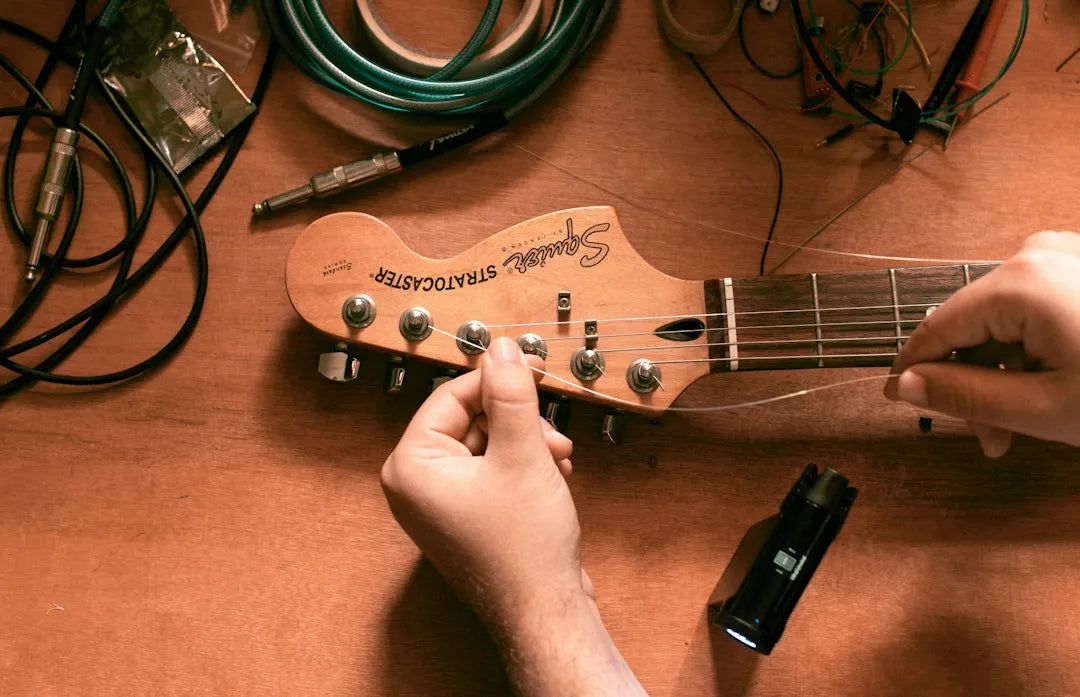
Start by examining the body and neck for visible damage. Look for cracks, chips, dents, or finish wear. Run your fingers along edges and surfaces to feel for rough spots or separation. Pay special attention to the headstock, which is particularly vulnerable to impact damage and affects value significantly.
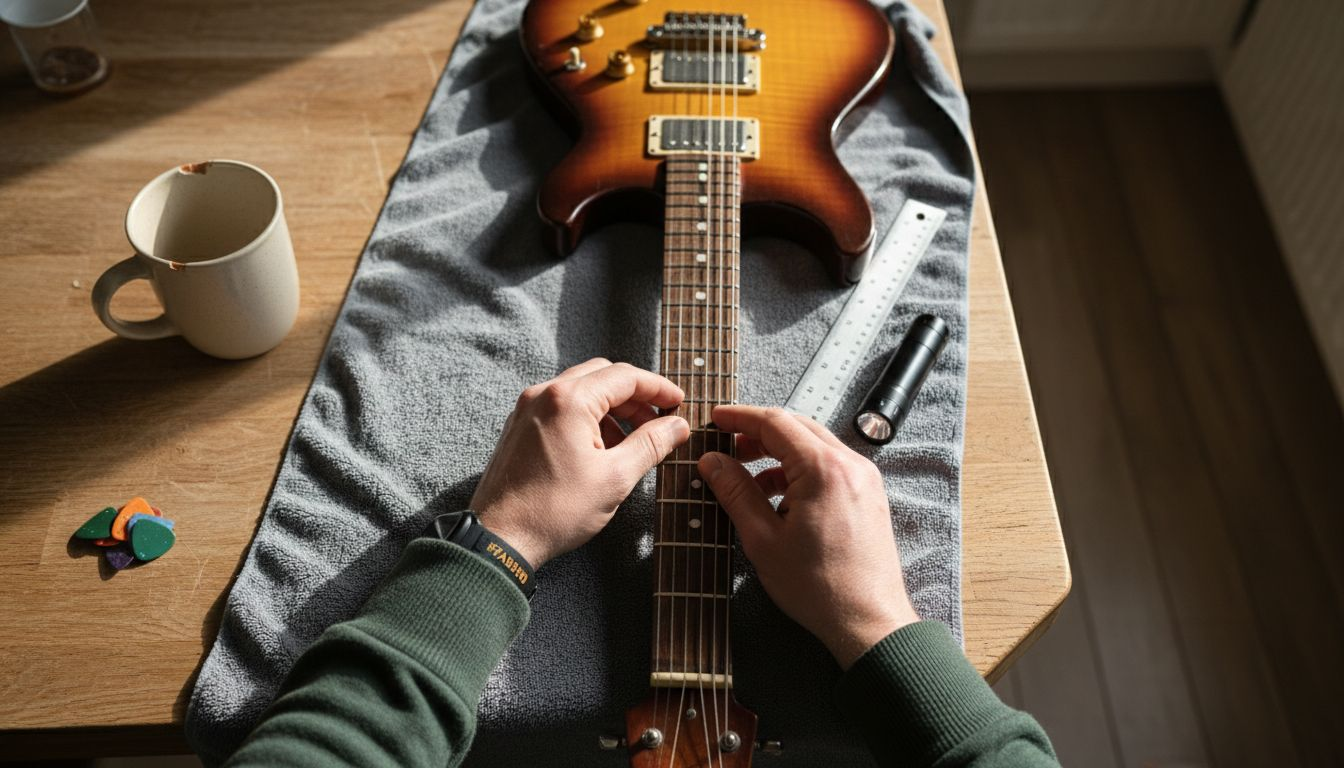
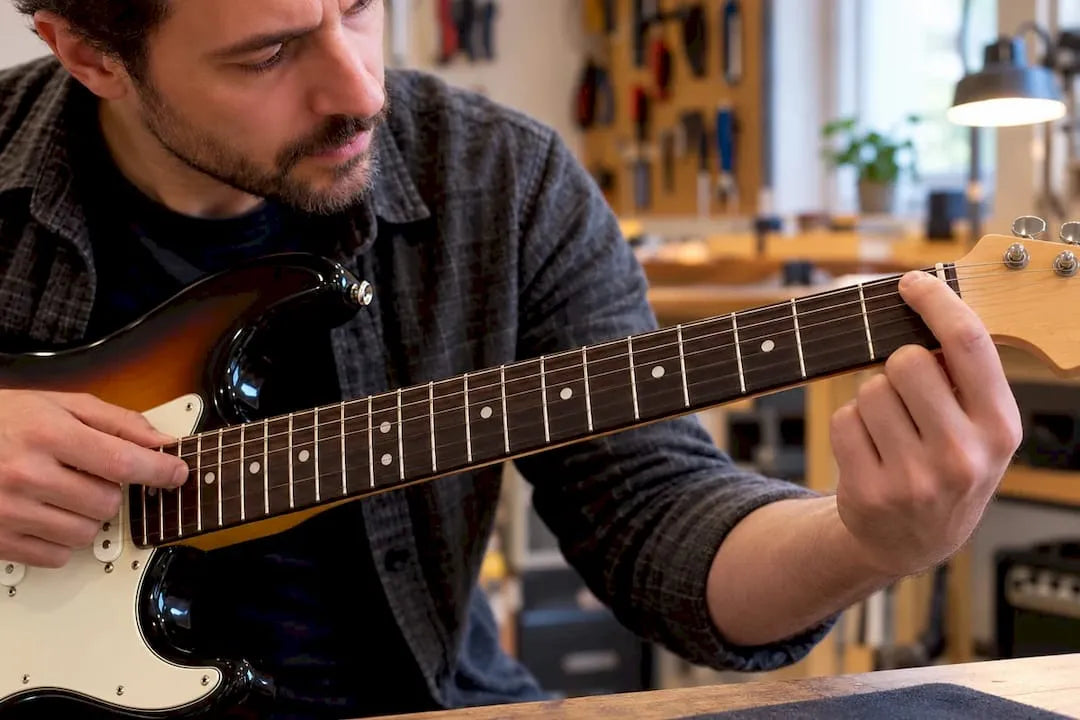
Inspect the fretboard closely. Check for wear patterns, fret sprout (where frets protrude above the board), or discolouration. Look along the length of the neck by sighting down it like a rifle barrel to spot any warping or twisting. A neck issue can be costly to repair and dramatically impacts resale value.
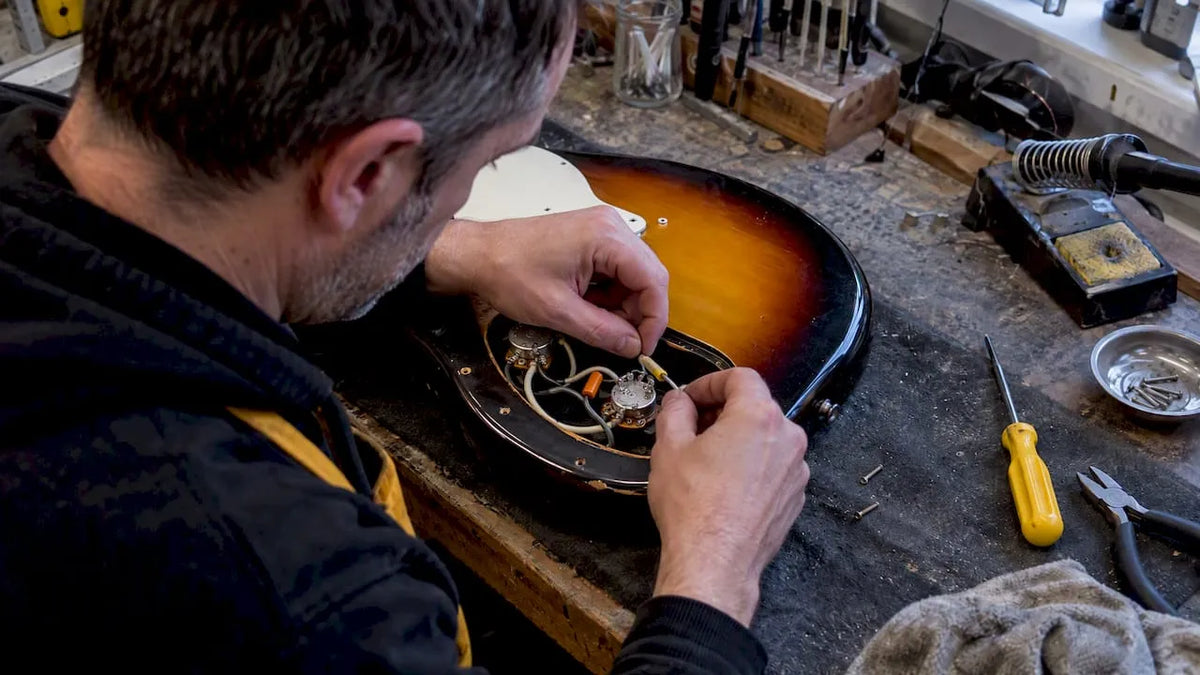
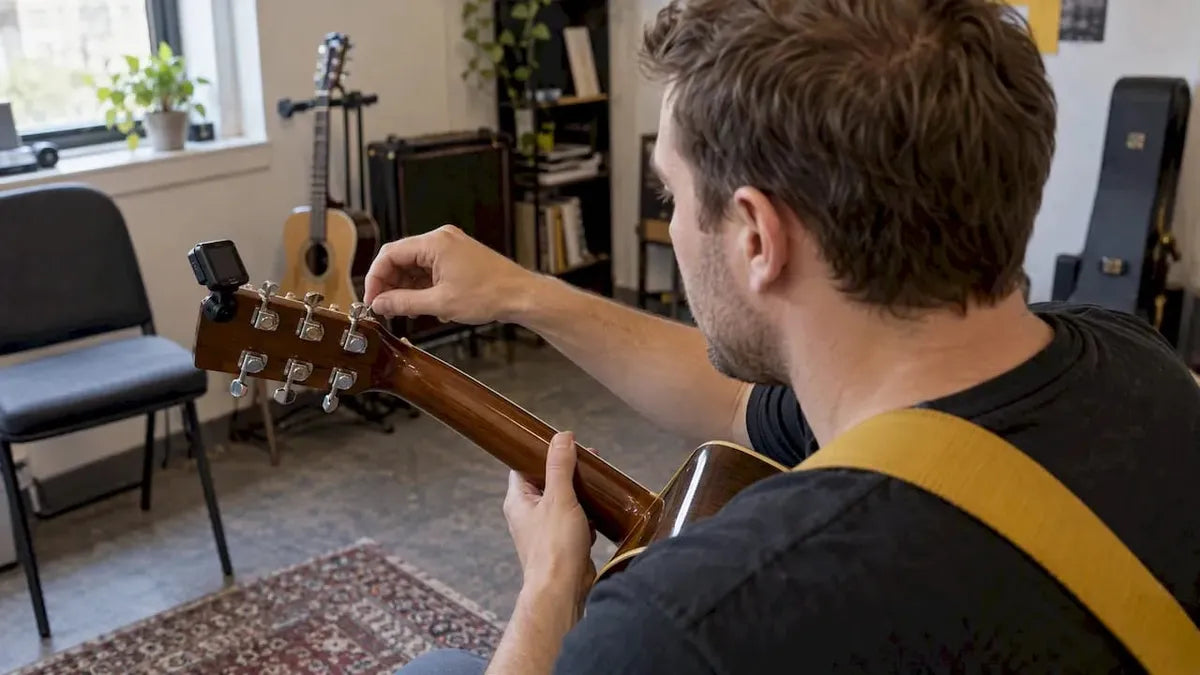
Examine the hardware and electronics. Rust on tuning machines, bridges, or pickups indicates exposure to moisture. Test all switches, knobs, and potentiometers to ensure they work smoothly. Crackling sounds when adjusting controls suggest deterioration inside. Check input jacks for corrosion or loose connections.
Documentation matters tremendously. Take annotated photographs from multiple angles, showing damage clearly. Professional condition reporting methods help differentiate old damage from recent issues, establishing a baseline for the instrument’s state.
Consider these key inspection points:
- Cracks or splits in wood (body, neck, headstock)
- Fret wear, unevenness, or lifting
- Finish checking, scratches, or deep gouges
- Bridge integrity and glue joints
- Tuning stability and hardware function
- Previous repairs or modifications
- Original parts versus replacements
Understanding how these factors influence playability helps you assess whether the guitar requires setup work or restoration. This evaluation directly affects its market value and appeal to potential buyers.
Pro tip: Photograph your inspection findings in natural daylight with a ruler or coin in frame for scale, ensuring future buyers or appraisers can assess damage severity accurately without handling the instrument.
Step 2: Identify make, model and provenance
Knowing exactly what guitar you own is critical for valuation. Identifying the make, model, and ownership history transforms a vague instrument into a documented asset with traceable value.
Start by looking for the manufacturer’s label or stamp. Most guitars have labels inside the body identifying the maker and production year. Check the headstock for brand names, logos, or serial numbers. These markings are your primary identification tools. If labels are missing or unclear, examine construction details like wood type, hardware style, and body shape to match against manufacturer specifications.
Locate the serial number and record it carefully. Serial numbers reveal production dates and help verify authenticity. Different manufacturers use different numbering systems, so research your specific brand’s conventions. Cross-reference the serial number with official databases or manufacturer records when possible.
Ownership history matters significantly for value. Gather any documentation you possess, including original receipts, warranty cards, or previous sales records. These establish provenance and build confidence in potential buyers. Even informal documentation helps, such as photographs showing the guitar in use over time or correspondence with previous owners.
Investigate provenance marks and ownership records that establish the instrument’s history. Look for inscriptions, signatures, or identifying marks inside the guitar body. These details create an auditable trail of ownership that substantially increases market value and collector appeal.
Check these identification sources:
- Manufacturer labels or stamps inside the body
- Serial numbers on headstock or body
- Brand logos and hardware markings
- Wood types and construction methods
- Original cases or documentation
- Previous owner information or letters
- Repair receipts from authorised service centres
When researching your model, use manufacturer catalogues, vintage guitar databases, and specialist forums relevant to your specific brand. This research establishes what your instrument should look like, highlighting any modifications or missing original parts that affect value.
Documented ownership history can increase a guitar’s resale value by 15-30%, making provenance research worthwhile even for modern instruments.
Pro tip: Create a personal inventory document with photographs, serial numbers, purchase receipts, and any modifications, then store it separately from the instrument itself for insurance and resale purposes.
Step 3: Compare market prices and trends
Market research transforms your guitar’s condition into a realistic asking price. Comparing prices across multiple platforms and understanding current demand patterns ensures you’re neither undervaluing nor overpricing your instrument.
Start by searching online marketplaces and auction sites. Look for identical or very similar models with comparable condition. Note the asking prices, sold prices, and how quickly items sell. Sold prices matter more than asking prices, as they reflect actual market value rather than wishful thinking.
Check specialist guitar retailers and resale platforms. These often provide more accurate valuations than general marketplaces because buyers and sellers understand instrument-specific factors. Look at completed sales over the past 3-6 months to establish realistic trends rather than isolated listings.
Understand current guitar market trends and demand patterns that influence pricing. Vintage models from certain manufacturers command premiums when collector interest peaks. Modern instruments from established brands hold value more consistently than budget options. Research whether your specific model is gaining or losing collector interest.
Adjust prices based on condition and modifications. A pristine 1980s guitar in original condition sells for significantly more than a played-in version with replaced pickups or a refinished body. Subtract repair costs from comparable prices when your guitar needs work.
Consider these pricing research approaches:
- Recently sold listings on auction websites
- Specialist vintage guitar dealer websites
- Second-hand marketplace listings in your region
- Brand-specific collector forums and discussions
- Professional appraisal services for high-value instruments
- Shipping costs and market availability factors
Track price data over time. Document what comparable guitars sell for monthly. This reveals whether the market is moving upward, downward, or holding steady. Seasonal demand also matters—guitars often sell better before summer touring season and around gift-giving periods.
Market prices vary significantly by condition, originality, and current collector demand, so comparing 5-10 comparable sales gives more reliable data than any single listing.
Pro tip: Create a spreadsheet tracking comparable guitar sales with dates, prices, condition notes, and sale locations, then update it quarterly to spot pricing trends unique to your model and market region.
Below is a quick-reference on sourcing accurate guitar value information:
| Source Type | Typical Reliability | Key Benefit |
|---|---|---|
| Auction sale data | High | Reveals real-world transaction values |
| Specialist dealers | High | Expert, brand-specific model insights |
| Online marketplaces | Moderate | Large data, but may contain outliers |
| Brand-specific forums | Variable | Collector trends and subtle variations |
| Professional appraisals | Very high | Formal documentation for insurance/sale |
Step 4: Verify authenticity and unique features
Authenticity determines whether your guitar commands premium pricing or raises buyer scepticism. Verifying that your instrument is genuinely what it claims to be, and identifying any rare or desirable features, separates valuable investments from questionable acquisitions.
Start by examining construction details against known specifications. Research your guitar’s exact model year and compare wood types, hardware, and finish to factory standards. Counterfeit or misrepresented guitars often have inconsistencies in materials or construction methods that don’t match documented specifications.
Look for original factory markings and stamps. Authentic instruments typically have consistent branding, clear serial numbers, and manufacturer stamps. Poorly applied labels, mismatched fonts, or unclear markings suggest either age-related deterioration or potential fakery. Photograph these marks clearly for documentation.
Check for modifications and replacements. Original components significantly increase value compared to guitars with swapped pickups, refretted necks, or refinished bodies. Document what is original and what has been changed, as this affects both authenticity claims and resale value.
Utilise certification and provenance documentation to verify your guitar’s history and originality. Certificates of authenticity, original purchase receipts, or documented ownership transfers provide verifiable proof that strengthens buyer confidence and justifies premium pricing.
Identify rare or desirable features that increase value:
- Limited production runs or special editions
- Unusual wood combinations or finishes
- Signature artist models with documented provenance
- Pre-CBS or pre-injury period instruments
- Factory custom shop specifications
- Discontinued models with collector demand
- Original case and accessories included
Consult specialist forums and expert resources specific to your guitar’s brand. Collectors and enthusiasts can identify subtle variations that indicate rarity. Many manufacturers have online archives or serial number databases where you can verify exact specifications and production dates.
A guitar with complete original documentation and unmodified components can command 25-40% more than an identical instrument missing authenticity proof.
Pro tip: Request professional authentication from a reputable luthier or specialist appraiser before listing high-value guitars, as their expert assessment adds credibility and justifies premium asking prices to serious collectors.
Step 5: Calculate final guitar value
Converting your research into a concrete asking price requires combining market data, condition assessment, and authenticity findings. Your final valuation reflects what a buyer would reasonably pay for your specific instrument in today’s market.
Start with your baseline market price. Use the comparable sales you researched earlier as your foundation. If you found five similar guitars selling between £800 and £1,200, your baseline sits somewhere in that range. Don’t use the highest or lowest outlier, but rather the middle cluster of sales.
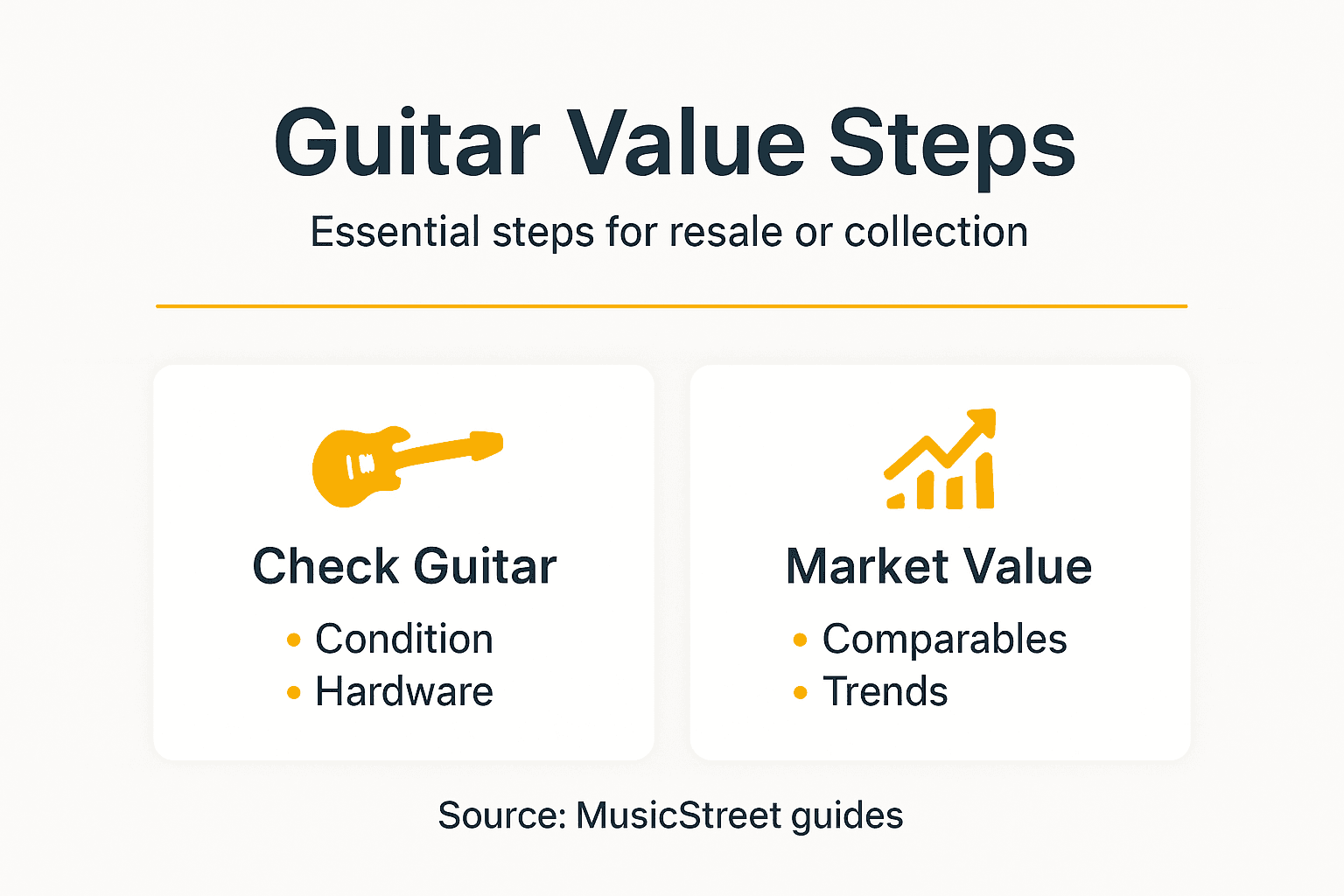
Adjust for condition relative to comparables. If your guitar is in better condition than most comparable sales, add 10-20%. If it requires repair work or shows significant wear, subtract 15-30%. Be honest about condition, as buyers will inspect thoroughly and may demand price reductions later.
Factor in originality and modifications. Original components and unmodified instruments command premiums. Subtract the cost of necessary repairs from your baseline price. If your guitar needs a professional setup, fret levelling, or finish touch-ups, deduct those expenses from your asking price.
Account for fair market value principles and associated costs when calculating your final price. Include shipping expenses, packaging, insurance, and platform fees in your mental calculations. Your asking price should reflect what you’ll actually receive after these deductions.
Consider these valuation adjustment factors:
- Condition premium or discount (10-30%)
- Originality and unmodified status (5-25%)
- Rare features or limited editions (15-50%)
- Documented provenance (10-20%)
- Required repairs or maintenance (subtract cost)
- Market demand for your specific model
- Seasonal pricing variations
Test your valuation with realistic expectations. List conservatively at first, allowing room for negotiation. Overpricing sits unsold, whilst underpricing leaves money on the table. Many experienced collectors price guitars for quick sale rather than maximum profit.
Here is a summary of how key factors impact guitar value:
| Factor | Value Increase Potential | Common Impact |
|---|---|---|
| Original components | Up to 25% | Boosts desirability for collectors |
| Documented provenance | 10-30% | Increases trust and authenticity |
| Rare or limited edition features | 15-50% | Adds uniqueness and collector appeal |
| Excellent condition | 10-20% | Commands higher resale price |
| Required repairs or modifications | Reduces value | Diminishes appeal, costs deducted |
Your final asking price should reflect baseline market value adjusted for condition, plus 5-15% premium if documentation and originality are exceptional.
Pro tip: Calculate three price points: conservative (realistic quick sale), target (ideal outcome), and premium (only if exceptional provenance exists), then start with your target price allowing negotiation down to conservative rather than trying to command premium immediately.
Unlock Your Guitar’s True Potential with MusicStreet
Evaluating a guitar’s value can feel overwhelming when faced with assessing condition, verifying authenticity, and comparing market trends. The process demands a keen eye for detail and trusted expertise to ensure you understand your instrument’s worth fully. At MusicStreet, we share your passion for guitars and provide personalised support tailored to help you confidently navigate these challenges with professional inspection and expert advice.

Explore our range of high-quality electric, acoustic, and bass guitars at MusicStreet. Whether looking to upgrade your collection, sell your instrument, or simply learn more about value factors like provenance and originality, our team is here to assist. Take advantage of our trustworthy service, expert setup, and transparent pricing today. Don’t wait — empower your guitar journey with trusted insights and premium instruments now at https://musicstreet.co.uk.
Frequently Asked Questions
How can I assess the condition of my guitar before selling it?
To assess the condition of your guitar, examine the body, neck, and hardware for any visible damage, such as cracks or scratches. Document your findings with annotated photographs and detailed notes to provide transparency to potential buyers.
What should I look for when identifying the make and model of my guitar?
Check for the manufacturer’s label or serial number, as these markings help confirm the make and model. If labels are missing, examine construction features and components to match them against known specifications from the manufacturer.
How do I compare market prices to evaluate my guitar’s value?
Research completed sales of similar guitars on various online platforms to gauge realistic market prices. Record the asking and sold prices of comparable models to establish a range and price your guitar competitively within 30–60 days.
What factors affect the resale value of my guitar?
The resale value can be influenced by condition, originality, and market demand. For example, well-maintained guitars with original components often command 10-20% higher prices than those requiring repairs or modifications.
How can I ensure the authenticity of my guitar?
To verify authenticity, examine construction details against factory specifications and look for original factory markings. Document any modifications and request professional authentication if you’re unsure, as this can increase buyer confidence and justify higher asking prices.
What is the best way to calculate my guitar’s final value?
Calculate your guitar’s final value by starting with the baseline market price from your research and then adjusting for condition and originality. Allow 5-15% for authentic documentation, and consider necessary repairs that may lower your asking price.


Share:
Guitar Sustain Explained: Why It Matters For Tone
The Bass VI: Baritone Guitar or Bass?