

Many guitarists overlook the zero fret, a small metal component that can dramatically transform how open strings sound and behave. While traditional nuts have dominated guitar design for decades, zero frets offer a compelling alternative that addresses common tonal inconsistencies and tuning stability issues. Understanding this often-misunderstood feature helps you make informed decisions about guitar setup and tone optimisation.
Table of Contents
- What Is A Zero Fret And How Does It Work?
- How Zero Frets Influence Guitar Tone And Playability
- Zero Fret Compared To Different Nut Types
- How To Incorporate Zero Fret Technology: Retrofit Options And Setup Tips
- Explore Premium Guitars And Accessories At MusicStreet
- Frequently Asked Questions
Key takeaways
| Point | Details |
|---|---|
| Zero frets create tonal consistency | They hold strings at the same height as other frets, making open string sound closely approximate fretted strings. |
| They reduce friction dramatically | String contact in the nut reduces by 93%, improving tuning stability and playability. |
| The nut still plays a role | Positioned behind the zero fret, the nut spaces strings horizontally whilst the zero fret controls height. |
| Retrofit options exist | Products like ZerO Glide allow you to add zero fret benefits without modifying your guitar permanently. |
| Regular maintenance matters | Keeping both the zero fret and standard frets clean maximises tonal benefits and playing comfort. |
What is a zero fret and how does it work?
A zero fret is a metal fret positioned at the location where your guitar’s nut typically sits. Unlike a traditional nut, which holds strings at varying heights above the fingerboard, a zero fret functions as a fret, lowering the string to the same height as other frets. This seemingly minor adjustment creates significant tonal and playability advantages.
When you play an open string on a zero fret guitar, the string rests on this metal fret exactly as it would if you pressed down at the first fret position. The nut doesn’t disappear entirely but moves behind the zero fret, where it primarily handles string spacing rather than height control. This division of labour creates more uniformity across your guitar’s tonal range.
The zero fret’s primary function is to hold the strings the correct distance above the other frets, ensuring open strings vibrate with characteristics similar to fretted notes. Some players prefer zero frets slightly taller than standard frets for specific tonal qualities, though this remains a matter of personal preference and guitar design philosophy.
Here’s how zero frets differ from traditional nuts:
- Zero frets set string height uniformly with other frets whilst nuts hold strings at independently determined heights
- Nuts on zero fret guitars focus on horizontal string spacing rather than vertical positioning
- Open strings on zero fret systems rest on metal like fretted notes rather than bone, plastic, or other nut materials
- Zero frets create tonal consistency between open and fretted positions that traditional nuts cannot achieve
- String pressure distributes across the zero fret’s polished surface instead of cutting into softer nut materials
Understanding your guitar nut basics helps clarify how zero frets work alongside rather than replace the nut entirely. This collaboration between components creates the zero fret system’s distinctive advantages.
How zero frets influence guitar tone and playability
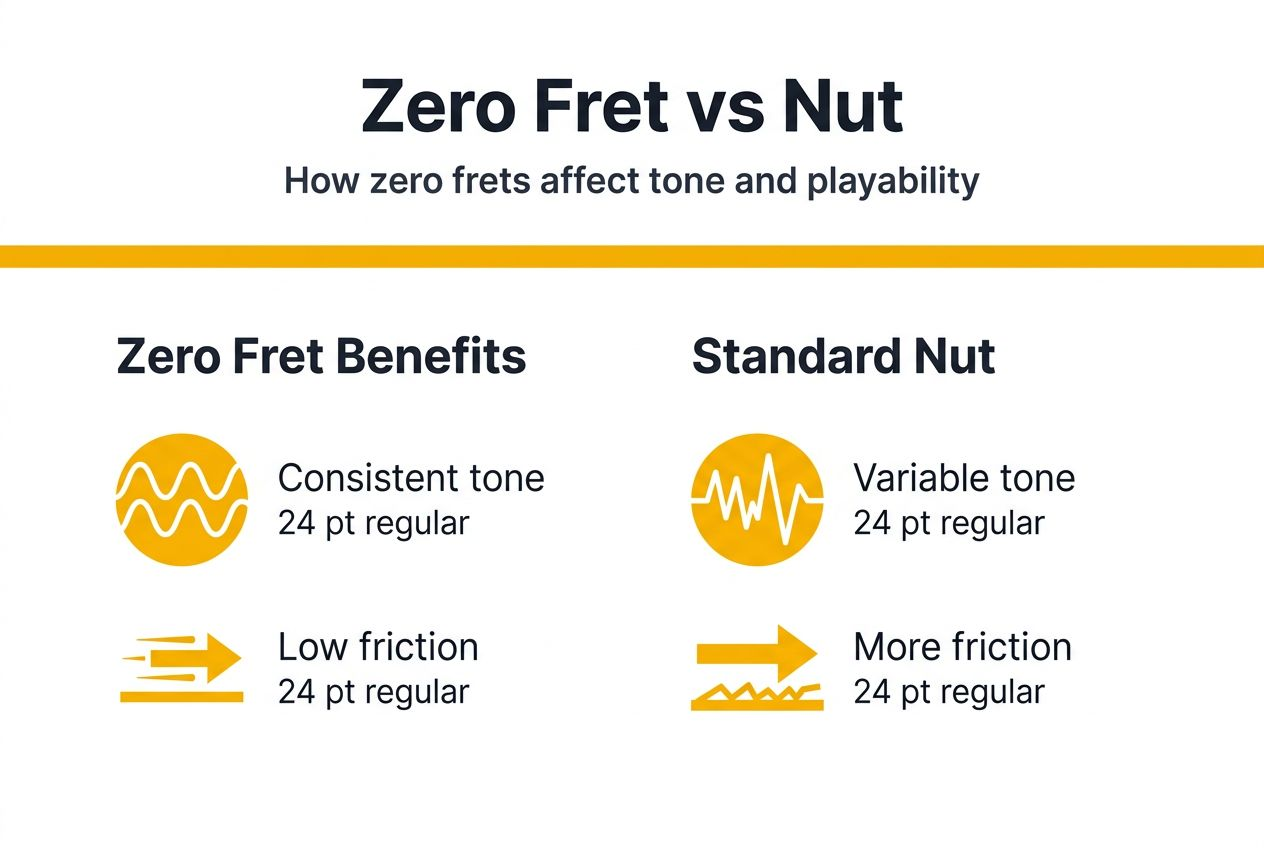
The tonal benefits of zero frets stem from their ability to create consistency across your guitar’s range. It is claimed that with a zero fret, the sound of an open string more closely approximates the sound of a fretted string, eliminating the jarring timbral shift many players notice when moving between open and fretted positions. This uniformity proves especially valuable for chord work and melodic passages mixing both positions.
Friction reduction represents another major advantage. Open strings have a stronger, more resonant tone and improved tuning stability because strings glide more freely across the polished fret surface. When you bend strings or use vibrato, strings glide freely on the polished fret, and return to tune fast and reliably, minimising the binding issues that plague traditional nut designs.

Not every musician agrees zero frets produce superior tone compared to high-quality bone or synthetic nuts. Some argue that traditional nut materials contribute desirable warmth and complexity that metal frets cannot replicate. These debates often come down to musical genre, playing style, and personal tonal preferences rather than objective superiority.
Playability improvements manifest in several practical ways:
- Clearer chord voicings result from uniform string vibration characteristics across open and fretted notes
- String bending requires less finger pressure because reduced friction allows smoother movement
- Tuning stability increases during aggressive playing techniques like tremolo use or heavy bends
- Open position work sounds more balanced with fretted passages in the same musical phrase
- Sustain and resonance improve because energy transfers more efficiently through consistent contact points
Regular guitar fret maintenance becomes even more critical with zero fret systems. Keeping your zero fret clean and polished ensures strings continue gliding smoothly, whilst neglect creates the same binding problems zero frets aim to eliminate. Combining zero fret technology with proper guitar setup guide practices maximises both tonal and playability advantages.
Pro tip: Clean your zero fret with the same products and techniques you use for regular frets, paying special attention to string contact points where dirt and oxidation accumulate most rapidly.
Zero fret compared to different nut types
Choosing the right nut can elevate your sound, make your bends smoother, your chords clearer, and your guitar’s overall playability even more enjoyable. Understanding how zero frets stack up against alternative nut designs helps you make informed modification decisions.
| Nut Type | Key Features | Advantages | Disadvantages |
|---|---|---|---|
| Standard nut (bone/plastic) | Traditional design, nut sets string height and spacing | Familiar tone, wide material choices, easy replacement | Standard nut design often causes friction, leading to tuning instability especially with tremolo use |
| Compensated nut | Adjustable saddles for each string | Improved intonation at open positions | Complex installation, higher cost, doesn’t address friction issues |
| Locking nut | Clamps strings for tremolo stability | Excellent tuning stability with whammy bars | Requires routing, limits tonal warmth, complicates string changes |
| Roller nut | Bearings reduce string friction | Smoother bending and vibrato | Retains traditional height setup, mechanical complexity |
| Zero fret system | Zero fret approach reduces string contact in the nut by 93% | Consistent tone, minimal friction, easy maintenance | Requires fret-level precision, unfamiliar to some techs |
Locking nuts deliver superior tuning stability for tremolo enthusiasts but don’t address the tonal inconsistency between open and fretted strings that zero frets tackle. Roller nuts reduce friction effectively yet maintain traditional string height variations that create timbral differences across positions.
When selecting between nut styles or zero fret systems, consider these factors:
- Playing style priorities: tremolo users benefit from locking nuts whilst tone-focused players prefer zero frets
- Maintenance comfort: zero frets require fret-level upkeep whilst standard nuts need periodic replacement
- Tonal goals: uniform sound across positions favours zero frets, traditional warmth suggests quality bone nuts
- Reversibility needs: retrofit zero fret systems allow experimentation without permanent modification
- Technical skill: installing locking nuts requires routing expertise whilst zero fret retrofits offer simpler installation
Zero frets appeal particularly to guitarists prioritising open string tone quality and sustain. The nut continues regulating string spacing even with zero frets installed, maintaining proper string alignment whilst the zero fret handles height uniformity. Exploring guitar nut types overview provides additional context for understanding how these components interact.
Pro tip: If you frequently use open tunings or play styles emphasising open strings, zero fret systems offer proportionally greater benefits than for players who rarely use open position work.
How to incorporate zero fret technology: retrofit options and setup tips
ZerO Glide allows players to enjoy zero fret benefits without needing a new instrument, making this technology accessible to guitarists with existing instruments. These retrofit systems combine a traditional nut for string spacing with an integrated zero fret component that handles height control. Best of all, ZerO Glide requires no manipulation to your instrument and can be swapped back to a conventional nut if you decide the system doesn’t suit your preferences.
Follow these steps to install or switch to a zero fret replacement nut:
- Measure your current nut width, string spacing, and slot depths to ensure proper zero fret nut sizing and fit.
- Loosen strings completely and carefully remove the existing nut, noting its orientation and any shims used for height adjustment.
- Clean the nut slot thoroughly, removing old adhesive, wood debris, and dirt that could affect the new nut’s seating.
- Test fit the zero fret nut without adhesive, checking that string spacing matches your bridge saddle positions and the zero fret sits level.
- Apply minimal adhesive to the nut slot base, allowing easy future removal whilst preventing movement during play.
- String the guitar to pitch and check action, intonation, and string height uniformity across all positions.
- Make final adjustments to truss rod, bridge height, and intonation to optimise the zero fret system’s performance.
Correct string spacing proves critical because the nut portion of zero fret systems still handles horizontal alignment. Misaligned strings create uneven tension distribution and playability problems regardless of how well the zero fret controls height. Nut alignment matters equally, as any tilt or gap under the nut translates directly to inconsistent string action.
Setup after fitting a zero fret replacement requires attention to overall guitar geometry. Check that your neck relief, bridge height, and pickup positions all complement the new zero fret configuration. Some guitars need minor truss rod adjustments to accommodate the subtle action changes zero frets introduce.
Easy reversibility encourages experimentation without commitment anxiety. You can test zero fret sound during practice sessions, record with both systems for comparison, and make informed long-term decisions based on real playing experience rather than theoretical advantages. Learning guitar personalisation tips helps you integrate zero fret upgrades into broader instrument optimisation efforts.
Pro tip: After installing a zero fret system, play for at least a week before making final setup adjustments, allowing your technique and ear time to adapt to the new tonal characteristics and feel.
Explore premium guitars and accessories at MusicStreet
Now that you understand zero fret benefits and installation options, exploring quality instruments where you can experience these systems firsthand makes practical sense. At MusicStreet, we offer premium guitars featuring various nut configurations, including zero fret systems and high-quality traditional setups. Our expert staff can demonstrate the tonal differences and help you identify which approach suits your playing style.

Quality accessories support your instrument maintenance and optimisation efforts. Whether you’re retrofitting zero fret technology or maintaining existing systems, proper tools and components ensure professional results. Our comprehensive guitar nut guide complements your zero fret knowledge with practical insights into nut materials, installation techniques, and troubleshooting common setup issues. Visit our Huntingdon showroom or browse online to discover how the right components and expert guidance elevate your playing experience.
Frequently asked questions
What exactly is a zero fret on a guitar?
A zero fret is a metal fret positioned where the nut normally sits, setting string height to match other frets precisely. The nut remains behind the zero fret, spacing strings horizontally whilst the zero fret controls their vertical position.
Does a zero fret affect string spacing?
No, the nut still handles string spacing on zero fret guitars. The zero fret only controls string height, leaving horizontal alignment entirely to the nut positioned behind it.
Are zero frets better than traditional bone nuts?
This depends on your tonal priorities and playing style. Zero frets create consistent tone between open and fretted strings with superior tuning stability, whilst quality bone nuts offer warmth some players prefer.
How do zero frets improve tuning stability?
Zero frets reduce string friction by over 90% compared to traditional nuts, allowing strings to glide smoothly and return to pitch quickly after bending or vibrato. The polished metal surface minimises binding that causes tuning problems.
Can I add a zero fret to my existing guitar?
Yes, retrofit systems like ZerO Glide allow you to add zero fret benefits without permanent guitar modification. These replacement nuts combine traditional spacing functions with integrated zero fret technology and can be swapped back to conventional nuts easily.
Recommended
- What Is Fuzz? Complete Guitar Effect Overview – MusicStreet
- Understanding What the Perfect Guitar Tone Is for You | MusicStreet
- ultimate guitar features: Defining the Perfect Instrument – MusicStreet
- Clean Guitar Frets: Step-by-Step Guide for Musicians – MusicStreet
- Violin F-Hole Design Explained: Impact on Tone



Share:
Step by step guitar setup guide for optimal playability