


Over 60 percent of british guitarists experience discomfort from poorly fitted straps, impacting their enjoyment and technique. With the right strap, you safeguard your posture and make every practice session smoother. From strap width to secure attachment and subtle adjustments, these steps give you the confidence and comfort needed for better performance and long term well being.
Table of Contents
- Stage 1: Choose the Right Guitar Strap for Your Needs
- Stage 2: Set Strap Length for Optimal Playing Position
- Stage 3: Securely Attach Strap to Guitar for Stability
- Stage 4: Adjust Strap for Comfort and Balance
- Stage 5: Test Your Guitar Setup in Playing Position
Quick Summary
| Essential Insight | Detailed Explanation |
|---|---|
| 1. Choose a Suitable Width | Selecting a guitar strap between 2.5 to 4 inches wide helps distribute weight evenly, reducing shoulder strain. |
| 2. Adjust Strap Length Properly | Set your strap to match your seated playing height to maintain ergonomic comfort and prevent awkward adjustments while performing. |
| 3. Secure Strap with Strap Locks | Use strap locks to prevent accidental disconnections, ensuring your guitar remains stable during energetic performances. |
| 4. Maintain Balance and Comfort | Adjust your strap height to keep your elbows relaxed and ensure easy access to the fretboard without physical strain. |
| 5. Test Setup in Playing Position | Perform various techniques while standing to evaluate comfort and playability, ensuring your setup feels natural and effortless. |
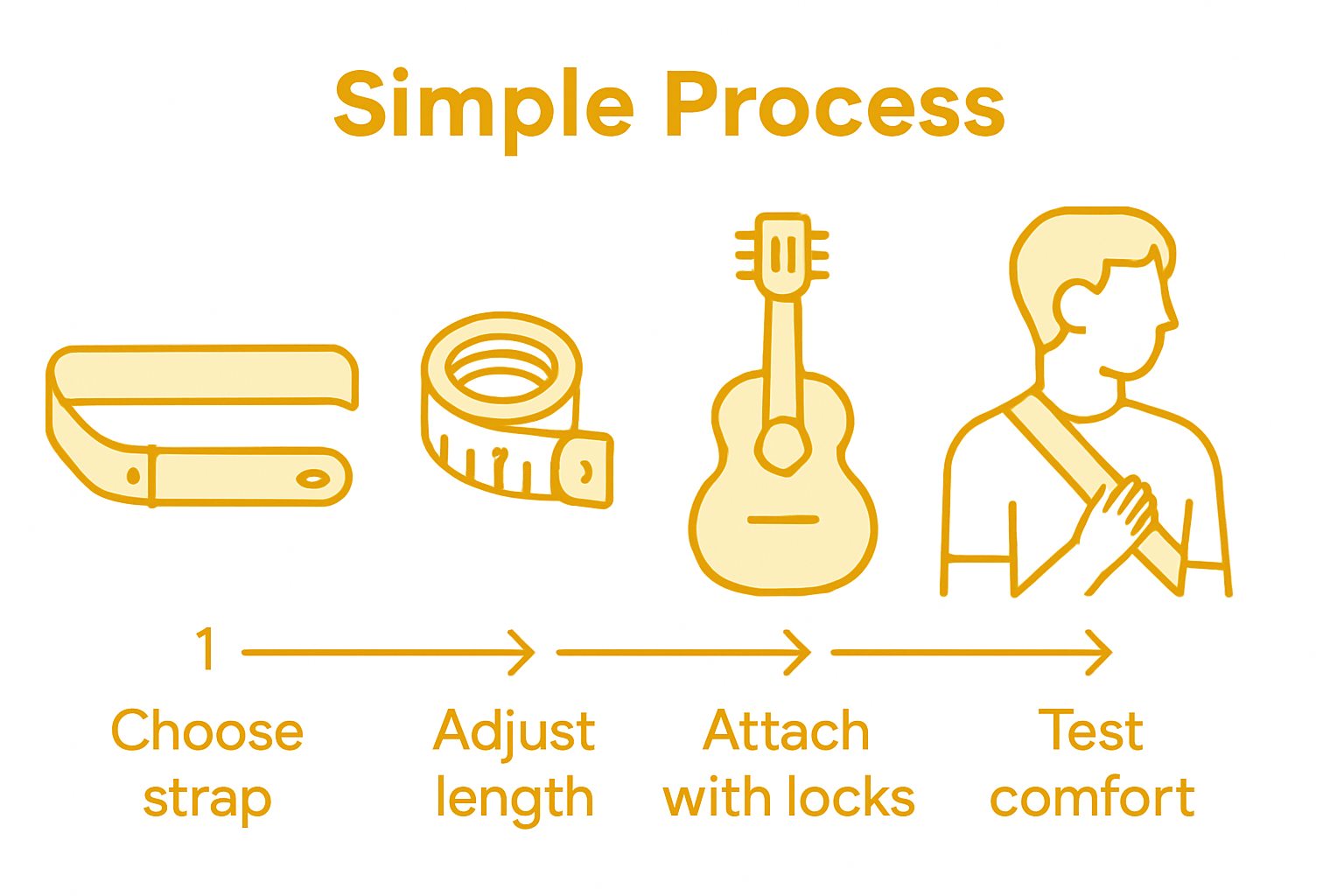
Stage 1: Choose the Right Guitar Strap for Your Needs
Picking the perfect guitar strap goes beyond simple aesthetics. Your choice directly impacts playing comfort, performance quality, and long-term physical health. Understanding how different strap characteristics influence your playing experience will help you make an informed decision.
Width matters significantly when selecting a guitar strap. Wide straps between 2.5 to 4 inches distribute instrument weight more evenly, reducing shoulder strain during extended playing sessions. Consider straps crafted from materials like leather that naturally conform to your body shape over time. Leather adapts to your shoulder contours, providing personalised comfort that synthetic materials cannot match.
Beyond width, prioritise padding and adjustability. A high-quality strap should feature memory foam or neoprene padding that provides support without adding unnecessary bulk. Adjustable length is crucial as it accommodates different playing styles and body types. Look for straps with secure buckles or sliding mechanisms that allow precise length customisation. A non slip surface will prevent unwanted movement during passionate performances, ensuring your instrument remains stable and secure.
A pro tip for guitarists: always test the strap before purchasing. Walk around, simulate playing positions, and assess how the strap feels against your shoulder. Your comfort translates directly into better musical performance.
Stage 2: Set Strap Length for Optimal Playing Position
Adjusting your guitar strap length is a crucial step in achieving comfortable and efficient playing technique. Getting this right means finding that perfect sweet spot where your instrument feels like a natural extension of your body, allowing you to perform with maximum ease and minimal physical strain.

Setting the strap length to mirror your seated playing position helps maintain a consistent and ergonomic approach to your music. This means positioning the guitar at the same height and angle you would experience when sitting down. By doing so, you create muscle memory that translates smoothly between seated and standing performances, reducing the likelihood of awkward adjustments mid-song.
To find your ideal strap length, start by sitting with your guitar in a comfortable playing position. Measure the distance from your seated position to where the guitar naturally rests. Then, adjust your standing strap to replicate this exact positioning. This approach supports a natural wrist angle and enhances overall playability, making complex techniques like bends and intricate fretwork feel more intuitive and less physically demanding.
Pro tip: Make small incremental adjustments. A difference of just a few centimetres can significantly impact your playing comfort and technical precision. Listen to your body and be prepared to make fine tunings until the strap feels perfect.
Stage 3: Securely Attach Strap to Guitar for Stability
Securing your guitar strap is more than a simple attachment task it is a critical step in protecting your instrument and ensuring a confident performance. The right connection between your strap and guitar can mean the difference between a smooth performance and a potential catastrophic drop.
Strap locks are highly recommended to prevent accidental slippage during energetic playing. These ingenious devices provide an extra layer of security that standard strap buttons cannot match. Traditional strap buttons can gradually loosen over time, creating a risky situation where your guitar might unexpectedly disconnect mid performance. Professional musicians understand that investing in quality strap locks is a small price to pay for instrument safety.
When attaching your strap, carefully align the strap end with the guitar’s strap buttons. Ensure a snug fit by gently pulling the strap to test its stability. Ergonomic straps with padded shoulders can additionally reduce playing discomfort while providing a secure connection. Pay attention to the material and design of both your strap and attachment points to guarantee maximum stability and comfort.
Pro tip: Always perform a gentle pull test before each performance. A quick tug can reveal potential weak points in your strap attachment and prevent potential instrument damage.
Stage 4: Adjust Strap for Comfort and Balance
Finding the perfect balance with your guitar strap transforms your playing experience from merely functional to genuinely comfortable. Your goal is to create an ergonomic setup that feels like a natural extension of your body, allowing you to play with maximum efficiency and minimal physical strain.
Proper strap adjustment is crucial for maintaining relaxed playing posture. The ideal positioning allows your elbows to remain relaxed and provides unrestricted access to the entire fretboard. Start by standing in your typical playing stance and adjusting the strap length so that the guitar sits at a height where your fretting hand can easily reach all frets without stretching or contorting your wrist.
Pay close attention to how the guitar sits against your body. The instrument should feel balanced and stable, not tilting too far forward or hanging too low. Your shoulders should remain level and tension free, with the guitar’s weight distributed evenly. A good rule of thumb is to ensure your playing position mimics the comfort and accessibility you experience when sitting down.
Pro tip: Practice subtle strap adjustments while playing. Small millimetre changes can make substantial differences in overall playing comfort and technical precision. Listen to your body and be willing to make incremental modifications until everything feels just right.
Stage 5: Test Your Guitar Setup in Playing Position
Testing your guitar setup is the final crucial step in ensuring optimal comfort and playability. This process transforms all previous adjustments into a refined playing experience that feels natural and effortless.
Comprehensive guitar setup techniques involve more than just visual checks. Begin by standing in your standard playing position and performing a series of technical assessments. Play through different musical styles and techniques that represent your typical performance range. Pay attention to how the guitar feels during complex chord transitions, intricate picking patterns, and extended playing sessions.
Evaluate your setup across multiple dimensions. Check your wrist angle during fretting. Assess whether you can reach all fretboard positions comfortably without straining. Observe how the guitar balances against your body when playing seated and standing. Listen carefully to ensure that your playing technique remains consistent and unimpeded by any physical discomfort or awkward positioning.
Pro tip: Record a short video of yourself playing. This objective perspective will reveal nuanced details about your setup that might feel imperceptible during actual performance. Small adjustments can make significant differences in your overall playing comfort and technical execution.
Discover the Perfect Guitar Strap and Setup at MusicStreet
Finding the ideal guitar strap is essential to overcome discomfort and improve your playability, just as the article explains. Many guitarists struggle with shoulder strain, unstable instruments, and awkward positioning which can hinder performance and even cause long-term physical issues. At MusicStreet, we understand these challenges deeply. Our carefully selected range of quality guitar straps, including adjustable and padded designs, will help you achieve the balance and comfort you need for every session.

Experience personalised service from experts who offer professional setup and advice to refine your strap length and guitar balance perfectly. Whether you prefer electric, acoustic, or bass guitars, our store in Huntingdon and online platform at MusicStreet provide everything to support your musical journey. Act now to explore reliable straps, secure strap locks, and expert fittings that guarantee stability and comfort during your performances. Visit MusicStreet online and transform your playing experience today.
Frequently Asked Questions
How do I choose the right guitar strap width for comfort?
Choosing a guitar strap width between 2.5 to 4 inches will provide better weight distribution, reducing shoulder strain during long playing sessions. Test different widths to find one that feels comfortable against your shoulder.
What is the best way to adjust my guitar strap for optimal playing position?
To adjust your guitar strap correctly, measure the distance from your seated position to where the guitar naturally rests, then replicate this length for standing. Make small adjustments until the guitar feels balanced and helps maintain a natural wrist angle.
How can I ensure my guitar strap is securely attached?
Use strap locks to prevent accidental slippage and ensure a snug fit at the strap buttons. Always perform a gentle pull test before playing to check for a secure connection.
What should I consider when adjusting my guitar strap for balance?
Adjust your guitar strap so that the instrument sits comfortably against your body without tilting or hanging too low. Check that your elbows are relaxed and unrestricted while accessing the fretboard freely.
How can I test my guitar setup for comfortable playability?
Test your guitar setup by playing in your standard position and assess comfort during different techniques. Record a short video of yourself playing to identify any areas needing adjustment for improved comfort or technique.







Share:
Guitar Strap Fitting Guide for Perfect Playing Comfort
What Is a DI Box? Unlocking Pristine Sound Quality