

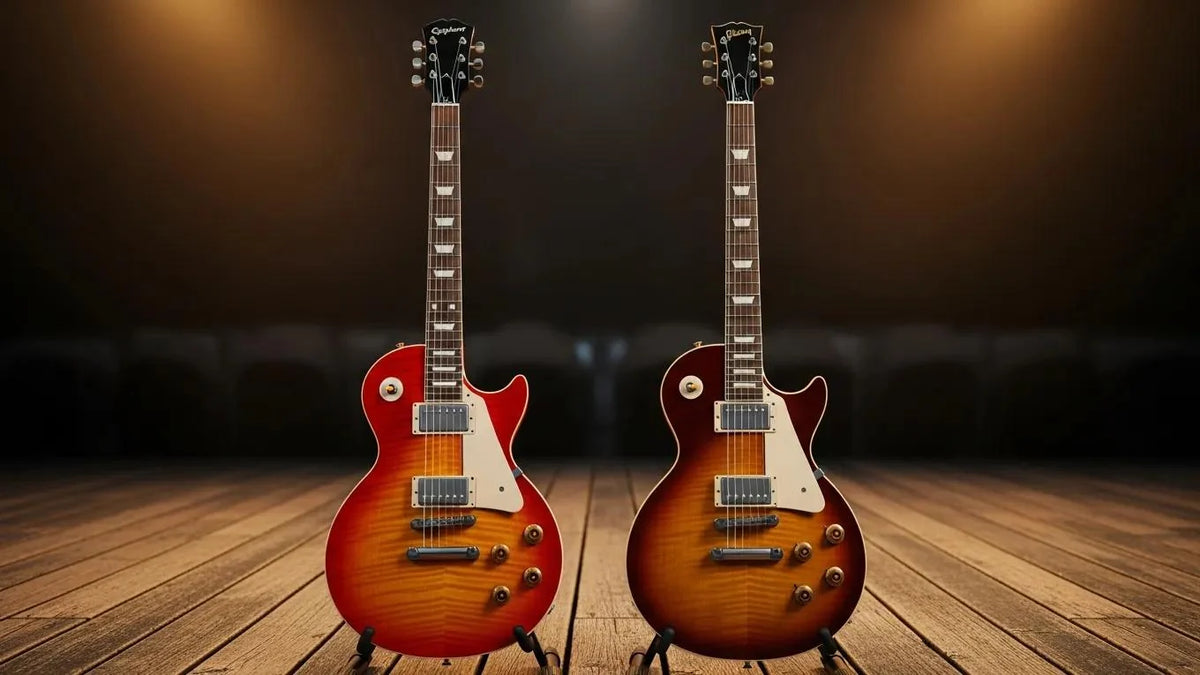
Shop Gibson Les PaulShop Epiphone Les Paul
Epiphone Les Paul vs Gibson Les Paul: Is the Upgrade Worth It?

By Tony Rawson, MusicStreet
The debate between Epiphone Les Paul and Gibson Les Paul guitars is common among musicians seeking quality instruments. This article explores the key differences between these iconic brands to help you decide if upgrading to a Gibson Les Paul is worth it. We cover construction, sound quality, playability, and price differences, alongside how MusicStreet can assist your choice. Many guitarists weigh affordability against premium quality; this guide clarifies that choice by examining body materials, sound characteristics, and overall value.
What Are the Key Differences Between Epiphone and Gibson Les Paul Guitars?
Comparing Epiphone and Gibson Les Paul guitars reveals differences in build quality, sound, and target audience. Gibson guitars are often the gold standard, crafted with higher-quality materials and superior workmanship. Epiphone offers a budget-friendly alternative that still delivers solid performance. You can find a great range of Epiphone guitars for sale at MusicStreet, making it easy to get started with quality instruments.
How Do Body Materials and Construction Affect Tone and Playability?
Body materials and construction techniques greatly influence tone and playability. Gibson typically uses a solid mahogany body with a carved maple top, producing a rich, warm sound with excellent sustain. Epiphone models also feature mahogany but may use different woods or construction methods affecting tonal quality. Material choice impacts both sound and feel, so players should consider their preferences carefully.
Another key difference is the finish. Gibson Les Pauls use nitrocellulose lacquer, applied in multiple thin coats, requiring more labour and drying time than Epiphone’s polyurethane finish. Nitrocellulose lacquer is porous, allowing the wood to breathe and vibrate freely. Over time, it ages with characteristic checking and wear patterns that many players find aesthetically and tonally desirable. Epiphone’s polyurethane finish is thicker and more durable, offering better resistance to temperature and humidity changes. This makes it practical for gigging musicians needing a robust instrument that withstands frequent travel and performance without delicate care.
Additionally, the unplugged resonance of a Gibson Les Paul is noticeably fuller and more complex. This results from higher-grade tonewoods, thinner finish, and tighter construction tolerances. Acoustically, a Gibson Les Paul exhibits richer sustain and harmonic complexity, which translates to its plugged-in tone, especially in mid-range and upper harmonics. While an Epiphone Les Paul sounds good unplugged, it generally lacks the same depth and resonance, reflecting its more economical construction.
How Does Sound Quality and Playability Compare Between Epiphone and Gibson Les Paul Models?
Sound quality and playability are crucial when selecting a guitar, and both brands have unique characteristics.
What Pickup Types and Electronics Define Each Brand's Signature Sound?
Pickups and electronics play a significant role in defining each brand’s sound. Gibson models typically feature humbuckers that provide a warm, full-bodied tone, ideal for rock and blues. Epiphone guitars also use humbuckers, but quality and type vary, leading to a slightly different tonal character.
| Hardware Component | Gibson Les Paul | Epiphone Les Paul |
|---|---|---|
| Bridge | ABR-1 / Nashville Tune-o-matic — brass saddles, tighter string spacing, superior sustain transfer | LockTone Tune-o-matic — solid performer, lighter alloy saddles |
| Nut | Graph Tech TUSQ or bone — harder material, better sustain and tuning stability | Nylon/synthetic — functional but less precise |
| Tuners | Grover Rotomatic / Gibson Deluxe (18:1 gear ratio) — finer, more precise tuning | Grover (14:1 gear ratio) — reliable but less fine adjustment |
| Electronics | Hand-wired, CTS 500k pots, Orange Drop capacitors — smooth taper, warm roll-off | PCB-mounted — consistent and reliable, slightly more abrupt taper |
| Pickups | Burstbucker series — slightly overwound, raw, dynamic output | ProBucker series — well-voiced, balanced, excellent value |
Gibson Les Pauls employ hand-wired electronics, where components are soldered point-to-point on a traditional wiring harness. This includes CTS 500k potentiometers, known for smooth, consistent taper, and Orange Drop capacitors (0.022µF), regarded as the gold standard for tone and volume roll-off. This setup allows refined control over tonal dynamics, with volume roll-off that retains clarity and warmth as you back off the knob. Epiphone uses printed circuit board (PCB) electronics, which are consistent and reliable but less serviceable and generally have a slightly less refined taper. Epiphone’s volume roll-off can feel more abrupt, lacking some subtlety found in Gibson’s wiring. Both systems work well, but Gibson’s hand-wired electronics offer a meaningful upgrade in tonal nuance and player control.
Which Neck Profiles and Setups Suit Different Playing Styles?
Neck profiles and setups are essential for playability. Gibson Les Pauls often feature thicker neck profiles, preferred by some for chord work and soloing. Epiphone models may have slimmer necks, easier for faster, technical styles. Neck profile choice greatly affects comfort and performance.
What Is the Price Difference and Value Proposition of Epiphone vs Gibson Les Paul Guitars?
Price differences are significant, with Gibson models commanding higher prices due to premium materials and craftsmanship.
How Does Price Reflect Quality and Features in Each Model?
Price reflects quality and features. Gibson Les Pauls start around £2,200, offering superior build, sound, and playability, making them worthwhile for serious musicians. Epiphone models range from £500 to £1,000, providing excellent value for beginners or budget-conscious players. This disparity highlights the importance of considering your playing level and goals. Additionally, purchasing used second-hand guitars can be an economical way to access quality instruments from both brands.
Is the Gibson Les Paul Worth the Extra Cost for Beginners and Professionals?
For beginners, a Gibson Les Paul may seem extravagant, but its quality can enhance playing experience and longevity. Professionals often prefer Gibson for reliability and superior sound, making it a worthy investment. The decision depends on individual needs and budget.
How Can MusicStreet’s Part Exchange and Setup Services Facilitate Your Upgrade?
MusicStreet offers services to help upgrade from an Epiphone to a Gibson Les Paul.
What Are the Benefits of MusicStreet’s Part Exchange Program for Les Paul Upgrades?
MusicStreet's part exchange program lets you trade in your current guitar for credit towards a new purchase. This provides convenience and fair valuation, easing upgrades without a heavy financial burden.
How Does Professional Setup Enhance Your Les Paul Playing Experience?
A professional setup greatly improves your Les Paul experience. MusicStreet offers setup services ensuring your guitar is perfectly adjusted for optimal playability, making a significant difference in performance. Proper setup includes neck, action, and intonation adjustments, helping you get the most from your instrument.
The MusicStreet Verdict
Choosing between an Epiphone and a Gibson Les Paul depends on your budget, playing style, and goals. Epiphone offers excellent value for beginners and those seeking a reliable instrument without premium cost. Gibson Les Pauls provide superior materials, craftsmanship, and tonal nuance, ideal for professionals and serious players. The nitrocellulose finish, hand-wired electronics, and higher-grade hardware contribute to Gibson’s richer sound and feel. MusicStreet’s part exchange and setup services make upgrading accessible and ensure your guitar performs at its best. Ultimately, investing in a Gibson Les Paul is worthwhile if you prioritise tone, playability, and longevity, while Epiphone remains a solid choice for quality on a budget.
Explore Gibson Les Paul Guitars
Discover the premium craftsmanship and iconic sound of Gibson Les Paul guitars.
Explore Epiphone Les Paul Guitars
Find affordable, quality Les Paul guitars perfect for beginners and enthusiasts.

Share:
Fender Stratocaster Buyer's Guide: Which Model Is Right for You?
Buy Epiphone Guitars in the UK: Electric & Acoustic Models for Every Player