


The best guitar websites offer a combination of trusted retail shops, structured learning platforms, and active community forums. These resources help players progress efficiently by providing quality instruments, comprehensive lessons, and peer support. Engaging with multiple site types enhances motivation and accelerates skill development throughout the guitar journey.
Guitar websites are online platforms that serve every stage of your guitar journey, from buying your first instrument to mastering advanced techniques and connecting with fellow players. The best sites combine rich product catalogues, structured lessons, tab libraries, and active forums into one accessible space. Platforms like JustinGuitar, Good Guitarist Academy, and Musicstreet each serve distinct needs, whether you are shopping for a PRS, working through beginner chords, or hunting down accurate tabs for a favourite song. Knowing which type of site to use, and when, saves you time and money.
1. What are the best guitar websites for buying instruments?
The top guitar retail sites stock instruments across every price point, from entry-level acoustics to high-end electrics from Gibson, Fender, PRS, and Martin. A quality retail site does more than list products. It provides detailed specifications, multiple photographs, sound samples where possible, and honest descriptions of condition for pre-owned stock.

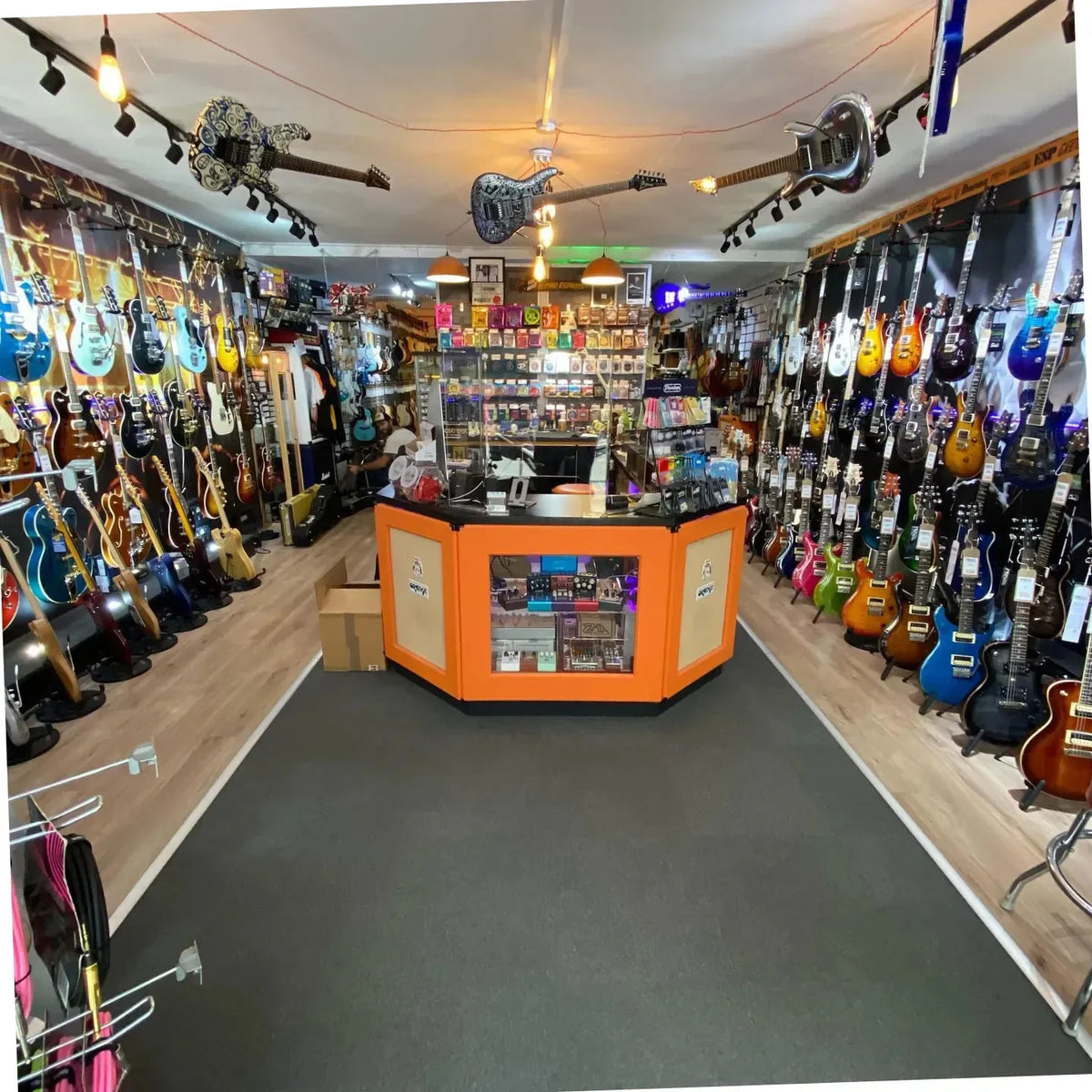
Musicstreet is a UK specialist retailer based in Huntingdon, Cambridgeshire, offering new and pre-loved guitars with professional inspection and expert setup included. Every instrument is checked before dispatch, which removes the guesswork that often comes with online purchases. Free UK delivery on qualifying orders and insurance-backed warranties add further confidence for buyers.
When assessing any guitar retail site, look at three things: the breadth of brands stocked, the clarity of product information, and the quality of post-sale support. A site that lists a guitar without setup details or condition notes is not serving you well. Musicstreet’s approach of offering in-store tryouts alongside online shopping is a model worth noting, particularly for players who want to feel an instrument before committing.
Pro Tip: If you are buying online without trying first, read the guitar shopping tips on Musicstreet’s blog before you browse. Knowing what to look for in a product listing prevents costly mistakes.
2. Which online guitar lesson websites offer the best learning?
Structured online academies are the most cost-efficient way to learn guitar. Structured academies cost around $14.95 per month, compared to private one-hour sessions priced at $60–$90. That difference is significant over a year of consistent practice.
Good Guitarist Academy is a strong example of what a well-built lesson platform looks like. It offers five comprehensive courses, community access, play-along tracks, and discounted sheet music for a single monthly fee. The structured progression means you are never guessing what to practise next.
For players who prefer a more personal approach, 1-on-1 beginner sessions range from $27–$52 per session depending on the instructor and platform. That format suits learners who need direct feedback on posture, technique, or music theory concepts that are hard to self-assess.
| Feature | Structured academy | 1-on-1 lessons |
|---|---|---|
| Monthly cost | Low (approx. $14.95) | High ($27–$52 per session) |
| Progression structure | Pre-built curriculum | Instructor-led |
| Community access | Often included | Rarely included |
| Flexibility | Learn at your own pace | Scheduled sessions |
| Best for | Self-motivated learners | Players needing direct feedback |
Pro Tip: Free trials last 7–30 days on most platforms. Do not use that time to browse passively. Complete at least two full lessons and post one question in the community forum to judge real value.
3. What video and interface features matter in lesson platforms?
The quality of a lesson platform’s delivery affects how quickly you progress. HD video, split-screen views, and animated tabs significantly improve the learning experience compared to static diagrams or low-resolution recordings. Split-screen views are particularly useful because they show both the fretboard and the instructor’s picking hand simultaneously.
Audio quality on your end matters just as much. Decent speakers or headphones are essential for hearing instructional audio clearly, especially when an instructor is demonstrating subtle tonal differences between techniques. A cheap laptop speaker will not reproduce the nuance of a fingerpicked passage accurately.
Platforms that incorporate live sessions alongside pre-recorded content offer a meaningful advantage. JustinGuitar.com, for example, focuses on musical growth with live sessions and community access, which creates a sense of accountability that pre-recorded lessons alone cannot replicate. That real-time interaction is what keeps many players returning week after week.
4. What guitar tab and resource websites support players best?
Tab websites give you instant access to chord charts, full song transcriptions, and scale diagrams for thousands of tracks. The best platforms organise content by difficulty, genre, and instrument type, so you can filter results rather than scrolling through irrelevant material.
Quality tab resources work best as a complement to formal lessons rather than a replacement. A well-transcribed tab shows you what to play. A good lesson teaches you why it works and how to play it cleanly. Using both together accelerates progress more than either approach alone.
Look for these features when evaluating a tab or resource site:
- Accuracy ratings from verified players, so you can trust the transcription before investing time in it
- Printable formats for sheet music and chord charts, useful for practice away from a screen
- Backing tracks that let you play along in the correct key and tempo
- Music theory sections that explain the theory behind the songs you are learning
- User-submitted corrections, which indicate an active community maintaining content quality
The best resource sites also integrate video demonstrations alongside written tabs. Seeing a passage played at full speed, then slowed down, removes ambiguity that written notation alone cannot resolve.
5. What are the advantages of guitar forums and online communities?
Guitar forums are the most underused resource in most players’ learning toolkit. They provide direct access to players at every skill level, from complete beginners to session musicians with decades of experience. That range of knowledge in one place is genuinely difficult to replicate elsewhere.
The benefits of active guitar community websites extend beyond simple Q&A. Here is what regular forum participation delivers:
- Gear advice grounded in real experience. Forum members have owned and played the instruments you are researching. Their opinions are based on hours of use, not marketing copy.
- Motivation through accountability. Posting your progress publicly, even in a small community, creates a sense of commitment that practising in isolation does not.
- Troubleshooting support. Whether your intonation is off or you cannot nail a barre chord, someone in a forum has faced the same problem and solved it.
- Tone and setup guidance. Discussions about amplifier settings, pedal chains, and string gauges are detailed and practical in ways that generic articles rarely match.
- Discovery of new music. Forum members share recommendations constantly. You will find artists and styles you would never have encountered through streaming algorithms alone.
Community features reduce practice isolation and increase motivation, which is one of the most consistent findings across guitar learning research. The social element of learning is not a bonus. It is a core driver of long-term progress.
6. How to choose the right guitar website for your needs
Skill level and goals are the primary filters when choosing between guitar websites. A beginner shopping for their first acoustic needs a retail site with clear beginner guidance, not a forum debating the tonal differences between mahogany and rosewood back and sides.
Start by identifying your primary goal. If you are buying, prioritise sites with strong product information, transparent condition descriptions for pre-owned stock, and reliable UK delivery. If you are learning, match the platform to your learning style. Self-directed learners do well with structured academies. Players who need encouragement benefit more from community-led platforms with live sessions.
Budget is a practical constraint worth addressing directly. Online lessons are most effective for foundational skills but rarely replace in-person feedback for advanced techniques. That means a structured online academy is a sound investment for the first year or two, with in-person lessons added later for technique refinement.
Pro Tip: Combining structured paid lessons with free resources like YouTube for song practice gives you the best of both formats. Use the academy for technique and theory, and free platforms for applying those skills to songs you actually want to play.
The most effective approach is to use multiple site types in combination. A retail site for your instrument, a structured academy for lessons, a tab resource for song practice, and a forum for community support covers every dimension of guitar learning without over-relying on any single platform.
If you are a beginner, Musicstreet’s guide to choosing your first guitar is a practical starting point before you commit to any purchase.
Key takeaways
The most effective approach to guitar websites combines a trusted retailer, a structured lesson platform, a quality tab resource, and an active community forum to cover every stage of your development.
| Point | Details |
|---|---|
| Retail sites: prioritise support | Choose retailers that offer expert setup, clear product details, and post-sale assistance. |
| Lesson platforms: compare formats | Structured academies cost far less per month than 1-on-1 sessions and suit self-directed learners. |
| Tab resources: use alongside lessons | Tab sites work best as a complement to formal tuition, not a standalone learning method. |
| Forums: use them actively | Regular community participation builds motivation and provides gear advice no article can match. |
| Free trials: engage fully | Use trial periods to complete real lessons and test community features before subscribing. |
What I have learned from years of watching guitarists use these sites
The pattern I see most often is this: a player finds a great lesson platform, subscribes, watches a few videos, and then drifts away within six weeks. The platform is not the problem. The missing ingredient is almost always community. Players who post in forums, share progress clips, and ask questions publicly stick with it. Players who consume content passively do not.
The other mistake I see regularly is treating retail and learning as separate decisions. The instrument you buy shapes how you learn. A poorly set-up guitar with high action will make chord transitions feel impossible, and no amount of lesson content will compensate for that. Buying from a retailer that inspects and sets up instruments properly, as Musicstreet does, removes a variable that quietly derails many beginners.
My honest recommendation is to resist the temptation to use only free resources. YouTube is genuinely useful for song tutorials, but it has no structure, no progression, and no accountability. A structured academy at under $15 per month is one of the best-value investments in any hobby I can think of. Pair that with an active forum and a well-chosen instrument from a trusted UK retailer, and you have everything you need to make real progress.
The sites that serve guitarists best are not the ones with the most content. They are the ones that make it easy to take the next step, whatever that step happens to be.
— Music
Find your next guitar at Musicstreet
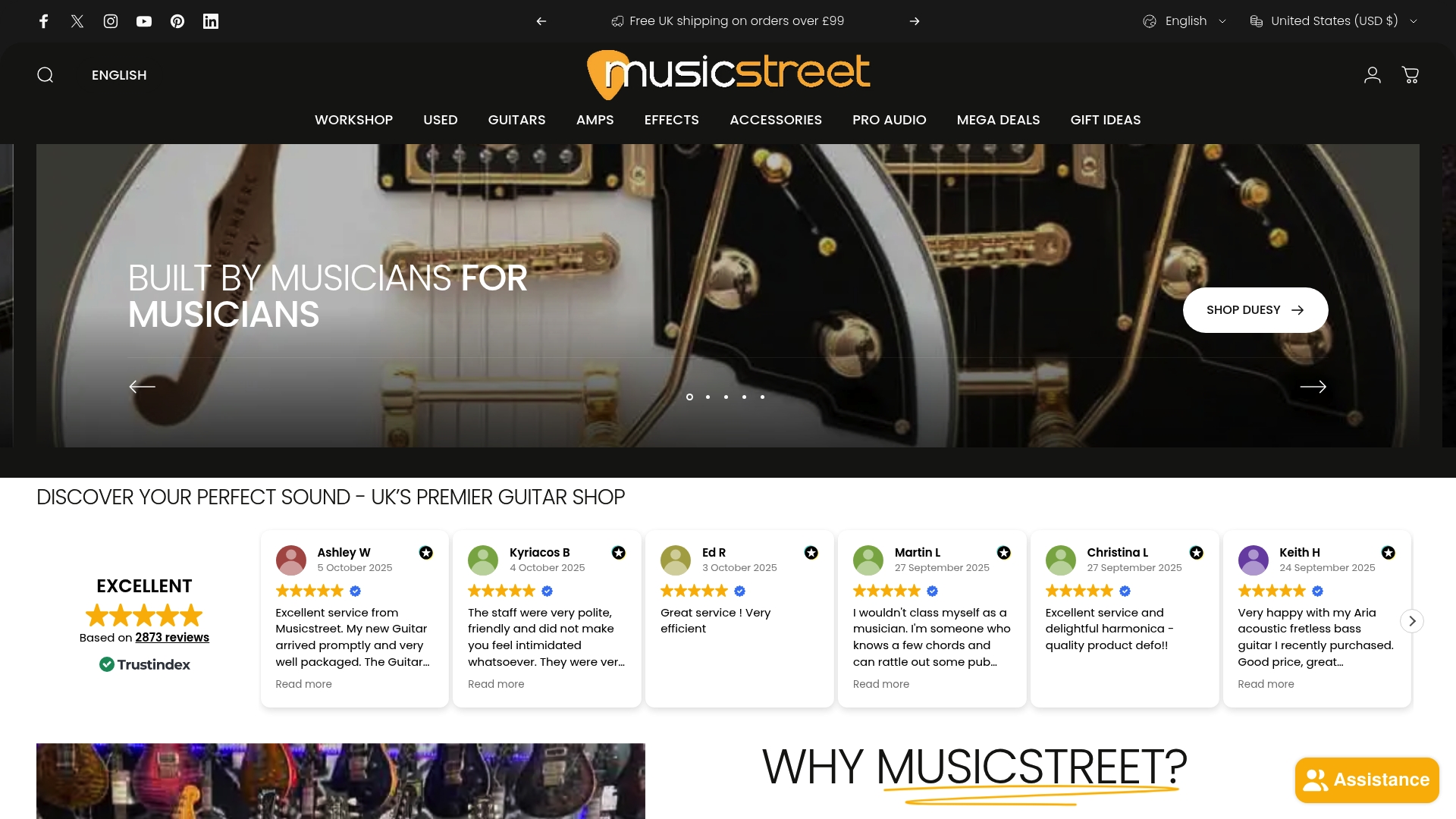
Musicstreet stocks an extensive range of electric, acoustic, and bass guitars from PRS, Gibson, Fender, and Martin, all professionally inspected and set up before dispatch. Whether you are buying your first guitar or adding a premium instrument to your collection, Musicstreet’s team in Huntingdon provides expert guidance at every stage. The site also carries a carefully selected range of pre-loved guitars, each assessed for quality and playability. Free UK delivery is available on qualifying orders, and every purchase is backed by an insurance-supported warranty. Visit Musicstreet’s guitar shop to browse the full range and find the right instrument for where you are in your playing.
FAQ
What types of guitar websites are there?
Guitar websites fall into four main categories: retail shops, online lesson platforms, tab and resource sites, and community forums. Most players benefit from using at least two or three types in combination.
Are online guitar lessons worth paying for?
Structured online academies cost around $14.95 per month and offer far better value than private lessons at $60–$90 per hour. They are most effective for foundational skills and self-directed learners.
How do I know if a guitar tab website is reliable?
Look for user accuracy ratings, active correction threads, and verified transcriptions. Sites with large, engaged communities tend to maintain higher tab quality over time.
What should I look for in a guitar retail website?
Prioritise sites that provide detailed product specifications, clear condition descriptions for pre-owned stock, professional setup before dispatch, and strong post-sale support including returns and warranties.
Do guitar forums actually help you improve?
Yes. Community features on guitar lesson and forum sites reduce practice isolation and increase long-term motivation, which are two of the most consistent factors in sustained progress.


Share:
Acoustic guitar vs electric guitar: first-time buyer's guide
Acoustic vs electric guitar strings: key differences