


- Master volume controls the final amp output and influences tone and feel.
- Proper use of master volume enhances dynamics and tonal richness at different volumes.
- In studio mixing, managing headroom with the master fader is crucial for clarity and balance.
Many guitarists assume that turning up the volume is all there is to getting a great sound. It is not. Master volume is one of the most misunderstood controls on any guitar amplifier, and its role in music production is equally overlooked. Whether you are playing at home, performing on stage, or mixing a track in a DAW, understanding master volume can genuinely transform the way your instrument sounds and feels. This article breaks down exactly how master volume works, why it matters for tone, and how to use it practically across every musical environment you are likely to encounter.
Table of Contents
- Master volume in guitar amplifiers: how it works
- Beyond just volume: how master volume affects tone and amp feel
- Master volume in music production: mixing, DAWs, and headroom
- Practical applications: setting master volume for home, stage, and studio
- A fresh perspective: why mastering master volume transforms your tone
- Explore amps and gear that unlock true tone
- Frequently asked questions
Key Takeaways
| Point | Details |
|---|---|
| Master volume shapes tone | It affects both loudness and the quality of your sound in guitar amps and mixes. |
| Control differs by context | Master volume acts uniquely in amps versus DAW mixing, influencing output and dynamics. |
| Optimal settings matter | Setting master volume properly can unlock richer tone and avoid unwanted distortion. |
| Home use tips | Elevate master volume as much as your space allows for full sound during practice. |
| Mixing headroom essentials | Keep DAW master fader peaks between -6dB and -3dB for clean, professional mixes. |
Master volume in guitar amplifiers: how it works
Before you can use master volume effectively, you need to understand where it sits in your amplifier’s signal chain. A typical guitar amp processes your signal in two main stages: the preamp and the power amp. Your guitar signal enters the preamp first, where gain and EQ shape the tone. The signal then travels to the power amp, which drives the speakers. Master volume sits post-preamp and post-EQ, meaning it controls how much of that shaped signal actually reaches the power amp and speakers.
This position is what makes master volume so powerful. It is not the same as gain, which controls how hard the preamp is being driven, and it is not the same as channel volume, which adjusts the level leaving the preamp stage. Each control does something distinct. Understanding the guitar amp features on your specific amp will help you see how these controls interact.
Here is a quick breakdown of the three main controls:
- Gain: Controls input drive into the preamp. Higher gain means more distortion and harmonic saturation.
- Channel volume: Sets the output level of the preamp channel before the master stage.
- Master volume: Controls the final output level from the power amp to the speakers.
The table below shows how each control differs in function:
| Control | Position in signal chain | Primary effect |
|---|---|---|
| Gain | Preamp input | Distortion and saturation |
| Channel volume | Preamp output | Preamp level balance |
| Master volume | Post-preamp, pre-speaker | Overall output loudness |
One of the most practical benefits of master volume is that it enables high preamp gain at lower volumes. This means you can dial in a rich, driven tone without needing to shake the walls. For anyone reading a beginner amp guide, this distinction is essential knowledge before purchasing your first amp.
“Master volume is the gatekeeper between your tone and your audience. Get it wrong and even the best preamp settings fall flat.”
If you are playing through a tube amplifier, this becomes even more critical. Tube amps respond differently to output levels, and the interaction between the power amp and speakers is a core part of what gives them their character.
Beyond just volume: how master volume affects tone and amp feel
Here is where things get genuinely interesting. Master volume does not just make your amp louder or quieter. It directly influences how the amp feels to play. When the master volume is set low, tones can sound lifeless because the power amp and speakers are not being pushed hard enough to respond dynamically. There is a physical interaction between the power amp, the output transformer, and the speaker cone that only comes alive at higher output levels.
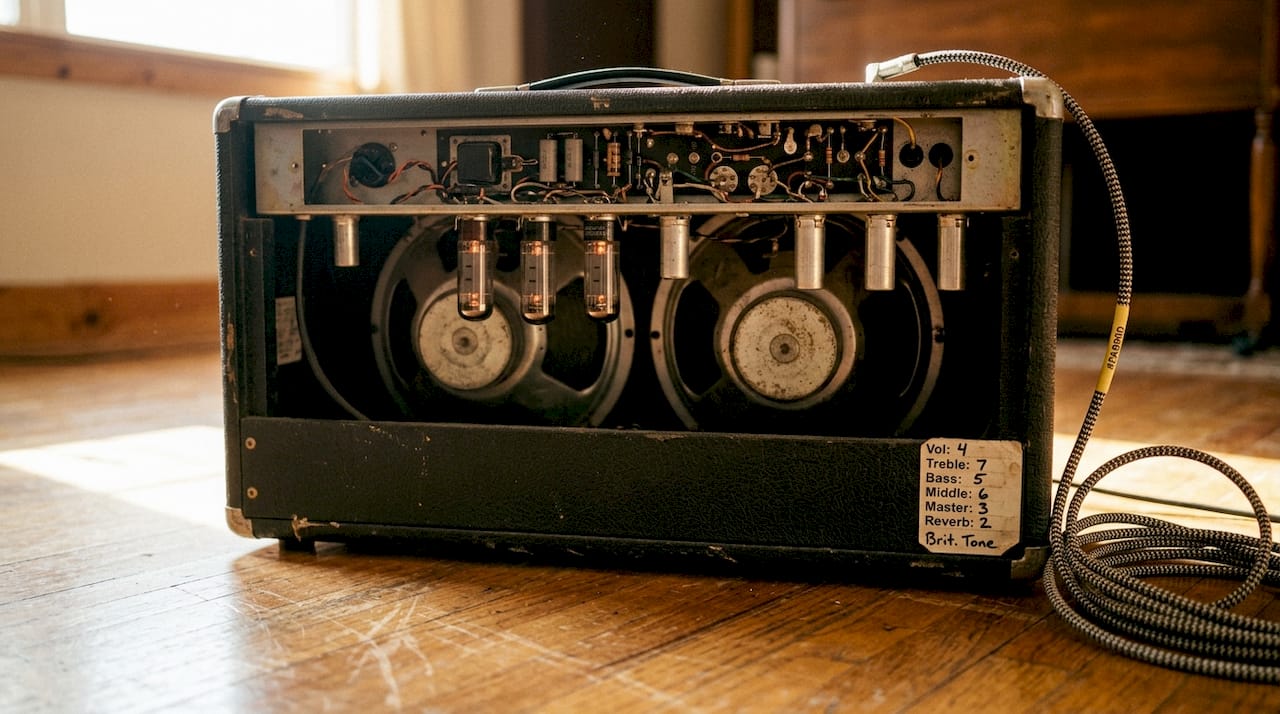
There are also two distinct types of master volume circuits worth knowing about: pre-phase inverter (pre-PI) and post-phase inverter (post-PI). These are not just technical curiosities. Pre-PI masters lose treble at lower settings, which can make your tone sound darker and less defined. Post-PI types affect the power amp drive differently, often preserving more of the original tonal character at lower volumes.
Here is how the two types compare:
| Type | Treble retention | Power amp drive | Best for |
|---|---|---|---|
| Pre-PI master | Loses treble at low settings | Minimal | High-gain styles |
| Post-PI master | Better treble retention | More power amp drive | Clean and mid-gain tones |
The tonal changes you will notice at different master settings include:
- Low master: Thinner sound, less speaker movement, reduced dynamics
- Mid master: Balanced tone, good clarity, moderate feel
- High master: Fuller sound, more speaker compression, enhanced harmonic response
Understanding tube amp tone science helps explain why these differences exist at a physical level. The speaker itself compresses and responds to the signal, adding warmth and character that simply cannot be replicated at low output levels.
Pro Tip: Set your master volume as high as your environment allows before adjusting gain or channel volume. This approach gives you a truer picture of your tone and allows the amp to breathe naturally.
If you are weighing up your options, comparing tube vs digital amps will show you how master volume behaves very differently depending on the technology inside your amp. Looking at examples of guitar amps across different price points also reveals how manufacturers implement master volume in varied ways.
Master volume in music production: mixing, DAWs, and headroom
Switching from amps to studio environments, master volume takes on a new role in mixing and production. In a digital audio workstation (DAW), the master fader controls the overall mix output level to your speakers or monitors. It is separate from gain staging, which happens at the individual track and bus level. Confusing the two is one of the most common mistakes producers make.
Headroom is the key concept here. Headroom refers to the space between your loudest peak and the point at which the signal clips or distorts digitally. Unlike analogue clipping, which can sound warm and musical, digital clipping is harsh and destructive. Protecting your headroom is not optional.
Here is a straightforward gain staging process for your mix:
- Set individual track levels so that no single track is peaking above -12dB.
- Balance your mix at the track and group bus level before touching the master fader.
- Check your mix bus output. Mix bus peaks of -6dB to -3dB are recommended before sending your mix to mastering.
- Use the master fader only to set the final listening level, not to compensate for poor gain staging elsewhere.
- Reference your mix on multiple playback systems to confirm the output level translates well.
The reason the -6dB to -3dB target matters is that mastering engineers need room to work. If your mix is already peaking at 0dB, there is nowhere to go. A well-managed amp headroom guide applies the same principle to the physical world: push the signal too hard and you lose clarity and control.
One practical insight many producers overlook is that the master fader position in a DAW does not affect the relative balance of your mix. It only controls the final output level. This means you should always mix at a comfortable monitoring volume and only adjust the master fader when you are ready to export or print your final mix.
Practical applications: setting master volume for home, stage, and studio
With a clear understanding of its function, here is how you can tailor master volume to fit your playing or production environment.
At home: The temptation is to keep the master low to avoid disturbing others. However, setting master volume as high as comfortable gives you a fuller, more responsive tone even at modest levels. Amps without a master volume control rely on the single volume knob to do everything, which means you have less flexibility. A dedicated practice amp guide will help you find an amp that handles low-volume playing without sacrificing tone.
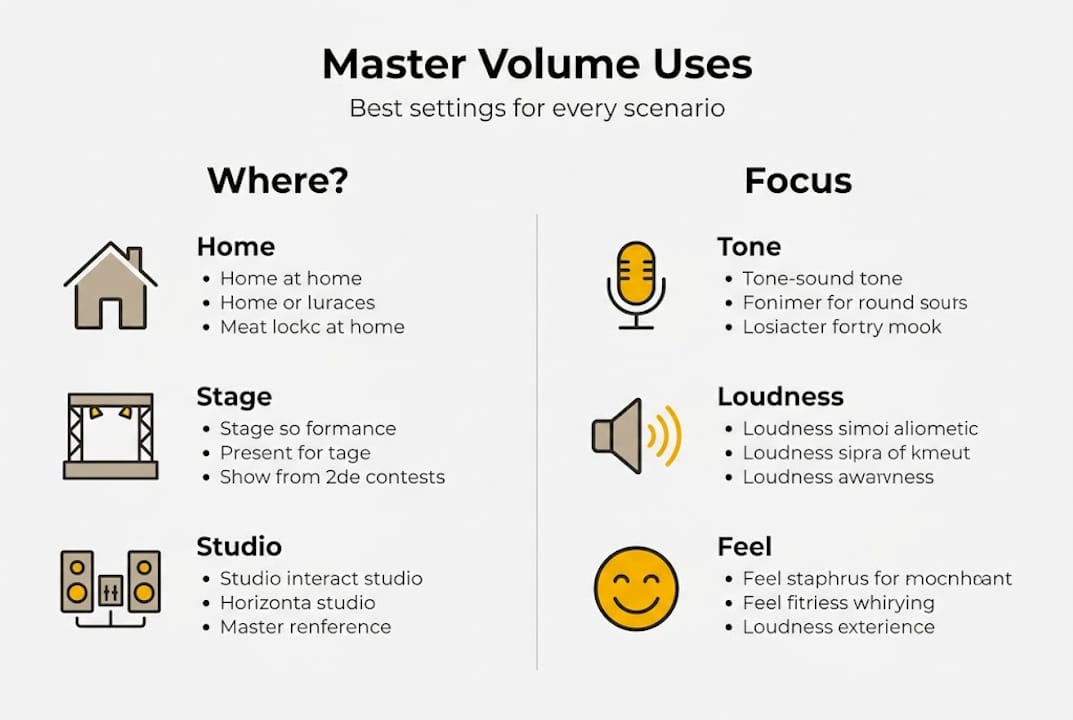
On stage: Here, master volume becomes your primary tool for managing stage volume without losing tone. Set your gain and channel volume for the sound you want, then use the master to match the room. Larger venues need more output; smaller rooms need careful control to avoid overwhelming the space.
In the studio: Whether you are recording a guitar amp or mixing a full production, master volume discipline pays off. When recording, mic placement and amp output interact, so dialling in the right master level affects both the recorded tone and the room sound. Check out best amplifiers for Gibson guitars if you are looking for amps that respond particularly well to careful master volume management.
Pro Tip: When recording a guitar amp, try setting the master higher than you think you need and pulling back the gain slightly. This often produces a cleaner, more dynamic recorded tone that sits better in a mix.
Pitfalls to avoid:
- Never use master volume to compensate for poor gain staging. Fix the source first.
- Do not leave master volume at maximum by default. This removes your ability to push the power amp progressively.
- Avoid setting master too low for extended periods. Your tone will suffer and you will compensate with too much gain.
- Do not ignore master volume when shopping for an amp. Its circuit type matters enormously. Consider boutique amplifier options where master volume implementation is often a key design feature.
A fresh perspective: why mastering master volume transforms your tone
Most musicians focus obsessively on gain. They chase preamp settings, swap pedals, and experiment endlessly with EQ. Yet the master volume control sits largely ignored, often left wherever it was last touched. This is a significant mistake, and one that separates players who understand their gear from those who are simply guessing.
In our experience, the single biggest tonal improvement many guitarists can make costs nothing. It is simply learning to push the master volume higher and let the amp work as it was designed to. The science behind tube amp tone confirms what experienced players already know: the power amp and speaker are not passive components. They are active contributors to your sound.
The same principle applies in the studio. Producers who treat the master fader as an afterthought consistently produce mixes that lack punch and clarity. True tone emerges when you control output, not just input. That applies whether you are playing live or mixing at midnight in a home studio.
Explore amps and gear that unlock true tone
If reading this has made you reconsider how you are using your current amp or DAW setup, you are already ahead of most players. The next step is finding gear that gives you the control and quality to put these principles into practice.

At MusicStreet, we stock a carefully curated range of electric, acoustic, and bass guitars alongside amplifiers where master volume is a genuine design priority. Whether you are after a boutique tube amp for home recording or a stage-ready combo, our team in Huntingdon can help you find the right match. Browse online or visit us in store for a hands-on conversation about your tone goals.
Frequently asked questions
Can I get good tone at low master volume?
Low master volume often produces thinner, less dynamic tone because the power amp and speakers are not being driven enough to interact fully. For richer sound, push the master as high as your environment allows.
How is master volume different from channel volume and gain?
Gain controls preamp drive and distortion, channel volume sets the preamp output level, and master volume controls the final amp output. Master volume is post-preamp and post-EQ, making it the last major control before your speakers.
Should I use the master fader for mixing or leave it alone?
Use the master fader to set your final output level, but always sort your gain staging at the track and bus level first. Aim for mix bus peaks of -6dB to -3dB before mastering to preserve headroom.
Is master volume important for home practice amps?
Absolutely. Master volume allows you to achieve a fuller, more responsive tone even at lower volumes. Amps without a master volume rely on a single volume control, which limits your tonal flexibility at home practice levels.
What dB level should my DAW’s master fader peak at before mastering?
Aim for peaks between -6dB and -3dB before sending your mix to mastering. This recommended headroom range gives mastering engineers the space they need to work without introducing digital clipping.





Share:
Electric Guitars — Shop the UK's Best Electric Guitar Range at Music Street
Epiphone vs Gibson: Which Guitar Should You Buy?