

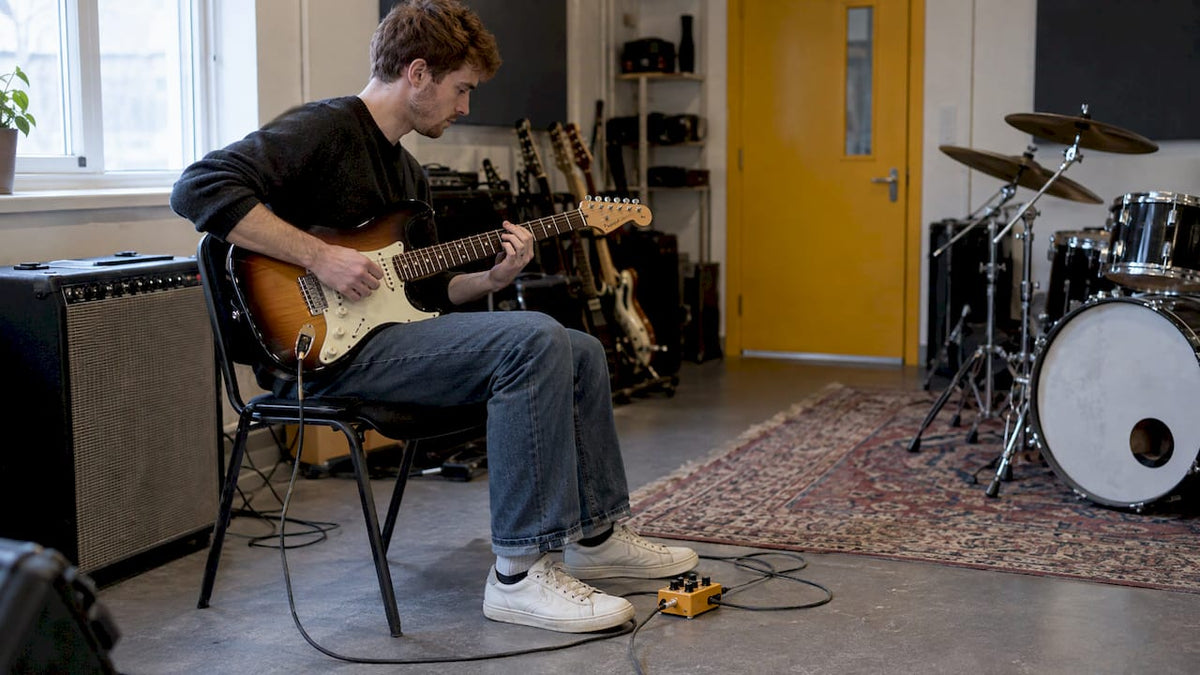
Three different things hide behind this search. An Amazon Echo Show is a smart speaker with a screen: it shows the weather, your calendar, video calls and streamed films and series, all through Alexa. An echocardiogram, usually shortened to “echo”, is a heart scan. And in a guitar rig, an echo is a delay effect that repeats your playing. If you play, practise or teach, the first and third are the ones that matter, and this guide covers both. The heart scan gets a short, clear pointer further down.
Table of Contents
- What an Amazon Echo Show displays
- Setting an Echo Show up in a practice space
- What counts as a good guitar use for it
- The other “echo”: what an echocardiogram shows
- The third echo: the effect on a guitar pedalboard
- Making the most of echo on different guitars
- A short practice routine for learning delay
- Our view: why the guitar underneath matters most
- Find your guitar, amp and effects at Musicstreet
- Questions people ask about the Echo Show
- Sources
What an Amazon Echo Show displays
The Echo Show is Alexa with a screen. Anything Alexa would say aloud, the display can also put in front of you. According to Saga’s guide to the Echo Show, the screen can give you a seven-day forecast based on your location, along with your calendar and reminders. The same guide notes that you can stream video from services including Prime Video and Netflix on an Echo Show smart display.
For a musician, the useful part is how little attention it asks for. A screen on a shelf or desk shows the time, a timer or a reminder without you reaching for your phone with a guitar across your lap.
Video calls
You can start a video call by voice, saying “Alexa, video call” followed by a contact’s name, or by swiping in from the edge of the screen and choosing the communication feature, as Saga explains. The same guide singles out the Echo Show 10 for calls, because its screen rotates to follow you around the room.
That movement matters for anyone who plays. If you are showing a friend or a student a chord shape, you are rarely sitting still and square to the camera. A screen that follows you is more forgiving than a phone propped against a music stand.

Video and recipes
Streaming is the other headline feature. Watching a live performance or a gear demo on a larger screen than a phone is comfortable in a practice room, and the voice controls leave both hands free for the guitar. Saga also reports that Echo Show devices can walk you through around 11,000 recipes from one publisher via Alexa, which tells you the screen is built mainly around the kitchen and living room. In a music room, it is a convenient extra, not a replacement for a proper amp, monitor or interface.
Setting an Echo Show up in a practice space
Where you put the device shapes whether it helps or gets in the way. A few practical points from a guitar-playing household:
- Keep it off the amp. A speaker cabinet vibrates, and a screen balanced on top of it will buzz and wander. A shelf or wall bracket at eye level works better.
- Leave room for your stand and your headstock. You want the screen visible while you play, without swinging a neck into it.
- Think about when you play. A voice assistant in a room with a loud amp will mishear you. Use the touchscreen when you are playing, and voice when you are not.
- Decide on the camera. If the device sits in a bedroom where you practise, consider whether you want the camera pointing at you all the time. Many readers ask about this; the answer is a personal one, and the device’s own settings are where you control it.
The set-up itself is simple: pick a language, connect to your Wi-Fi and follow the on-screen steps, as the official set-up page describes.
What counts as a good guitar use for it
Be realistic about what a smart display is for. It is not an audio interface, it will not sound like your amplifier, and it is not a tuner you should trust over a clip-on or pedal. Where it earns a place:
- Timers for practice. Twenty minutes on scales, ten on a new riff, five on the song you are learning. Say it aloud, and the screen counts down.
- Following video lessons. A bigger screen than your phone, at a distance you can read.
- Video calls for lessons. Teachers and students can keep a lesson going across distance.
- Reminders. Re-string day, a set-up booked in, a gig load-in time.
Those are small conveniences. Your tone, and how the instrument feels in your hands, come from the guitar, the strings and the amp.
The other “echo”: what an echocardiogram shows
If you arrived here after a letter from a hospital, that is a different subject. An echocardiogram is a scan of the heart that uses soundwaves to create an image, similar to the ultrasound scan used in pregnancy, and it is done to see how well the heart is working, according to the NHS page on echocardiograms. The most common type takes around 30 to 40 minutes. The NHS says you may sometimes talk through the results the same day, but you will usually get another appointment; if you have heard nothing after a few weeks, contact the doctor who referred you.
For what your own result means, ask the doctor or cardiology team who requested it. They have your history and symptoms, which no general article can read.
The third echo: the effect on a guitar pedalboard
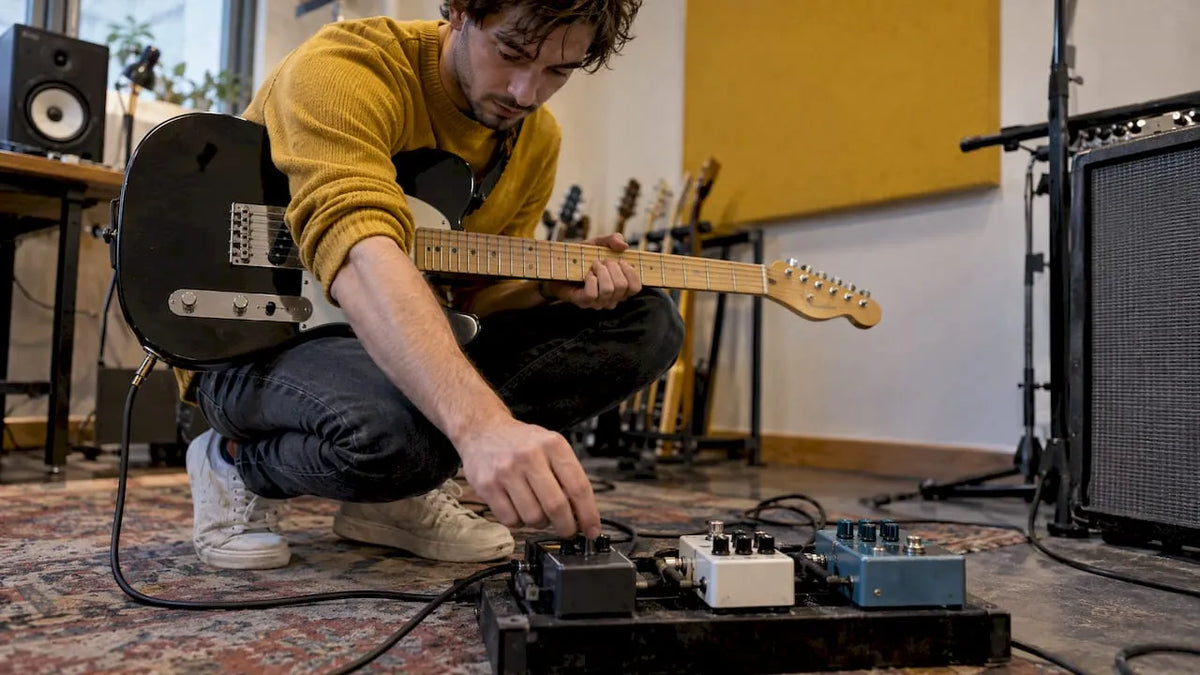
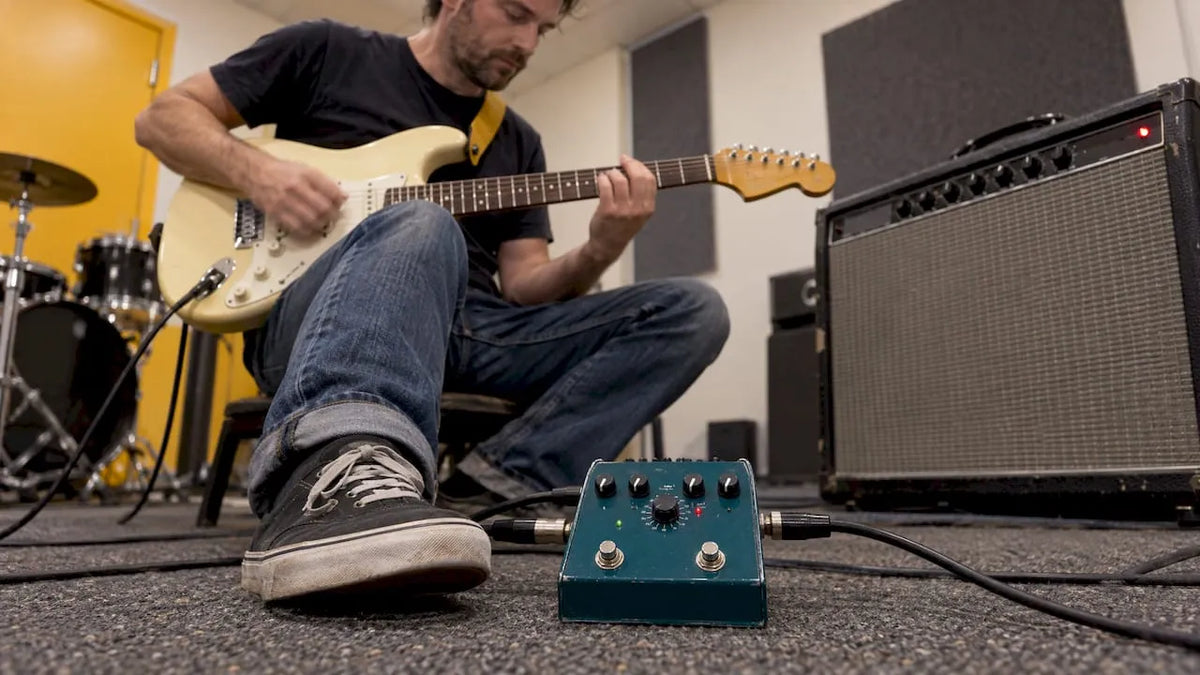
Guitarists use the word in a more musical sense. Echo, or delay, is an effect that records a moment of your playing and plays it back after a short gap, once or many times. Short settings thicken a lead line. Longer ones create the repeating, spacious sound behind a slow, ringing chord.
What to listen for
When you try a delay, watch these controls:
- Time: how long before the repeat arrives. Short is slapback, long is ambient.
- Feedback (repeats): how many times the repeat is itself repeated.
- Mix or level: how loud the repeats are against your dry signal.
- Tone: some pedals darken each repeat, others keep them bright.
Set the mix lower than you think you need. Delay is easy to overdo, and a mix that sounds lush alone often smears in a band.
Where it goes in your signal chain
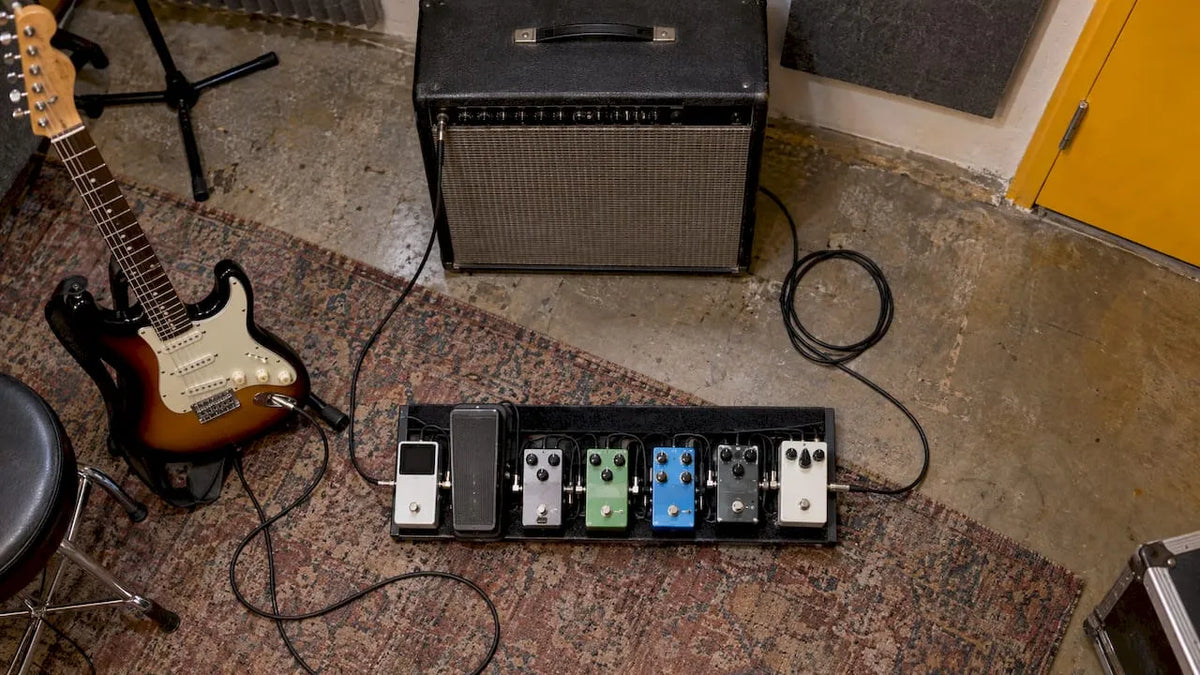
The usual habit is to place delay after your overdrive and distortion pedals and before any reverb, so the repeats are of your finished tone rather than of a raw one. Your own ears can overrule that; the point is to try a few orders and keep the one that sounds best on your amp.

Matching a delay to your amp
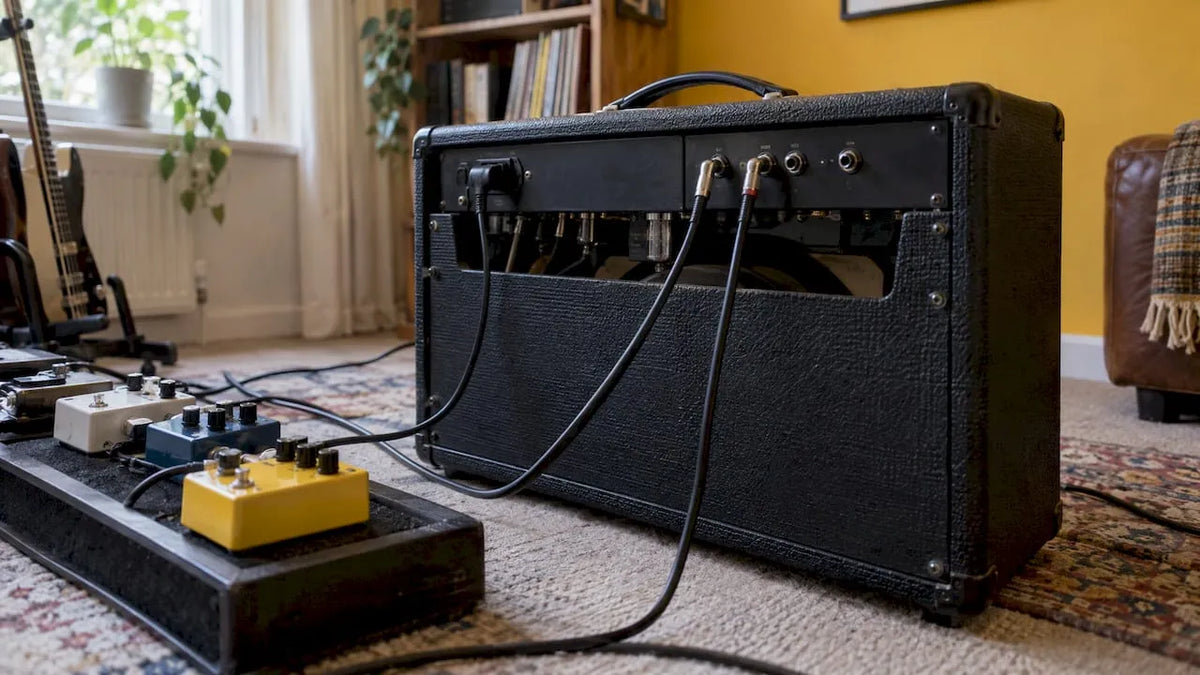
A delay sounds different through a clean valve combo, a small practice amp or a modelling amp. Clean amps show repeats clearly, which is why a delay is a common first effect for players building a clean tone. If you play through a gain-heavy setup, shorter, lower repeats stay clearer. You can browse guitar amps and combos with this in mind, and plug an effect in on the day you try one.
Making the most of echo on different guitars
The guitar you plug in changes what the delay does with it.
Electric guitars. Humbucker-equipped guitars give a thicker input and can make repeats feel heavy, while single coils leave more space. A guitar with a good, stable set-up lets the repeats stay in tune with the original note, which matters more than most players expect.
Electro-acoustics. Delay on an acoustic is subtle: a short, low-mix repeat adds a sense of room to fingerstyle playing. Too much feedback on an acoustic soon turns into a wash.
Bass. Many bass players keep delays very light, or use them for specific moments, because repeats can blur low notes.
Whatever you play, strings and set-up shape what reaches the pedal. Worn strings give dull, uneven attack that repeats exaggerate, and a poorly set-up guitar with fret buzz hands the delay a flawed signal to repeat.
A short practice routine for learning delay
If you have a new delay, or you are using one for the first time, give yourself ten minutes with this routine:
- Set the mix at about a quarter, feedback low and time short.
- Play a simple riff and listen to the repeat sit behind the original.
- Lengthen the time and notice how your playing needs to leave gaps.
- Raise the feedback a little, then back it off when the repeats start to muddy the next phrase.
- Play the same riff on the neck and bridge pickups and compare.
This builds a habit of listening to the space between notes, which improves your timing even when the pedal is off.
Our view: why the guitar underneath matters most
At Musicstreet, we see an echo as a good test of a guitar’s honesty. A delay repeats whatever you give it, so a clean, well-adjusted instrument sounds better through it than a tired one.
That is why we put expert set-up and inspection at the centre of what we do, for new and pre-owned guitars alike. A guitar that stays in tune, with comfortable action and fresh strings, gives an effect something good to work with.
If you are building a rig, start with the instrument, then the amp, then the pedals. Our shop in Huntingdon lets you try guitars in store, and our post-sale support and insurance-backed warranties mean you are not left alone after you buy.
Music
Find your guitar, amp and effects at Musicstreet
If your echo interest is musical, we are a dedicated guitar retailer with an online shop and a physical store in Huntingdon, Cambridgeshire. We sell new and pre-owned electric guitars, acoustic guitars and bass guitars, plus amps, effects, cases and accessories. Delivery in the UK is free on orders over a minimum amount.

If your current guitar needs attention before you add a pedal, our guitar setups, servicing and repairs and in-store restring service are there for that. You can see the range of guitar strings too, and the full shop is on our Musicstreet home page.
Questions people ask about the Echo Show
Can I watch Netflix on an Echo Show?
Yes. Saga’s guide says you can stream video from services including Prime Video and Netflix on an Echo Show smart display. Check which services the model you own supports on its own settings screen, as availability can vary.
What does an Echo Show do that an Echo speaker does not?
The screen. It lets Alexa show information such as forecasts, calendar entries and video calls, instead of only reading them out. You can also stream video on it, and some models are better suited to calls than others.
What does an echocardiogram show?
An echocardiogram uses soundwaves to make an image of your heart, so doctors can see how well it is working, according to the NHS. If you have had one, the doctor who referred you is the person to explain your result.
Is a delay pedal the same as an echo?
In everyday guitar talk, yes: both describe an effect that repeats your playing after a short gap. Differences between types come from how each one shapes the repeats, such as brighter or darker, but the basic idea is the same.



Share:
What Effects Go in an Effects Loop? A Guitarist's Guide