


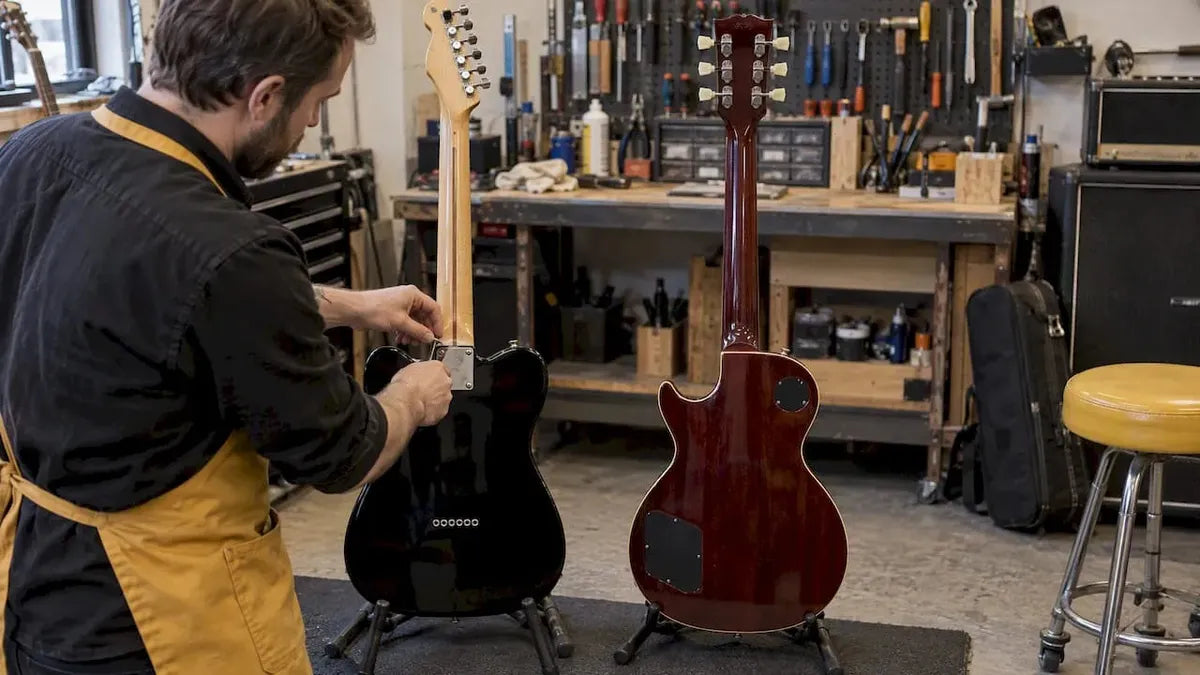
A guitar luthier is a skilled crafts-person who designs, builds, and repairs stringed instruments from raw materials. They differ from guitar technicians by handling complex structural work and custom builds, while technicians focus on routine maintenance and setup. The craft requires advanced woodworking, acoustics knowledge, and a keen understanding of how materials influence sound.
A guitar luthier is a skilled craftsperson who designs, builds, and repairs stringed instruments, combining woodworking expertise, acoustic science, and artistic judgement. The term “luthier” derives from the French word for lute maker, but today it applies broadly to makers and restorers of guitars, violins, and other fretted instruments. Unlike a general repair technician, a luthier works at the deepest level of instrument construction, shaping raw timber into a playable, resonant instrument from scratch. Understanding what a luthier does helps you make better decisions about instrument care, custom builds, and who to trust with your guitar.
What is a guitar luthier and how do they differ from a guitar tech?
A luthier builds instruments from raw materials, while a guitar technician focuses on maintenance, repair, and setup of existing instruments. That distinction matters enormously when you are deciding who to call. A guitar tech might handle five or six instruments daily for faster turnaround, whereas a luthier devotes substantial time to building projects that can span weeks or months. Both roles are valuable, but they serve different needs.
Guitar technicians are the right choice for routine jobs: adjusting action, replacing strings, setting intonation, or swapping pickups. Luthiers step in when the work requires deep structural knowledge, such as repairing a cracked soundboard, resetting a neck joint, or building a completely new instrument to a player’s specification. Some luthiers specialise in building while others focus on restorations and complex repairs, so their day-to-day work varies considerably.
| Aspect | Guitar luthier | Guitar technician |
|---|---|---|
| Primary focus | Building and major structural repair | Maintenance, setup, and minor repairs |
| Typical workload | One to a few instruments at a time | Multiple instruments daily |
| Training emphasis | Woodworking, acoustics, instrument design | Playability, electronics, setup technique |
| Best suited for | Custom builds, crack repairs, neck resets | Action adjustments, restringing, intonation |
| Time per job | Weeks to months for a full build | Hours for most routine tasks |
Pro Tip: If your guitar needs a basic setup or a fret polish, a guitar technician offers faster and more cost-effective service. Reserve a luthier for structural work or a custom commission.
Essential skills, tools, and materials used by guitar luthiers
Guitar making engages specialised woodworking techniques that are highly distinct from furniture making or general carpentry. A luthier must carve, shape, glue, and finish timber to tolerances measured in fractions of a millimetre, because even small errors affect tone and playability. The craft also demands a working knowledge of acoustics, so the maker understands how wood density, grain orientation, and bracing patterns influence the sound a finished guitar produces.
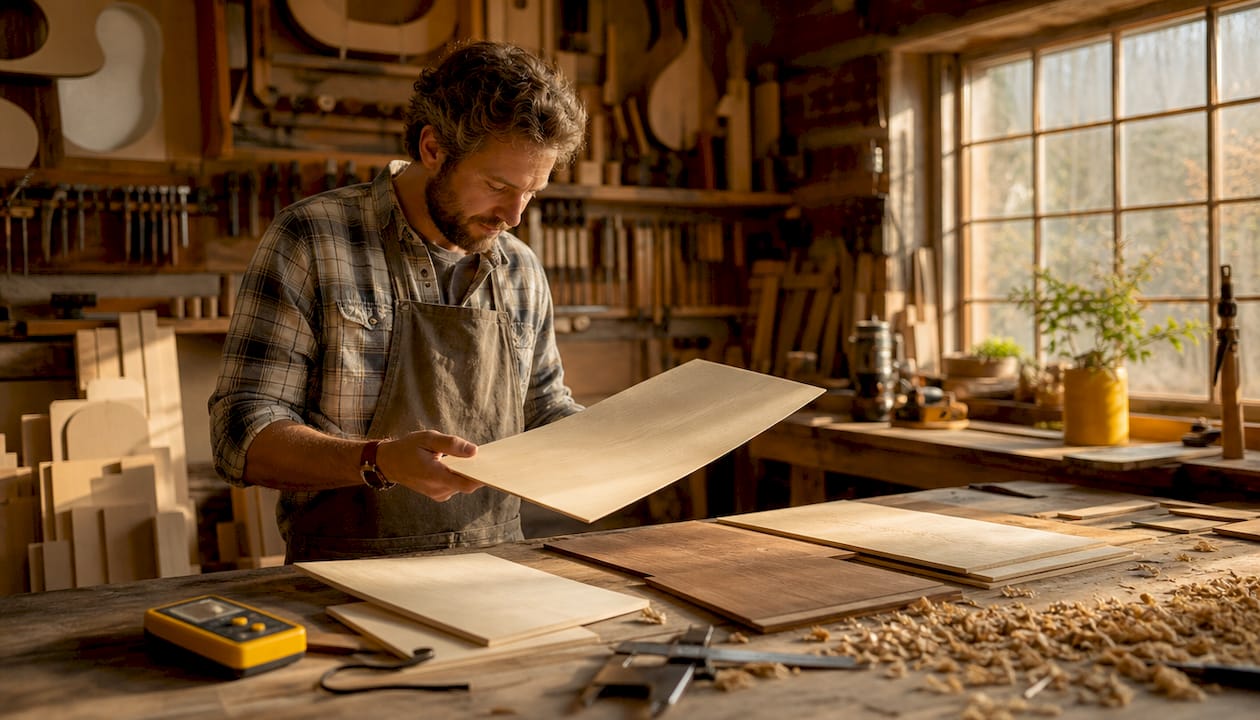
Wood selection sits at the heart of every build. Spruce and cedar are the most common soundboard timbers because they balance stiffness with low mass, allowing the top to vibrate freely. Rosewood, mahogany, and maple are favoured for backs and sides, each contributing a distinct tonal character. The bracing system pioneered by luthier Antonio de Torres and later refined by C.F. Martin, whose X bracing remains standard in steel-string guitars, shapes both durability and sound projection to this day. That single design decision, made over a century ago, still defines how most acoustic guitars are built.
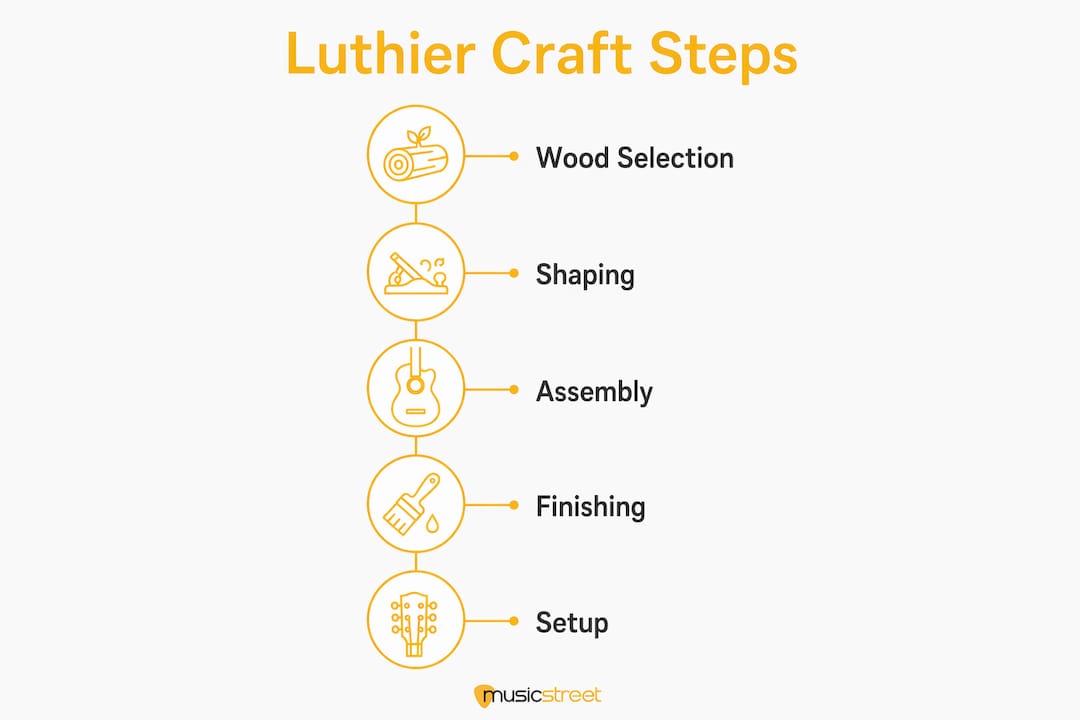
Core tools used in guitar making
The best tools for luthiers combine precision hand tools with a small number of specialist jigs:
- Chisels and carving gouges for shaping braces and carving the neck profile to exact dimensions
- Radius dishes and sanding blocks for accurately curving the soundboard and back plates
- Binding jigs and routers for cutting the channels that hold decorative binding and purfling
- Fret press and fret files for seating and levelling frets to a consistent height across the fingerboard
- Humidity gauges and conditioning chambers for acclimatising timber before and during the build, since wood grain and humidity directly affect acoustic energy transfer and structural stability
- Scrapers and cabinet scrapers for achieving a glass-smooth surface before finishing
- Lacquer spray equipment or brush-finishing tools for applying nitrocellulose or oil finishes that protect the wood without deadening its resonance
Quality materials and tools are not optional luxuries. A poorly seasoned piece of spruce or a badly levelled fret will compromise the instrument regardless of the maker’s skill.
How to become a guitar luthier: training and career path
Formal training provides a foundation, but real-world workshop experience is where most luthiers develop genuine competence. College courses in instrument making exist across the UK, covering joinery, acoustics, and finishing. These programmes teach the principles, but they rarely replicate the pace and problem-solving demands of a professional workshop.
The most critical phase of luthier training occurs through commercial apprenticeships or full-time workshop employment. The number of UK guitar makers has grown from a handful in the 1970s to over 100 by 2025, which reflects both rising demand for handcrafted instruments and a gradual expansion of training opportunities. That growth is encouraging, but the field remains small enough that personal connections and reputation carry significant weight.
Becoming a working luthier typically follows these steps:
- Study the basics through a recognised instrument-making course or evening woodworking classes to build foundational skills before committing fully.
- Build your first instrument from a kit or with guidance, because hands-on mistakes teach more than any textbook.
- Seek an apprenticeship or workshop placement with an established maker, since combining musicianship with craft deepens your understanding of how design choices affect playability and sound.
- Document every build with photographs and notes to create a portfolio that demonstrates your progress to future clients or employers.
- Build a reputation gradually by taking on small repair jobs, which develop speed and diagnostic skill alongside your building work.
Pro Tip: Learn to play the guitar before or during your training. Luthiers who play understand what a musician actually needs from an instrument, and that knowledge shapes better design decisions.
Are custom-built guitars worth the cost?
Building a custom guitar can involve 100 to 150 hours of work, which explains the premium price compared to mass-produced models. That time investment covers every stage from selecting and seasoning timber to final fret levelling and setup. A factory guitar is assembled in a fraction of that time using CNC machinery and standardised components, which keeps costs low but removes the individual attention a luthier provides.
The benefits of a custom build are real and measurable. A luthier selects each piece of wood for its acoustic properties, matches the neck profile to your hand, and voices the soundboard to your playing style. The result is an instrument that fits you specifically, rather than a general specification designed to suit the widest possible market. Custom builds also tend to age well, because quality timber and traditional joinery outlast the adhesives and laminates used in budget production guitars.
| Factor | Custom luthier build | Mass-produced guitar |
|---|---|---|
| Build time | 100–150 hours | Minutes to hours with CNC |
| Wood selection | Hand-picked per acoustic quality | Standardised grade |
| Personalisation | Full specification to player’s needs | Fixed models and options |
| Cost | Significantly higher | Entry to mid-range pricing |
| Longevity | High with proper care | Variable by price point |
Custom builds make the most sense for experienced players who know exactly what they want and are willing to invest in an instrument they intend to keep for decades.
When should you consult a guitar luthier for repairs?
Professional luthiers provide honest consultation, sometimes advising against repairs when the cost exceeds the instrument’s value. That transparency is a mark of professionalism, not a sales tactic. A good luthier will tell you plainly if a repair on a low-quality guitar is not cost-effective, and that advice saves you money even when it costs them business.
For everyday repairs like action adjustments, dedicated guitar technicians usually offer faster and more cost-effective service. Luthiers are the right choice when the job requires structural knowledge that goes beyond routine maintenance. Knowing the difference saves time and money.
Signs your guitar needs professional luthier attention:
- A cracked or separated soundboard or back that requires careful gluing and clamping to restore structural integrity
- A lifting or misaligned bridge that affects intonation and risks further damage to the soundboard
- A twisted or warped neck that cannot be corrected by truss rod adjustment alone
- Fret sprout or severe fret wear requiring a full refret rather than a simple level and crown
- A loose or broken neck joint on a set-neck or dovetail-jointed instrument
- Vintage instrument restoration where original materials and methods must be respected to preserve value
Pro Tip: Before committing to a repair, ask the luthier for a written assessment and cost estimate. A professional will always give you an honest picture of whether the repair is worth pursuing, as players benefit most from understanding the true scope of the work before agreeing to it.
Key takeaways
A guitar luthier is a specialist craftsperson who builds and restores instruments using woodworking skill, acoustic knowledge, and hands-on experience that no factory process can replicate.
| Point | Details |
|---|---|
| Luthier vs technician | Luthiers build and handle major structural repairs; technicians manage routine setups and maintenance. |
| Custom build time | A handcrafted guitar takes 100–150 hours, justifying its premium over mass-produced models. |
| Training path | Apprenticeships and workshop experience matter more than college courses alone in the UK. |
| Honest consultation | A good luthier advises against repairs that cost more than the instrument is worth. |
| When to call a luthier | Cracked soundboards, neck resets, and full refrets require luthier expertise, not a basic tech visit. |
Why the luthier’s craft deserves more respect than it gets
The guitar world talks endlessly about pickups, pedals, and amplifiers. The luthier rarely gets the same attention, and that is a mistake. Every time I handle a well-built handcrafted guitar at Musicstreet, the difference is immediate. The neck sits in your hand differently. The resonance under your fingers tells you something about the timber and the person who shaped it.
What strikes me most is how much musicianship matters in this craft. A luthier who plays understands the frustration of a neck that does not quite fit, or a soundboard that feels stiff under a pick. That lived experience shapes better instruments. The luthiers I respect most are the ones who treat every build as a conversation with the player, not just a woodworking exercise.
The rarity of skilled luthiers in the UK is worth noting. The field has grown, but it remains small. That scarcity means a genuinely talented luthier is worth finding and worth trusting. If you are considering the craft as a career, commit to the apprenticeship route. No course fully prepares you for the diagnostic thinking that professional workshop life demands. And if you are a player, take the time to understand what your instrument actually needs before handing it over to anyone. The signs your guitar needs attention are usually obvious once you know what to look for.
— Music
Quality guitars and expert care at Musicstreet
At Musicstreet, every guitar in the collection is inspected and set up before it reaches you. Whether you are looking for a new acoustic, a pre-loved electric, or a bass with serious character, the team brings the same attention to playability that a skilled luthier brings to a custom build.

The Yamaha FGX5 acoustic guitar is a strong example of factory craftsmanship meeting professional setup standards, making it a reliable choice for players who want quality without commissioning a full custom build. For those who want to keep their instrument in peak condition between professional visits, the CruzTools Groovetech Guitar Player Tech Kit covers the essential adjustments any guitarist should know how to make. Browse the full range at Musicstreet and find an instrument that suits how you play.
FAQ
What is the difference between a luthier and a guitar maker?
The terms are largely interchangeable. “Luthier” is the traditional craft title, while “guitar maker” is a plain description of the same role. Both refer to someone who builds stringed instruments from raw materials.
How long does it take to become a qualified luthier?
Most luthiers spend several years in training, combining a formal course with a commercial apprenticeship or workshop placement. Hands-on experience is the most important factor in developing professional-level skill.
Can a luthier repair any guitar, regardless of brand or age?
A skilled luthier can work on most guitars, including vintage and high-value instruments. However, they may advise against repairing low-quality guitars where the repair cost exceeds the instrument’s worth.
What does a guitar luthier charge for a custom build?
Pricing varies widely depending on the maker, materials, and complexity. Because a custom build involves 100 to 150 hours of work, costs are significantly higher than mass-produced equivalents, often running into thousands of pounds.
Do I need a luthier or a guitar technician for a setup?
For routine setups, action adjustments, and intonation work, a guitar technician is the faster and more cost-effective choice. Consult a luthier when the job involves structural repairs, neck resets, or full refrets.
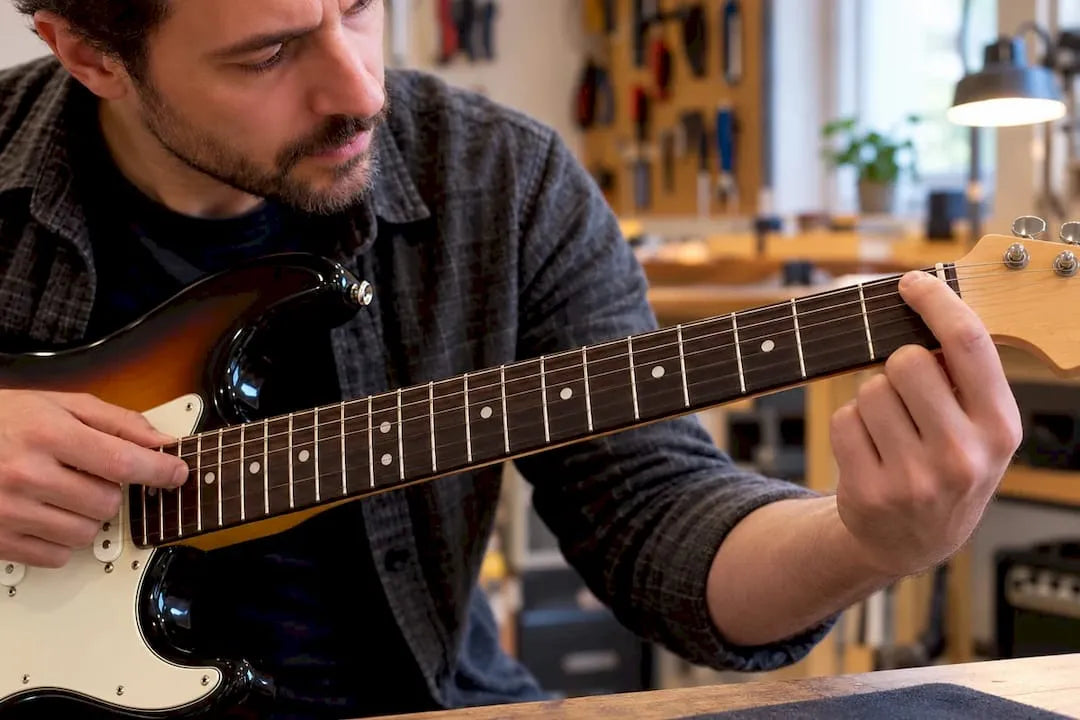



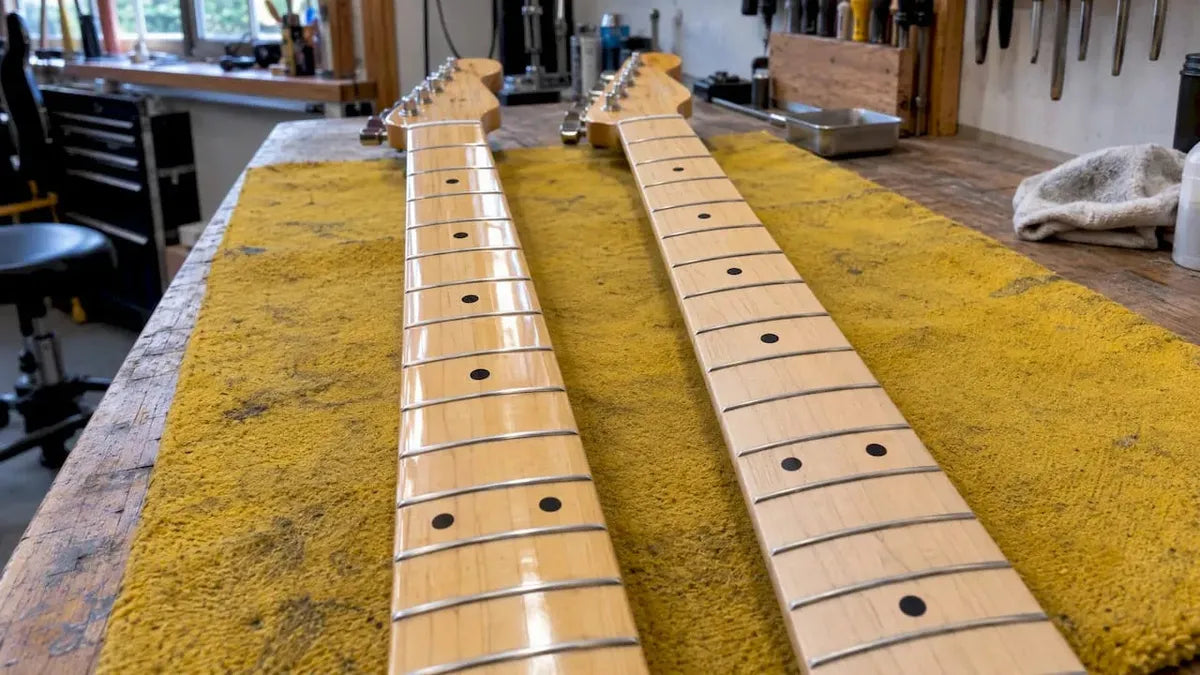



Share:
Semi-acoustic vs acoustic guitar: key differences explained
PRS vs. Gibson: A Comprehensive Guide to Electric Guitar Sound Quality Differences