


Mastering Fingerpicking Techniques: Essential Patterns, Exercises, and Guitar Choices for All Levels
Fingerpicking techniques give guitarists a powerful way to combine melody, harmony, and rhythm using the fingers and thumb independently, creating rich textures not possible with a flatpick alone. This guide teaches practical fingerstyle skills, from alternating-bass and Travis picking patterns to progressive exercises and instrument choices that support tone and playability. Many players struggle with coordination, tone consistency, and selecting the right guitar or strings for fingerstyle; this article provides clear, actionable solutions and practice progressions to overcome those obstacles. You will learn foundational patterns, concrete drills to build thumb independence and finger accuracy, and guidance on choosing guitars and accessories tailored to fingerpicking across blues, folk, jazz, and classical styles. The sections cover definitions and benefits, step-by-step pattern tutorials with tab-like examples, recommended guitar features and brand guidance, essential accessories, advanced exercises with theoretical context, local expert support, and concise FAQs to answer common beginner questions. Throughout, related terms such as fingerstyle guitar, alternating bass pattern, Travis picking, and string choices appear to build semantic clarity and practical application.
What Are Fingerpicking Techniques and Why Should Beginners Learn Them?
Fingerpicking refers to plucking strings directly with the thumb and fingers to play simultaneous basslines, chords, and melody, enabling dynamic control and polyphonic texture on the guitar. This approach works by assigning the thumb to anchor bass pulses while the fingers articulate treble strings, producing independent rhythmic and melodic roles that expand musical expression. For beginners, learning fingerpicking improves right-hand coordination, tone variety, and songwriting options, making simple arrangements sound fuller without additional instruments. The following subsections define the terminology, list clear benefits, recommend starter patterns, and explain how independence drills accelerate progress toward confident fingerstyle playing.
What Is Fingerpicking and How Does It Differ from Fingerstyle Guitar?
Fingerpicking specifically describes the technique of plucking strings with the thumb and bare fingers or picks, often applied to folk and blues idioms where alternating bass lines and simple arpeggios are common. Fingerstyle is a broader term that includes fingerpicking but also refers to more complex approaches—such as classical and modern acoustic arrangements—where one player handles full chord-melody textures, advanced voicings, and extended techniques. In practice, the lines blur: a folk player using alternating bass patterns is both fingerpicking and part of the fingerstyle family, while a classical guitarist performs a formal fingerstyle repertoire using nylon strings. Understanding these distinctions helps you choose exercises and repertoire that match your technical and tonal goals.
What Are the Benefits of Learning Fingerpicking Techniques?
Learning fingerpicking delivers several practical musical benefits that translate across genres and skill levels. First, it increases right-hand independence so you can maintain a steady bass while playing a melody or harmony on top, which directly enhances arranging ability and solo performance. Second, fingerpicking offers greater tonal nuance and dynamic control: individual fingers produce variable attack and sustain, enabling softer passages and percussive accents within the same phrase. Third, the technique broadens songwriting possibilities by allowing simultaneous bass movement and inner-voice detail, making simple chord progressions feel more sophisticated and expressive. These advantages accelerate progress toward musical independence and make solo arrangements and intimate ensemble playing more compelling.
- The main benefits of fingerpicking include coordination, tonal control, and expanded arranging options.
- Fingerpicking improves rhythmic stability by separating bass and treble roles between the thumb and fingers.
- Fingerstyle techniques increase expressive range through dynamics and selective string articulation.
These benefits make fingerpicking a high-value skill for players seeking versatility; next we explore specific beginner patterns that embody these advantages and offer immediate practice wins.
Which Fingerpicking Patterns Are Best for Beginners?
Beginner-friendly patterns emphasize a steady thumb anchor with simple finger movements on the treble strings, allowing learners to focus on independence before adding syncopation. The alternating bass pattern is the canonical starter because it pairs an easy thumb motion with predictable finger plucking on the higher strings, making coordination problems easier to detect and correct. Simple arpeggio figures and thumb-led patterns that outline chord tones are also excellent first choices because they map directly to chord shapes and help build familiarity with voice-leading. Practise these patterns slowly with a metronome, starting at a comfortable tempo and increasing gradually as accuracy improves.
- Alternating bass: steady thumb on two bass strings with simple finger plucks on treble strings.
- Simple arpeggio: roll the chord using thumb + two fingers to outline harmony.
- Thumb-led pattern: maintain a walking bass with the thumb while the fingers play melody fragments.
Start each pattern slowly and focus on relaxed hand posture; the next subsection explains targeted independence drills to speed up coordination gains.
What Are the Most Popular Fingerpicking Patterns and How Do You Play Them?
Popular fingerpicking patterns balance a steady bass with complementary treble movement and are adaptable across styles from folk to country and blues. Each pattern relies on clear thumb assignment—often labelled P (thumb), I (index), M (middle), A (ring)—and uses repeated rhythmic templates that you can internalize with metronome practice. Below we show step-by-step guidance for the alternating bass, outline the mechanics of Travis picking, map patterns to genres, and offer effective practice strategies to convert slow accuracy into musical fluency.
How to Play the Alternating Bass Pattern: Step-by-Step Guide with Tabs
The alternating bass pattern features the thumb alternating between two bass strings while the fingers pluck a melody or chord tones on the treble strings, producing a steady one-two pulse beneath a moving treble line. Begin in 4/4 by assigning the thumb to play beats 1 and 3 on low strings and fingers on beats 2 and 4; practice on an open C or G to simplify fretting. Steps: assign P to the appropriate bass note, set I-M-A to the treble strings you will use, practise P–I–P–M at 40 bpm focusing on even tone, then raise the tempo in 5 bpm increments as accuracy steadies. A small tab example for a G-based alternating bass might look like a repeated pattern of G (6th string) – D (4th string) with treble plucks on the 2nd and 1st strings; start slow and prioritise consistent thumb tone and even finger attack.
- Assign thumb (P) to bass string and fingers (I/M/A) to treble strings.
- Practice the P–I–P–M sequence slowly with a metronome at 40–60 bpm.
- Increase tempo slowly and incorporate simple chord changes to build continuity.
This measured progression secures the thumb’s rhythmic role and prepares you for syncopated patterns like Travis picking.
What Is Travis Picking and How Can You Learn It?
Travis picking is a fingerpicking style characterized by an alternating bass played by the thumb combined with syncopated treble patterns from the fingers, creating a rolling, syncopated accompaniment often used in country and folk. The thumb replicates a steady bass line—sometimes alternating between root and fifth—while the fingers add off-beat accents and melody fragments, producing a rhythmic lilt that supports singing or solo lines. To learn Travis picking, isolate the thumb pattern until it is automatic, then layer in finger syncopations slowly; practise common drills where the thumb cycles across two bass strings while the index and middle fingers accent the "and" of the beat. Song examples and short exercises help internalize the left-hand chord changes so your right hand can maintain the pattern under harmonic movement.
Which Fingerpicking Patterns Are Common in Blues, Folk, and Jazz Styles?
Different genres use characteristic fingerpicking variants that reflect their rhythmic and harmonic priorities. Blues fingerpicking often features boogie-style alternating bass variants and call-and-response motifs, prioritising feel and blue notes to convey emotion. Folk patterns tend toward steady bass with simple arpeggios and clear melody placement on treble strings to support lyrics and singable lines. Jazz fingerstyle employs chord-melody and hybrid picking approaches, using complex voicings and voice leading to present bass, harmony, and melody simultaneously. Identifying genre characteristics helps you choose exercises and repertoire: practise blues riffs with swing feel, folk arpeggios with lyrical phrasing, and jazz chord-melody studies focusing on voice-leading and chord substitution.
How Can You Practice Fingerpicking Patterns Effectively?
Effective practice converts slow, accurate repetition into automatic technique by using short, focused sessions and progressive complexity. Begin with 10–20 minute focused blocks: 5–8 minutes on thumb-only rhythm stability, 5–8 minutes layering simple finger patterns, and 5 minutes linking patterns to chord changes; repeat daily and track tempo increases. Use a metronome and backing tracks to develop groove and record short runs so you can objectively assess timing and tone; chunk difficult bars and isolate transitions until fluid. Consistent, incremental tempo gains and deliberate slow practice ensure accuracy becomes musical expression rather than mechanical repetition.
- Use short, focused practice blocks with clear objectives.
- Employ a metronome and record to evaluate timing and tone.
- Progress tempo in small increments and isolate trouble spots.
This structured approach accelerates reliable muscle memory and musical phrasing.
Which Acoustic and Classical Guitars Are Best Suited for Fingerpicking Techniques?
Guitar features such as body shape, top wood, neck width, scale length, and action significantly influence fingerpicking tone and playability because each attribute alters sustain, string spacing, and responsiveness. Fingerstyle players typically prioritize comfortable neck width and slightly lower action for ease of fretting, balanced top woods for clear midrange articulation, and body shapes that offer a focused acoustic voice rather than overwhelming boom. Below we describe the features to prioritize, recommend brands commonly aligned with these requirements from MusicStreet’s curated inventory, and explain how a professional setup improves playability for fingerstyle approaches.
What Features Make a Guitar Ideal for Fingerstyle Playing?
Ideal fingerstyle guitars balance clarity, responsiveness, and comfort through three main feature groups: top wood and body size determine tonal balance and projection, neck width and string spacing affect finger placement and comfort, and action plus nut setup influence fretboard clearance and ease of fretting. Spruce tops often deliver dynamic clarity and articulate trebles, while cedar offers warmer, immediate response; body shapes like grand auditorium or OM provide a focused midrange suitable for solo arrangements. Prioritize a neck profile and nut width that let your fingers move freely for chord-melody work, and request a setup to dial in action and intonation for precise thumb-led bass playing.
| Guitar Feature | Attribute | How It Affects Fingerpicking |
|---|---|---|
| Body shape | OM / Grand Auditorium | Focused mids and balanced projection for solo fingerstyle |
| Top wood | Spruce vs Cedar | Spruce = clarity and attack; Cedar = warm, immediate response |
| Neck width/spacing | Wider nut / string spacing | Easier finger placement and less muting during complex voicings |
Choosing the right combination of these features supports clarity and comfort while you develop fingerstyle technique.
Which MusicStreet Guitar Brands Are Recommended for Fingerpicking?
MusicStreet’s curated selection includes several brands that align with fingerstyle priorities: Martin models are prized for rich acoustic tone and balanced projection suitable for recording and performance, Yamaha offers value-driven instruments with reliable setups for learners, and classical-oriented brands like Cordoba provide nylon-string options tailored to classical fingerstyle techniques. These brand distinctions help you match the instrument to your goals—select Martin for studio-quality tonal depth, Yamaha for consistent reliability and value, or classical models for nylon-string repertoire and slightly wider neck spacing. Browse MusicStreet categories or contact their team for guidance on models that fit your budget and playing profile.
How Does a Professional Guitar Setup Enhance Fingerpicking Playability?
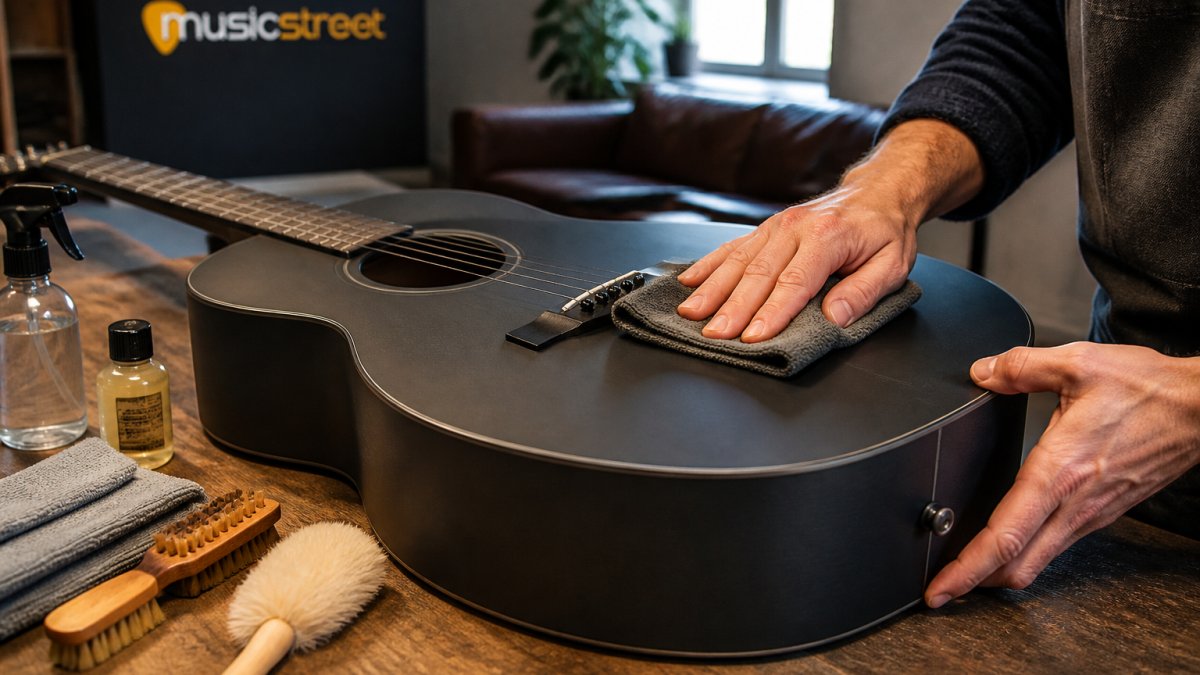
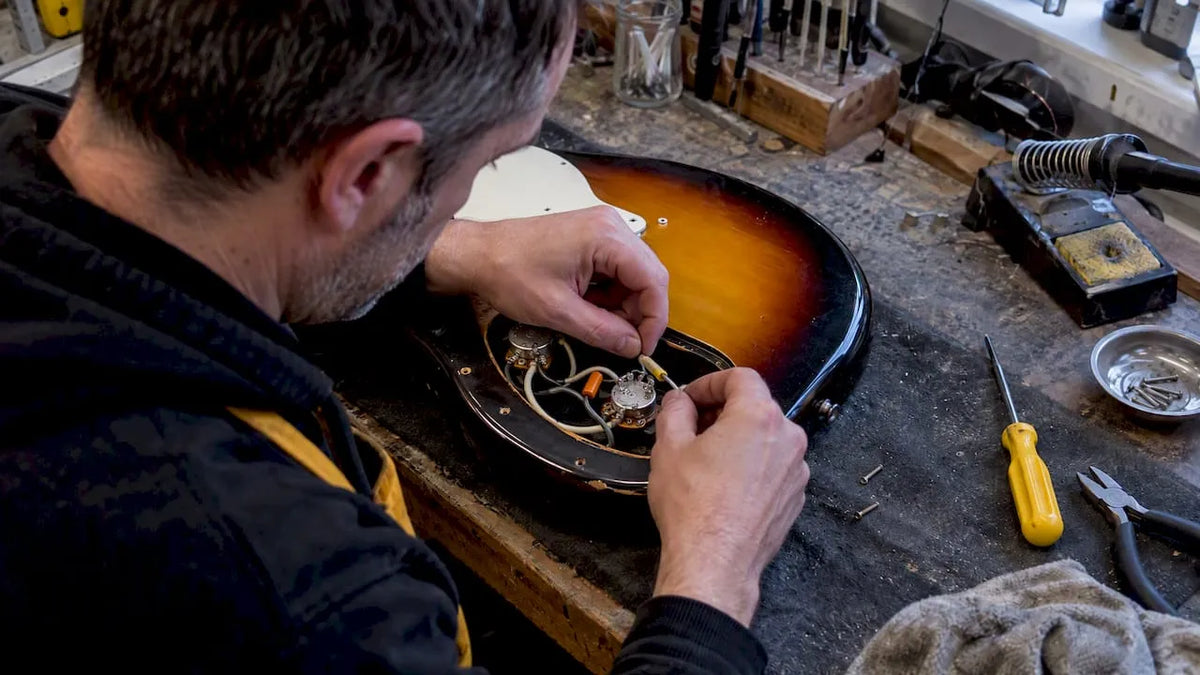
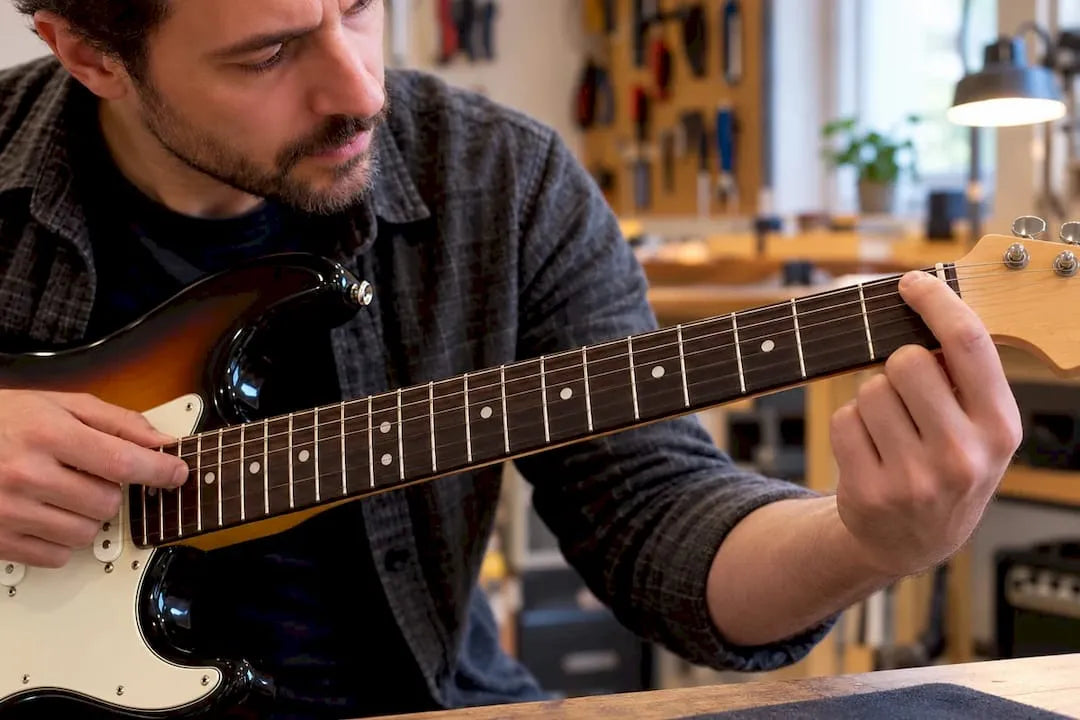
A professional setup adjusts action, nut slot height, neck relief, and intonation to match fingerstyle demands, producing lower, even action for comfortable fretting without fret buzz and consistent string spacing for clear finger clarity. Lower action reduces strain when executing chord-melody passages and thumb bass lines, while fret dressing and precise intonation ensure open-string voicings ring true across the neck. MusicStreet’s workshop services include meticulous instrument setups and servicing that refine a guitar’s playability specifically for fingerpickers, making new or pre-owned instruments feel and sound substantially better for this technique.
| Setup Element | Purpose | Value for Fingerpicking |
|---|---|---|
| Action adjustment | Lower string height | Easier fretting for complex chord shapes |
| Nut and saddle work | Optimised string spacing and intonation | Improved clarity and balanced voicings |
| Fret dressing | Smooth fret edges and even wear | Reduced buzz and clearer sustain |
Professional setup transforms an instrument’s tactile and sonic response and is a worthwhile investment for serious fingerstylists.
What Are the Best Pre-Owned Guitars for Fingerstyle Beginners?
Pre-owned guitars can offer excellent value for beginners, allowing players to access higher-quality instruments at lower price points provided a careful inspection covers neck straightness, fret wear, electronics function, and overall structural integrity. Check for even fret wear, neck relief within acceptable tolerances, secure bridge and saddle, and responsive action at playable heights; also test how the guitar responds to thumb-led bass and chord-melody voicings. MusicStreet supports part-exchange and sells pre-owned instruments, which can be a cost-effective path for beginners to step up to a better-sounding guitar while benefiting from professional setups performed in their workshop.
This comparison and checklist help beginners choose pre-owned guitars that offer the playability required for sustained fingerstyle practice.
What Essential Accessories Support Fingerstyle Guitarists?
Accessories such as appropriate strings, fingerpicks or fingernail strategies, capos, humidifiers, and practice tools materially affect fingerpicking tone, comfort, and instrument longevity by changing attack, sustain, tuning stability, and ergonomic setup. Choosing phosphor-bronze or light-to-medium gauge strings for steel-string acoustics, considering fingerpick types or nail shaping techniques, and selecting a reliable capo with stable tension are practical decisions that shape your tone and technical choices. The following subsections break down string choices, fingerpick vs. fingernail trade-offs, capo uses, and other useful accessories along with an EAV table to link accessory attributes to recommended uses and MusicStreet categories.
Which Guitar Strings Are Best for Fingerpicking Tone and Feel?
String material and gauge markedly affect the attack, warmth, and playability for fingerstyle players: phosphor bronze strings deliver warm, balanced tone with sustained clarity, while 80/20 bronze tends toward brighter attack and pronounced treble. Light gauges ease fretting and bending for beginners, while medium gauges offer fuller tone and better sustain for recording or solo performance; nylon strings are the standard for classical fingerstyle, providing soft attack and wider dynamic shading. Choose string types according to your guitar (steel vs nylon), desired tone, and hand strength, and consider experimenting with different gauges to find the best balance between volume and comfort.
| String Type | Purpose | Best-for |
|---|---|---|
| Phosphor bronze | Warm, balanced tone | Fingerstyle acoustic players seeking fullness |
| 80/20 bronze | Bright attack | Players needing clarity and cut in ensemble |
| Nylon | Soft, rounded tone | Classical fingerstyle and wider neck spacing |
This table helps match string selection to tonal goals and playing contexts.
Should You Use Fingerpicks or Fingernails for Fingerstyle Guitar?
Choosing between fingerpicks and natural fingernails impacts tone, volume, and technique: fingerpicks give a brighter, more consistent attack and added volume for live settings, while natural nails provide a warm, nuanced tone with more dynamic shading. Many players adopt a hybrid approach—using bare fingers on some strings and a thumb pick for bass—to blend the advantages of both methods; nail maintenance and shaping are important if you rely on natural nails to maintain consistent tone. Consider your volume needs, tonal preferences, and maintenance willingness when selecting picks or investing time in nail care.
- Fingerpicks: consistent, louder attack, good for performance.
- Fingernails: warm, expressive tone, preferred by classical and folk players.
- Hybrid approach: thumb pick plus bare fingers balances volume and nuance.
Choose the approach that aligns with your performance context and tone goals, and test both to find what feels best.
How Do Capos Enhance Fingerpicking Techniques?
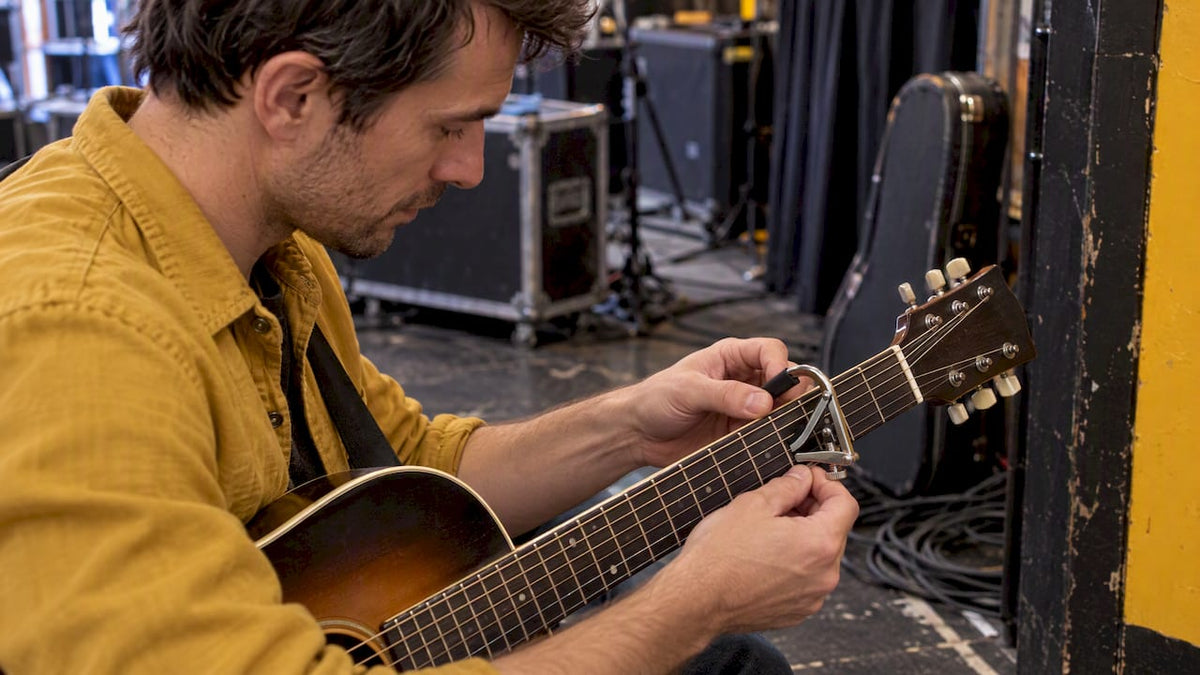
Capos enable instant key changes and fresh voicings without changing chord shapes, allowing fingerstyle players to access open-string resonances and new voicings that support melody and drone notes. Using a capo can simplify tricky transpositions, unlock more comfortable fingerings, and let you experiment with alternate tunings in performance or practice, expanding your harmonic palette. When selecting a capo, prioritize tuners that apply even pressure across the nut and preserve intonation; lightweight, low-profile capos often produce the least interference with fingerpicking hand movement. Capo use is a practical tool for adapting arrangements and maintaining open-string textures in new keys.
What Other Accessories Improve Fingerstyle Guitar Practice?
Several additional accessories help fingerstyle players practice efficiently and protect their instruments: a reliable metronome or practice app builds timing consistency, a humidifier preserves top wood integrity in seasonal climates, and a comfortable footstool aids posture for classical technique. For performance, under-saddle or soundboard pickups provide a natural amplified tone without changing the guitar’s acoustic response, while a hard case protects the instrument from impact and humidity fluctuations. These accessories collectively support consistent practice, instrument health, and real-world performance needs.
| Accessory | Purpose | Best-for / Price-range |
|---|---|---|
| Metronome / Click | Timing development | All players / low cost |
| Humidifier | Top wood care | Acoustic owners / budget varies |
| Under-saddle pickup | Amplification | Live performers / mid-range |
MusicStreet stocks a range of accessories and their pre-owned options and part-exchange pathways can make quality accessories more accessible to learners.
How Can You Advance Your Fingerpicking Skills with Exercises and Theory?
Advancing beyond basics requires a blend of targeted exercises that develop independence, theoretical understanding of voicings and voice-leading, and introduction to advanced techniques like harmonics and percussive elements. Structured practice moves from isolated drills to applied musical contexts: build thumb independence, expand fretting-hand voicings, and apply chord-melody concepts to repertoire. The following subsections present concrete exercises with tempo and duration guidance, explain how fingerstyle theory enhances musical decision-making, and list advanced techniques and song targets that encapsulate those skills.
What Are Effective Fingerpicking Exercises for Developing Finger Independence?
Targeted exercises include thumb-versus-fingers drills, chromatic string-skipping patterns, and controlled arpeggio sequences that increase coordination and rhythmic stability. A common drill: set a metronome at 60 bpm and play the thumb on beats 1 and 3 while alternating index and middle on off-beats for five minutes per session, then increase tempo by 5 bpm every three days as accuracy improves. Chromatic exercises across adjacent frets and string-skipping patterns build precision and reduce unwanted string noise; practice each drill for focused 8–12 minute blocks and track progress through recordings. Regular, measured progression ensures steady gains in independence and accuracy.
| Exercise | Skill targeted | Practice prescription |
|---|---|---|
| Thumb anchor | Bass steadiness | 5–10 min @ 60–80 bpm daily |
| String-skipping chromatic | Accuracy & spacing | 8 min @ slow–moderate tempo |
| Arpeggio sequencing | Right-hand coordination | 10 min with incremental tempo gains |
These drills translate directly into improved musical fluency and make complex patterns manageable.
How Does Understanding Fingerstyle Guitar Theory Improve Your Playing?
Applying theory—chord voicings, voice-leading, and diatonic arpeggios—lets you construct arrangements where basslines and melody interlock logically, making improvisation and chord-melody writing more musical. Learn to prioritize chord tones on beat one and connect inner voices using stepwise motion to create smooth transitions between shapes; this voice-leading approach enhances the singability of your arrangements. Using diatonic arpeggios and inversions helps you craft basslines that support melodic movement while preserving harmonic clarity, turning simple progressions into richer fingerstyle textures.
What Are Advanced Fingerpicking Techniques to Master?
Advanced techniques expand expressive vocabulary: natural and artificial harmonics add bell-like overtones, percussive slaps and taps integrate rhythmic elements directly into the guitar, and hybrid picking or tapping techniques allow extended polyphony and rapid melodic runs. Start each advanced element with simple applications—natural harmonics on open-string nodes, light percussive slaps on the body to mark rhythm, or simple hybrid-picked licks—and integrate them into familiar patterns before attempting full compositions. Gradually combining these techniques with voice-leading and chord-melody work produces distinctive, modern fingerstyle arrangements.
Which Songs Are Ideal for Practicing Advanced Fingerpicking Styles?
A curated progression of songs helps translate techniques into musical context by targeting specific skills: choose pieces that isolate thumb independence, emphasize syncopated treble figures, or require hybrid picking for fast melodic runs. Select 6–8 songs ranging from intermediate to advanced that map directly to the techniques you want to master—for example, a steady alternating-bass folk tune, a Travis-picking country standard, a chord-melody jazz arrangement, and modern percussive fingerstyle instrumentals. Practice each song focusing on the technique it exemplifies, then synthesize elements across pieces to develop a versatile, technique-driven repertoire.
- Begin with intermediate tunes focusing on alternating bass and arpeggios.
- Progress to syncopated and Travis-picking pieces for coordination.
- Finish with advanced chord-melody and percussive arrangements for integration.
This repertoire-driven approach anchors technical progress in musical outcomes.
Where Can You Find Expert Advice and Support for Fingerpicking Guitarists?
Local expertise and workshop services provide hands-on setup, instrument servicing, and tailored guidance that significantly enhance the learning curve for fingerstyle players. Professional technicians can adjust nut slots, action, and string spacing specifically to suit fingerpicking ergonomics, while in-store demos and staff advice help match instrument tone and feel to your goals. MusicStreet, a high-end boutique guitar shop and information hub that sells new and pre-owned instruments and offers a workshop for setups and repairs, provides these services and supports players from beginners through touring professionals.
How Does MusicStreet’s Workshop Support Fingerstyle Guitarists?
MusicStreet’s workshop services include meticulous instrument setups, repairs, and servicing designed to optimise action, intonation, and playability for fingerstyle techniques. These setup adjustments—such as lowering action without fret buzz, refining nut slots for consistent string spacing, and fret dressing—directly enhance thumb-led bass comfort and clarity across chord shapes. MusicStreet also facilitates part-exchange and pre-owned purchases, enabling learners to access well-setup instruments at better value, and their staff provide expert advice to align instrument choices with fingerpicking needs.
What Expert Tips Does MusicStreet Offer for Fingerpicking Beginners and Pros?
MusicStreet staff emphasise foundational priorities: maintain relaxed hand posture to prevent tension, prioritize thumb independence through slow metronome work, and choose string gauges that balance comfort and tone for your playing context. They recommend professional setups early when upgrading instruments or buying pre-owned to ensure instant playability, and suggest trying both fingerpicks and natural nails to select the tone that suits your repertoire. These practical tips help players focus practice and gear choices to match technical goals and performance contexts.
How Can You Access Fingerpicking Tutorials and Guides from MusicStreet?
MusicStreet provides an information hub featuring blog articles, staff-led demonstrations, and workshop-based guidance tailored to instrument setup and technique. Learners can benefit from in-store demos and hands-on workshops to try guitars and receive personalised setup advice, while the shop’s curated content helps bridge technique instruction with gear selection. Contact MusicStreet by phone for workshop bookings or to ask about in-store resources and pre-owned inventory tailored to fingerstyle players.
What Do Customers Say About Their Fingerpicking Experience with MusicStreet Guitars?
Verified customer feedback and reviews are valuable when assessing how an instrument will perform for fingerpicking and can be found on product listings and review sections associated with the shop. Look for comments that reference playability, setup quality, tonal balance, and the effectiveness of workshop services—these points often indicate whether a guitar will suit fingerstyle needs. When evaluating pre-owned options, check documented service history and setup notes to ensure the instrument has been optimised for fingerpicking; real customer reviews can corroborate staff recommendations and confirm value.
What Are the Most Common Questions About Fingerpicking Techniques?
Beginners commonly ask about how to start, which patterns to learn first, the choice between picks and fingers, and how fingerstyle differs from other approaches; concise, focused answers help capture immediate information needs and guide next steps. The following H3 items provide actionable starting points, quick practice steps for the easiest patterns, direct comparisons for picks versus fingers, and a one-paragraph clarification of terminology along with a compact list of basic techniques every guitarist should know.
How Do You Start Fingerpicking on Guitar?
Begin by establishing relaxed right-hand posture with the thumb resting in front of the fingers and assign the thumb to bass strings and index/middle/ring to treble strings; this physical foundation prevents tension and clarifies string assignment. Start with a simple alternating bass pattern on an open chord at a slow metronome tempo—40–50 bpm—focusing on even attack and consistent thumb tone for 5–10 minutes per session. Gradually add a single treble finger to create a P–I–P–M sequence, increasing tempo in small increments as accuracy improves and recording short segments to monitor progress.
What Is the Easiest Fingerpicking Pattern to Learn?
The easiest pattern is the alternating bass (P–I–P–M) because it requires a repetitive thumb motion paired with a simple two-finger treble pattern, reducing cognitive load while building independence. Practice steps: 1) set a metronome to 40 bpm and play the thumb on beats 1 and 3; 2) add the index on beat 2 and middle on beat 4; 3) increase tempo gradually and introduce chord changes while maintaining steady bass. This minimal progression secures the thumb’s role and creates a reliable foundation for more complex patterns.
Should You Use a Pick or Fingers for Fingerstyle Guitar?
Use fingers when you want warmth, dynamic nuance, and subtle articulation; choose fingerpicks when you need consistent attack and extra volume for performance contexts, or combine both in a hybrid approach for flexibility. Fingers allow fine control of tone and dynamics and are preferred in classical and intimate folk settings, whereas fingerpicks give cut and projection useful in ensemble or amplified situations. Ultimately, experiment with both methods and consider your repertoire and performance environment when deciding.
What Is the Difference Between Fingerstyle and Fingerpicking?
Fingerpicking names the specific technique of plucking strings with thumb and fingers to play bass and treble parts, while fingerstyle is a broader category that includes fingerpicking plus more elaborate approaches like classical guitar and modern percussive techniques. Fingerstyle can encompass complex chord-melody arrangements, extended techniques, and hybrid picking, whereas fingerpicking often refers to simpler folk and blues patterns; both overlap but differ in scope and typical repertoire.
What Are the Basic Fingerpicking Techniques Every Guitarist Should Know?
Every guitarist starting fingerpicking should master a core set of techniques that form the foundation for broader styles and repertoire. These essentials include thumb-led alternating bass patterns to secure rhythmic support, basic arpeggios to outline harmony and create flowing textures, Travis picking to introduce syncopation and interplay between bass and treble, and basic string muting and dynamic control to shape phrases musically. Practice each technique in isolation before combining them in songs to build reliable musical application.
- Thumb-led bass patterns for rhythmic foundation.
- Simple arpeggios for tonal shaping and clarity.
- Travis picking for syncopation and groove.
- Muting and dynamics control for expressive nuance.
These fundamentals create a transferable skill set you can apply across genres and arrangements.



Share:
What Is a Patch Cable and Its Impact on Your Sound
Unleashing Jimi Hendrix Gear: The Secrets Behind His Sound