
Jimi Hendrix: Gear, Techniques & Enduring Influence - Mastering His Iconic Sound and Legacy
Jimi Hendrix remains one of the most influential guitarists in music history, known for his innovative techniques and unique sound. This article delves into the gear he used, the revolutionary techniques he pioneered, and his lasting impact on modern music. Readers will gain insights into how Hendrix's choice of instruments and amplifiers shaped his iconic tone, as well as how contemporary musicians can emulate his style today. Many aspiring guitarists struggle to capture the essence of Hendrix's sound, but understanding his gear and techniques provides a pathway to achieving that legendary tone. We will explore the guitars he played, the amplifiers and effects that defined his sound, his groundbreaking techniques, and how his influence continues to resonate in today's music scene.
What guitars did Jimi Hendrix use to create his legendary tone?
Jimi Hendrix's choice of guitars played a crucial role in shaping his distinctive sound. The most notable among them is the Fender Stratocaster, which became synonymous with his music. The Stratocaster's unique design and tonal characteristics allowed Hendrix to explore a wide range of sounds, from clean, crisp notes to heavy distortion. Additionally, Hendrix's modifications to his guitars, such as using different string gauges and occasionally changing pickups, further enhanced his ability to create a signature tone that was both powerful and expressive.
How did the Fender Stratocaster shape Hendrix's sound?
The Fender Stratocaster is renowned for its bright, bell-like tones and exceptional playability, which made it a favorite for many guitarists, including Hendrix. Its three single-coil pickups provided a wide tonal palette, allowing Hendrix to achieve everything from smooth, clean sounds to aggressive, distorted tones. His use of the Stratocaster in songs like "Purple Haze" and "Little Wing" showcased its versatility. Moreover, Hendrix often modified his Stratocaster setup, including adjusting the pickup height and using different string gauges, which contributed to his unique sound.
What other guitars did Hendrix play and why?
In addition to the Fender Stratocaster, Hendrix played several other guitars throughout his career. Notable mentions include the Gibson Flying V and the Fender Jazzmaster. The Gibson Flying V, known for its thick, warm tones, allowed Hendrix to explore different sonic landscapes, particularly in his live performances. The Fender Jazzmaster, with its unique switching system and longer scale length, provided a different feel and sound, which he utilized in various recordings. Each guitar offered distinct tonal qualities that Hendrix leveraged to enhance his musical expression.
Which amplifiers and effects pedals defined Jimi Hendrix's gear setup?
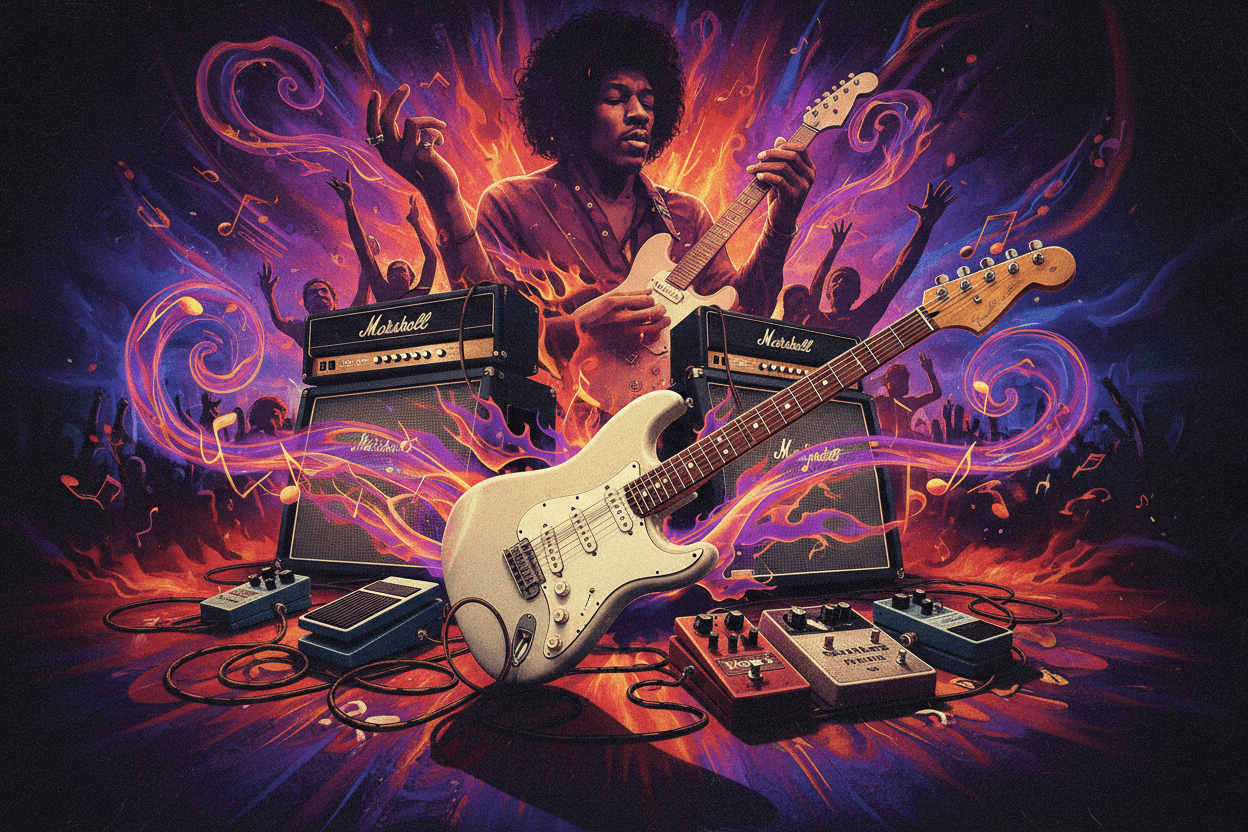
Hendrix's sound was not solely dependent on his guitars; the amplifiers and effects pedals he used were equally important. His primary amplifier was the Marshall stack, which contributed to his powerful and dynamic sound. The combination of high gain and volume allowed Hendrix to push the boundaries of electric guitar sound, creating a raw and energetic performance style that captivated audiences.
How did Marshall amplifiers contribute to Hendrix's powerful tone?
Marshall amplifiers were integral to Hendrix's sound, providing the necessary power and distortion that defined his music. The Marshall JTM45 and later models allowed him to achieve a rich, saturated tone that complemented his playing style. The amplifiers' ability to handle high volumes without losing clarity enabled Hendrix to perform with a level of intensity that became his trademark. The interaction between his Stratocaster and Marshall amps created a feedback loop that he expertly manipulated, resulting in his signature sound.
What role did signature pedals like Fuzz Face, Wah, Uni-Vibe, and Octavia play?
Hendrix's use of effects pedals was revolutionary, as he incorporated them into his performances to create unique sounds. The Dallas Arbiter Fuzz Face pedal was essential for achieving the thick, distorted tones heard in tracks like "Foxy Lady." The Wah pedal allowed him to manipulate frequencies, adding expressiveness to his solos. The Uni-Vibe created a swirling, chorus-like effect that became a staple in his sound, particularly in songs like "Voodoo Child (Slight Return)." The Octavia pedal, which added an octave-up effect, was famously used in "Purple Haze." Each pedal contributed to the overall texture of his music, showcasing his innovative approach to sound design.
What revolutionary guitar techniques did Jimi Hendrix pioneer?
Hendrix was not only a master of tone but also a pioneer of guitar techniques that transformed the way the instrument was played. His innovative use of feedback, string bending, and chordal playing set new standards for guitarists. These techniques allowed him to express emotions and create soundscapes that were previously unimaginable.
How did Hendrix master controlled feedback and sustain?
Controlled feedback was one of Hendrix's signature techniques, allowing him to create sustained notes that sang with emotion. He achieved this by positioning his guitar close to the amplifier, creating a natural resonance that he could manipulate. This technique is evident in songs like "The Star-Spangled Banner," where he used feedback to evoke powerful emotions. By mastering this technique, Hendrix demonstrated how feedback could be an integral part of musical expression rather than just an unwanted noise.
What are the key vibrato, string bending, and chordal playing methods Hendrix used?
Hendrix's vibrato technique was characterized by its wide range and expressiveness, often used to add depth to his solos. His string bending was equally impressive, allowing him to reach notes that conveyed a sense of longing and emotion. Additionally, his approach to chordal playing, particularly in songs like "Hey Joe," showcased his ability to blend rhythm and melody seamlessly. These techniques not only defined his style but also influenced countless guitarists who followed in his footsteps.
How has Jimi Hendrix influenced modern guitarists and music genres?
Hendrix's impact on music extends far beyond his lifetime, influencing a wide range of genres, including rock, blues, and psychedelic music. His innovative techniques and sound have inspired generations of guitarists, making him a pivotal figure in the evolution of modern music.
In what ways did Hendrix shape rock, blues, and psychedelic music?
Hendrix's fusion of rock and blues elements created a new sound that resonated with audiences worldwide. His ability to blend genres allowed him to push the boundaries of what was possible in music. Songs like "All Along the Watchtower" exemplify his unique approach, combining storytelling with innovative guitar work. His influence can be seen in the works of artists across various genres, as they draw inspiration from his groundbreaking style.
Which contemporary artists cite Hendrix as a major influence?
Many contemporary artists, including John Mayer, Gary Clark Jr., and Lenny Kravitz, cite Hendrix as a significant influence on their music. These artists have embraced his techniques and sound, incorporating them into their own styles. The legacy of Hendrix continues to inspire new generations of musicians, ensuring that his impact on music remains profound and enduring.
How can musicians build a Jimi Hendrix inspired rig today?
For musicians looking to capture the essence of Hendrix's sound, assembling a rig that emulates his setup is essential. This involves selecting the right guitars, amplifiers, and effects pedals that reflect his iconic tone.
What modern gear replicates Hendrix's classic sound?
Today, several brands offer gear that closely resembles Hendrix's setup. For instance, Fender produces signature Stratocasters that replicate his modifications, while Marshall continues to create amplifiers that deliver the same powerful sound. Additionally, effects pedals like the Dunlop Cry Baby Wah and the Dallas Arbiter Fuzz Face pedal are widely available, allowing musicians to recreate Hendrix's signature tones. Investing in quality gear that mirrors Hendrix's choices is crucial for achieving an authentic sound.
How to assemble and set up a Hendrix-style guitar signal chain?
To create a Hendrix-style signal chain, start with a Fender Stratocaster, followed by a fuzz pedal, then a wah pedal. Connect this to a Marshall amplifier set to a high gain. Experiment with the placement of pedals to find the sweet spot for your sound. Additionally, using a good set of strings and maintaining your guitar's setup will help you achieve the best tone possible. This setup will allow you to explore the sonic landscapes that Hendrix so masterfully navigated.


Share:
Fingerpicking Techniques
Eric Clapton's Iconic Guitars & Blues Journey