
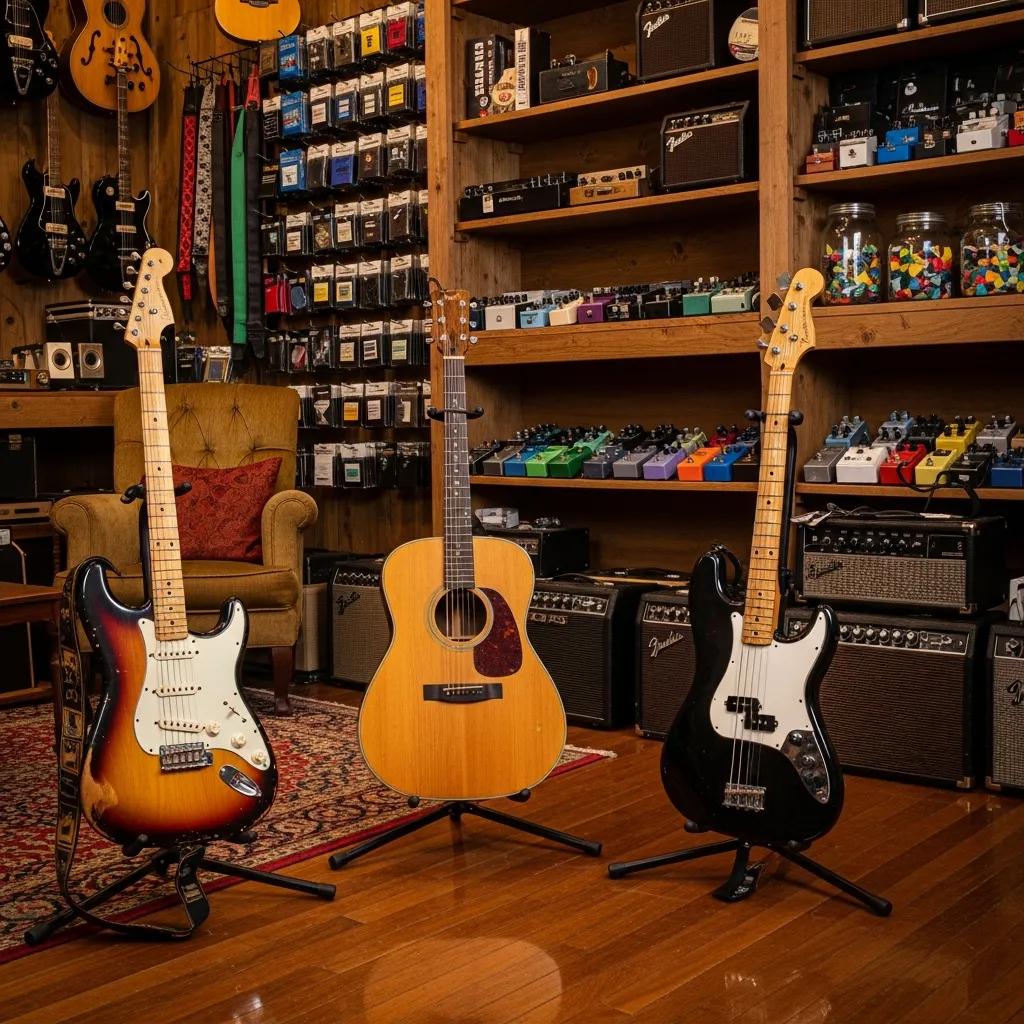
Used Guitars Near Me: Where to Buy, Sell, and Trade Quality Second Hand Guitars in the UK

Finding used guitars near you saves money and often uncovers unique or vintage instruments you won't see in new-inventory racks, whether you're searching for a used electric, acoustic or bass. This guide explains where to locate quality second-hand guitars in the UK, how to inspect them before purchase, and practical options for selling or trading your own instrument locally. Readers will learn how to compare local shops and online marketplaces, run a quick inspection for playability and authenticity, and prepare a guitar for sale or trade-in to secure a fair price. Practical checklists, brand-specific notes and valuation tables are included to make store visits and online negotiations precise and efficient. The article covers local sourcing strategies, buyer inspection steps, seller trade-in and valuation workflows, advantages of vintage instruments, and city-focused search tips for London, Manchester and Birmingham. Throughout, target keywords like "used guitars near me", "used guitar shops near me", and "sell your guitar near me" are woven in naturally to help you act quickly and confidently.
Where Can I Find the Best Used Guitars Near Me?
Used guitars are typically found in a mix of independent music shops, specialist vintage dealers, and online marketplaces with local filters; each source offers different selection, price and testing opportunities. Locally, independent shops and specialist dealers usually provide hands-on testing, expert inspection and provenance checks, which benefits buyers seeking playable instruments or rare models. Online marketplaces expand selection and price transparency but require careful condition checks, clear photos and seller reputation reviews before purchase. Knowing where to look and what to ask saves time and increases the chance of finding good value instruments; the next paragraphs break down the main local sources and offer a quick checklist to trigger search results and featured snippets.
Local and online sources to search for used guitars:
- Local independent music stores and specialist vintage dealers often list inventory that you can inspect in person.
- Online marketplaces with local filters provide wider selection and price comparables that you can narrow by postcode.
- Consignment, repair shops and pawn outlets sometimes carry curated, refurbished and authenticated second-hand instruments.
These three sources cover most opportunities for finding used guitars near you, and the following subsection explains what to expect from different local store types so you can plan visits or calls.
Which Local Music Stores Offer Quality Used Guitars?

Independent shops, specialist vintage stores and national chains each present a distinct used-guitar experience, from curated vintage stock to trade-in turnover and budget-friendly consignments. Independent and specialist shops tend to emphasise expertise and inspection services, offering tested instruments and often providing short-term guarantees or refurbishment before sale. Chain music stores and multi-branch retailers may have steady trade-in flows and standardised condition grading, which can help with predictable pricing and occasional nationwide delivery options. When planning a visit, call ahead to confirm stock and testing availability, check opening hours and ask whether instruments have been professionally inspected; this information helps you prioritise which stores to visit for hands-on trials and which to browse online first.
How Do Online and Local Stores Compare for Buying Used Guitars?
Online retailers and marketplaces give buyers access to a broader selection, searchable comparables and price-history signals, but they limit the ability to test playability and tone in person. Local stores let you play before you buy, negotiate directly and take an instrument home immediately, while online purchases often rely on condition reports, video demos and return policies to reduce risk. To mitigate online buying risks, always request detailed photos of the neck, frets, bridge, tuners and serial number, ask for a short video of the guitar being played unplugged and plugged in, and confirm any available warranty or inspection report. Understanding these trade-offs allows you to choose the source that best matches your priorities—selection and price transparency versus hands-on testing and immediate possession—which leads naturally into the exact inspection steps to use when evaluating a guitar.
What Should I Know Before Buying a Used Guitar Near Me?
Before buying a used guitar, focus on structural integrity, playability, electronics and authenticity; these core checks determine whether the instrument will perform and hold value. A concise inspection method helps identify costly problems such as neck warps, severe fret wear, bridge separation on acoustics or noisy electronics on electrics. Documenting serial numbers and service history supports authentication and resale value, while trying multiple playing positions reveals action, intonation and fret buzz issues. Below is a practical numbered checklist optimized for quick in-store or remote inspection to target featured snippets and ensure you cover the essentials.
Use this inspection checklist before buying a used guitar:
- Check neck straightness and relief: sight down the neck and press each string to test for back-bow or excessive relief.
- Inspect frets and fretboard wear: look for deep grooves or uneven frets that affect intonation and playability.
- Test electronics and hardware: plug in, sweep pickups, move switches and turn pots to listen for crackles or dropouts.
Following this checklist highlights immediate red flags and provides a baseline for negotiating price; the next subsection gives a more detailed, step-by-step inspection sequence and a quick-reference EAV table to use in-store or for local pickup.
How to Inspect a Used Electric or Acoustic Guitar?
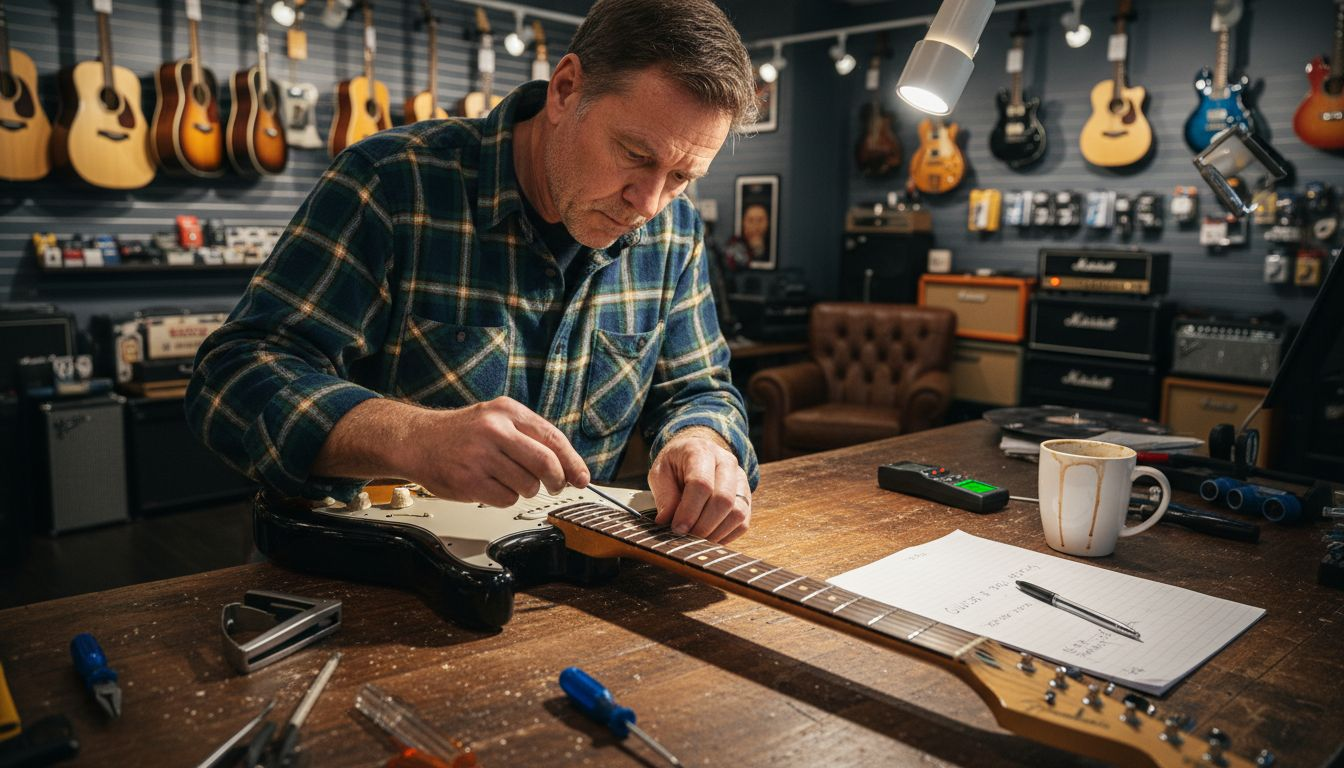
A structured inspection starts with a visual and hands-on review of the neck, frets, action and body for both electrics and acoustics, and progresses to electronics testing for electrics and bridge/seam checks for acoustics. Begin by sighting the neck from headstock to body to assess straightness and measure relief by fretting the low E at the first and last frets while checking the gap at the 7th–9th fret; excessive bow or back-bow often requires professional setup. Examine the frets for wear lines and uneven heights, then play open chords and single notes across the fretboard to detect buzzes and intonation issues; truss rod access notes and whether adjustments are possible affect immediate repair costs. For electrics, plug in and test pickups, switches and potentiometers for noise or dead coils; for acoustics, inspect the bridge plate and soundboard for any separation, cracks or repaired seams. If any structural repair is suspected, seek a technician's opinion before purchase; this brings us to a concise EAV table summarising the main checks for quick reference.
This table is a quick-reference inspection checklist for buyers to use when evaluating a used guitar in person or during local pickup.
| Part to Check | What to Look For | Result & Notes |
|---|---|---|
| Neck | Straightness, relief, truss rod function | Pass: straight/adjustable; Fail: severe warp or stuck truss rod |
| Frets & Fretboard | Wear grooves, uneven frets, fret ends | Pass: light wear; Fail: deeply grooved or sharp fret ends |
| Electronics (electrics) | Pickups, pots, switches, output jack | Pass: clean sound/noise; Fail: crackle, dropouts, static |
| Body & Finish | Cracks, bridge separation, repaired seams | Pass: stable finish; Fail: open cracks or loose bridge |
| Hardware | Tuners, bridge saddles, nut condition | Pass: stable tuning; Fail: broken/worn hardware affecting playability |
Use this table as a quick pass/fail guide during inspections; if multiple "Fail" notes appear, factor repair costs into your offer and consider a technician appraisal before committing.
Which Brands and Models Are Best for Second Hand Buyers?
Certain brands consistently retain value and offer reliable performance on the used market, while others represent best value for beginners or collectors; knowing brand tendencies helps set realistic expectations. Premium brands like Fender, Gibson and Martin typically hold resale value and attract collectors, but they also require focused authentication checks due to counterfeits and costly repairs. Brands such as Yamaha, Squier and Epiphone often deliver dependable used entry-level and intermediate guitars that play well after a basic setup, offering good value for beginners. When evaluating specific models, cross-reference recent sale prices on marketplaces and look for documentation or service history; the following EAV-style table outlines common condition issues and authentication tips for popular brands to help buyers identify value signals.
| Brand / Model | Common Used-Condition Issues | Price Range & Authentication Tip |
|---|---|---|
| Fender (Strat/Tele) | Fret wear on playables, replaced hardware | Mid-range to high; check neck heel stamp and serial lookup |
| Gibson (Les Paul/SG) | Finish checking and headstock repairs | High; inspect neck joint and original wiring for authenticity |
| Martin (Dreadnought) | Bridge lifting, top cracks on older models | High; verify label and dovetail neck joint |
How Can I Sell or Trade In My Used Guitar Locally?

Selling or trading a used guitar locally involves preparing the instrument, choosing the right channel (private sale, consignment, or trade-in) and documenting condition to justify price; these steps reduce friction and help secure a fair offer. Private sales often yield the highest cash returns but require time to list, respond to enquiries and meet buyers; consignment and trade-in programmes provide convenience and immediate credit but can pay less than private sale prices. Preparing a guitar means cleaning it, servicing basic setup issues, taking high-quality photos of serial numbers and key details, and compiling any service records; clear documentation increases buyer confidence and can lift offers. Below is a numbered list of suggested selling steps for local sellers, followed by a table summarising valuation factors that stores typically assess when making an offer.
Steps to sell or trade your guitar locally:
- Clean and set up the guitar, and address minor repairs to maximise appeal.
- Photograph key details: headstock, serial number, electronics and any damage.
- Gather provenance and service history, and research comparable sales to set price expectations.
These steps make your guitar more attractive to buyers and shops, and the next subsection outlines the benefits and trade-offs of local trade-in programmes so you can choose the best selling route.
What Are the Benefits of Guitar Trade-in Programmes Near Me?
Trade-in programmes offer immediate credit toward new purchases, streamline the selling process and remove the burden of private sale logistics, though they often deliver a lower net cash return than selling privately. For sellers who prioritise convenience, trading in at a local shop can offset the cost of an upgrade and eliminate the need to ship or meet private buyers. Shops handling trade-ins usually inspect and refurbish instruments, adding value through professional setup, cleaning and minor repairs before resale—this refurbishment can improve the instrument’s marketability. Trade-ins are especially practical when you plan to buy another instrument from the same retailer and prefer instant store credit instead of delayed private-sale proceeds; the following paragraph explains how to get fair valuations at trade-in time.
How to Get a Fair Valuation for Your Used Guitar?
A fair valuation combines objective condition assessment, current market comparables and clear documentation; understanding each factor helps you negotiate a better offer. Start by researching recent sale prices for the same model and year on marketplaces, noting condition differences that affect price, and prepare a short packet of photos and service notes to present to the appraiser. Shops use condition, brand desirability and demand to calculate offers, and they will deduct expected refurbishment costs; being transparent about repairs and upgrades avoids surprises at appraisal. The table below summarises typical valuation factors, how shops assess them and their relative impact on price to give sellers clarity when negotiating trade-ins or consignment terms.
| Valuation Factor | How It's Assessed | Impact on Price |
|---|---|---|
| Condition | Physical inspection of frets, neck, body and electronics | High |
| Brand & Model Rarity | Market demand and collectability research | High |
| Documentation | Serial numbers, service history, original case/parts | Medium |
| Required Refurbishment | Estimated cost of setup, fretwork, electronics repair | Medium |
| Current Market Comparables | Recent sale prices for similar condition | High |
Understanding these factors reduces surprises and helps you present your guitar in a way that supports a fair offer; the next section explores why vintage and pre-owned guitars can be especially attractive purchases.
What Are the Advantages of Buying Vintage and Pre-Owned Guitars Near Me?
Vintage and pre-owned guitars often offer unique tonal character, access to discontinued models and potential investment upside, making them desirable beyond simple cost savings. Aged tonewoods and original electronics can produce a sound profile that modern reproductions may not replicate, and provenance or historical significance can increase both musical and collector value. Buying locally allows direct inspection and verification of provenance, which is particularly important for vintage purchases where condition and authenticity dramatically affect value. There is also an environmental benefit: purchasing pre-owned instruments supports a circular economy, reducing demand for new manufacturing and extending the useful life of quality instruments.
Vintage benefits summarised in a short list:
- Unique tone and playing feel from aged woods and original components.
- Access to discontinued or rare models that command collector interest.
- Potential for long-term value appreciation and investment potential.
These advantages make vintage instruments appealing to players and collectors, and the next subsection explains why local shops are often the best place to acquire and verify vintage pieces.
Why Choose Vintage Guitars from Local Shops?
Local vintage shops typically offer the advantage of expert appraisal, in-person testing and provenance checks that online listings cannot fully replicate. Specialists at these shops often maintain records of past repairs and can provide a service history or notes on prior restorations, increasing buyer confidence. Being able to play the instrument and hear its unplugged and amplified voice in person is invaluable for assessing aged tonewoods and original electronics. Local expertise also helps identify subtle authenticity markers and historical details that affect value; the following subsection outlines the sustainability benefits of choosing used instruments.
How Does Buying Used Guitars Support Sustainability?
Buying used guitars reduces the environmental impact associated with new instrument production by extending instrument lifespans and lowering demand for raw materials and manufacturing energy. Reusing and refurbishing instruments supports local repair economies and encourages circular practices in the music retail sector. Choosing pre-owned instruments also conserves resources tied to packaging and shipping of new goods, which aligns with eco-conscious purchasing for many musicians. These sustainability advantages add social value to buying used instruments and complement the tonal and financial benefits discussed earlier.
Which Used Guitar Brands and Types Are Available Near Me?
Used markets commonly stock electric guitars, acoustics and basses across entry-level, mid-range and high-end segments, making it possible to find instruments suited to beginners, intermediates and professionals. Entry-level buyers will often find Squier, Yamaha and Epiphone models that are reliable after a setup, while intermediate players can source Fender MIM, PRS SE and similar instruments that offer upgraded hardware and tone. High-end and vintage categories include sought-after Fender Stratocasters, Gibson Les Pauls and Martin acoustics whose value depends on condition, originality and provenance. The following subsection lists typical inventories by buyer segment and instrument type, with tips on what to prioritise when searching locally.
What Used Electric, Acoustic, and Bass Guitars Can I Find Locally?
Local inventories typically include beginner-friendly electrics and acoustics, mid-range instruments ideal for gigging players, and occasional high-end or vintage pieces for collectors and professionals. For beginners, look for Squier, Yamaha and Epiphone models that take a basic setup well and keep costs low; for intermediate players, Fender Mexican-made instruments, PRS SE and similar models offer better components and tone. Bass buyers will find used Fender Precision and Jazz bass shapes across price ranges as well as quality offerings from Yamaha and other manufacturers. When shopping, prioritise playability and setup quality for gig-ready instruments and authenticity verification for higher-value vintage pieces.
How to Identify Authentic Used Fender, Gibson, and Martin Guitars?
Authenticating premium brands involves checking serial numbers against manufacturer patterns, inspecting construction markers like neck joints and headstock details, and verifying original wiring, hardware and finish characteristics. Locate and photograph serial numbers, compare headstock logos and heel stamps to known references, and inspect wiring and pickup cavities for factory soldering versus aftermarket modifications. Look for consistent wear patterns that match the instrument's age rather than uniform cosmetic "relic" work, and when in doubt, ask for a technician appraisal or provenance documentation from the seller. These authentication steps protect buyers from forgeries and ensure that high-value purchases are backed by verifiable evidence.
Where Are the Top Vintage Guitar Shops in London and Other UK Cities?
Major UK cities such as London, Manchester and Birmingham concentrate specialist dealers, consignment stock and repair experts, increasing the odds of finding rare or well-documented pre-owned instruments. London typically offers the deepest vintage inventories and specialist appraisers with provenance knowledge, while Manchester and Birmingham present a mix of independent shops and market-day opportunities that can yield hidden gems. When searching city-specific inventories, use map filters, store finders and city-keyword searches to locate shops, and always call ahead to confirm appointments for high-value viewings or professional assessments. The next subsections explain what makes London unique and provide practical tips for searching in Manchester and Birmingham.
What Makes Vintage Guitar Shops in London Unique?
London hosts a higher concentration of specialist dealers, trained appraisers and vintage inventories, which translates to more opportunities to inspect rare models and access provenance records. Specialist shops in London often offer refurbishment and certification services in-house, making it easier to buy instruments that have been professionally serviced and documented. The city’s market depth supports comparative pricing and sometimes immediate access to expert second opinions, which benefits collectors seeking reliable provenance and players wanting ready-to-play instruments. If you plan an in-person visit, schedule an appointment to view provenance documentation and request a demonstration of electronics and tone to make the most of specialist offerings.
How to Find Used Guitars in Manchester and Birmingham?
Searching for used guitars in Manchester and Birmingham benefits from a combination of local keyword searches, marketplace filters and visits to multi-shop retail areas or market days where multiple dealers congregate. Use local marketplace filters to narrow listings by postcode, check classified ads and visit established music retail streets to compare instruments side-by-side. Contact shops ahead to ask about current inventory, any inspection reports they provide, and whether they offer local pickup or nationwide delivery for larger purchases. These tactics increase your chances of finding well-priced, inspected used guitars in regional markets and make the buying process smoother.

Share:
yamaha acoustic guitar
Discover the Best Classical Guitar Techniques for All Levels