
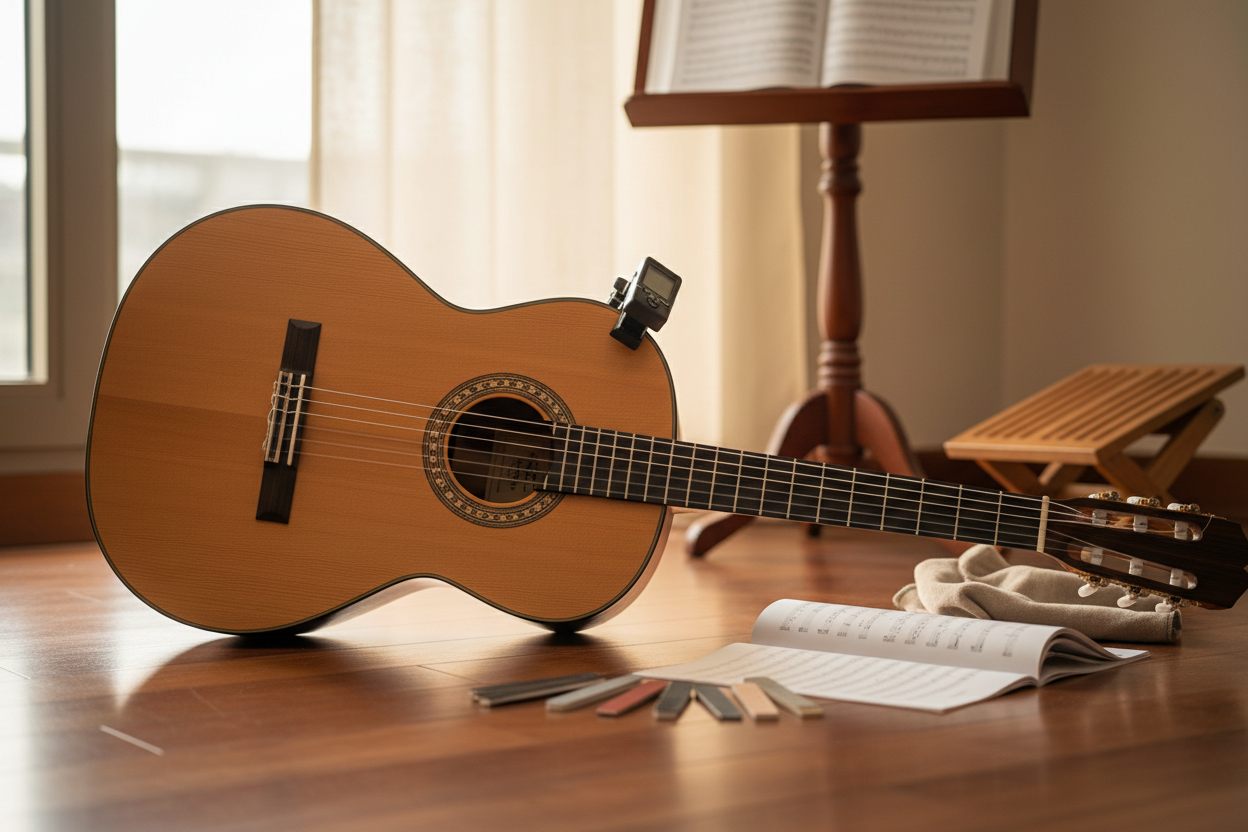
Best Classical Guitars and Accessories: Your Ultimate Guide to Choosing, Learning, and Caring for Nylon String Guitars
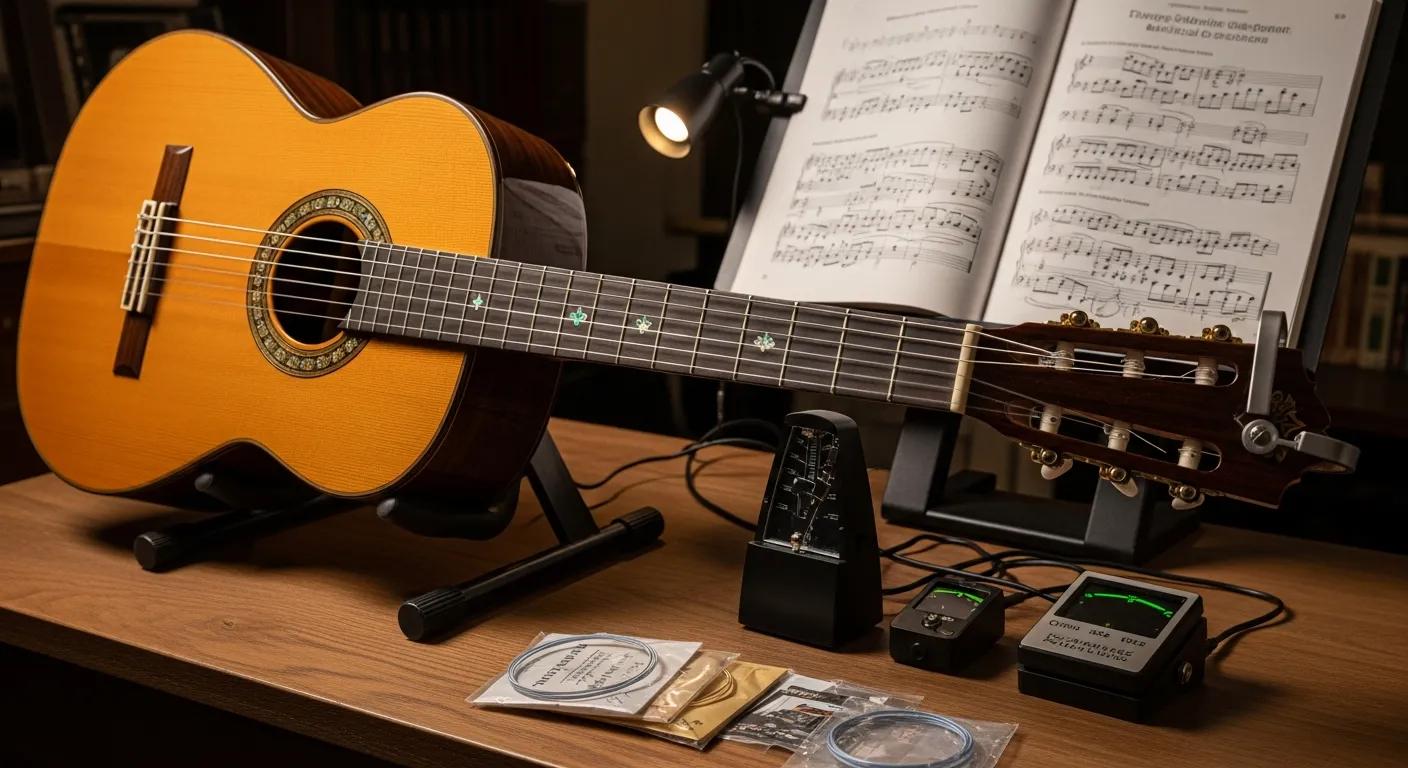
Classical guitar refers to a nylon-stringed, wide-necked instrument designed for fingerstyle technique and repertoire ranging from Renaissance lute transcriptions to contemporary classical and Latin styles. This guide explains how classical guitars differ from steel-string and flamenco variants, outlines the best brands and models in 2025, and shows which accessories, learning pathways and maintenance routines preserve tone and playability. Many players struggle to choose between spruce and cedar tops, find the right action for fingerstyle, or understand trade-in value; this article delivers practical criteria, comparisons, and step-by-step advice so you can buy, protect and progress confidently. You will find clear model recommendations, an accessories quick-reference, online lesson pathways and a comprehensive trade-in and valuation checklist tailored to modern players and electric-classical performers. Read on for focused buying guidance, maintenance protocols including humidity control, learning progressions for beginners and intermediates, and actionable trade-in steps to get the best value from your instrument.
What Are Classical Guitars and How Do They Differ from Other Guitars?
A classical guitar is a plucked string instrument that uses nylon or equivalent low-tension strings, a wider fretboard and a design prioritising warm, focused tone for fingerstyle playing. The lower string tension and wider neck enable complex polyphony and precise fingerpicking, producing softer attack and sustained harmonic clarity compared with steel-string acoustic guitars, which emphasise projection and strummed textures. Understanding these core differences helps players choose the right instrument for repertoire and technique, and it also informs setup choices such as action height and string tension. The next section details the defining materials and technical choices that produce the characteristic classical sound and playability.
What Defines a Nylon String Guitar and Its Unique Features?
A nylon string guitar uses nylon, fluorocarbon or gut-based strings which deliver a warm, rounded tone and reduced tension that is gentler on the fingers and the top soundboard. String material and tension directly affect timbre, sustain and playability: higher tension strings increase projection and clarity, while lower tensions yield a softer, more sonorous voice that favours tonal nuance. Classical setups typically include a flatter fingerboard radius, a wider nut width and lower action geared towards fingerstyle articulation rather than aggressive strumming, and these design choices change how the instrument responds dynamically. These setup differences mean players should choose string type and tension to match repertoire and hand strength, leading naturally to a discussion of how flamenco and electric classical designs adapt the basic classical template.
How Do Classical, Flamenco, and Electric Classical Guitars Compare?
Classical, flamenco and electric classical guitars share the same basic body form and nylon-string heritage but diverge in construction and tonal goals to support different musical roles. Flamenco guitars are typically lighter with lower action and tap plates to create quick response and percussive attack suitable for dance and rhythmic compás, whereas traditional classical guitars favour fuller resonance and slower sustain for lyrical pieces. Electric classical guitars incorporate pickups or onboard electronics to enable amplification and effects for stage use; pickups alter the instrument’s acoustic resonance priorities and often necessitate different bracing or slightly modified body shapes to reduce feedback. Choosing between these types depends on repertoire and performance context, and the next section will name top brands and models that exemplify these approaches for 2025 buyers.
Which Are the Best Classical Guitar Brands and Models in 2025?
Best classical guitar choices in 2025 balance build quality, tonewood selection and features such as cutaways or onboard electronics to suit player level and performance needs. For beginners, reliable factory instruments offer consistent action and intonation; intermediate and advanced players prioritise solid-top construction and choice woods for richer dynamics. Hybrid and electric classical options have matured, with manufacturers incorporating pickups that preserve nylon-string character while enabling stage-ready amplification without excessive feedback. The following H3 subsections explain why brands like Yamaha, Cordoba and Ibanez occupy strong positions and how tonewoods and features affect suitability, followed by a compact comparison table to aid selection.
What Makes Yamaha, Cordoba, and Ibanez Top Choices for Classical Guitarists?

Yamaha is widely regarded for consistent manufacturing standards and dependable playability, making models like the Yamaha C40 a common recommendation for beginners seeking value and reliable setup. Cordoba emphasises classical tradition with models such as the Cordoba C5 that combine solid-top tonewoods and player-friendly neck profiles to appeal to those wanting classical timbre with modern playability. Ibanez brings strong hybrid and electric-classical options—models in the Ibanez G series and Ibanez GA35TCE demonstrate the brand’s focus on amplified performance and cutaway convenience, appealing to gigging players who need nylon-string tone on stage. These brand strengths map neatly to player needs: Yamaha for value and consistency, Cordoba for traditional tone and feel, and Ibanez for amplified versatility.
How Do Tonewoods and Features Affect Classical Guitar Quality?
Top wood selection—commonly spruce or cedar—largely determines the instrument’s attack and tonal envelope: spruce tops typically deliver brighter, articulate projection while cedar tops offer warmer, more immediate response suited to expressive dynamics. Back and sides woods such as rosewood produce strong low-end and complex overtones, whereas mahogany emphasises midrange clarity and a more focused sound; these choices interact with body size and bracing to shape projection and sustain. Features such as cutaways and onboard preamps enable amplified performance but may slightly alter the acoustic voice; players prioritising pure unplugged classical tone often choose full-body, solid-top instruments without heavy electronics. Selecting woods and features according to repertoire and venue needs leads into a side-by-side model comparison to help buyers match attributes to their priorities.
Wood Selection for Guitars: Traditional and Alternative Species
Most soundboards (tops) were manufactured from American or European spruces. Rosewood and, less frequently, mahogany, maple, and koa, were employed for backs and sides. Spanish cedar and mahogany were the preferred species for necks; ebony or rosewood for fretboards. Due to scarcity and increasing costs, novel woods are now utilised. Some are congeners of traditional woods; others are more innovative. The botanical identification of many of these species is inaccurate. A common name may refer to more than one species (under-differentiation, e.g., Madagascar rosewood for several Dalbergia spp.). Conversely, a binomial may be known by several common names (over-differentiation, e.g., European, German, or Italian spruce for Picea abies). Instrument makers and wood suppliers are unreliable sources of taxonomic names, especially with newer woods. Here, I provide the full taxonomic identification (binomials, author citations, and families) for both traditional and some new guitar woods. Many factors determine a wood’s suitability for lutherie. A model based on two mechanical properties of wood, density and modulus of elasticity, can be used to determine what species of wood constitutes each part of a guitar. Many of the “new” guitar woods are now becoming scarce. Luthiers face the continual task of finding suitable alternative woods. The model presented here can serve as a guide in future wood choices; further modifications, using additional wood properties, may help refine the model. These principles are also applicable to wood selection for other chordophones.
The sound of trees: wood selection in guitars and other chordophones, 2016
Different models compared by key specifications:
| Model | Top wood / Neck width / Scale length / Electronics / Price band / Suitable for |
|---|---|
| Yamaha C40 | Spruce top / 52 mm / 650 mm / None / Entry-level / Beginners and students |
| Cordoba C5 | Solid cedar top / 52 mm / 650 mm / Optional / Mid-range / Classical repertoire players |
| Ibanez GA35TCE | Spruce top / 46 mm / 648 mm / Cutaway + electronics / Mid-range / Gigging and amplified players |
This comparison highlights choices across budgets: laminate or solid tops, neck widths for fingerstyle, and electronics for amplified use. After reviewing models, readers may benefit from checking available inventory or seeking personalised advice to match a chosen model to individual technique and repertoire needs. For players seeking instruments or tailored product advice, retailers and specialist shops often maintain wide selections and can provide inventory guidance and hands-on comparisons. A brief, topic-first approach to choosing an instrument helps players define budget, tonal target and required features before contacting a provider for stock checks or setup consultations. This business integration supports the buying decision without replacing the technical selection criteria already outlined.
What Essential Accessories Do You Need for Your Classical Guitar?
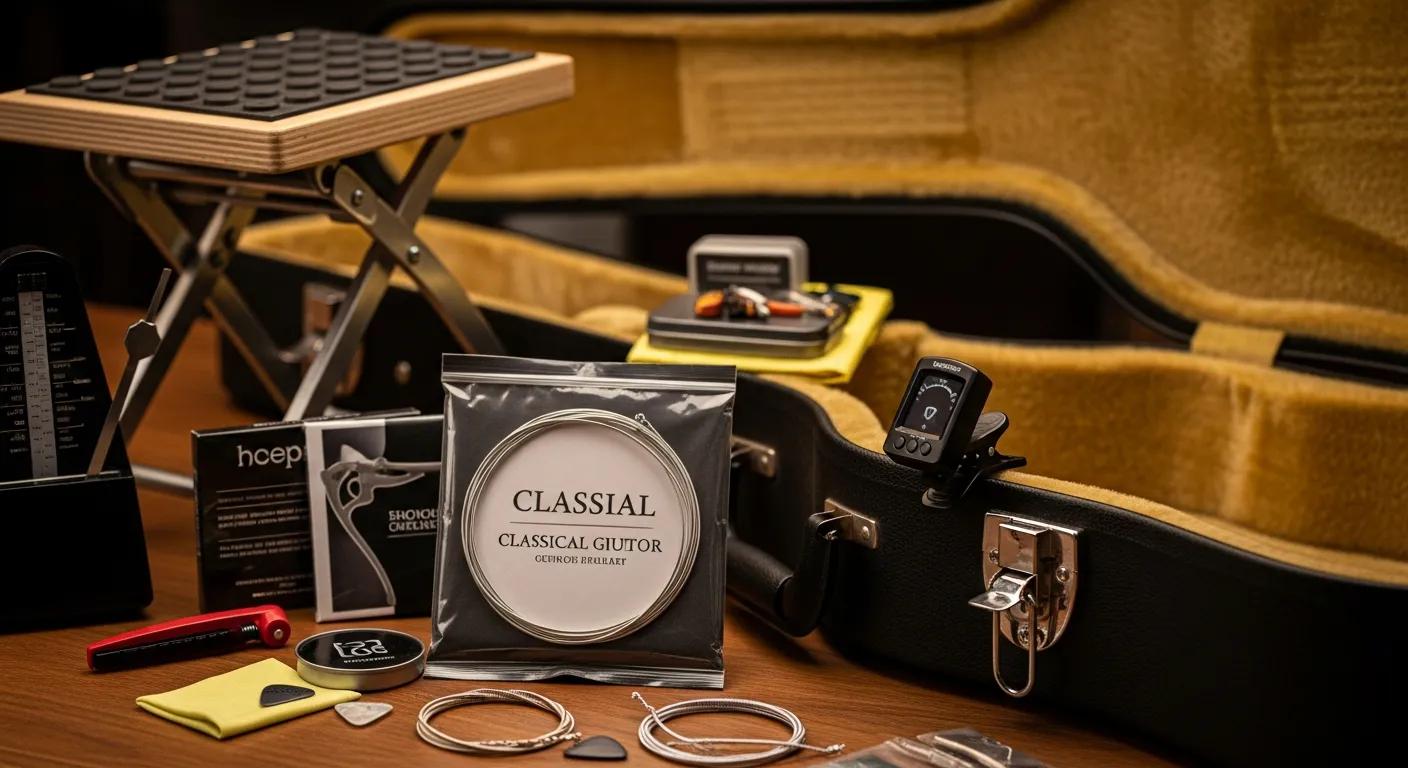
Accessories materially affect your instrument’s protection, tuning stability and long-term tone; essential categories include strings, protective cases, tuners and ergonomic aids like footstools. Choosing the right accessories reduces risk of damage, improves day-to-day playability and helps maintain consistent intonation and tone. The following subsections compare strings, cases and tuners, and then explain why humidifiers, footstools and nail-care kits influence performance and maintenance routines. Practical accessory choices should be guided by instrument type, climate and playing context.
Which Guitar Strings, Cases, and Tuners Are Best for Nylon String Guitars?
String choice varies by material and tension: nylon and fluorocarbon strings are common, with higher-tension sets offering more projection and lower-tension sets providing softer response and easier fretting for beginners. Hard-shell cases provide maximum environmental protection and impact resistance, while padded gig bags favour portability and light storage; both choices should fit the instrument snugly to avoid stress on the neck. Tuners designed for nylon strings account for friction at the nut and slotted headstock geometry; clip-on chromatic tuners and precision pedal tuners both offer accurate pitch reference, but players who perform live often favour rack or pedal solutions for reliability. Match string tension, case type and tuner choice to your playing environment for optimal protection and tuning stability.
Accessory quick-reference:
| Accessory | Purpose | Recommended type | Price range |
|---|---|---|---|
| Strings | Tone and tension control | Nylon or fluorocarbon sets, varied tensions | Low–medium |
| Case | Protection and transport | Hardshell for storage, padded gigbag for travel | Medium–high |
| Tuner | Accurate pitch reference | Clip-on chromatic for practice, pedal/rack for performance | Low–medium |
Choosing accessories that complement your instrument and use case reduces maintenance time and supports reliable tone in practice and performance. Many providers also offer bundled packages that combine strings, humidifier and a case for convenience and savings.
How Do Humidifiers, Footstools, and Nail Care Kits Enhance Your Playing Experience?
Maintaining stable humidity is crucial for wooden classical guitars; humidifiers prevent top cracks, bridge lifting and neck warping by keeping the instrument within safe humidity ranges. Footstools or adjustable supports improve posture and left-hand fretting alignment, reducing tension and enabling better fingering accuracy for classical repertoire. Nail care kits tailored for fingerstyle players help shape and maintain nail edges for consistent attack and tone, directly influencing timbral clarity and dynamic control. Regular use of these accessories preserves instrument integrity and supports technique development, so investing in suitable humidity control and ergonomic aids yields long-term benefits.
How Can You Learn Classical Guitar Online Effectively?
Online learning for classical guitar succeeds when structured curricula, clear technique demonstrations and guided practice plans combine with regular feedback from teachers or community critique. A dependable pathway includes short video modules that demonstrate posture and fingerings, progressive exercises for right- and left-hand independence, and repertoire that builds coordination and musicality. Learners should prioritise fundamentals—posture, nail care, rest vs free stroke technique and accurate rhythm—before progressing to complex contrapuntal pieces. The next subsections compare platforms and offer beginner technique priorities to help online students map their practice.
What Are the Best Online Classical Guitar Lessons and Platforms?
Effective online platforms offer a mix of structured courses, one-to-one tuition and community feedback options to keep learners accountable and technically correct. Free resources and video libraries provide useful demonstrations, but paid platforms often include curriculum sequencing, downloadable exercises and progress tracking that accelerate learning. When choosing a platform, evaluate instruction clarity, teacher credentials, the presence of technical breakdowns and the availability of personalised feedback or masterclasses. Combining course material with occasional live lessons ensures students receive both modeled technique and corrective input, improving the speed and accuracy of skill acquisition.
Recommended practice platforms and approaches include:
- Structured course platforms: Offer stepwise progression and exercises suited to beginners and intermediates.
- One-to-one tuition: Provides tailored correction and repertoire advice specific to the student’s posture and technique.
- Community-based feedback: Enables peer review and performance opportunities that encourage consistency.
A balanced combination of structured lessons, personalised coaching and regular practice produces the best long-term results for classical guitar students.
Which Techniques and Posture Tips Should Beginners Master First?
Beginners should prioritise correct seating position, guitar angle and footstool use to ensure the left wrist remains straight and the right hand can access the soundhole without tension. Early technique exercises should focus on simple arpeggios, rest and free stroke differentiation, and left-hand chromatic exercises to build independence and fretboard familiarity. Nail maintenance and fingertip conditioning are practical elements that influence tone production and comfort, and players should adopt a gradual routine to avoid pain or injury. Establishing a daily practice plan that emphasises short, focused sessions and incorporates metronome-based rhythm work speeds progress and reduces the risk of developing inefficient technique.
For players seeking lesson support or expert advice, many retailers and specialist teachers offer lesson packages and consultation services that complement online courses and provide personalised setup and technique evaluation.
How Do You Maintain and Care for Your Classical Guitar to Ensure Longevity?
Routine maintenance preserves tonal quality and prevents irreversible damage to a classical guitar; key areas include humidity management, safe cleaning and periodic setups to maintain action and intonation. Understanding target humidity ranges, safe cleaning products and the signs that indicate a setup is overdue enables owners to intervene early and avoid costly repairs. The subsections below address humidity control and cleaning best practices and offer guidance on string replacement intervals and setup frequency. Regular, small maintenance actions combined with occasional professional setups keep an instrument performing optimally.
What Are the Best Practices for Humidity Control and Cleaning?
The ideal relative humidity for most classical guitars lies between approximately 45–55%, where the wood maintains dimensional stability and adhesive joints remain sound; players should monitor humidity with a reliable hygrometer. Passive and active humidifiers—such as soundhole humidifiers or case-mounted systems—help maintain this range during dry winters or in heated rooms, while dehumidifiers or room-level control is important in excessively damp environments. Cleaning should be minimal and use products explicitly formulated for finished wood surfaces; avoid alcohol-based cleaners on the fingerboard and use a slightly damp cloth followed by dry polishing for routine care. These humidity and cleaning practices prevent structural issues and protect the instrument’s finish and playability over time.
| Care item | Recommended practice | Why it matters |
|---|---|---|
| Humidity monitoring | Use a hygrometer and case/humidifier system | Prevents cracks and glue joint failures |
| Cleaning | Use non-abrasive, guitar-specific cleaners sparingly | Preserves finish and wood oils |
| Storage | Store in case away from direct heat or sunlight | Minimises warp and finish damage |
Maintaining stable humidity and gentle cleaning habits prevents common deterioration and extends the instrument’s usable life, and it naturally leads to decisions about when to replace strings and schedule setups.
How Often Should You Change Strings and Perform Guitar Setup?
String change intervals depend on playing frequency and tonal preference: casual players may change strings every 3–6 months, regular players every 1–3 months, and professionals more frequently to maintain peak tone and projection. Signs that a setup is required include buzzing, poor intonation, rising action due to seasonal humidity changes, or fret wear that affects playability; these symptoms warrant a technical check and possible fret dressing, saddle adjustment or neck relief correction. A basic setup checklist includes checking neck relief, saddle height, nut condition and tuning stability; when in doubt, consult a qualified technician for a comprehensive evaluation. Regular string replacement and scheduled setups ensure consistent playability and protect the instrument’s structural integrity.
How Can You Buy, Sell, or Trade In Your Classical Guitar with Confidence?
Buying, selling and trading classical guitars with confidence requires clear valuation criteria, standardised preparation and an understanding of market demand for brands, woods and condition. Valuation depends on brand desirability, condition, provenance, materials and recent market trends; buyers should ask for detailed photos, playability reports and service histories when considering used instruments. The subsections below list primary valuation drivers and provide a pragmatic step-by-step trade-in workflow plus guidance on preparing an instrument for sale or appraisal. Clear preparation and documentation increase trade-in value and reduce negotiation friction.
What Factors Determine the Value of a Classical Guitar for Trade-In?
Several attributes determine trade-in value: brand and model desirability, the instrument’s structural condition and playability, the quality and provenance of tonewoods, and whether original case and documentation are present. Cosmetic issues such as finish cracks, bridge detachment or serious fret wear can significantly reduce value, whereas recent professional setups and documented repairs can stabilise or enhance resale pricing. Market demand and rarity also influence price: instruments with sought-after features or limited-production materials typically command higher trade-in values. Understanding these valuation drivers helps sellers present the instrument transparently and helps buyers recognise fair trade-in offers.
| Brand/model | Market desirability | High: increases value |
|---|---|---|
| Condition/playability | Structural integrity and action | High: major impact if poor |
| Wood/provenance | Solid top and reputable tonewoods | Medium–High: affects tone/value |
| Case and docs | Completeness of package | Medium: supports higher offers |
Transparent documentation and honest condition reporting reduce disputes during trade-ins and support fair valuation outcomes, and the next section describes a practical trade-in workflow.
How Does the Trade-In Process Work and Where Can You Get Expert Advice?
A clear trade-in workflow begins with gathering documentation and photographs, obtaining a playability report, and receiving a preliminary valuation either online or in-person from a specialist. Typical steps include submitting clear images and a description, receiving an estimated appraisal, arranging inspection or shipping, and finalising the value after an in-person check or technician assessment; this process protects both buyer and seller by validating condition and playability. To prepare an instrument, clean it carefully, provide a strings and setup history and disclose any repairs; professional photos and a short playability video expedite remote valuations.
- Prepare documentation: Collect photos, service history and original accessories.
- Request appraisal: Submit images and descriptions for a preliminary valuation.
- Arrange inspection or shipment: Finalise the trade-in after an in-person or technician review.
Following these steps ensures the trade-in process is transparent and that valuations reflect the instrument’s true market position. For sellers seeking assistance, specialist services and retailers focused on instruments often provide valuation, trade-in and refurbishment support aligned with fair market practices.

Share:
used guitars near me
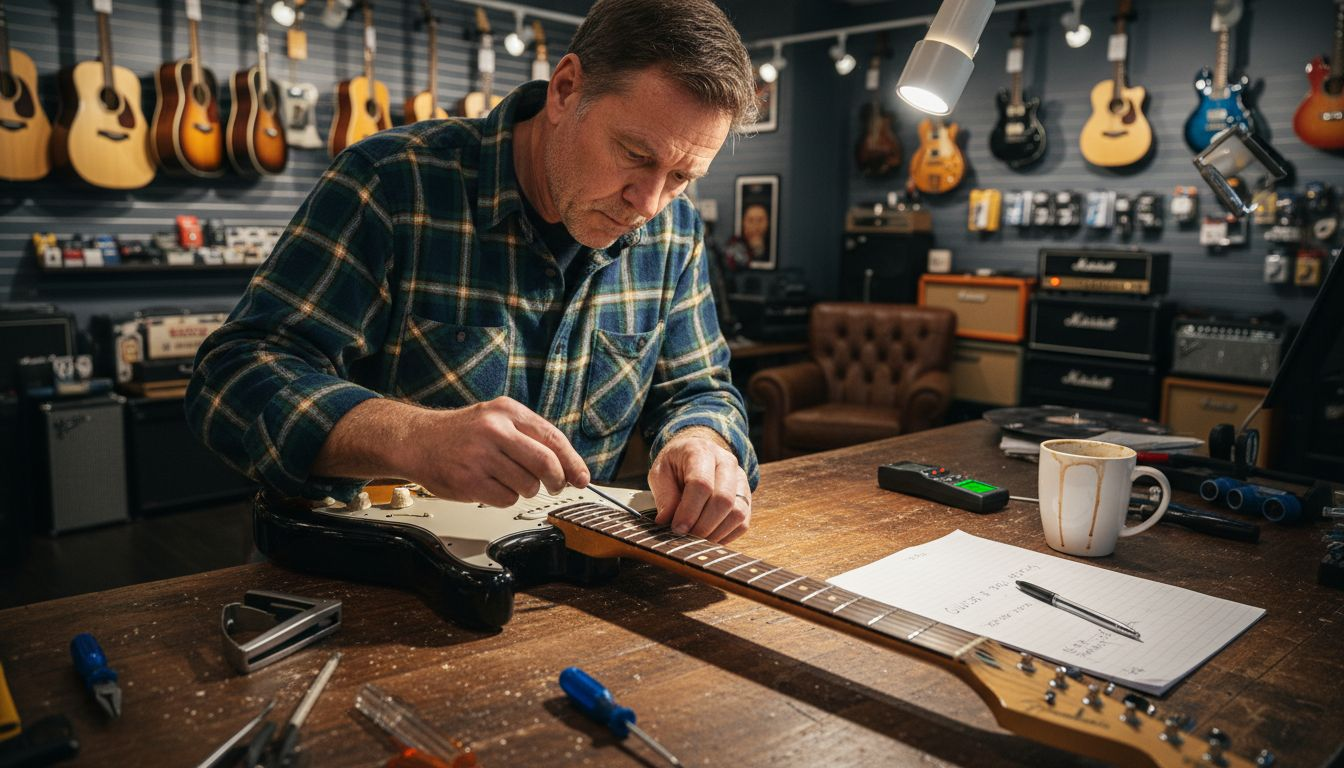
Why Maintain Guitar Setup – Playability and Tone Matter