


Walking into a guitar shop can feel overwhelming when you’re surrounded by dozens of instruments, each promising to be ‘the one’. Without a clear evaluation process, you might fall for flashy finishes or persuasive sales pitches rather than finding a guitar that truly suits your playing style and needs. Many guitarists leave stores with buyer’s remorse simply because they didn’t know what to check or how to test properly. This comprehensive guide will walk you through every step of auditioning guitars in store, from preparation through final purchase, so you can make confident decisions and find an instrument that inspires you to play every day.
Table of Contents
- Preparing To Audition Guitars In Store
- Inspecting Guitars: What To Check For Quality And Condition
- Playing And Evaluating Guitars Effectively In-Store
- Final Checks And Making The Right Purchase Decision
- Find Your Perfect Guitar With MusicStreet
Key takeaways
| Point | Details |
|---|---|
| Feel matters most | Playability and comfort outweigh price tags when choosing guitars that you’ll actually enjoy playing |
| Inspect thoroughly | Checking neck condition and hardware prevents expensive repairs down the line |
| Use systematic testing | Following organised audition steps helps you avoid impulsive purchases you’ll regret |
| Compare multiple guitars | Trying several instruments reveals your true preferences better than relying on demos alone |
Preparing to audition guitars in store
Before you step into any guitar shop, invest time understanding what you actually need from an instrument. Your musical style dictates which guitar type suits you best, whether that’s a bright Stratocaster for funk, a Les Paul for rock, or an acoustic for singer-songwriter material. Choosing a guitar that inspires you to pick it up daily matters more than any brand name or price point.
Setting a realistic budget narrows your choices dramatically and prevents wasting time on instruments you can’t afford. Be honest about what you can spend, including potential setup costs or minor repairs. Many guitarists find their perfect instrument in the mid-range rather than at premium prices, so don’t assume expensive automatically means better for your needs.
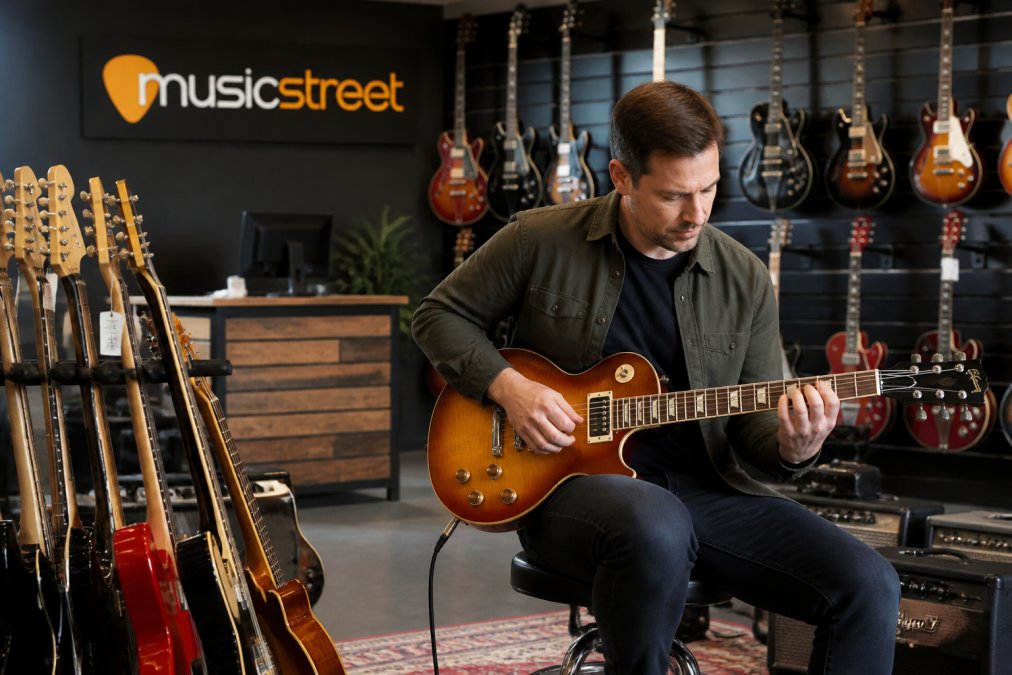
Bring your own accessories when possible to ensure consistent testing conditions. Your familiar cable, picks, and even a small portable amplifier help you hear what the guitar truly sounds like rather than relying on shop equipment that might colour the tone. Some shops welcome this approach, whilst others prefer you use their gear, so phone ahead to check their policy.
Create a mental or written checklist of features you’re evaluating. This might include neck profile, fret size, pickup configuration, weight, and tonal characteristics. Having clear criteria prevents you getting distracted by superficial elements and keeps your audition focused on what genuinely matters for your playing.
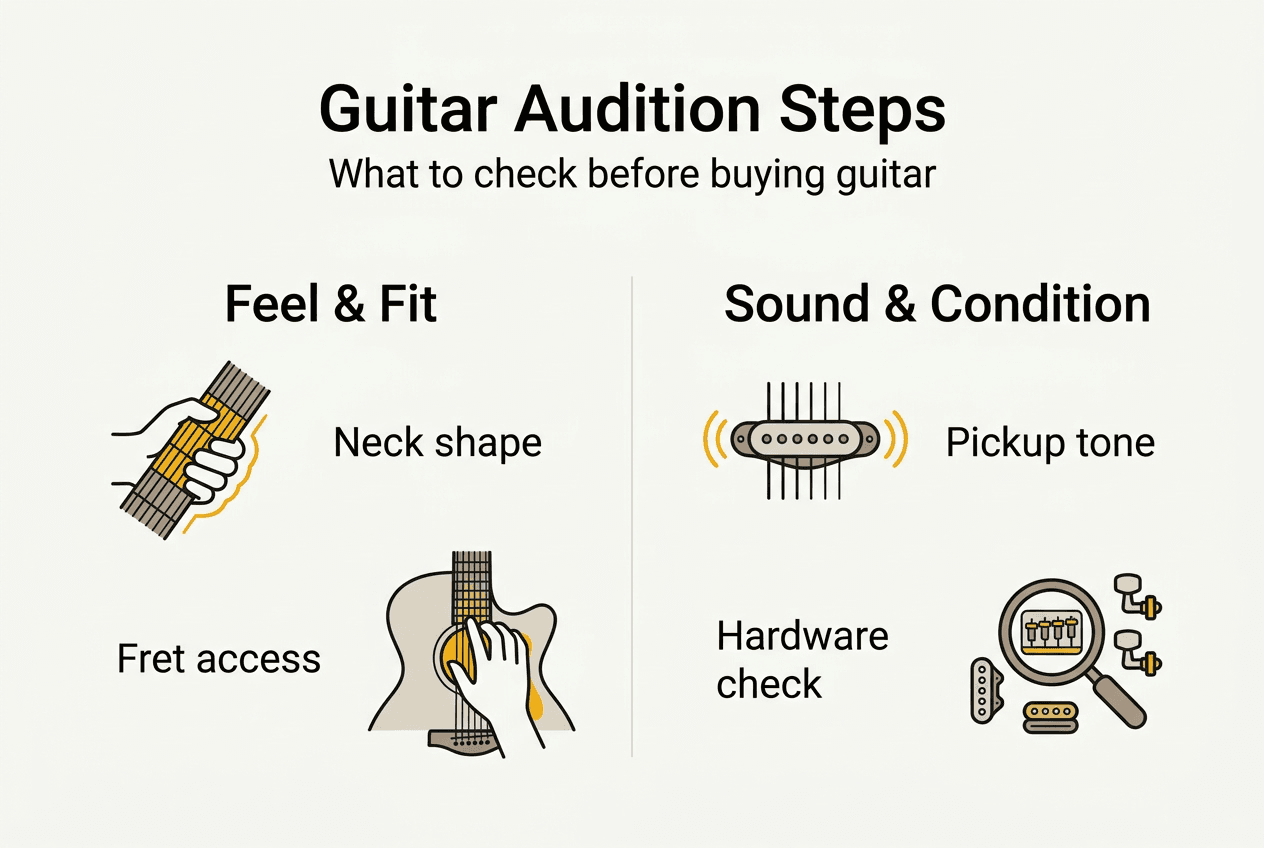
Pro Tip: Visit shops during quieter weekday hours when staff have more time to assist you and fewer customers create background noise that interferes with your listening.
Remember that feel and playability drive your long-term satisfaction with any guitar. An instrument that’s uncomfortable or doesn’t suit your hand size will gather dust regardless of its specifications or reputation. The testing used guitars guide offers additional preparation insights worth reviewing before your shop visit.
Prepare questions about the guitar’s history, setup, and any modifications. Knowledgeable staff appreciate informed customers and can provide valuable context about specific instruments. Don’t hesitate to ask about return policies, warranty coverage, and whether the shop offers professional setup services.
Inspecting guitars: what to check for quality and condition
The neck demands your closest attention because neck repairs cost £225 to £450, making it the most expensive component to fix or replace. Sight down the neck from the headstock to check for warping, twisting, or excessive relief. A straight neck with minimal bow indicates proper construction and storage, whilst significant curves suggest problems that affect playability and intonation.
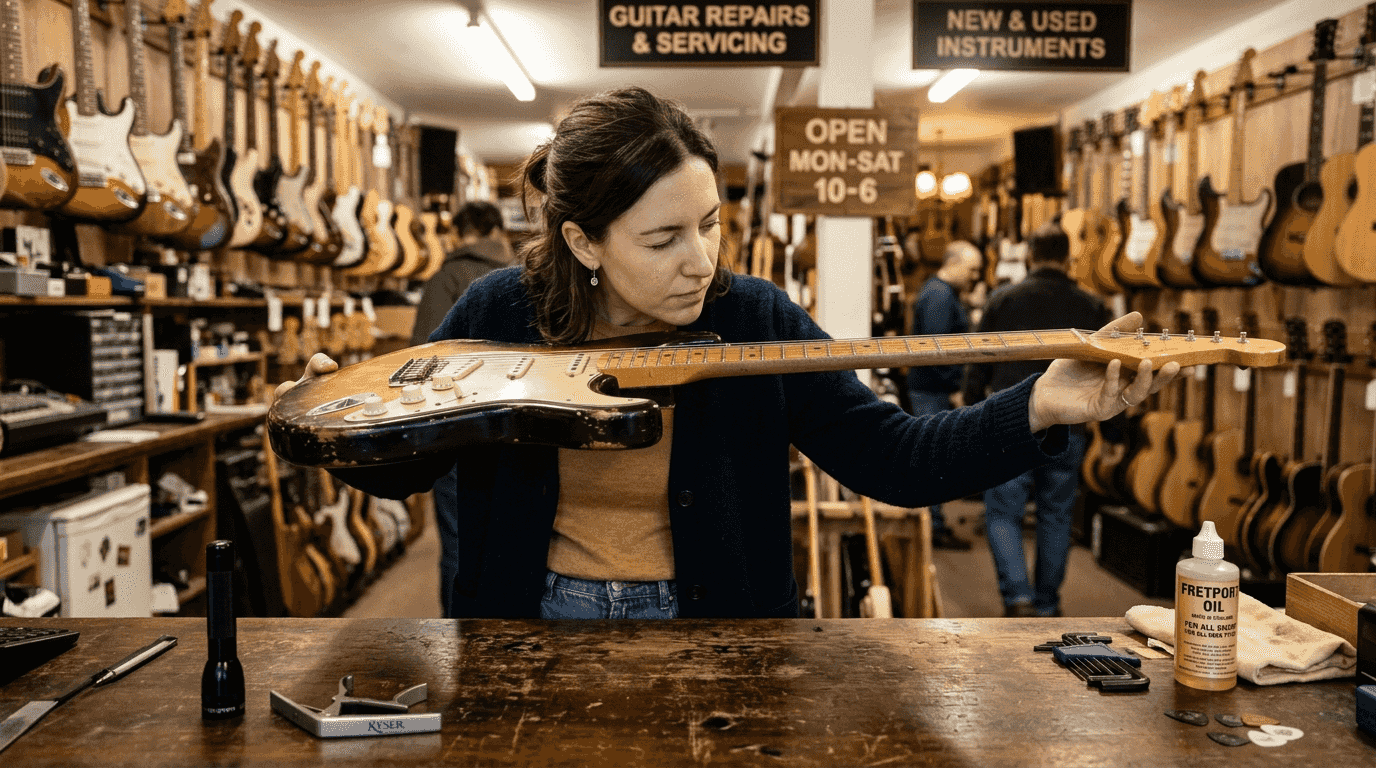
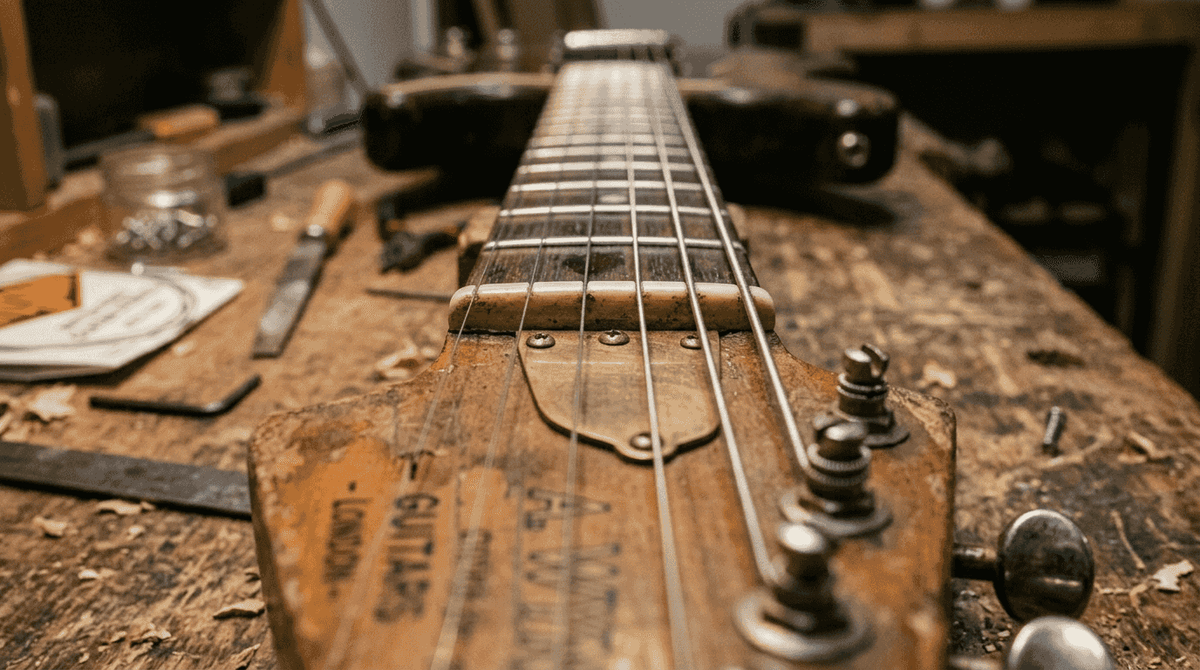
Fret condition reveals how much life remains in the instrument and whether you’ll face immediate additional costs. Run your fingers along the fret edges to feel for sharp ends that indicate poor finishing or neck shrinkage. Check for divots, flat spots, or excessive wear on the fret crowns, particularly around the first five frets where most playing occurs. Deep wear means a refret looms in your future.
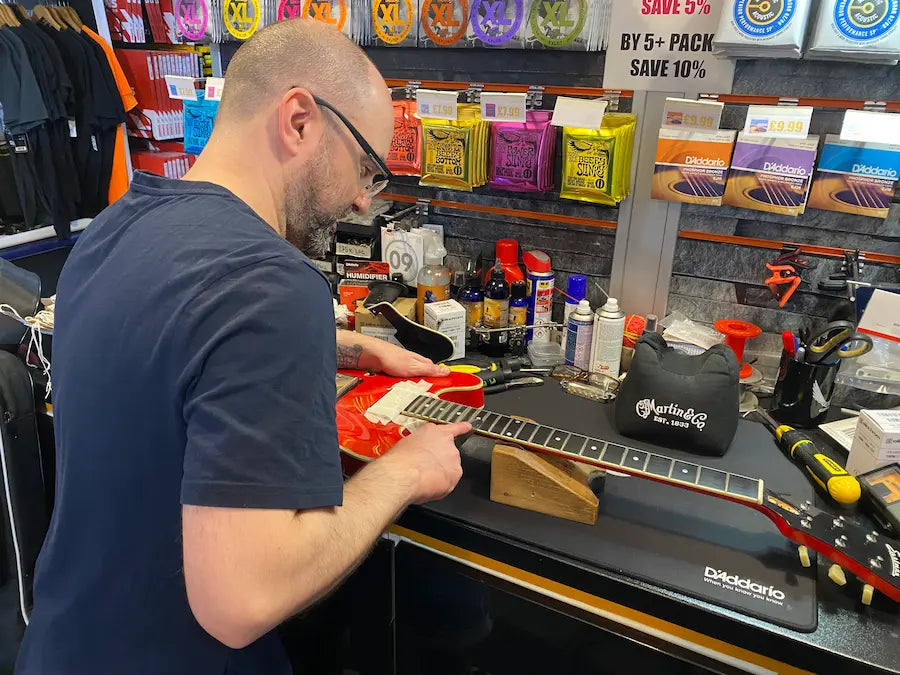
Hardware inspection prevents nasty surprises after purchase. Test every tuning machine for smooth operation without slipping or grinding. Examine bridge saddles, tailpieces, and tremolo systems for rust, corrosion, or stripped screws. Original hardware generally indicates careful ownership, whilst replacements might signal previous problems or modifications that could affect value.
Good lighting and organised workspace help you spot subtle defects during inspection. Position the guitar under bright shop lights and rotate it slowly to examine the finish from multiple angles. Look for hairline cracks in the finish, particularly around the neck joint, bridge posts, and output jack. These cracks might indicate structural issues or simply finish checking, which is cosmetic.
Body inspection checklist:
- Check for cracks in solid wood or delamination in laminated guitars
- Examine binding for separation from the body
- Look for filled holes indicating removed hardware or previous repairs
- Test the output jack for tightness and clean connection
- Inspect the nut for proper slot depth and smooth string travel
| Component | What to check | Red flags |
|---|---|---|
| Neck | Straightness, twist, relief | Severe bow, back bow, twisted grain |
| Frets | Level crowns, smooth ends, wear pattern | Deep divots, sharp edges, buzz |
| Hardware | Smooth operation, no corrosion | Rust, stripped screws, mismatched parts |
| Finish | Clean surface, no cracks | Deep scratches, finish checking, repairs |
| Electronics | Clear signal, no crackling | Scratchy pots, intermittent output, dead pickups |
Pro Tip: Bring a small torch to inspect the interior of acoustic guitars through the soundhole, checking for loose braces, cracks, or previous repairs that might not be visible from outside.
The buying used guitars guide provides deeper context on valuation and condition assessment. Understanding these inspection points helps you negotiate fairly and avoid instruments requiring immediate expensive work. Some guitars show honest wear that doesn’t affect playability, whilst others hide serious problems under cosmetic appeal.
Setup quality indicates how much the previous owner or shop cares about playability. Check string height at the 12th fret, which should allow comfortable fretting without excessive buzzing. Test intonation by comparing the 12th fret harmonic with the fretted note at the same position. Poor intonation might indicate bridge placement issues or a neck angle problem. The evaluating guitar value resource helps you understand how condition affects pricing.
Don’t skip the small details that reveal overall care. Clean fretboards, polished frets, and dust-free electronics suggest an instrument that’s been maintained properly. Conversely, grime buildup, tarnished hardware, and sticky controls indicate neglect that might extend to less visible components. Even violin neck design principles remind us that neck construction fundamentally affects playability across stringed instruments.
Playing and evaluating guitars effectively in-store
Start your playing test with familiar material that showcases your typical technique and musical style. Don’t attempt complicated passages you rarely play, as this won’t reveal how the guitar performs in real-world use. Focus on chord voicings, rhythm patterns, and lead phrases you use regularly. This approach quickly shows whether the neck profile suits your hand size and playing position.
Neck feel deserves extended evaluation because it’s the primary interface between you and the instrument. Pay attention to the profile shape, whether it’s a chunky C, slim D, or vintage V. Notice the fret size and how it affects bending and vibrato. Some players prefer jumbo frets for easier bending, whilst others find medium frets more comfortable for chording. Neither choice is objectively better, only personally suitable.
Blindfold tests show feel outweighs price when guitarists evaluate instruments without visual cues. This research confirms that your hands provide more reliable feedback than your eyes or preconceptions about brands. Close your eyes whilst playing to focus purely on tactile response and tonal character without distraction from cosmetic features.
Avoid relying exclusively on shop demos or YouTube videos when forming opinions about guitar sound. These recordings often use professional players, studio effects, and careful production that don’t represent what you’ll achieve at home. What sounds magical in a demo might feel uninspiring when you actually play the instrument yourself.
Testing approach for electric guitars:
- Start with a clean amplifier tone to hear the guitar’s natural voice
- Test each pickup position individually, noting tonal differences
- Adjust tone controls to confirm they provide useful range
- Add your typical effects to ensure the guitar responds well
- Play at various volume levels, as some guitars sound thin when quiet
Cable choice affects your sound evaluation more than most guitarists realise. Coiled cables reduce high frequencies compared to straight cables due to increased capacitance. If you’re testing electric guitars, request a quality straight cable rather than using whatever’s hanging on the wall. This small detail ensures you hear the instrument’s true tonal character without cable-induced darkening.
Comparison testing reveals preferences you might not notice playing a single guitar:
- Play the same passage on three different guitars back to back
- Notice which neck profile feels most natural in your hand
- Compare how each guitar responds to your picking dynamics
- Assess which tone inspires you to keep playing rather than stop
Pro Tip: Record short clips on your phone of each guitar you’re seriously considering, then listen back at home where you can focus without shop pressure or distractions.
Weight and balance matter more during long playing sessions than brief shop auditions. Hold the guitar in playing position for several minutes to assess whether it causes shoulder strain or neck fatigue. Some beautiful guitars prove uncomfortable after 30 minutes, whilst others disappear against your body. This comfort factor significantly affects how often you’ll actually play the instrument.
The guitar buying checklist provides a systematic framework for evaluation. Following structured steps prevents you missing critical factors in the excitement of trying new instruments. Take your time with each guitar rather than rushing through dozens superficially.
Listen for sustain, note clarity, and harmonic richness across the fretboard. Play high on the neck to ensure upper frets remain accessible and sound good. Test bends to confirm they don’t choke out or sound thin. These playing characteristics reveal build quality and setup more reliably than visual inspection alone.
Final checks and making the right purchase decision
Before committing to purchase, verify that all hardware functions exactly as it should. Test every control knob, switch, and mechanical component whilst the guitar is still in the shop where problems can be addressed immediately. Tuning machines should turn smoothly without slipping, pickup selectors should click firmly into each position, and tremolo systems should return accurately to pitch.
Take your time with the final decision rather than feeling pressured by sales staff or your own excitement. A guitar represents a significant investment that you’ll hopefully play for years, so an extra day of consideration often prevents regret. If you’re torn between two instruments, ask whether you can return tomorrow for another audition with fresh ears and perspective.
Common audition mistakes to avoid:
- Making snap judgements based on appearance rather than playability
- Ignoring minor setup issues that will annoy you daily
- Assuming expensive automatically means better for your needs
- Skipping comparison testing because you’ve found ‘the one’
- Letting sales pressure override your honest assessment
Review your original criteria against the guitar’s actual characteristics. Does it meet the requirements you established during preparation, or have you been swayed by features you didn’t initially want? Sometimes discovering unexpected preferences is valid, but ensure you’re making an informed choice rather than an impulsive one based on novelty.
Single demos can mislead buyers as much as enlighten them, so trust your hands and ears over marketing materials. The guitar that sounds perfect in a professional demo might not suit your playing style or skill level. Your personal experience during the audition provides far more reliable data than any amount of online research.
Final verification steps:
- Confirm the price includes any promised setup or adjustments
- Understand the return policy and warranty coverage completely
- Check that all advertised accessories are actually included
- Ask about the shop’s repair services for future needs
- Ensure you’re comfortable with the total cost including case and extras
Trust your instinct about whether the guitar genuinely inspires you to play. This emotional connection matters more than specifications or reviews because it determines whether you’ll actually pick up the instrument daily. A guitar that excites you will improve your playing simply because you’ll practise more willingly and enthusiastically.
Don’t ignore subtle concerns that nag at you during the audition. That slight neck dive, the pickup switch that feels loose, or the finish flaw you keep noticing will likely bother you increasingly over time. Address these issues before purchase or choose a different instrument rather than hoping you’ll learn to overlook them.
The risk minimising rules buying used guitars apply equally to in-store purchases. Verify everything yourself rather than accepting assurances at face value. Reputable shops stand behind their instruments, but your careful inspection protects you regardless of where you buy.
Consider the total ownership cost beyond the initial purchase price. A guitar requiring immediate fret work, electronics repair, or professional setup might cost significantly more than the ticket price suggests. Factor these expenses into your decision, or negotiate with the shop to address issues before you take the instrument home.
Find your perfect guitar with MusicStreet
After learning how to audition guitars with confidence, you need a trusted source offering quality instruments and expert guidance. MusicStreet specialises in premium electric, acoustic, and bass guitars from renowned brands, combining an extensive online catalogue with a welcoming physical shop in Huntingdon, Cambridgeshire.

Their experienced team understands that finding the right guitar involves matching instruments to your playing style, skill level, and musical goals. Every guitar receives professional inspection and setup before sale, ensuring you receive an instrument ready to play rather than one requiring immediate additional work. Whether you’re exploring their curated selection online or visiting for hands-on auditions, MusicStreet provides the personalised service and quality assurance that makes purchasing guitars easier and more reliable in 2026.
FAQ
How do I know if a guitar neck needs repair?
Look for excessive bowing visible when sighting down the neck from the headstock, or warped frets that cause buzzing across multiple positions. The neck is the most expensive component to repair or replace, so identifying problems during audition saves you from costly surprises later. Ask shop staff to check relief and twist if you’re uncertain about what you’re seeing.
Why should I prefer a straight cable over a coiled cable for in-store testing?
Straight cables preserve the guitar’s natural tone better because coiled cables reduce high frequencies through increased capacitance. They also show fewer connection problems that might make you misjudge the guitar’s output quality. Using a reliable straight cable ensures you hear the instrument’s true tonal character without cable-induced darkening or intermittent signal issues.
How many guitars should I try before deciding?
Trying at least three guitars allows you to compare feel, tone, and playability, helping you understand your preferences more clearly. Feel and playability help value guitars more than price alone, suggesting that comparison testing reveals what truly suits you. Some guitarists need to try a dozen instruments before finding the right one, whilst others know immediately, so let your comfort level guide the process.
Should I buy a guitar that needs minor repairs if the price is right?
Only if you accurately understand the repair costs and have them deducted from the purchase price or completed by the shop before sale. Minor issues like scratchy potentiometers or loose output jacks are inexpensive fixes, but structural problems or fret work can quickly exceed any savings. Get written quotes for repairs before committing to ensure the deal genuinely represents good value.
How important is trying a guitar through my own amplifier?
Extremely important for electric guitars, as different amplifiers dramatically affect tone and feel. If the shop allows it, bring your amp or at least test through a model similar to what you own at home. This approach reveals how the guitar will actually sound in your practice space rather than through the shop’s potentially flattering equipment.
Recommended
- Essential Guitar Shopping Tips 2025 for UK Musicians – MusicStreet
- Mastering the art of guitar shopping – MusicStreet
- How to Test Used Guitars and Make Smart Buying Decisions – MusicStreet
- 7 Steps for a Complete Guitar Buying Checklist UK Buyers Need – MusicStreet
- Tonewood Grading Guide 2026: 30% Better Sound for Luthiers



Share:
Best Guitar Maintenance Kits for Acoustic Players 2026
What is zero fret and how does it enhance guitar tone?