


Choosing the right string gauge often leaves many guitarists debating between comfort and bold tone. The topic matters because string thickness has a genuine effect on both how your instrument feels under your fingers and the sound it produces. Understanding the complex relationship between string gauge, tension, and tone empowers British musicians to avoid common pitfalls and find a string setup that brings out their best playing, whether you prefer gentle fingerstyle or driving rock riffs.
Table of Contents
- String Gauge Meaning And Common Misconceptions
- Types Of Guitar Strings And Gauge Options
- How String Gauge Affects Tone And Feel
- Changing String Gauges: Practical Steps And Tips
- Key Setup Considerations And Common Pitfalls
Key Takeaways
| Point | Details |
|---|---|
| Understanding String Gauge | String gauge affects guitar tone and playing experience, with heavier strings often producing richer sound and lighter strings offering easier playability. |
| Choosing the Right Gauge | Selection should be based on individual playing style, genre, and comfort level, with experimentation advised to find an optimal balance. |
| Impact on Instrument Setup | Changing string gauges can alter neck tension, requiring adjustments to the guitar’s setup to maintain playability and sound quality. |
| Professional Setup Recommendations | It is recommended to consult a professional for significant gauge changes to ensure proper adjustments are made to avoid potential damage and enhance performance. |
String Gauge Meaning and Common Misconceptions
String gauge represents the thickness of guitar strings, a critical factor that profoundly influences both instrument tone and playing experience. Complex acoustic interactions demonstrate that string thickness is far more nuanced than many guitarists initially understand.
Understanding string gauge involves recognising several key characteristics:
- Thickness measured in thousandths of an inch
- Direct impact on string tension
- Influence on overall instrument sound
- Relationship to playing technique and finger strength
Contrary to popular belief, string gauge isn’t a simple “thicker is better” equation. Lighter gauge strings typically offer easier playability with less finger strain, while heavier gauges provide fuller, richer tonal characteristics. Acoustic research reveals that the relationship between string thickness and sound is complex and dependent on multiple factors.
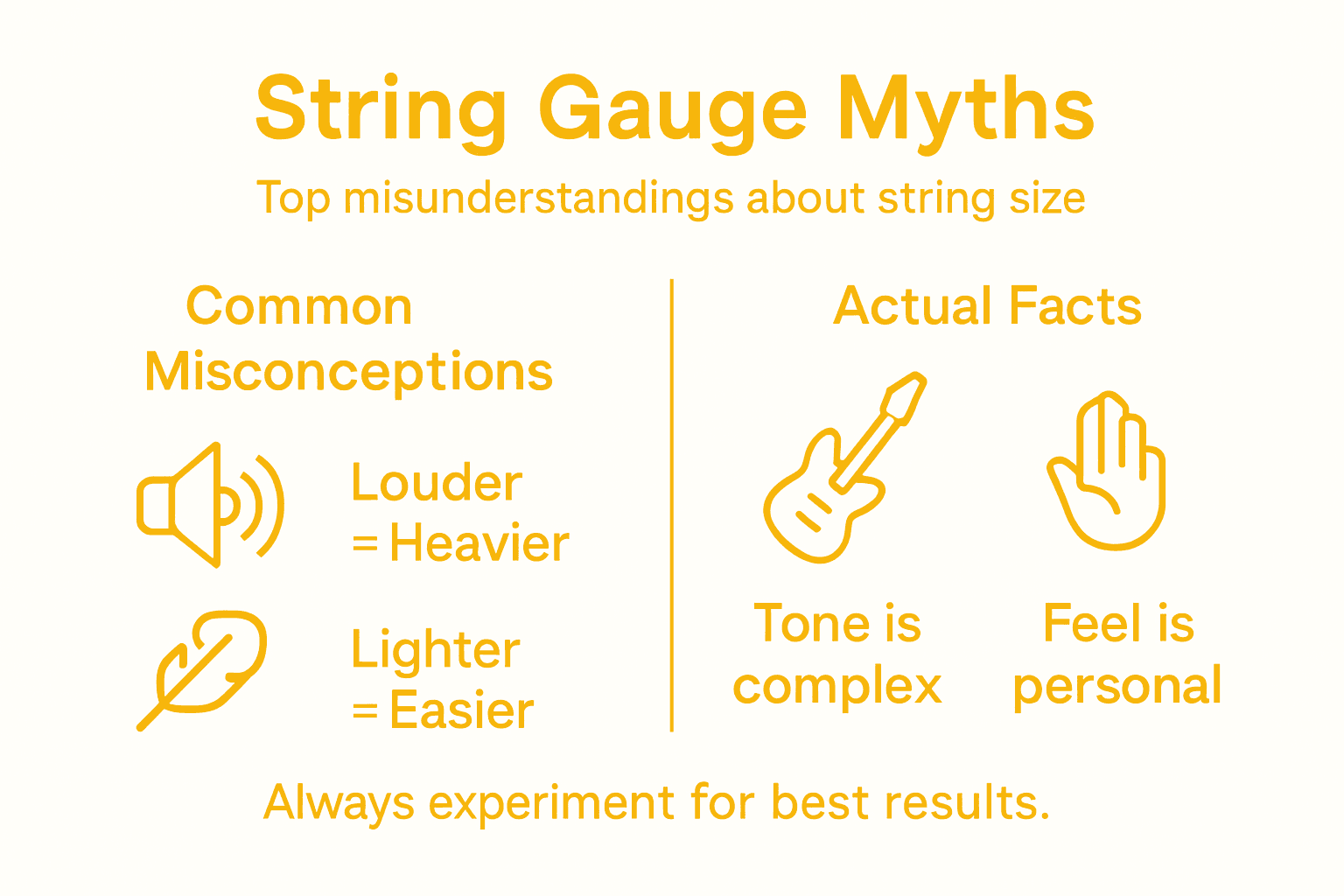
Musicians often misconceive that heavier strings automatically produce louder sounds or that lighter strings are universally easier to play. In reality, string gauge selection requires considering individual playing style, musical genre, and personal comfort. Factors like finger strength, playing technique, and instrument setup all interact with string thickness to determine overall performance.
Pro tip: Start by experimenting with medium gauge strings, which offer a balanced compromise between playability and tonal richness.
Types of Guitar Strings and Gauge Options
Guitar strings come in various types and gauges, each designed to suit different playing styles and musical genres. String selection strategies can significantly impact a musician’s overall sound and playing experience.
The primary types of guitar strings include:
The following table compares common guitar string materials and their key sonic qualities:
| String Material | Typical Sound | Durability | Best Use Case |
|---|---|---|---|
| Nickel-Plated Steel | Balanced, versatile | Moderate | Multiple genres, all-round |
| Stainless Steel | Bright, crisp | High | Rock, pop, heavy use |
| Pure Nickel | Warm, vintage | Moderate | Jazz, classic tones |
| Phosphor Bronze | Rich, bright acoustic | Moderate to high | Acoustic, folk, fingerstyle |
| Coated | Slightly mellowed | Extended lifespan | Frequent players, longevity |
- Nickel-Plated Steel: Balanced tone, versatile for multiple genres
- Stainless Steel: Brighter tone, increased sustain
- Pure Nickel: Warmer, vintage-style sound
- Phosphor Bronze: Preferred for acoustic guitars
- Coated Strings: Extended lifespan, reduced finger noise
String gauges are typically categorised into standard ranges:
- Extra Light (8-38)
- Light (9-42)
- Medium (10-46)
- Heavy (11-52)
Each gauge presents unique characteristics that affect playability and tone. Lighter gauges provide easier bending and reduced finger strain, making them ideal for beginners and players with smaller hands. Heavier gauges offer more volume, sustain, and a fuller sound, preferred by blues and rock musicians who require more aggressive playing techniques.
Here is a summary of how each string gauge typically affects tone and playability:
| Gauge Category | Typical Tone Produced | Playability Impact | Best Suited For |
|---|---|---|---|
| Extra Light | Brighter, less sustain | Easiest to bend and fret | Beginners, soloing |
| Light | Balanced, clear | Comfortable for most | Versatile styles |
| Medium | Rich, full-bodied | Moderate finger effort | Rhythm, general playing |
| Heavy | Deep, powerful | Requires strong fingers | Blues, aggressive styles |
Musicians must consider their personal playing style, instrument type, and musical genre when selecting string gauges. Factors like finger strength, preferred playing technique, and desired tonal characteristics all play crucial roles in determining the most suitable string option.
Pro tip: Experiment with different string gauges to find your perfect balance between comfort and tonal quality.
How String Gauge Affects Tone and Feel
String gauge profoundly influences both the tonal characteristics and physical feel of a guitar, creating a complex interplay between instrument and player. String tension dynamics reveal how seemingly small changes can dramatically transform musical expression.
The tonal impact of string gauge varies across multiple dimensions:
- Thickness: Directly affects sound resonance
- Tension: Determines sustain and harmonic complexity
- Material: Interacts with gauge to shape sonic qualities
- Playing Style: Influences how strings respond to technique
Heavier gauge strings typically produce a more robust, fuller sound with enhanced low-end response. They generate greater string tension, which translates to increased volume and improved sustain. Conversely, lighter gauges offer reduced tension, enabling easier string bending and more nuanced vibrato techniques.

The physical feel of different string gauges can significantly impact a guitarist’s playing experience. Thicker strings demand more finger strength and can cause increased hand fatigue, while lighter gauges provide smoother playability and reduce strain during extended playing sessions. Intermediate players often find that medium gauges offer the most balanced compromise between tonal richness and comfortable manipulation.
Pro tip: Consider your playing style and hand strength when selecting string gauges, and don’t hesitate to experiment with different tensions to find your ideal sound.
Changing String Gauges: Practical Steps and Tips
Changing guitar string gauges requires careful consideration and methodical approach. String gauge transition techniques help musicians navigate potential challenges when modifying their instrument’s setup.
Key considerations when changing string gauges include:
- Impact on guitar’s neck tension
- Required adjustments to instrument setup
- Potential need for professional setup
- Gradual progression recommended
When transitioning between string gauges, musicians must understand the potential structural implications. Significant gauge changes can alter the neck’s curvature, affecting action, intonation, and overall playability. Lighter gauges reduce string tension, potentially requiring truss rod adjustments, while heavier gauges increase tension and might necessitate more comprehensive modifications.
The recommended approach involves incremental changes. Moving up or down by one gauge size allows the instrument to gradually adapt, minimising potential stress on the neck and preventing sudden structural alterations. Professional guitar technicians suggest checking the instrument’s setup after each gauge change, paying particular attention to the truss rod, nut slots, and bridge alignment.
Pro tip: Always make small, incremental gauge changes and have your guitar professionally set up if transitioning more than one gauge size.
Key Setup Considerations and Common Pitfalls
Guitar string gauge changes require meticulous attention to detail to prevent potential instrument damage and maintain optimal playing performance. Critical setup challenges can dramatically impact an instrument’s functionality and sound quality.
Common pitfalls musicians must avoid include:
- Neglecting nut slot adjustments
- Ignoring neck tension modifications
- Failing to recalibrate intonation
- Rushing the setup process
- Overlooking bridge height requirements
The truss rod plays a crucial role in managing neck curvature during string gauge transitions. Different string tensions can cause subtle but significant changes to the neck’s alignment, potentially leading to buzzing, high action, or reduced playability. Professional guitar technicians recommend careful, incremental adjustments and thorough testing after each modification.
Intonation represents another critical consideration when changing string gauges. Variations in string thickness directly impact how precisely notes are rendered across the fretboard. Improper setup can result in noticeable tuning inconsistencies, particularly when playing chords or performing intricate melodic passages. Careful measurement and potential bridge saddle repositioning become essential to maintaining precise tonal accuracy.
Pro tip: Invest in a professional setup when making significant string gauge changes to ensure your instrument maintains optimal playability and sound quality.
Discover the Perfect String Gauge and Guitar Setup at MusicStreet
Choosing the ideal string gauge can be challenging because it affects your guitar’s tone, playability, and overall feel. Understanding concepts like string tension, neck adjustment, and the impact of different gauges on your playing comfort is essential. If you want to avoid common pitfalls such as improper intonation or excessive finger strain, finding expert advice and professional setup is key to unlocking your instrument’s full potential.

At MusicStreet, we specialise in helping musicians like you find the perfect balance between comfort and tonal richness. Whether you prefer extra light strings for effortless bending or heavier gauges for a powerful sound, our wide range of electric, acoustic, and bass guitars, combined with expert setup services, ensures your instrument is tailored specifically to your needs. Explore our carefully inspected new and pre-loved guitars and benefit from personalised support both online and in our Huntingdon store. Start your journey to better tone and effortless playability today by visiting MusicStreet and experience the difference professional guidance makes.
Frequently Asked Questions
What does string gauge mean in guitar playing?
String gauge refers to the thickness of guitar strings, measured in thousandths of an inch, which affects the instrument’s tone, playability, and tension.
How does the string gauge impact the sound of a guitar?
Heavier gauge strings typically produce a fuller, richer sound with enhanced low-end response and sustain, while lighter gauges offer easier bending and playability, often resulting in a brighter sound.
Can changing the string gauge affect my guitar’s setup?
Yes, changing string gauges can alter the neck tension and may require adjustments to the truss rod, nut slots, and intonation to maintain optimal playability and sound quality.
What are the common string gauge categories for guitars?
Guitar string gauges are commonly categorised as Extra Light (8-38), Light (9-42), Medium (10-46), and Heavy (11-52), each affecting tone and playability differently.


Share:
Guitar Hardware Explained: Enhance Your Sound
Guitar Types Revealed: Which One Is Right for You?