


Upgrading your guitar can feel overwhelming when every small component seems to promise a big change in sound. For guitar enthusiasts around Huntingdon aiming to fine-tune their instruments, understanding how guitar hardware shapes your tone and playability is the real key. Choices like bridges, tuners, and nuts do more than hold strings in place—they shape everything from resonance and sustain to the very identity of your instrument. Learning the subtle impact of each part empowers you to personalise your sound and unlock new musical possibilities.
Table of Contents
- What Guitar Hardware Means For Players
- Key Types Of Guitar Hardware Components
- How Hardware Choices Affect Tone
- Common Upgrade Mistakes To Avoid
- Selecting The Right Hardware For Your Needs
Key Takeaways
| Point | Details |
|---|---|
| Guitar Hardware Shapes Sound | The selection of components like bridges and pickups directly influences sustain, resonance, and tonal character, impacting overall musical expression. |
| Holistic Interaction Matters | Understanding how hardware components work together is crucial for achieving optimal performance and sound quality in your guitar. |
| Personalised Choices are Key | Selecting hardware should align with your specific playing style and musical requirements, making it a deeply personal artistic decision. |
| Upgrades Require Care | Mistakes in hardware upgrades can lead to compatibility issues and diminished performance, necessitating thorough research and, when possible, professional guidance. |
What Guitar Hardware Means for Players
Guitar hardware represents far more than mere metal components - it’s the critical infrastructure that transforms raw musical potential into sonic expression. These intricate pieces determine how your instrument sounds, feels, and responds to your playing style, making them fundamental to a guitarist’s artistic voice.
The tiny metal components like bridges, tuners, nuts, and frets collectively shape your guitar’s fundamental acoustic characteristics. Each part contributes unique qualities that influence:
- Sustain: How long notes ring out after being played
- Resonance: The guitar’s natural tonal complexity
- Tuning Stability: How consistently the instrument maintains pitch
- Tonal Character: The distinctive sound profile of the instrument
Understanding these hardware elements goes beyond technical knowledge - it connects directly to musical identity. Professional musicians carefully select hardware that matches their genre, playing technique, and personal aesthetic preferences. Guitar technologies fundamentally shape performance identity, reflecting broader cultural values of authenticity and innovation.
Each component interacts with others, creating a complex system where minute adjustments can dramatically transform sound. A bridge’s material, a tuner’s precision, or a nut’s configuration can make the difference between an average instrument and an extraordinary one.
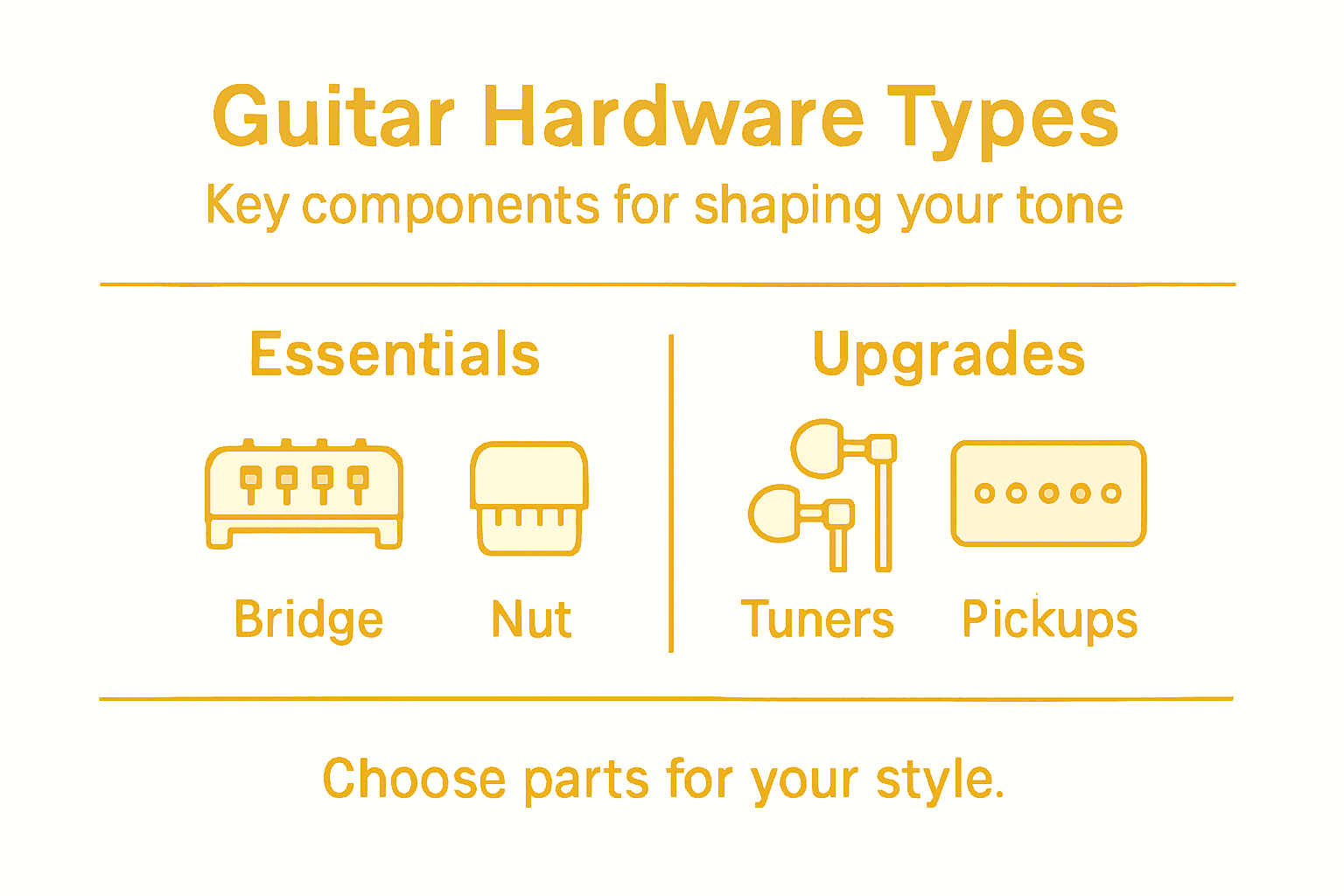
Here’s a concise overview of how key guitar hardware components interact to influence a player’s experience:
| Component | Main Influence | Common Material | Impact on Player |
|---|---|---|---|
| Bridge | Sustain, resonance | Steel, brass | Stability, tone |
| Tuners | Tuning accuracy | Diecast, vintage | Pitch control |
| Nut | String spacing | Bone, synthetic | Playability |
| Frets | Intonation, feel | Nickel-silver | Comfort, accuracy |
| Pickups | Sound character | Magnetic alloys | Genre versatility |
Pro tip: When evaluating guitar hardware, focus on how components interact holistically rather than treating them as isolated parts.
Key Types of Guitar Hardware Components
Guitar hardware comprises a complex ecosystem of components that work together to define an instrument’s performance, tone, and playability. Essential guitar components vary between acoustic and electric models, each serving a critical role in sound production and musical expression.
The primary hardware components can be categorised into several key groups:
-
Tuning Mechanism
- Headstock
- Tuning pegs/machines
- String trees
-
String Support Structures
- Nut
- Bridge
- Saddles
-
Neck Hardware
- Frets
- Truss rod
- Fretboard markers
-
Body Attachments
- Pickup mounting rings
- Control plates
- Jack socket
Each component plays a nuanced role in transforming mechanical vibration into musical sound. The headstock and tuning pegs, for instance, allow precise tension adjustment, while the bridge transmits string vibrations and influences sustain and resonance.
Professional guitarists understand that hardware selection isn’t just technical - it’s an artistic choice. Guitar hardware types fundamentally shape musical performance, with musicians carefully selecting components that match their specific playing style and sonic preferences.
Pro tip: Invest time in understanding how different hardware components interact, as their collective performance matters more than individual specifications.
How Hardware Choices Affect Tone
Guitar tone is a delicatealchemy of components, where every hardware choice contributes to the instrument’s sonic character. Different hardware elements directly influence a guitar’s tonal palette, transforming mechanical vibrations into unique musical expressions.
The primary hardware components that dramatically shape tone include:
-
Bridges
- Fixed bridges: Maximize sustain and stability
- Tremolo bridges: Allow pitch modulation with reduced sustain
-
Pickups
- Single coil: Crisp, bright sound
- Humbucker: Thick, warm tone
- Active pickups: Higher output, more aggressive sound
-
Materials
- Wood type of body and neck
- Metal composition of hardware
- Saddle and nut materials
Each component interacts in complex ways. A fixed bridge, for instance, will provide more resonant sustain compared to a floating tremolo system, while pickup selection can transform a guitar from jangling clean tones to heavy distortion.
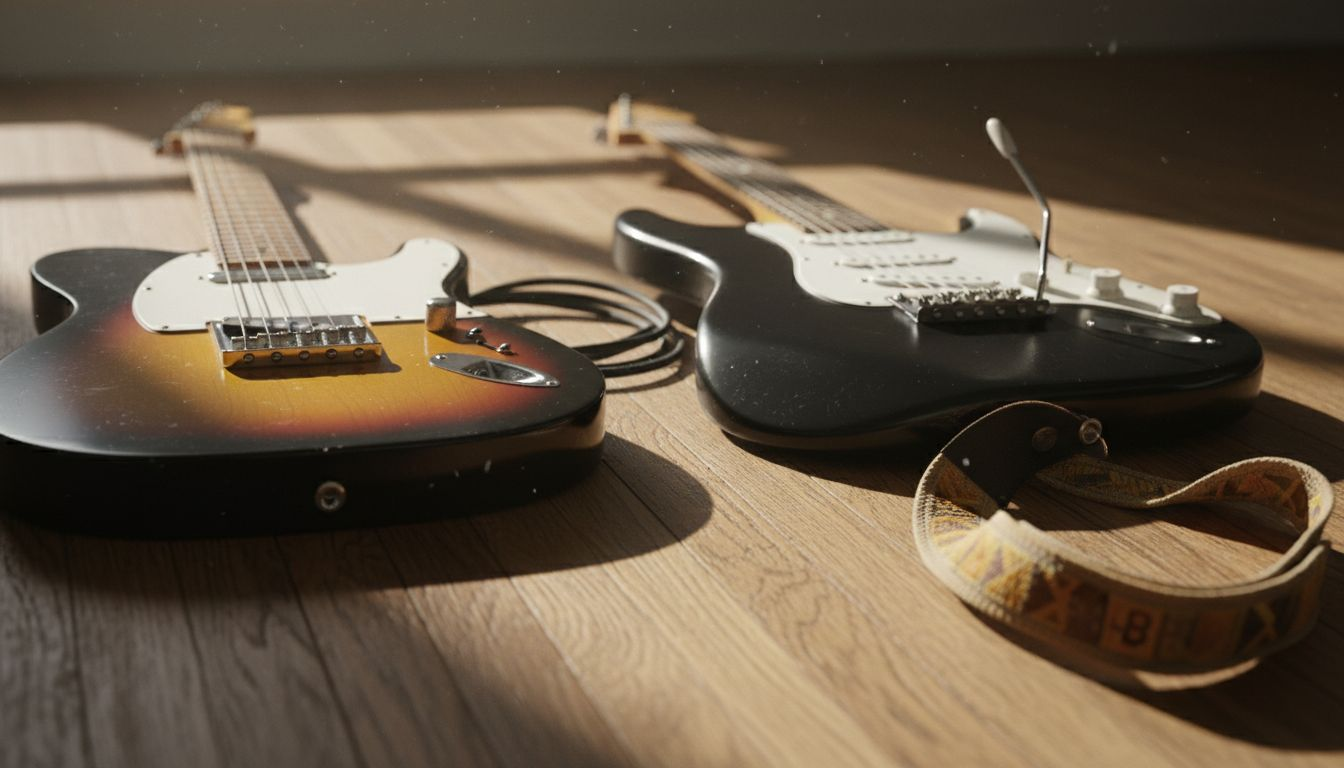
Compare the two main types of guitar bridges to assist in making an informed hardware choice:
| Bridge Type | Tonal Quality | Tuning Stability | Playing Style Suitability |
|---|---|---|---|
| Fixed Bridge | Maximum sustain | Very stable | Rhythm, rock, jazz |
| Tremolo/Floating | Pitch modulation | Less stable | Lead, expressive genres |
Professional musicians understand that hardware isn’t just technical specification - it’s an artistic choice. The nuanced interaction of guitar electronics allows players to craft their unique sonic signature, making hardware selection a deeply personal journey.
Pro tip: Experiment with different hardware combinations to discover your distinctive sound, understanding that tone is a holistic experience.
Common Upgrade Mistakes to Avoid
Upgrading guitar hardware can be a minefield of potential errors that compromise your instrument’s performance and sound quality. Selecting inappropriate hardware supports can lead to significant playing difficulties, potentially causing discomfort or even long-term playing issues.
The most common hardware upgrade mistakes guitarists make include:
-
Compatibility Oversights
- Purchasing parts without checking precise measurements
- Ignoring manufacturer specifications
- Mismatching electronic components
-
Performance Misconceptions
- Assuming expensive always means better
- Neglecting professional setup after upgrades
- Changing multiple components simultaneously
-
Ergonomic Errors
- Selecting supports that restrict playing posture
- Ignoring individual physical requirements
- Prioritising aesthetics over functionality
Many guitarists mistakenly believe that simply replacing hardware will instantly improve their sound. In reality, upgrades require careful consideration of how each component interacts with the entire instrument system. A poorly chosen bridge or pickup can dramatically alter your guitar’s fundamental characteristics, potentially creating more problems than solutions.
Professional musicians understand that hardware upgrades are nuanced processes requiring research, precision, and often professional guidance. Rushed decisions can lead to expensive mistakes that compromise both instrument performance and personal playing comfort.
Pro tip: Always consult a professional technician and test components individually before committing to comprehensive hardware upgrades.
Selecting The Right Hardware for Your Needs
Choosing guitar hardware is an intensely personal journey that directly impacts your musical expression and performance capabilities. Guitar hardware selection requires understanding your unique sound and playing style, ensuring that each component aligns with your musical goals.
When selecting hardware, consider these critical factors:
-
Sound Requirements
- Genre-specific tonal characteristics
- Preferred playing technique
- Desired sonic range
-
Performance Considerations
- Tuning stability needs
- Playing intensity
- Comfort and ergonomics
-
Technical Compatibility
- Guitar body specifications
- Electronic system requirements
- Mounting and installation precision
Recognising the nuanced differences between hardware components is crucial for making informed decisions. For instance, fixed bridges suit players seeking maximum sustain and stable tuning, while tremolo bridges offer expressive pitch modulation for more dynamic playing styles.
Professional musicians understand that hardware is not just about technical specifications, but about creating a personalised instrument that feels like an extension of their musical voice. Each component - from tuners to pickups - plays a crucial role in translating musical intention into sound.
Pro tip: Always test hardware components in person and consider how they integrate with your specific playing style and musical goals.
Elevate Your Guitar Tone with Expert Hardware Choices
Understanding guitar hardware is essential to unlocking your instrument’s full potential. Whether you are seeking better sustain, improved tuning stability, or a personalised tonal character, the right components can transform your playing experience. MusicStreet offers a curated selection of electric, acoustic, and bass guitars as well as high-quality accessories that align perfectly with your hardware needs discussed in this article.

Discover guitars that come professionally set up to emphasise the hardware features you value most. Benefit from MusicStreet’s expert setup and post-sale support to ensure each bridge, tuner, and pickup integrates seamlessly with your style. Browse our collection now at MusicStreet and explore detailed buying guides that help you select hardware improvements tailored for your sound. Don’t wait to upgrade your tone and playability — visit MusicStreet today and realise your guitar’s true potential.
Frequently Asked Questions
What is the role of guitar hardware in sound production?
Guitar hardware, including bridges, nut, and tuners, significantly influences sound production by affecting sustain, resonance, tuning stability, and tonal character. Each component contributes to the overall acoustic characteristics of the instrument.
How do different types of guitar bridges affect tuning and tone?
Fixed bridges provide maximum sustain and stable tuning, making them ideal for rhythm and rock styles, whereas tremolo bridges allow pitch modulation but can lead to less stable tuning, suitable for expressive lead playing.
What should I consider when selecting guitar hardware upgrades?
When selecting upgrades, consider sound requirements, performance needs, and technical compatibility. Ensure that the components you choose align with your genre, playing technique, and the specifications of your guitar.
Why is it important to consult a technician when upgrading guitar hardware?
Consulting a technician helps avoid common mistakes, such as compatibility oversights and performance misconceptions. A professional can provide guidance on selecting the right components for your specific instrument and playing style.







Share:
Role of Guitar Woods – How Tonewoods Shape Sound
String Gauge Explained: Impact on Tone and Playability