


Most british guitarists in Huntingdon overlook just how much electronics shape their sound. More than 80 percent of professional players credit upgraded wiring and pickups for a noticeable improvement in performance and tone. Understanding the basics behind pickups, switches, and tone controls empowers you to unlock subtle details that set your playing apart. Whether you crave classic blues warmth or crisp modern clarity, learning about guitar electronics can transform your music and give you lasting confidence on stage.
Table of Contents
- What Guitar Electronics Really Do
- Types Of Pickups And Wiring Options
- How Controls And Switches Shape Tone
- Upgrades, Maintenance, And Common Pitfalls
- Choosing The Right Electronics For Your Needs
Key Takeaways
| Point | Details |
|---|---|
| Understanding Guitar Electronics | Guitar electronics allow musicians to manipulate sound through pickups, controls, and switches, creating a vast range of tonal possibilities. |
| Pickup Types Matter | Choosing between single-coil and humbucker pickups significantly influences sound quality and genre suitability. |
| Importance of Controls | Volume and tone controls, along with pickup selector switches, are crucial for tailoring your unique sound. |
| Upgrades Enhance Performance | Electronic modifications can substantially improve a guitar’s tonal characteristics and overall performance; however, careful selection and maintenance are essential. |
What Guitar Electronics Really Do
Guitar electronics are the sophisticated systems that transform simple string vibrations into rich, complex soundscapes. Electromagnetic pickups capture the mechanical energy of vibrating strings and convert them into electrical signals, enabling guitarists to shape their unique sonic signature across multiple genres.
At the core of guitar electronics are several key components that work together to modify and enhance sound. Pickups act as the primary translators, using magnetic fields to detect string movements and generate electrical currents. Volume and tone controls allow precise manipulation of signal strength and frequency characteristics, while switches enable quick tonal transitions. These intricate systems provide musicians unprecedented control over their instrument’s voice, from warm jazz tones to aggressive rock distortion.
The evolution of guitar electronics represents a fascinating journey of musical innovation. Early pickup technologies enabled guitarists to project sound over other loud instruments, transforming the guitar from a rhythm instrument to a lead voice in blues, jazz, and rock. Modern electronic configurations offer incredible versatility, allowing players to craft sounds ranging from crystal-clear clean tones to heavily saturated overdrive.
Pro tip: Experiment with your guitar’s tone and volume controls in different playing positions to discover unique sound combinations that can dramatically expand your tonal palette.
Types Of Pickups And Wiring Options
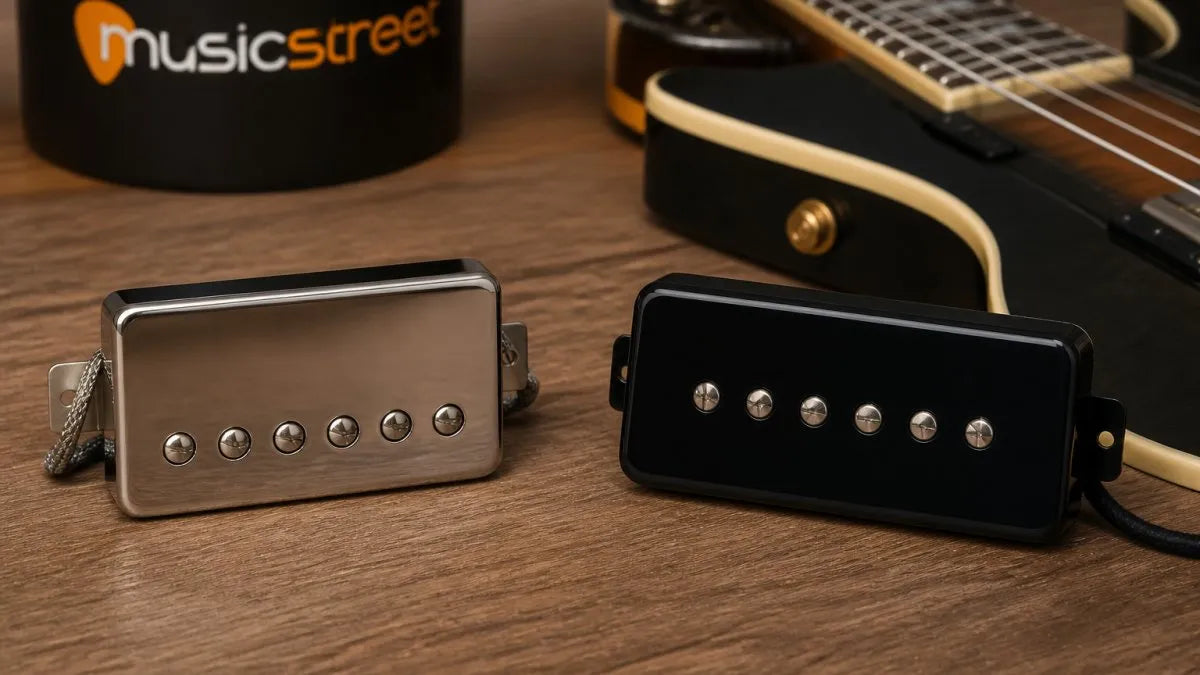
Guitar pickups represent the fundamental building blocks of an instrument’s electronic sound generation. Pickup technologies) fundamentally transform mechanical string vibrations into electrical signals, with two primary configurations dominating the musical landscape: single-coil and humbucker pickups. Single-coil pickups produce a bright, crisp tone characteristic of vintage and blues genres, while offering exceptional note definition and clarity.
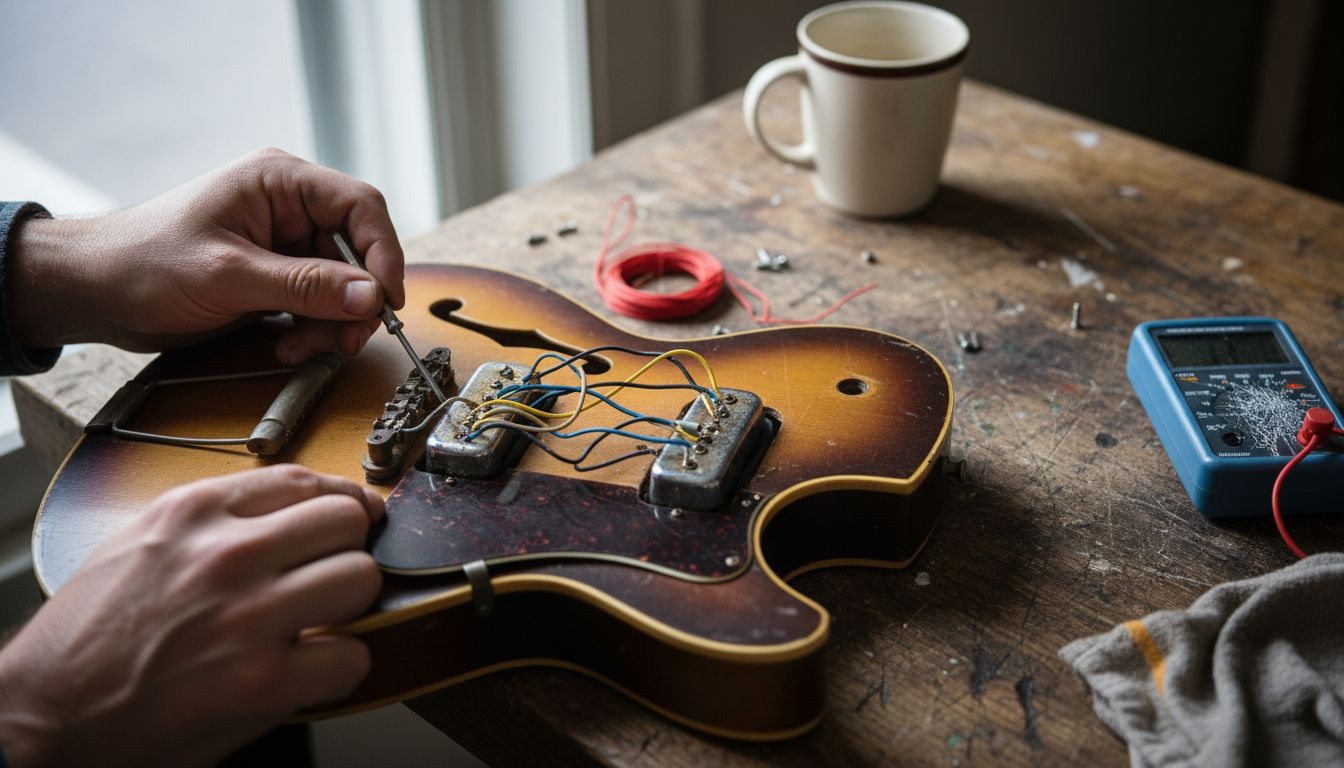
Humbucker pickups emerged as a sophisticated solution to the noise and interference challenges faced by single-coil designs. By incorporating two coils wound in opposite directions, these pickups effectively cancel out unwanted electromagnetic interference, delivering a thicker, warmer sound profile. Wiring configurations play a critical role in shaping a guitar’s tonal characteristics, with series and parallel connections offering musicians nuanced sound manipulation options.
Beyond traditional passive pickup designs, modern guitarists can also explore active pickup systems that incorporate battery-powered preamps. These sophisticated electronic configurations provide increased output, enhanced signal clarity, and greater tonal consistency across different playing environments. Advanced wiring options like coil-splitting and phase switching further expand a guitarist’s sonic palette, allowing for dramatic tonal transformations with simple control adjustments.
Here is a comparison of common guitar pickup types and their key attributes:
| Pickup Type | Typical Sound Profile | Noise Resistance | Preferred Genres |
|---|---|---|---|
| Single-Coil | Bright and clear | Susceptible to hum | Blues, vintage rock, pop |
| Humbucker | Warm and full-bodied | Strong hum cancellation | Rock, metal, jazz |
| Active | Crisp and consistent | Very low interference | Modern metal, progressive |
Pro tip: Experiment with different pickup combinations and wiring configurations to discover unique tonal textures that can set your sound apart from other musicians.
How Controls And Switches Shape Tone
Guitar controls represent a sophisticated ecosystem of electronic manipulation, allowing musicians to craft their unique sonic signature. Guitar wiring configurations enable precise sound sculpting through an intricate network of potentiometers, switches, and capacitors. Volume and tone controls act as critical gatekeepers, transforming raw electrical signals into nuanced musical expressions by filtering and attenuating specific frequency ranges.
Pickup selector switches provide guitarists with remarkable tonal versatility, allowing instantaneous transitions between different sonic characteristics. By engaging various pickup combinations, musicians can seamlessly move from bright, treble-heavy tones to warmer, more rounded sounds with a simple switch movement. Passive tone controls utilise resistors and capacitors to create low-pass filters, strategically reducing treble frequencies and softening the overall sound profile.
The interaction between volume and tone controls creates a dynamic sound-shaping environment. Rolling back the volume can introduce natural compression and reduce high-end frequencies, while carefully adjusted tone controls can simulate different amplifier characteristics. Advanced players often exploit these subtle interactions to create complex tonal textures, using their guitar’s electronics as an expressive instrument in its own right.
Pro tip: Experiment with your guitar’s tone and volume controls at different settings to discover unique sound combinations that can dramatically expand your musical palette.
Upgrades, Maintenance, And Common Pitfalls
Electronic modifications represent a critical pathway for guitarists seeking to enhance their instrument’s sonic capabilities. Upgrading pickups, potentiometers, and wiring can dramatically transform a guitar’s tonal characteristics, offering musicians unprecedented sound customisation. Strategic upgrades involve carefully selecting components that complement the guitar’s existing electronic architecture, ensuring seamless integration and optimal performance.
Maintenance is the cornerstone of preserving electronic performance and longevity. Guitar technicians recommend regular inspection of electronic components, focusing on critical areas such as pickup contacts, potentiometer connections, and soldering joints. Common maintenance practices include cleaning electrical contacts, checking for loose connections, and ensuring proper shielding to minimise unwanted electromagnetic interference. Guitarists should be particularly vigilant about potential issues like oxidation, signal degradation, and mechanical wear that can compromise electronic functionality.
Navigating the potential pitfalls of guitar electronics requires both technical knowledge and careful approach. Many musicians encounter challenges such as poor soldering technique, incompatible component selection, and improper installation. These issues can manifest as unexpected noise, signal loss, or complete electronic failure. Advanced players understand that successful electronic modifications demand precision, patience, and a thorough understanding of the instrument’s electrical architecture. Consulting professional technicians or investing time in learning proper electronic maintenance can prevent costly mistakes and ensure reliable performance.
Below is a summary of guitar electronic upgrades and their expected effects:
| Upgrade Type | Expected Benefit | Maintenance Complexity | Typical Cost Range |
|---|---|---|---|
| Pickup replacement | Improved tone and output | Moderate | £40–£200+ |
| Potentiometer swap | Smoother volume/tone control | Low to moderate | £5–£25 per part |
| Shielding upgrade | Reduced noise/interference | Moderate | £10–£35 |
| Wiring overhaul | Enhanced versatility | High | £25–£100+ |
Pro tip: Before attempting any electronic modifications, create a detailed diagram of your current wiring configuration to serve as a reference and prevent potential installation errors.
Choosing The Right Electronics For Your Needs
Electronic modifications demand a nuanced approach that balances personal musical style, tonal preferences, and technical considerations. Guitarists must carefully evaluate their sonic requirements, understanding that each electronic component contributes uniquely to the instrument’s overall sound profile. Single-coil pickups offer bright, crisp tones ideal for blues and vintage styles, while humbuckers provide warmer, more robust sounds perfect for rock and heavy genres.
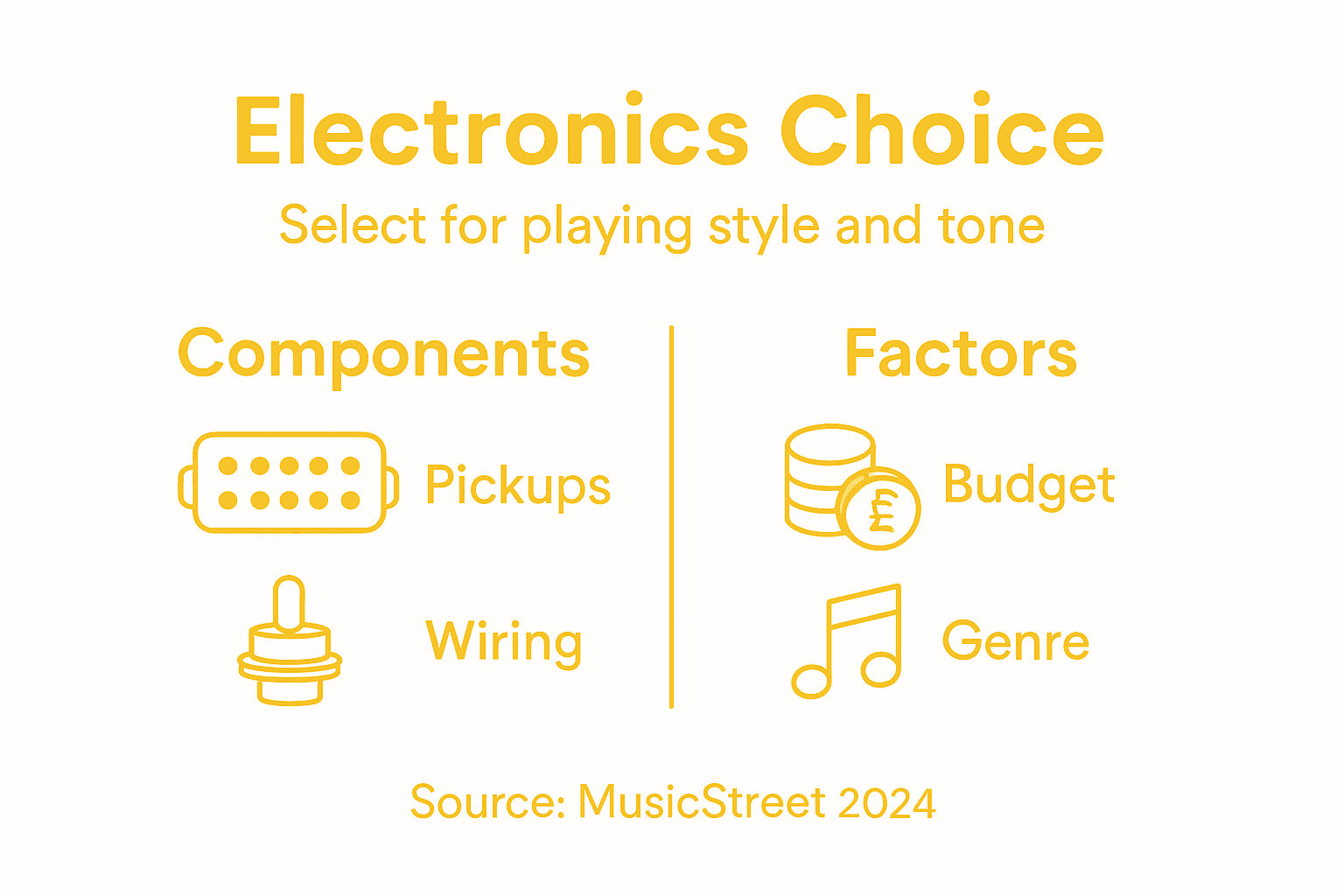
The selection process involves understanding the intricate interactions between various electronic components. Guitar wiring configurations play a crucial role in determining tonal characteristics, with potentiometer values and capacitor selections significantly impacting sound quality. Musicians should consider factors like pickup output, resistance values, and wiring options that complement their playing technique and genre. Coil-splitting capabilities offer additional versatility, allowing players to access multiple tonal landscapes with a single instrument.
Budget considerations are equally important when choosing guitar electronics. While premium components offer superior performance, skilled musicians can achieve remarkable sounds through strategic, affordable modifications. Beginners might start with subtle upgrades like replacing potentiometers or exploring different capacitor configurations. Advanced players often invest in high-end pickups and sophisticated wiring systems that provide nuanced tonal control, enabling more complex sound sculpting.
Pro tip: Consult experienced guitar technicians or participate in music forums to gain insights into electronics that best match your specific musical style and performance requirements.
Unlock Your True Guitar Tone with Expert Electronics Support
Understanding the role of guitar electronics is key to shaping your unique sound but transforming theory into practice can be challenging. From choosing between single-coil and humbucker pickups to mastering wiring configurations and control adjustments, these technical decisions directly affect the warmth, clarity and versatility of your playing. If you want to overcome common pitfalls like signal noise, poor component choices or complex installations, MusicStreet offers a trusted solution tailored to your specific needs.

Explore our curated collection of guitars and accessories at MusicStreet where expert setup and personalised service ensure your instrument’s electronics perform at their best. Whether upgrading pickups, seeking professional repairs or discovering versatile wiring options, our craftsmanship and guidance help you unlock the full potential of your guitar’s electronics. Take the next step and visit MusicStreet today for premium products, expert advice and free UK delivery when you order over £100. Elevate your tone now with confidence.
Frequently Asked Questions
What are the main components of guitar electronics?
The main components include electromagnetic pickups, volume and tone controls, and switches. These elements work together to convert string vibrations into electrical signals and shape the guitar’s sound.
How do single-coil and humbucker pickups differ?
Single-coil pickups provide a bright, clear tone but are susceptible to noise, whereas humbucker pickups deliver a warmer, thicker sound by cancelling out electromagnetic interference.
What role do volume and tone controls play in shaping sound?
Volume controls adjust the strength of the electrical signal, while tone controls filter frequency ranges. Together, they help musicians create distinct sonic expressions and adapt their sound to different styles.
How can I upgrade my guitar electronics for better sound?
Upgrading your guitar’s pickups, potentiometers, and wiring can significantly enhance its tonal qualities. It’s important to choose components that complement your guitar and target the sound you’re aiming for.







Share:
How to Choose Vintage Guitars: A Collector’s Step-by-Step Guide
Guitar Output Jacks Explained: Reliability And Tone