

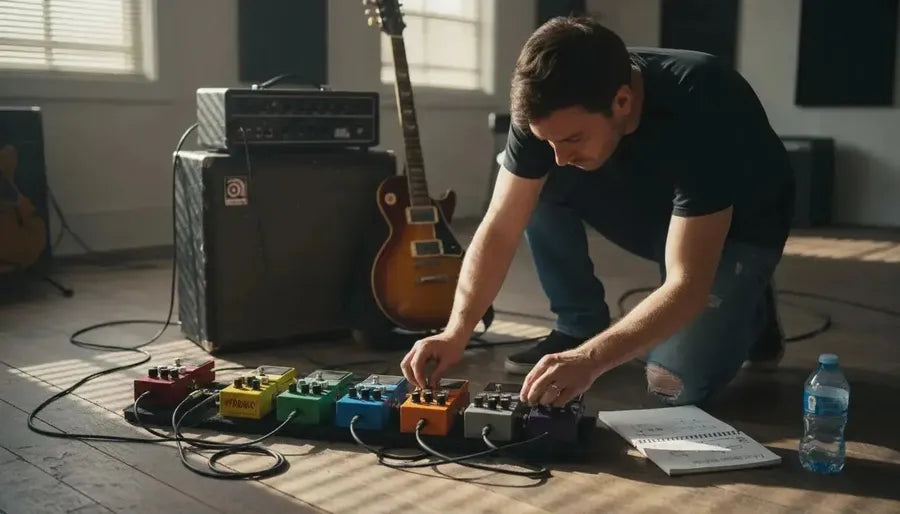
Finding the right guitar pedal can completely transform your music, yet over 85 percent of british electric guitarists say they struggle to pick pedals that truly suit their personal style. For players in Huntingdon, Cambridgeshire who want to move beyond basic setups, selecting quality pedals is key to unlocking new levels of dynamic sound, clarity, and expressive control. This guide reveals expert recommendations so you can shape everything from classic blues warmth to modern rock aggression with confidence.
Table of Contents
- Classic Overdrive Pedal For Dynamic Tone Shaping
- Distortion Pedal For Heavier Rock And Metal Sounds
- Delay Pedal For Echo And Atmospheric Effects
- Reverb Pedal For Spacious Ambience And Depth
- Chorus Pedal For Rich, Layered Guitar Textures
- Compressor Pedal To Even Out Volume And Sustain
- Wah Pedal For Expressive Soloing And Funky Rhythms
Quick Summary
| Key Insight | Explanation |
|---|---|
| 1. Overdrive Pedals Enhance Tone | Use overdrive pedals to subtly boost your guitar’s warmth and harmonic complexity, retaining its core character while adding richness. |
| 2. Distortion Pedals for Aggressive Sounds | Employ distortion pedals for thick, saturated tones ideal for rock and metal, providing dramatic sonic transformations to your guitar signal. |
| 3. Delay and Reverb Create Atmosphere | Integrate delay and reverb pedals to add depth and spaciousness to your sound, allowing for intricate, ambient textures and echoes. |
| 4. Chorus Pedals Add Layering | Use chorus pedals to create lush sounds that simulate multiple guitars, enhancing depth and richness in your musical performances. |
| 5. Compressors Balance Dynamics | Implement compressor pedals to even out sound levels by controlling dynamics, ensuring consistent tone quality and enhanced sustain. |
1. Classic Overdrive Pedal for Dynamic Tone Shaping
Electric guitarists seeking to elevate their sound understand that an overdrive pedal serves as a crucial tone-shaping tool. These remarkable devices transform a standard guitar signal by adding warmth, grit, and harmonic complexity that mimics the natural breakup of a cranked tube amplifier.
The magic of overdrive lies in its ability to subtly enhance guitar tones without completely altering the instrument’s fundamental character. Unlike distortion pedals that dramatically change your sound, classic overdrive provides a more nuanced approach to tone enhancement. It works by gently pushing your amplifier’s preamp section into natural compression, creating a rich, responsive sound that responds dynamically to your playing technique.
Classic overdrive pedals typically feature three primary controls: gain (which determines the amount of saturation), tone (for adjusting treble and bass frequencies), and output level (controlling the overall volume). These controls allow guitarists to dial in everything from a subtle boost to a more aggressive crunch perfect for blues and rock genres.
One legendary example is the Klon Centaur, renowned for its transparent tone and ability to add just enough grit without losing the guitar’s inherent character. Blues and rock players particularly appreciate how these pedals can transform a clean signal into a rich, expressive sound that sits perfectly in a mix.
Top Tip: Experiment with your overdrive pedal’s settings at low volumes first, gradually increasing gain and output to understand how it interacts with your specific guitar and amplifier setup.
2. Distortion Pedal for Heavier Rock and Metal Sounds
For electric guitarists craving intense, high-gain sounds that define rock and metal genres, a distortion pedal becomes an essential weapon in their sonic arsenal. These powerful devices transform your guitar signal from clean to aggressive, creating the thick, saturated tones that drive heavy music styles.
Distortion pedals work by intentionally clipping the guitar’s electrical signal, generating harmonics and compression that produce a more intense, overdriven sound. Unlike subtle overdrive, distortion creates dramatic sonic transformations designed to push your tone into aggressive territory.
The key controls on most distortion pedals include gain (determining signal saturation), tone (adjusting frequency response), and level (managing overall output volume). These parameters allow guitarists to craft everything from moderate crunch to extreme metal sounds, making the pedal incredibly versatile.
Electro-Harmonix Metal Muff represents a classic example of a distortion pedal engineered specifically for heavy music. Its circuitry is designed to deliver thick, powerful sounds with enhanced midrange frequencies that help guitars cut through dense musical arrangements.
Top Tip: When setting up your distortion pedal, start with lower gain settings and gradually increase intensity to find the sweet spot that maintains note definition while achieving desired aggression.
3. Delay Pedal for Echo and Atmospheric Effects
Electric guitarists seeking to add depth and dimension to their sound understand the transformative power of a delay pedal. These sophisticated devices create mesmerising echo effects that can range from subtle rhythmic repetitions to expansive atmospheric soundscapes.
Delay pedals manipulate audio signals by recording and reproducing your guitar’s sound at precise intervals, creating multiple echoes that can be controlled through parameters like delay time, feedback, and mix. This allows musicians to craft everything from tight slapback echoes to complex, cascading sound environments.
Most delay pedals offer several distinct modes. Digital delays provide crystal clear, precise repetitions, while analogue delays introduce warm, slightly degraded echoes that add vintage character. Some advanced models even simulate tape echo effects, recreating the organic sound of classic recording studios.
Practical applications include creating spatial textures in ambient music, adding rhythmic complexity to lead lines, and generating the illusion of multiple guitarists playing simultaneously. Famous guitarists like The Edge from U2 have built entire signature sounds around creative delay pedal techniques.
Top Tip: Start with short delay times and minimal feedback, gradually increasing complexity as you become more comfortable exploring the pedal’s sonic possibilities.
4. Reverb Pedal for Spacious Ambience and Depth
Every electric guitarist knows that true sonic magic often lies in creating depth and atmosphere beyond raw sound. A reverb pedal transforms your guitar tone by simulating the natural reflections and spaciousness of different acoustic environments.
Reverb pedals generate complex sonic landscapes by adding subtle or dramatic echo effects that mimic room acoustics. These sophisticated devices can reproduce anything from tight studio room sounds to expansive cathedral reverberations, giving musicians unprecedented control over their sonic texture.
Typical reverb pedals offer multiple modes including spring (emulating vintage amplifier sounds), hall (recreating large concert spaces), plate (simulating classic studio reverb techniques), and shimmer (creating ethereal, cascading atmospheric effects). Each mode provides a unique way to add dimensionality to your guitar’s voice.
Musicians across genres use reverb to create emotional depth ambient soundscapes can transport listeners from intimate club settings to vast sonic universes. Jazz players might use subtle room reverb, while post rock guitarists might employ massive, evolving shimmer settings to craft intricate textural experiences.
Top Tip: Start with modest reverb settings and gradually increase complexity, allowing your ears to adapt to how different reverb modes interact with your specific guitar and amplifier.
5. Chorus Pedal for Rich, Layered Guitar Textures
Electric guitarists searching for added depth and dimension in their sound will find the chorus pedal an indispensable tool for sonic exploration. These remarkable devices transform a standard guitar signal into a lush, expansive soundscape that seems to multiply your instrument.
Chorus pedals create complex sonic textures by duplicating the original signal and introducing subtle variations in pitch and timing. This technique generates the illusion of multiple guitars playing simultaneously, adding width and complexity to your musical performance.
The fundamental controls on a chorus pedal typically include rate (speed of modulation), depth (intensity of effect), and mix (balance between original and processed signals). These parameters allow musicians to craft anything from a gentle, shimmering background to a pronounced, swirling tone that dominates the sonic landscape.
Genres like new wave, shoegaze, and alternative rock have embraced chorus effects to create signature sounds. Iconic guitarists such as Andy Summers from The Police popularised the chorus sound, demonstrating how this effect can transform a simple guitar line into something truly extraordinary.
Top Tip: Begin with minimal chorus settings and gradually increase intensity, allowing your ears to adapt and find the sweet spot that enhances your natural guitar tone without overwhelming it.
6. Compressor Pedal to Even Out Volume and Sustain
Electric guitarists seeking consistency and professional polish understand the transformative power of a compressor pedal. This remarkable device acts like an intelligent volume manager, smoothing out dynamic variations and enhancing overall tone quality.
Compressor pedals control guitar dynamics by reducing volume peaks and amplifying quieter notes, creating a balanced and controlled sound. They essentially act as an automatic volume leveller, ensuring every note rings out with similar intensity and clarity.
Typical compressor pedals feature attack (how quickly compression engages), sustain (duration of note preservation), and blend controls. These parameters allow musicians to fine tune their tone from subtle levelling to dramatic sound shaping. Country and blues players often use compression to create smooth, singing lead tones, while rock guitarists appreciate its ability to tighten rhythm playing.
Professional musicians appreciate compressors for their ability to make clean tones sound thicker and overdrive sounds more defined. By evening out volume inconsistencies, these pedals help guitarists achieve a more professional and controlled sound across different playing techniques.
Top Tip: Start with minimal compression settings and gradually increase intensity, listening carefully to how the pedal affects your guitar’s natural dynamics.
7. Wah Pedal for Expressive Soloing and Funky Rhythms
Electric guitarists seeking to inject personality and vocal-like expression into their playing will find the wah pedal an extraordinary sonic weapon. These dynamic devices transform guitar tones through foot controlled frequency modulation, creating sounds that seem to speak and sing.
Wah pedals generate vocal guitar sounds by sweeping a resonant filter across different frequencies, producing the characteristic ‘wah wah’ effect that can dramatically alter a guitar’s voice. Musicians can create everything from subtle tone shifts to dramatic sonic statements with a single foot movement.
The key controls on most wah pedals include frequency range, resonance, and sweep characteristics. These parameters allow guitarists to craft sounds from funky rhythm techniques popularised by artists like Jimi Hendrix to soaring lead tones used by rock and blues musicians.
Iconic musicians from various genres have made the wah pedal legendary. Funk rhythm players use it to create percussive, rhythmic textures, while lead guitarists employ it to add extraordinary expression and emotion to their solos, making each note sound like it has its own unique voice.
Top Tip: When learning wah techniques, practise with a clean tone first to understand the pedal’s full range of motion and sonic possibilities.
Below is a comprehensive table summarising the various types of guitar pedals, their functions, and their practical applications as discussed in the article.
| Pedal Type | Primary Function | Applications |
|---|---|---|
| Overdrive Pedal | Enhances guitar tones with warm, gritty harmonics and mild compression. | Ideal for blues and rock genres, providing subtle boost to dynamic crunch. |
| Distortion Pedal | Produces gritty, high-gain sounds by clipping the guitar’s signal. | Suitable for intense rock and metal music, creating powerful, compressed tones. |
| Delay Pedal | Creates echoes by repeating signals at adjustable intervals. | Used to add rhythmic complexity or atmospheric depth to music, applicable in ambient and lead guitar sections. |
| Reverb Pedal | Simulates acoustic reflections and hall-like echoes. | Creates spacious sounds from subtle room reverbs to extensive ambient textures, useful across multiple genres. |
| Chorus Pedal | Generates a layered effect by duplicating and modulating the guitar signal. | Adds depth and width to soundscapes, prevalent in Shoegaze and New Wave music. |
| Compressor Pedal | Balances volume differences, enhancing sustain and note clarity. | Provides dynamic control, useful in genres requiring consistent tonality, such as country and blues. |
| Wah Pedal | Modulates frequencies to create a vocal-like tonality. | Applied for funky rhythms and expressive soloing, popularised by guitarists in rock and blues. |
Discover the Perfect Guitar Pedal to Elevate Your Electric Playing
Choosing the right guitar pedal can feel overwhelming when aiming to capture that perfect overdrive warmth, crushing distortion, or ethereal delay effect. Whether you want to add rich dimension with a chorus pedal or tighten your tone with a compressor, understanding how these pedals shape your sound is crucial to unlocking your creative potential. Many guitarists struggle with finding quality pedals that truly complement their guitar and amplifier setup.

At MusicStreet, we specialise in providing a carefully curated collection of electric guitar pedals and accessories designed to help you explore and master effects like wah, reverb, and classic overdrive. Our expert setup and post-sale support mean you get not only premium gear but personalised advice aligned with the fundamental concepts outlined in “7 Must-Know Examples of Guitar Pedals for Electric Players.” Take advantage of our free UK delivery on orders over a certain amount and access trusted brands through our main website. Start your journey to a sonic transformation by browsing our featured pedals today and experience the difference firsthand.
Frequently Asked Questions
What are the primary controls on a classic overdrive pedal?
Classic overdrive pedals typically feature three main controls: gain, tone, and output level. Adjust the gain to determine how much saturation you want, use the tone control to tweak treble and bass frequencies, and set the output level to manage the overall volume of your sound.
How does a distortion pedal differ from an overdrive pedal?
A distortion pedal creates a more aggressive, heavily saturated sound by intentionally clipping the guitar’s electrical signal, while an overdrive pedal adds warmth and subtle grit, mimicking a tube amplifier’s natural break-up. To choose the right pedal, consider the genre you play; overdrive suits blues and rock, whereas distortion works well for heavier styles.
What settings should I start with on a delay pedal?
When you start using a delay pedal, begin with short delay times and minimal feedback. Gradually increase these settings to explore how the echo effect enhances your playing within the desired musical context; for instance, you might set the feedback at 20% to achieve a clean and rhythmic echo.
What types of reverb settings are commonly available on reverb pedals?
Reverb pedals often include several modes, such as spring, hall, plate, and shimmer. Each mode simulates different acoustic environments, so experiment by starting with the spring mode for warmth and moving to hall for spaciousness to find what complements your sound best.
How can I adjust the intensity of a chorus effect?
To adjust the intensity of a chorus effect, use the depth control on your chorus pedal, which determines how pronounced the effect is. Start with minimal depth, then gradually increase it to achieve the desired lushness in your tones without overwhelming your guitar’s natural sound.
What benefits does a compressor pedal provide for guitarists?
A compressor pedal helps guitarists achieve a balanced sound by evening out volume variations and enhancing sustain. Set initial compression settings to a low level, then adjust as needed to maintain clarity and consistency across dynamic playing, aiming for a smoother output in your performances.




Share:
High End Guitar Finishes: Enhancing Sound and Value
Guitar History Explained: Influences Shaping Modern Music