


Most british guitarists are surprised to learn that a guitar’s finish can influence tone and performance just as much as pickups or wood type. For professionals, choosing between nitrocellulose, polyurethane, or oil finishes means weighing factors like resonance, durability, and feel. With over 60 percent of high-end instruments crafted using specialist finishes, understanding these options sets discerning players apart. This guide unpacks what truly defines a premium guitar finish and how expert craftsmanship shapes both sound and style.
Table of Contents
- High End Guitar Finishes Defined and Debunked
- Finish Types: Nitrocellulose, Polyurethane, and Oil
- How Guitar Finishes Affect Tone and Feel
- Manufacturing Processes and Craftsmanship Insights
- Maintenance, Durability, and Common Pitfalls
- Comparing Alternatives and Custom Finish Options
Key Takeaways
| Point | Details |
|---|---|
| High-End Finishes Enhance Performance | Quality guitar finishes protect the instrument and manipulate sound, influencing tone and durability. |
| Finish Type Matters | Nitrocellulose allows for greater resonance, while polyurethane offers durability at the potential cost of tonal depth. |
| Proper Maintenance is Essential | Each finish type has unique care requirements; understanding these can help preserve the instrument’s longevity and appearance. |
| Custom Finishes Reflect Identity | Personalisation options enable musicians to express their aesthetic and sonic preferences through bespoke finishes. |
High End Guitar Finishes Defined and Debunked
Guitar finishes are far more than aesthetic decorations – they represent a complex fusion of protection, sound manipulation, and artistic expression. Professional guitar finishes significantly influence an instrument’s tone, durability, and overall performance, challenging many common misconceptions about their role in musical craftsmanship.
At its core, a high-end guitar finish serves multiple critical functions. Beyond creating visual appeal, these specialist coatings protect the wooden body from moisture, temperature variations, and physical wear. Nitrocellulose lacquer, a traditional favourite among professional luthiers, allows the wood to breathe and vibrate more naturally compared to modern polyurethane alternatives. This breathing quality enables subtle tonal nuances that many professional musicians argue contribute to a richer, more resonant sound.
The debate surrounding guitar finishes often centres on thickness and application technique. Thinner finishes typically permit greater wood resonance, allowing the instrument’s natural acoustic properties to shine through. Conversely, thick finishes can dampen vibrations, potentially reducing the guitar’s tonal complexity. Professional builders understand that finish application is an art form – requiring precise layering, meticulous sanding, and an understanding of how different materials interact with wood’s inherent characteristics.
Top tip: When selecting a high-end guitar, gently tap the body and listen carefully – a resonant, clear tone often indicates a superior, thoughtfully applied finish that enhances rather than restricts the instrument’s natural voice.
Finish Types: Nitrocellulose, Polyurethane, and Oil
Guitar finishes represent a nuanced world of acoustic engineering, with each type offering distinct characteristics that dramatically influence an instrument’s sound and durability. Guitar finish types play a critical role in shaping the instrument’s tonal personality and protective qualities.
Nitrocellulose Lacquer remains the gold standard for vintage and high-end guitars. This traditional finish is prized for its ability to allow wood to breathe and vibrate freely, creating a thin coating that enhances natural resonance. Beloved by purists, nitro finishes develop a unique patina over time, showing subtle wear that many musicians consider a mark of character. However, they are less durable and more susceptible to environmental changes compared to modern alternatives.
In contrast, Polyurethane represents the modern approach to guitar finishing. This robust coating provides superior protection against scratches, moisture, and environmental damage. While polyurethane offers exceptional durability, it can be thicker and potentially dampens the wood’s natural vibration. Professional musicians often debate whether the trade-off between protection and tonal complexity is worthwhile. Oil finishes present a third option, offering minimal interference with the wood’s natural resonance. These finishes penetrate deeply into the wood, providing light protection while maintaining maximum acoustic transparency.
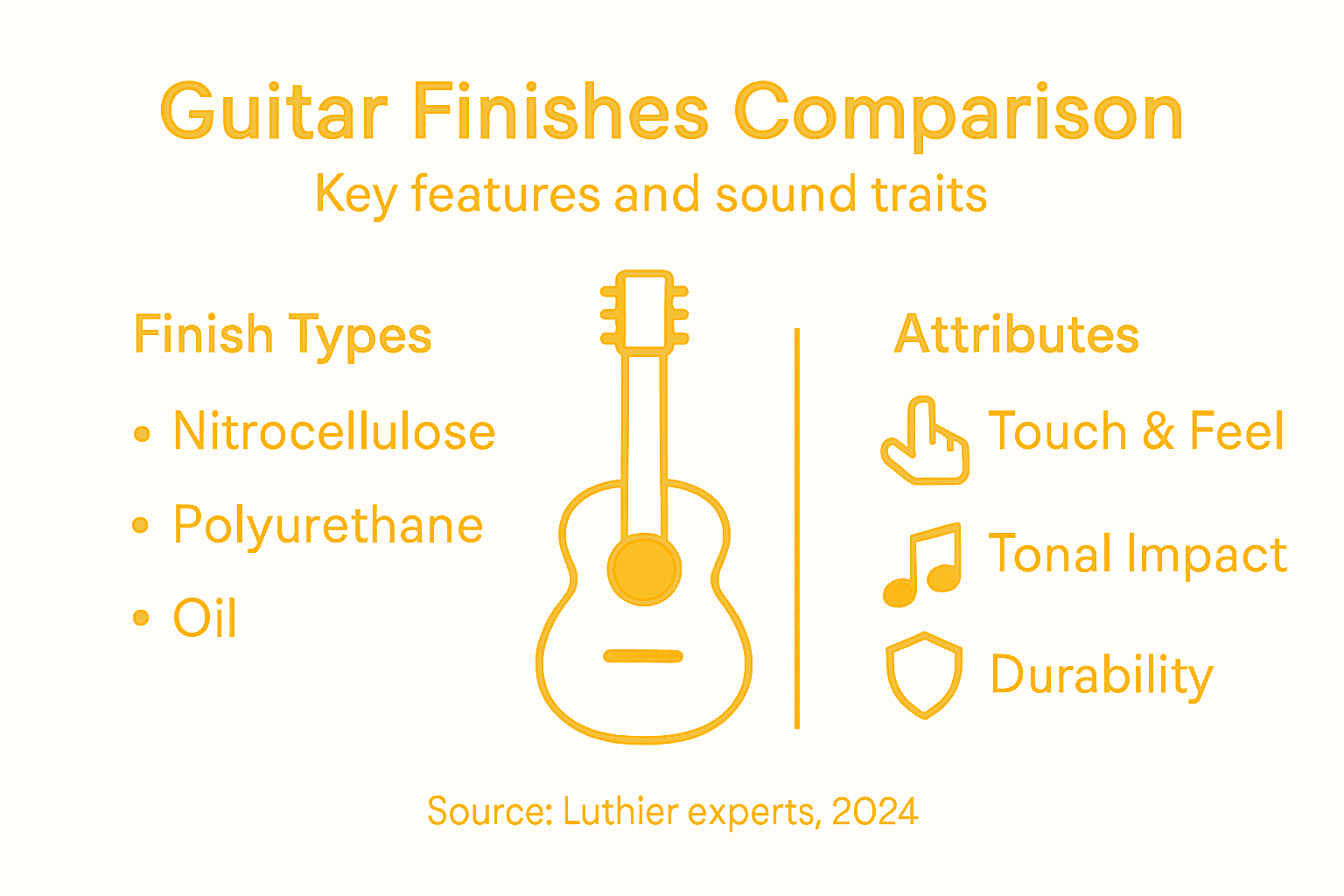
Here is a summary of the core characteristics of common guitar finish types:
| Finish Type | Touch & Feel | Durability Level | Tonal Impact |
|---|---|---|---|
| Nitrocellulose | Soft, ages gracefully | Moderate, may degrade | Open and resonant sound |
| Polyurethane | Hard, smooth, consistent | High, resists wear | Slightly compressed tone |
| Oil-Based | Natural, organic, textured | Low, requires upkeep | Maximum acoustic clarity |
| Shellac / French Polish | Velvety, classic feel | Delicate, easily marked | Preserves subtle dynamics |
Pro tip: When evaluating guitar finishes, run your fingernail gently across the surface – a high-quality finish will feel smooth and consistent, with minimal resistance or unevenness.
How Guitar Finishes Affect Tone and Feel
The interaction between guitar finishes and sound is a nuanced dance of physics and craftsmanship that profoundly impacts an instrument’s sonic character. Guitar finish characteristics reveal how microscopic variations can transform an instrument’s fundamental voice, creating subtle yet significant tonal differences that experienced musicians can discern.
At the molecular level, finish thickness plays a critical role in sound transmission. Nitrocellulose finishes, renowned for their thin application, allow wood fibres to vibrate more freely, producing a more open, resonant tone with enhanced harmonic complexity. These finishes create a responsive surface that seems to breathe with the instrument, capturing the most delicate nuances of playing technique. In contrast, thicker polyurethane coatings can dampen these vibrations, creating a more compressed sound with reduced dynamic range.
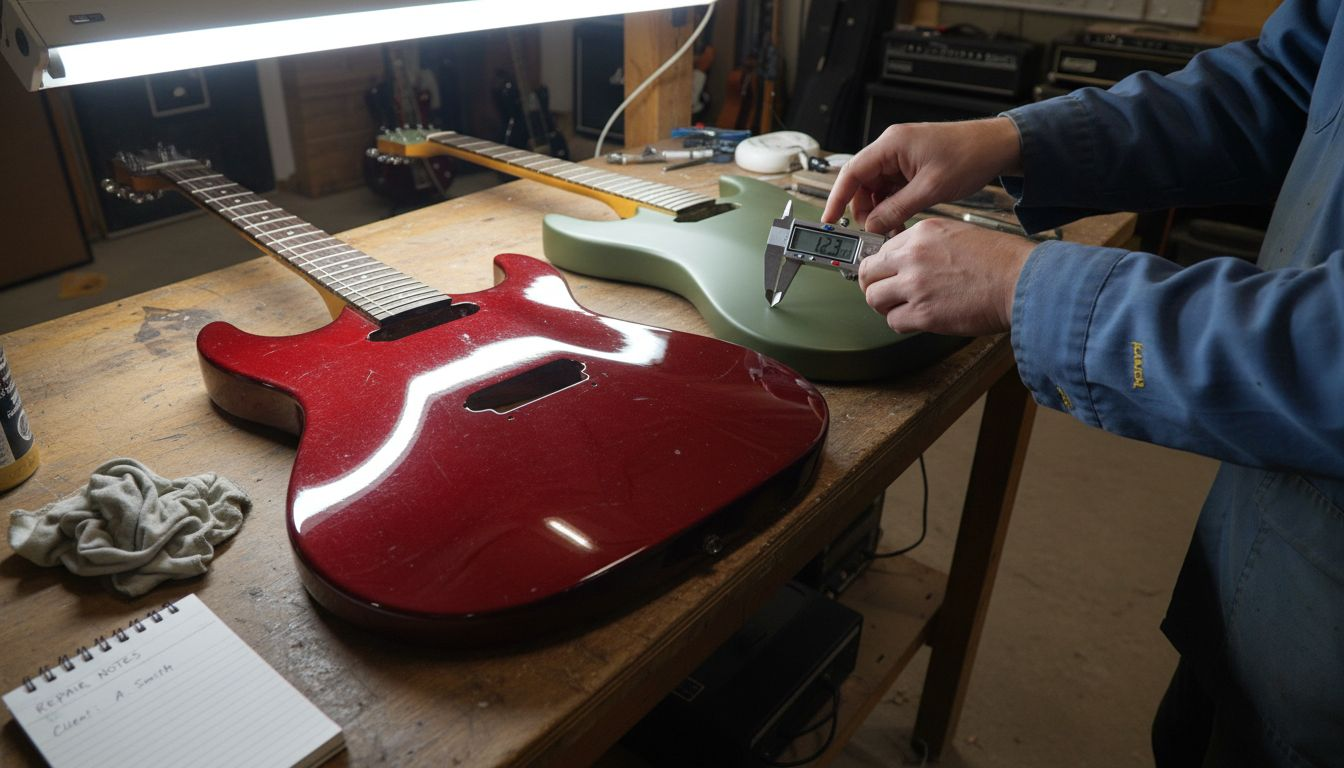
Beyond pure acoustics, finishes dramatically influence a guitar’s tactile experience. The way a finish feels against a player’s skin can affect comfort, playability, and even psychological perception of the instrument. Nitro finishes, with their softer, more porous nature, develop a unique patina over time – a quality many vintage guitar enthusiasts cherish. They create a more organic connection between musician and instrument, allowing subtle temperature and humidity changes to interact with the wood’s surface.
Pro tip: When testing guitar finishes, pay attention to how the neck feels during extended playing – a high-quality finish should feel smooth and natural, enhancing rather than hindering your playing experience.
Manufacturing Processes and Craftsmanship Insights
Guitar finishing represents an intricate blend of scientific precision and artistic skill, where every layer applied can transform an instrument’s fundamental character. Guitar finish manufacturing techniques reveal a complex process that demands extraordinary attention to detail and deep understanding of material properties.
The application of guitar finishes follows a meticulously controlled sequence of steps. Nitrocellulose lacquer, the traditional choice for vintage instruments, requires multiple thin layers carefully sprayed and allowed to partially dissolve into previous coats. This technique creates a finish that becomes almost integral with the wood, allowing maximum vibration and resonance. Modern polyurethane finishes, by contrast, involve more uniform application methods, using spray techniques that create a more consistent protective layer with less manual intervention.
Craftsmanship in guitar finishing extends beyond mere technical application. Master luthiers understand that each wood species responds differently to finishing techniques, requiring nuanced adjustments in coating thickness, application method, and curing time. The process involves careful sanding between coats, managing environmental conditions like temperature and humidity, and developing an almost intuitive sense of how different materials interact. Some finishers spend decades perfecting techniques that transform a simple protective coating into an art form that enhances an instrument’s acoustic properties.
Pro tip: When examining a high-quality guitar finish, look for consistency in colour, smoothness of application, and subtle transitions between coats – these are hallmarks of true craftsmanship.
Maintenance, Durability, and Common Pitfalls
Guitar finishes represent a delicate balance between protection and performance, with each type presenting unique maintenance challenges. Guitar finish durability reveals a complex landscape of care requirements that can significantly impact an instrument’s long-term value and aesthetic appeal.
Nitrocellulose finishes demand the most attentive maintenance regime. These traditional coatings are remarkably sensitive to environmental conditions, prone to checking, crazing, and yellowing over time. Professional musicians and collectors understand that these finishes require careful handling – avoiding direct sunlight, maintaining consistent temperature and humidity, and using specialised cleaning products. In contrast, polyurethane finishes offer superior resistance to environmental stressors, creating a more robust protective layer that withstands daily wear and handling with minimal intervention.
Common pitfalls in guitar finish maintenance often stem from misunderstanding material characteristics. Aggressive cleaning techniques, exposure to extreme temperatures, and improper storage can cause irreversible damage. Nitro finishes are particularly vulnerable, with their softer composition making them susceptible to scratches, chemical reactions, and gradual degradation. Professional guitar technicians recommend a nuanced approach: using microfibre cloths, avoiding alcohol-based cleaners, and storing instruments in controlled environments that minimise potential stress to the finish.
The following table compares finish maintenance challenges and best practices:
| Finish Type | Typical Issues | Maintenance Approach |
|---|---|---|
| Nitrocellulose | Yellowing, scratches, crazing | Gentle cleaning, climate control |
| Polyurethane | Minor dings, UV fading | Regular wipe, minimal intervention |
| Oil-Based | Dryness, lacks surface shield | Frequent oiling, avoid moisture |
| Shellac / French Polish | Water spots, finger marks | Use microfibre cloth, avoid chemicals |
Pro tip: Invest in a high-quality, instrument-specific cleaning cloth and perform gentle, regular maintenance – prevention is always more effective than attempting to repair damaged finishes.
Comparing Alternatives and Custom Finish Options
The world of guitar finishes extends far beyond traditional nitrocellulose and polyurethane, offering musicians an intricate palette of artistic and sonic possibilities. Alternative guitar finish techniques reveal a fascinating spectrum of materials that can dramatically transform an instrument’s aesthetic and acoustic characteristics.
Beyond the well-known nitro and poly finishes, musicians can explore diverse options like shellac, French polish, and oil-based finishes. Shellac provides a thin, breathable coating that enhances natural wood resonance, while French polish offers an extraordinarily delicate finish beloved by classical guitar builders. Oil finishes penetrate deeply into wood fibres, creating a minimal barrier that allows maximum tonal transparency. Each alternative brings unique qualities – some prioritising sound transmission, others focusing on visual depth and protection.
Custom finish options have evolved into a sophisticated art form, allowing musicians to personalise instruments beyond standard colour selections. Techniques range from translucent finishes that showcase wood grain to solid colours with complex metallic or pearl effects. Professional luthiers can create bespoke finishes that not only protect the instrument but also reflect a musician’s individual aesthetic and sonic preferences. The choice of finish becomes an extension of musical identity, with each layer telling a story of craftsmanship and personal expression.
Pro tip: When considering a custom finish, request samples and test how different coating techniques interact with your specific wood type – each combination produces subtly unique sonic and visual results.
Elevate Your Guitar Experience with Expert Finish Selection and Support
Choosing the right guitar finish is essential for unlocking your instrument’s fullest potential in tone, durability, and feel. Whether you value the rich resonance of a nitrocellulose lacquer or prefer the robust protection of polyurethane, making an informed decision is key to preserving your sound and investment. At MusicStreet, we understand these nuanced finish characteristics and offer a curated collection of new and pre-owned guitars that showcase superior craftsmanship and expert finish applications.

Explore our wide range of guitars where every detail from finish type to setup is handled with precision. Benefit from personalised service, professional instrument inspection, and dedicated post-sale support that helps you maintain your guitar’s pristine condition. Start your journey towards discovering the perfect finish and sound by browsing our featured guitars. Visit MusicStreet now to experience expert guidance and unmatched quality that bring your music to life.
Frequently Asked Questions
What are the main types of guitar finishes?
Guitar finishes primarily fall into three categories: Nitrocellulose lacquer, polyurethane, and oil-based finishes. Nitrocellulose is appreciated for its tonal clarity, polyurethane offers superior durability, and oil finishes provide minimal interference with wood resonance.
How do guitar finishes affect the instrument’s sound?
The thickness and type of finish significantly impact sound. Nitrocellulose finishes allow wood to resonate freely, enhancing tonal complexity, while thicker polyurethane finishes can dampen vibrations, resulting in a more compressed sound.
What maintenance is required for different guitar finishes?
Nitrocellulose finishes require careful maintenance to avoid yellowing and scratches, typically needing gentle cleaning and climate control. Polyurethane finishes are more robust but still benefit from regular wiping to maintain their appearance and protect against minor dings.
Can guitar finishes be customised?
Yes, customised guitar finishes are a growing trend that allows musicians to personalise their instruments with various colours and effects. Techniques like shellac and French polish can enhance the aesthetic and acoustic qualities, making the instrument uniquely theirs.


Share:
What Is a Guitar Preamp? Enhancing Your Tone
7 Must-Know Examples of Guitar Pedals for Electric Players