


Many british guitarists discover that choosing the right preamp can completely redefine their playing experience. In Huntingdon and across Cambridgeshire, musicians are driven by the search for gear that delivers real tonal control. With over 80 percent of intermediate players reporting dramatic improvements in sound clarity after upgrading their preamps, understanding what sets these devices apart matters more than ever. This guide sheds light on the biggest misconceptions and reveals how different preamp options shape your signature voice.
Table of Contents
- Defining Guitar Preamps And Common Misconceptions
- Main Types Of Guitar Preamps Explained
- How Guitar Preamps Shape Your Sound
- Choosing Between Preamps And Amplifiers
- Selecting The Right Preamp For Your Needs
Key Takeaways
| Point | Details |
|---|---|
| Understanding Preamps | Guitar preamps amplify weak signals from pickups, enhancing sound quality and enabling tonal shaping. |
| Types of Preamps | Active preamps offer extensive tonal control and clarity, while passive preamps provide a more natural sound. |
| Role in Sound Production | Preamps shape sound significantly and maintain signal integrity, enhancing overall performance. |
| Choosing the Right Preamp | Consider your performance environment and tonal preferences when selecting a preamp for optimal sound. |
Defining Guitar Preamps and Common Misconceptions
A guitar preamp is a critical electronic circuit designed to amplify the weak electrical signal generated by guitar pickups, ensuring optimal sound transmission and quality. Understanding the fundamental role of guitar signal amplification helps musicians appreciate how these devices transform raw pickup signals into rich, powerful tones.
Contrary to popular belief, preamps are not just simple volume boosters but sophisticated tone-shaping components. Many guitarists mistakenly assume that all pickups function identically, but the reality is more nuanced. Active pickups, which require battery power, incorporate built-in preamps that provide additional signal conditioning and tonal flexibility. These integrated preamps can dramatically enhance signal clarity, reduce noise, and offer expanded sound-sculpting capabilities compared to passive pickup configurations.
The placement and design of guitar preamps vary significantly across different instrument types. Some preamps are mounted directly inside the guitar body, while others exist as external units or integrated within amplification systems. This diversity allows musicians to choose preamp solutions that best complement their specific playing style and tonal preferences. Whether integrated into the instrument or used as standalone units, preamps play a crucial role in translating a guitarist’s subtle playing dynamics into a robust, expressive musical signal.
Pro Tip: When selecting a preamp, consider your specific genre and playing style to ensure you choose a unit that provides the right tonal characteristics and signal enhancement for your musical needs.
Main Types of Guitar Preamps Explained
Guitar preamps are primarily categorised into two fundamental types: active and passive preamps. Understanding guitar preamp configurations reveals the nuanced differences that significantly impact a guitarist’s sound and performance capabilities.
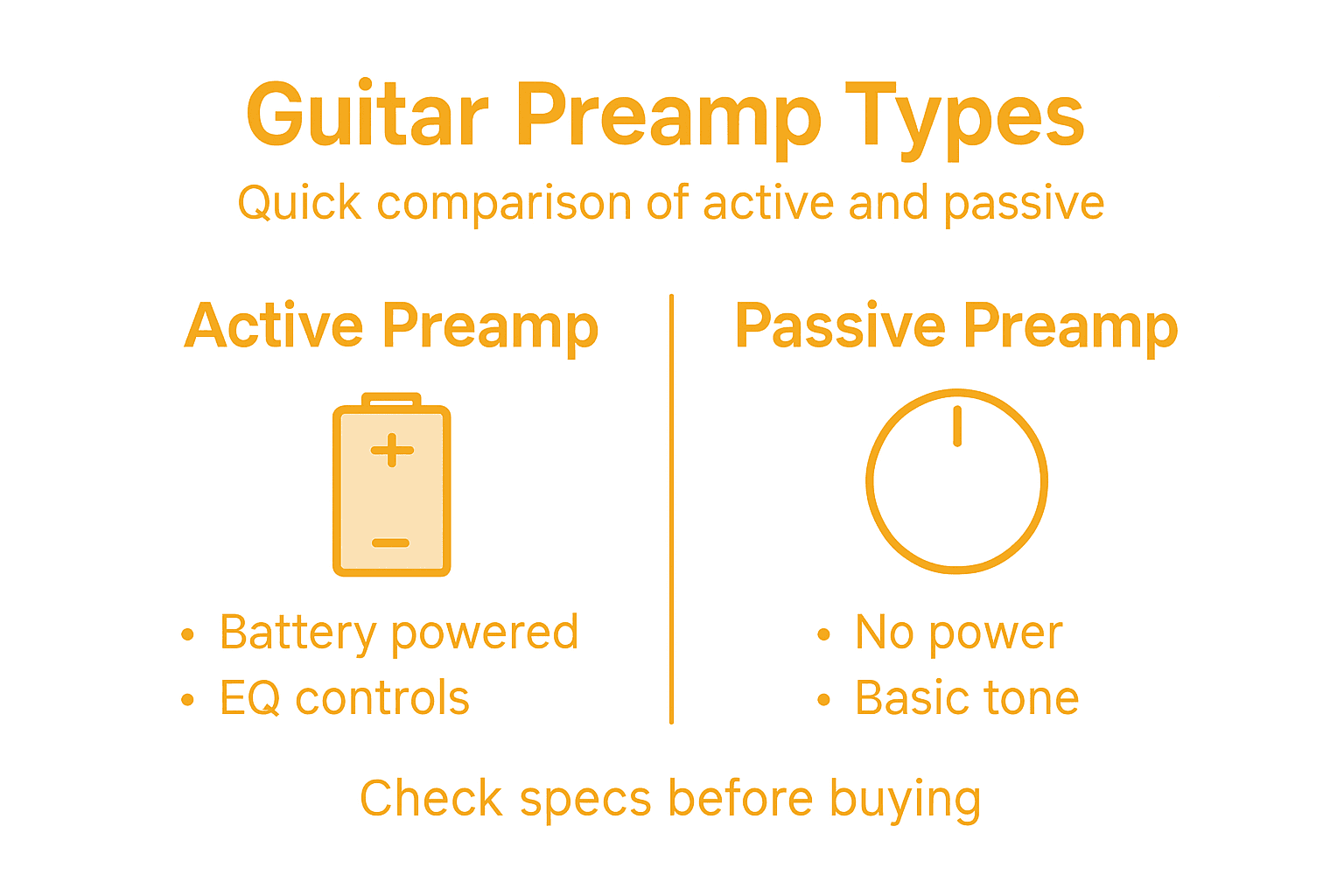
Active preamps represent the more sophisticated and versatile category, powered by internal batteries and typically integrated directly within the guitar’s electronics. These preamps offer musicians expanded tonal control through built-in equalisation circuits and volume adjustments. They are particularly prevalent in electric and acoustic-electric guitars, providing enhanced signal clarity, noise reduction, and the ability to shape tone with greater precision. Active preamps often feature multiple band equalisation options, allowing guitarists to fine-tune their sound across bass, middle, and treble frequencies.
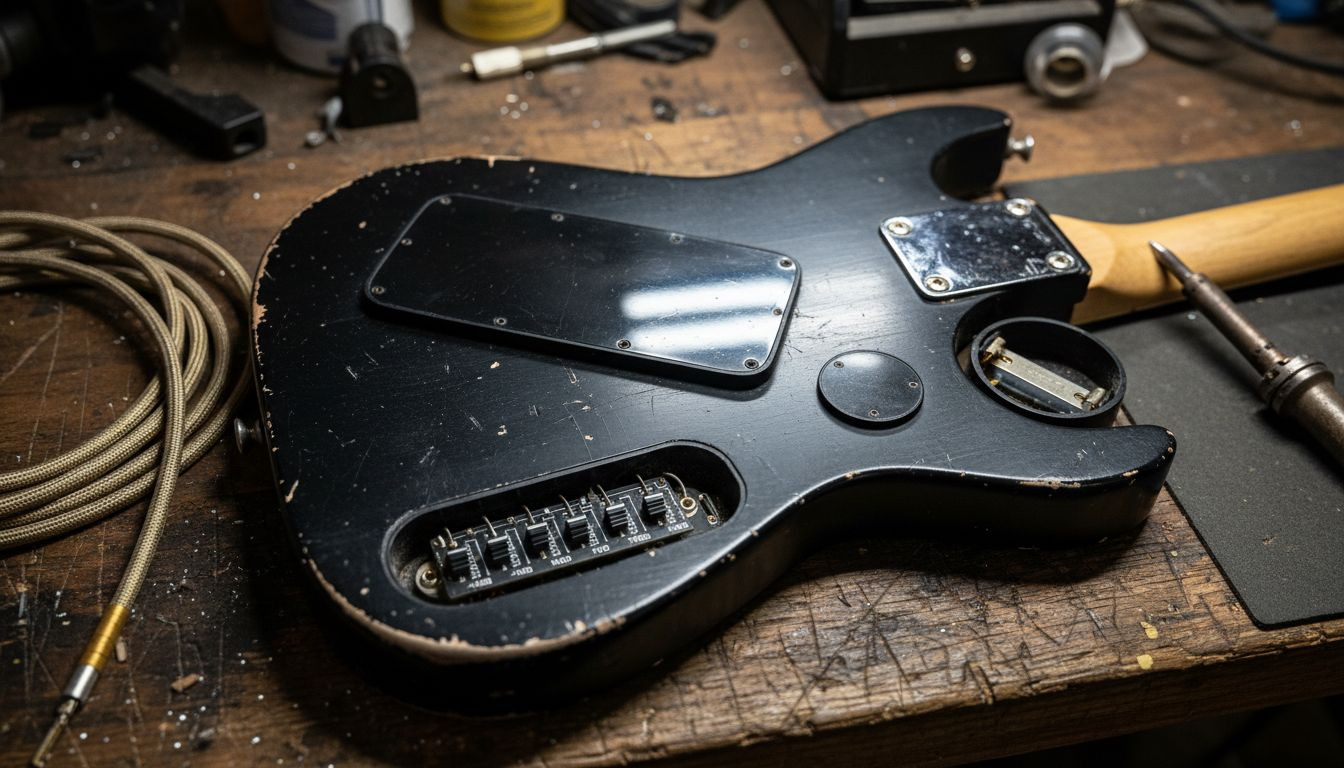
In contrast, passive preamps operate without external power sources and provide a more straightforward signal path. While less feature-rich compared to their active counterparts, passive preamps can deliver a purer, more transparent sound that some guitarists prefer for its natural character. These preamps are typically found in vintage-style instruments and are valued for maintaining the raw, uncoloured essence of the guitar’s natural tone. Passive preamp configurations are simpler, usually involving basic volume and tone controls that provide fundamental sound-shaping capabilities.
To help clarify the differences between active and passive guitar preamps, see the comparison below:
| Attribute | Active Preamp | Passive Preamp |
|---|---|---|
| Power Requirement | Requires battery | No external power needed |
| Tonal Flexibility | Extensive EQ and shaping | Limited tone controls |
| Signal Clarity | Enhanced, less noise | Natural, may be more susceptible to noise |
| Typical Usage | Modern guitars, stage use | Vintage/classic guitars |
Pro Tip: When choosing between active and passive preamps, consider your musical genre, playing style, and desired tonal characteristics to select the configuration that best complements your sonic preferences.
How Guitar Preamps Shape Your Sound
Guitar preamps play a transformative role in sculpting a musician’s ultimate sound, acting as sophisticated sonic architects that enhance signal clarity far beyond simple volume amplification. These electronic circuits serve as critical intermediaries between a guitar’s raw pickup output and the final sound produced through amplifiers or recording systems.
The primary mechanism by which preamps shape sound involves intricate signal processing and tonal manipulation. By providing precise control over volume, equalisation, and harmonic content, preamps enable guitarists to craft their unique sonic signature. Active preamps, in particular, offer extensive tone-shaping capabilities through multi-band equalisation controls, allowing musicians to boost or cut specific frequency ranges. This level of granular control means guitarists can emphasise crisp treble frequencies for bright, cutting lead tones or enhance bass responses for fuller, warmer rhythm sounds.
Beyond basic tone modification, preamps also play a crucial technical role in maintaining signal integrity. They combat potential signal degradation that can occur over long cable runs, reducing unwanted noise and preserving the guitar’s original tonal characteristics. Some advanced preamp designs incorporate additional features like feedback suppression, gain staging, and dynamic response enhancement, providing musicians with unprecedented control over their instrumental voice.
Pro Tip: Experiment with your preamp’s equalisation settings using small, incremental adjustments to discover subtle tonal variations that can dramatically transform your guitar’s voice.
Choosing Between Preamps and Amplifiers
Understanding the fundamental differences between preamps and amplifiers is crucial for guitarists seeking to optimise their sound. Guitar amplifier configurations reveal a complex relationship between these two critical components, each playing a distinct role in sound production and tonal shaping.
Preamps and amplifiers operate as complementary yet unique systems within a guitar’s signal chain. A preamp’s primary function is to process and shape the initial weak electrical signal from guitar pickups, providing crucial tonal refinement through equalisation, gain control, and harmonic enhancement. In contrast, power amplifiers focus on driving the signal to sufficient volume, converting the refined preamp output into sound loud enough to be heard through speakers. Some musicians opt for integrated systems that combine both functions, while others prefer separate units to maximise tonal flexibility and control.
The choice between standalone preamps and full amplifiers depends on multiple factors including performance environment, musical genre, and personal tonal preferences. Studio musicians might prioritise detailed preamp tone-shaping capabilities, whereas live performers may require the complete amplification power of a full amp system. Standalone preamps offer exceptional versatility, allowing direct connection to mixing consoles or recording interfaces, while traditional amplifiers provide a more holistic sound generation approach that includes speaker interaction and natural harmonic compression.
Pro Tip: Audition different preamp and amplifier combinations to discover the unique sonic character that best represents your musical voice.
Selecting the Right Preamp for Your Needs
Choosing the ideal preamp requires careful consideration of your specific musical requirements and performance context. Acoustic guitar preamp selection involves evaluating critical features that can dramatically influence your overall sound quality and performance flexibility.
The first step in selecting a suitable preamp is understanding your primary performance environment. Studio musicians might prioritise precision and detailed tone control, seeking preamps with advanced equalisation options and low noise floors. Live performers, conversely, often require robust units that can withstand stage conditions and provide consistent sound across varying acoustic environments. Onboard preamps integrated directly into guitars offer seamless convenience, while external pedal-style preamps provide more extensive tone-shaping capabilities and greater signal processing flexibility.
Technical specifications play a crucial role in preamp selection. Pay close attention to factors like input impedance, gain structure, and dynamic response. Some preamps offer natural compression characteristics that can enhance sustain and add harmonic richness, while others provide pristine, transparent signal reproduction. The positioning of the preamp within your effects chain can also significantly impact your tone, with early placement offering different sonic characteristics compared to later signal chain positions.
The following table summarises key considerations when selecting a guitar preamp:
| Consideration | Studio Setting Suggestion | Live Performance Suggestion |
|---|---|---|
| Tone Control | Precision EQ and low noise floor | Durable build, stable sound |
| Integration | Suit effects chain and recording | Onboard for convenience or pedal for control |
| Signal Quality | Prefer transparent, detailed output | Reliable, feedback suppression preferred |
Pro Tip: Always test potential preamps with your specific guitar and amplification setup to ensure optimal tonal compatibility and performance.
Elevate Your Tone with the Perfect Guitar Preamp
Struggling to find a guitar preamp that truly enhances your tone without sacrificing clarity or expression is a common challenge for guitarists. Whether you desire the precise control of an active preamp or the natural warmth of a passive design, selecting the right solution can make all the difference to your sound. At MusicStreet, we understand the importance of achieving that flawless signal clarity and tonal flexibility discussed in the article on What Is a Guitar Preamp? Enhancing Your Tone. Our curated selection of electric, acoustic, and bass guitars includes instruments crafted with expertly integrated preamps and accessories that bring out your unique musical voice.

Discover premium preamp-equipped guitars and professional setup services that ensure every note resonates with your intended character. Visit MusicStreet to explore our latest featured and pre-loved guitars with built-in preamps. Benefit from expert advice, personalized support, competitive pricing, and free UK delivery on orders above qualifying amounts. Don’t wait to transform your playing experience—start crafting your ideal tone today with MusicStreet.
Frequently Asked Questions
What is the role of a guitar preamp?
A guitar preamp amplifies the weak electrical signal from guitar pickups, enhancing sound quality and enabling tonal shaping beyond mere volume adjustment.
What is the difference between active and passive guitar preamps?
Active preamps require battery power and offer extensive tonal control with built-in EQ options, while passive preamps operate without power, providing a simpler signal path with a more natural sound.
How do guitar preamps affect my overall sound?
Guitar preamps shape your sound by enhancing signal clarity, allowing for precise volume and tonal adjustments, and maintaining the integrity of the guitar’s natural tone during amplification.
Should I choose a standalone preamp or an integrated amplifier?
The choice depends on your needs; standalone preamps offer greater tonal flexibility and are ideal for studio settings, while integrated amplifiers provide complete sound generation suitable for live performances.



Share:
Guitar Output Jacks Explained: Reliability And Tone
High End Guitar Finishes: Enhancing Sound and Value