


Most classic jazz recordings feature the unmistakable warmth of a hollow body guitar, an instrument favoured by both American and British musicians seeking nuanced sound. With its arched wooden design and completely hollow chamber, this guitar delivers a rich, organic tone far removed from the sharper edge of solid bodies. Over 80 percent of traditional jazz artists have relied on hollow body guitars to shape their signature sound, capturing both the resonance and soul of acoustic traditions alongside electric innovation.
Table of Contents
- Hollow Body Guitar Meaning And Core Design
- Key Characteristics Shaping Hollow Body Sound
- Main Types: Full Hollow Versus Semi-Hollow
- Common Musical Styles And Famous Users
- Hollow Body Risks, Benefits, And Alternatives
Key Takeaways
| Point | Details |
|---|---|
| Unique Design | Hollow body guitars feature a completely hollow internal chamber, merging traditional acoustic resonance with electric amplification. |
| Sound Characteristics | They produce rich, warm tonal qualities and exhibit enhanced acoustic resonance, making them ideal for jazz, blues, and certain rock genres. |
| Types of Hollow Bodies | The main types are full hollow and semi-hollow, with semi-hollow designs providing reduced feedback and more control over sound. |
| Considerations | While offering extraordinary tonal depth, hollow body guitars can be susceptible to feedback and require careful maintenance. |
Hollow Body Guitar Meaning and Core Design
A hollow body guitar represents a unique musical instrument design that bridges traditional acoustic resonance with electric sound amplification. Unlike solid-body electric guitars, these instruments feature a completely hollow internal chamber, creating a distinctive sonic character rooted in acoustic principles. Les Paul’s pioneering work significantly influenced the development of these instruments, highlighting the transition from pure acoustic to electric guitar technologies.
The core design of a hollow body guitar involves a wooden construction with an arched top and back, creating a resonant internal space. This architectural approach allows sound waves to move freely within the instrument’s body, generating rich, warm tonal qualities that differ markedly from solid-body electric guitars. Traditional jazz musicians like John ‘Bucky’ Pizzarelli particularly favoured these instruments for their expansive, organic sound profile.
Key characteristics of hollow body guitars include:
- Completely open internal chamber
- Arched top and back construction
- Typically lighter weight compared to solid-body alternatives
- Enhanced acoustic resonance
- Greater susceptibility to feedback at high volumes
Musicians seeking expressive, nuanced sound often gravitate towards hollow body guitars, especially in genres like jazz, blues, and certain rock subgenres that prize complex tonal characteristics. The instrument’s design allows for a more dynamic and responsive playing experience, with subtle variations in playing technique translating directly into tonal changes.
Key Characteristics Shaping Hollow Body Sound
The unique sonic profile of hollow body guitars emerges from their intricate design and construction, which fundamentally distinguishes them from solid-body electric instruments. Les Paul’s pioneering innovations highlighted the complex relationship between guitar architecture and sound production, demonstrating how structural elements dramatically influence tonal characteristics.
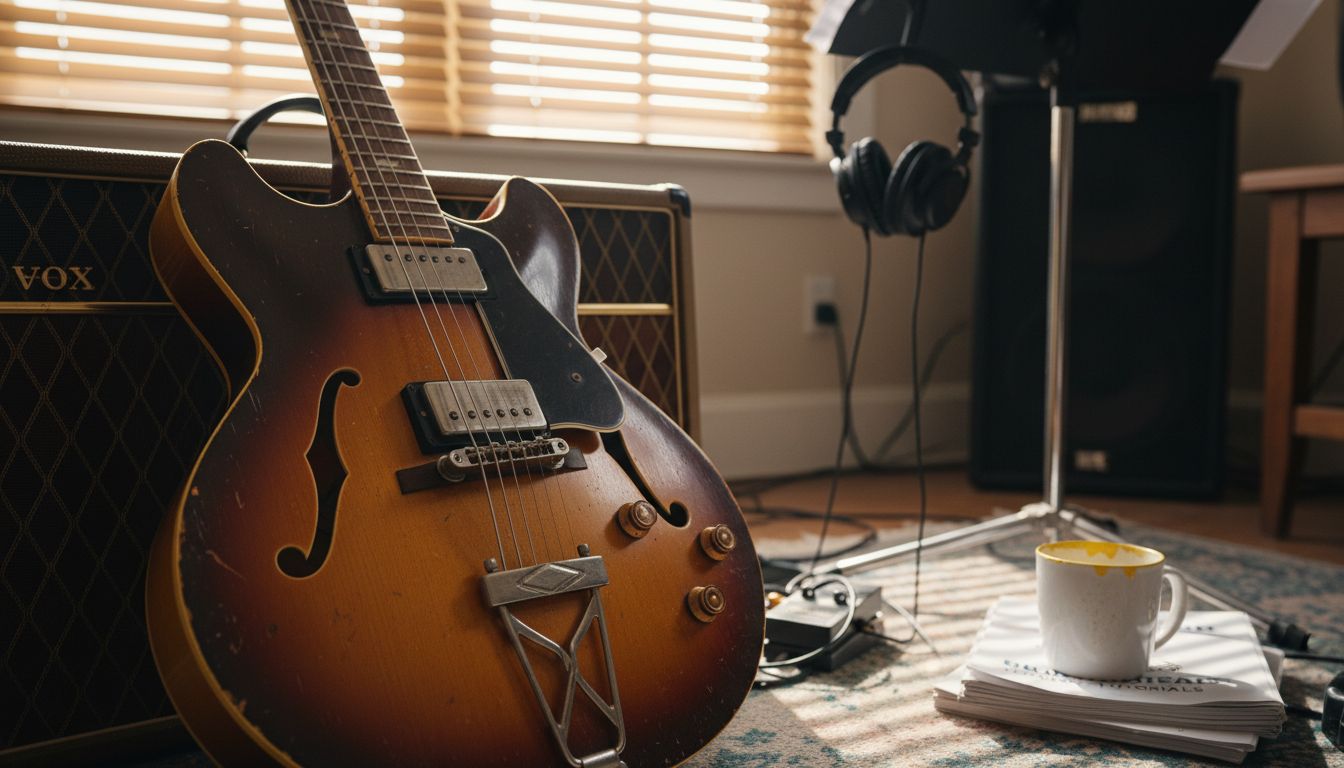
Sound generation in hollow body guitars relies on complex acoustic principles. The wooden chamber acts as a natural resonance chamber, allowing sound waves to interact and amplify in ways dramatically different from solid-body alternatives. Traditional jazz instrument designs like the Benedetto Archtop Guitar exemplify how thoughtful construction can produce extraordinarily rich and nuanced tonal qualities.
Critical sound-shaping characteristics include:
- Natural wood resonance
- Increased harmonic complexity
- Enhanced mid-range frequencies
- Greater dynamic responsiveness
- More pronounced acoustic undertones
Professional musicians appreciate these instruments for their remarkable ability to translate subtle playing techniques into complex sound textures. The hollow body design enables a more organic sound transmission, with each vibration and string interaction creating a multifaceted sonic experience that electronic processing cannot fully replicate. This makes hollow body guitars particularly prized in genres requiring exceptional tonal depth and emotional expression.
Main Types: Full Hollow Versus Semi-Hollow
Hollow body guitars primarily exist in two distinctive configurations: full hollow and semi-hollow designs, each offering unique sonic and structural characteristics. Les Paul’s groundbreaking innovations played a pivotal role in developing these variations, addressing fundamental challenges in electric guitar sound production and design.
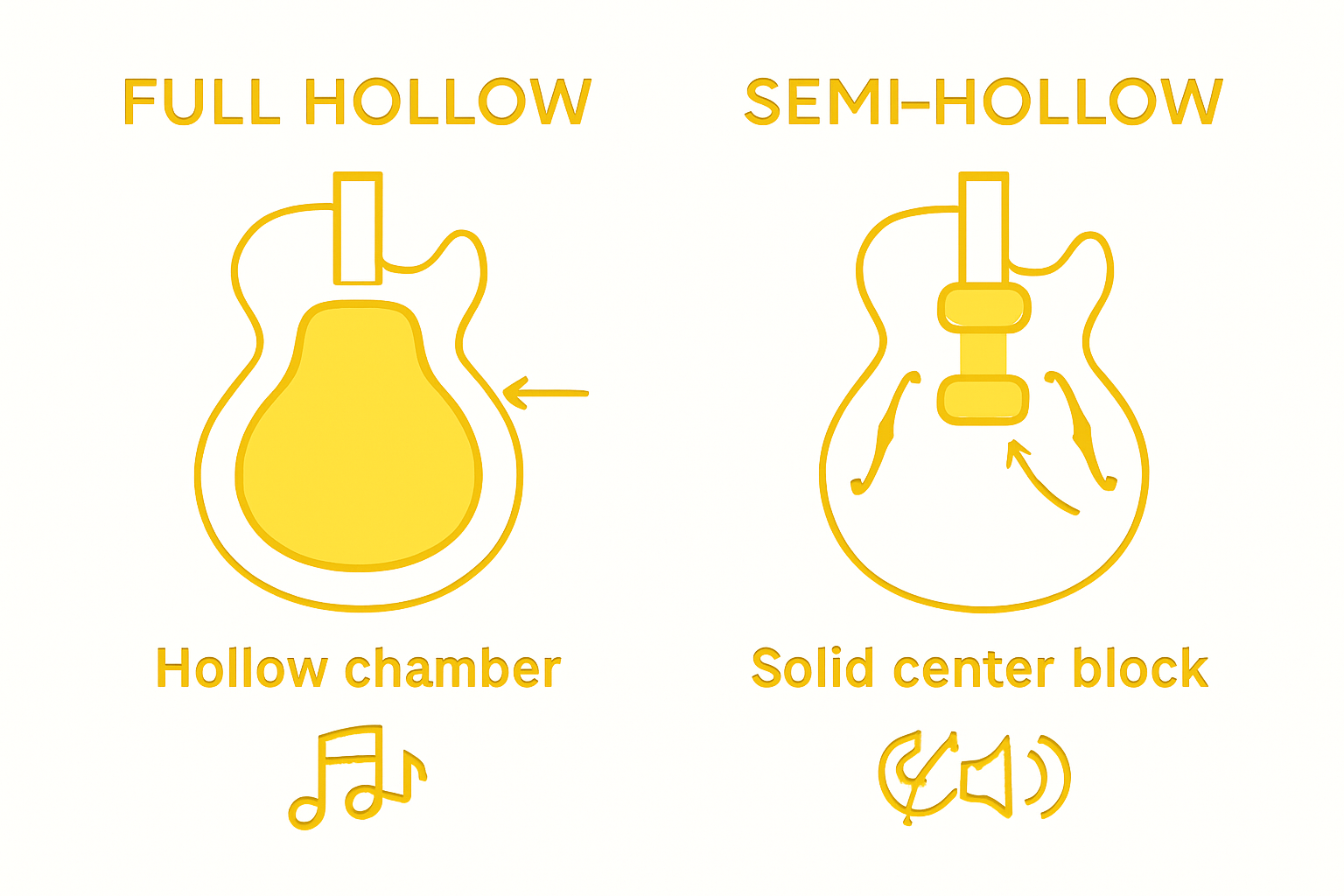
A full hollow body guitar represents the traditional approach, featuring a completely open internal chamber that resonates like an acoustic instrument. The Benedetto Archtop Guitar exemplifies this classic design, providing musicians with rich, warm tones particularly beloved in jazz and blues genres. These instruments produce a deep, acoustic-like sound with pronounced resonance but are more susceptible to unwanted feedback at higher volumes.
Key distinctions between full hollow and semi-hollow designs include:
- Full Hollow Body:
- Completely open internal chamber
- Maximum acoustic resonance
- Greater sound complexity
- Higher feedback potential
- Semi-Hollow Body:
- Central solid wood block
- Reduced feedback
- More controlled sound
- Enhanced sustain
Semi-hollow guitars represent a technological compromise, featuring a central solid wood block that stabilises the instrument while maintaining some of the acoustic characteristics of full hollow body designs. This innovative approach provides musicians with greater versatility, allowing performance across multiple genres without the significant feedback limitations of traditional full hollow instruments.
Common Musical Styles and Famous Users
Les Paul’s monumental contributions transformed hollow body guitars from niche instruments to versatile tools capable of spanning multiple musical genres. His innovative approach demonstrated that these guitars could transcend traditional jazz and blues boundaries, becoming integral to rock, country, and experimental musical styles.
Jazz remains the quintessential genre for hollow body guitars, with legendary musicians embracing their rich, resonant qualities. Jazz virtuosos like John ‘Bucky’ Pizzarelli exemplified the instrument’s capacity to produce nuanced, warm tones that capture the genre’s sophisticated musical language. These guitars became synonymous with sophisticated improvisational styles, particularly in bebop and cool jazz traditions.
Significant musical styles featuring hollow body guitars include:
- Classic Jazz
- Blues
- Rock and Roll
- Rockabilly
- Indie Rock
- Alternative Music
- Experimental Genres
Professional musicians across generations have prized hollow body guitars for their unique sonic characteristics. From early jazz pioneers to modern alternative rock musicians, these instruments offer an unparalleled combination of acoustic resonance and electric amplification. Their ability to produce complex, layered sounds makes them indispensable for musicians seeking expressive, dynamic instrumental voices that transcend traditional sonic boundaries.
Hollow Body Risks, Benefits, and Alternatives
Les Paul’s groundbreaking invention of the solid-body electric guitar revolutionised musicians’ understanding of instrument design, providing critical alternatives to traditional hollow body configurations. This innovation addressed fundamental challenges inherent in hollow body instruments, particularly around sound stability and performance limitations.
The Benedetto Archtop Guitar demonstrates the intricate balance between acoustic richness and potential technical challenges that characterise hollow body instruments. While these guitars offer extraordinary tonal depth, they simultaneously present unique performance considerations that musicians must carefully evaluate.
Key risks and benefits of hollow body guitars include:
- Risks:
- High susceptibility to feedback
- More delicate structural integrity
- Limited volume control
- Complex maintenance requirements
- Benefits:
- Rich, complex acoustic tones
- Enhanced harmonic resonance
- Extraordinary sound depth
- Unique aesthetic appeal
Alternative instruments like semi-hollow and solid-body electric guitars offer musicians flexible options for managing sound production. Professional players often select their instrument based on specific genre requirements, personal playing style, and desired sonic characteristics, recognising that each guitar type represents a nuanced compromise between technical performance and musical expression.
Discover the Perfect Hollow Body Guitar at MusicStreet
Choosing a hollow body guitar means embracing rich acoustic resonance and unique tonal depth but also facing challenges like feedback and delicate maintenance. If you are seeking an instrument that captures nuanced jazz or blues tones while balancing expressive versatility the experts at MusicStreet can guide you through this journey. Whether you prefer a full hollow or semi-hollow design our personalised service ensures you find a guitar that meets your sonic ambitions and playing style.

Explore MusicStreet’s curated collection of electric and hollow body guitars, all professionally inspected and expertly set up for immediate play. Benefit from competitive prices, free UK delivery on qualifying orders and expert post-sale support to keep your guitar performing at its best. Visit MusicStreet now and take the first step towards owning your ideal hollow body guitar with confidence. Your sound deserves nothing less than perfection.
Frequently Asked Questions
What is a hollow body guitar?
A hollow body guitar is a type of musical instrument that has a completely hollow internal chamber, combining the acoustic qualities of acoustic guitars with the amplification capabilities of electric guitars. This design produces a warm, resonant sound that is particularly valued in genres like jazz and blues.
How does a hollow body guitar differ from a solid body guitar?
Unlike solid body guitars, which have a solid internal structure, hollow body guitars feature an entirely open chamber that allows sound waves to resonate within the instrument, resulting in richer tonal qualities. Hollow body guitars are more susceptible to feedback but offer a unique sound profile that many musicians prefer.
Who should consider using a hollow body guitar?
Hollow body guitars are ideal for musicians in genres like jazz, blues, rock, and experimental music who seek a nuanced and expressive sound. They are particularly favoured by artists requiring complex tonal characteristics and dynamic response in their playing.
What are the types of hollow body guitars?
Hollow body guitars mainly come in two types: full hollow and semi-hollow. Full hollow guitars have a completely open chamber, offering maximum resonance but higher feedback potential. Semi-hollow guitars include a central solid wood block, providing reduced feedback while maintaining some acoustic qualities.






Share:
7 Must-Know Examples of Guitar Amps for Every Guitarist
Premium Guitar Straps – Comfort, Style and Longevity