


Most british guitarists believe vintage pedals guarantee superior tone, yet modern technology often rivals classic gear in sound quality. As you work to shape your own distinctive style, confusing myths and costly choices can complicate the search for the perfect pedal board. With over 60 percent of players investing in effects within their first year, understanding the real impact of signal processing will help you make confident decisions, whether browsing online or visiting your favourite UK shop.
Table of Contents
- Defining Guitar Effects And Common Myths
- Main Categories And Key Pedal Types
- How Effects Pedals Process Guitar Signal
- Choosing And Placing Effects Pedals Safely
- Common Pitfalls And Cost Considerations
Key Takeaways
| Point | Details |
|---|---|
| Understanding Guitar Effects | Guitar effects manipulate the electrical signal from an electric guitar to create complex sounds, with common categories including distortion, modulation, time-based, filter, and dynamics effects. |
| Common Myths | Expensive pedals do not guarantee better sound; tone is influenced by technique and personal expression, and effects are not limited to specific music genres. |
| Signal Chain Best Practices | Arrange effects in a logical order—dynamics first, followed by filtering, distortion, modulation, and time-based effects—to maintain the best sound quality. |
| Budget Considerations | Focus on purchasing versatile, high-quality pedals that genuinely enhance your sound rather than accumulating unnecessary gear. |
Defining Guitar Effects and Common Myths
Guitar effects are electronic devices and circuits designed to manipulate the electrical signal from an electric guitar, transforming its raw sound into something more complex and expressive. These devices, commonly housed in compact pedals, allow musicians to craft unique sonic textures by altering fundamental sound characteristics like volume, tone, distortion, and spatial qualities. Research from Queen’s University Belfast demonstrates that modern signal processing technology can effectively emulate classic effects, challenging long-standing myths about vintage equipment being inherently superior.
The world of guitar effects is riddled with persistent myths that often mislead aspiring musicians. One common misconception is that expensive pedals automatically produce better sounds. In reality, tone is a nuanced combination of technique, equipment, and personal expression. Another prevalent myth suggests that certain effects are only suitable for specific music genres. However, academic research from the University of Sheffield reveals that effects like wah-wah pedals transcend genre boundaries and can be creatively employed across multiple musical styles.
Understanding guitar effects involves recognising their core functions. Basic categories include distortion, which adds grit and aggression to the signal; modulation effects like chorus and flanger that create movement and depth; time-based effects such as delay and reverb that add spatial dimensions; and filter effects that shape frequency response. Each effect serves a unique purpose in sound design, allowing guitarists to move beyond traditional tonal limitations and explore innovative sonic territories.
Guitar Tech Tip: Experiment with combining different effects pedals in various signal chain orders to discover unexpected and unique tonal possibilities that can truly define your individual sound.
Main Categories and Key Pedal Types
Detailed research on guitar effects pedal categories from academic sources reveals a sophisticated landscape of sound manipulation divided into distinct functional categories. The primary pedal types can be broadly categorised into five essential groups: distortion, modulation, time-based, filter, and dynamics effects. Each category serves a unique purpose in transforming the guitar’s raw electrical signal, enabling musicians to craft intricate and personalised sonic landscapes.
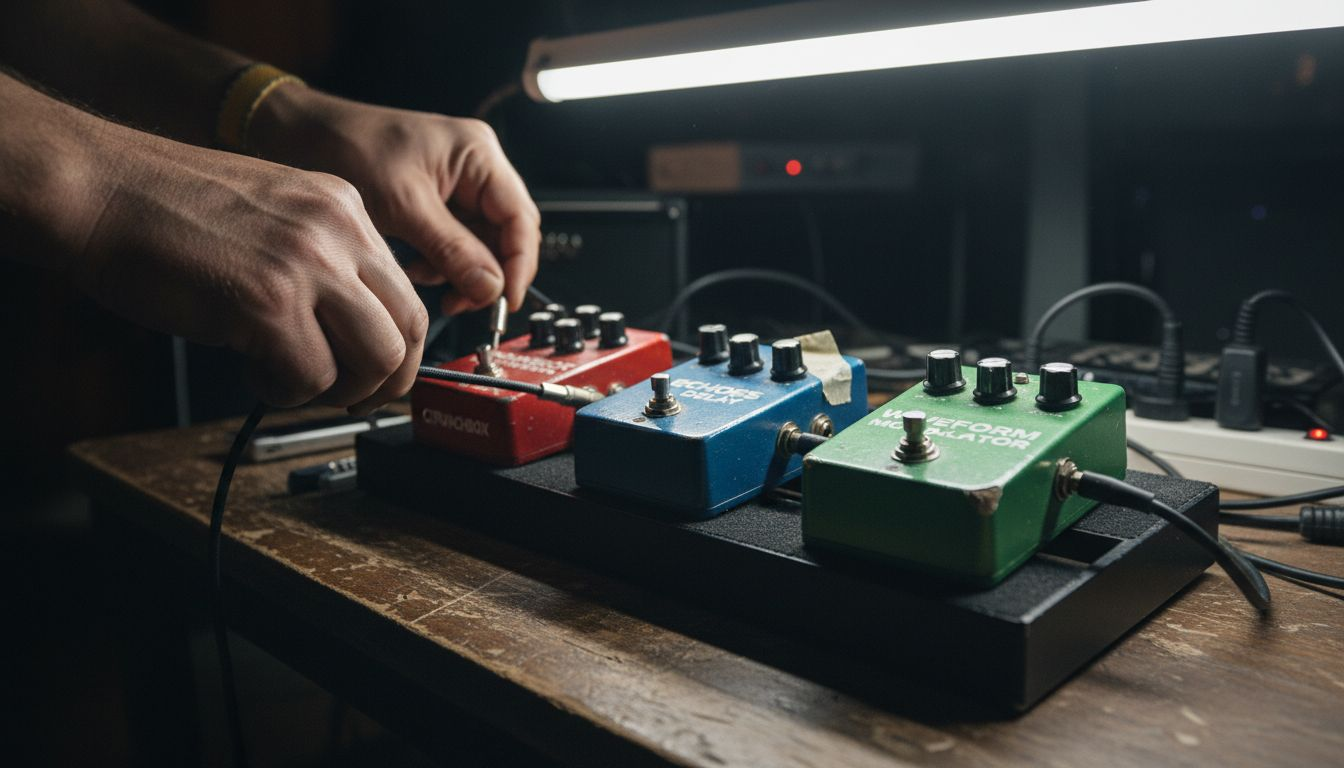
Distortion pedals represent the most aggressive category, fundamentally altering the signal’s harmonic structure to create overdriven, crunchy, or heavily saturated sounds. These include classic overdrive pedals that softly clip the signal, creating warm tube-like breakup, and more extreme fuzz pedals that radically reshape the waveform. The Berklee Online Guitar Handbook highlights how modulation effects like chorus, flanger, and phaser introduce cyclical variations in pitch, time, or amplitude, generating rich, swirling textures that add depth and movement to the guitar’s tone.
Time-based effects such as delay and reverb pedals create spatial dimensions by repeating or simulating sound reflections. Delay pedals range from simple echo effects to complex, multi-tap systems that can create rhythmic patterns, while reverb pedals emulate acoustic environments from small rooms to vast cathedrals. Dynamic effects like compressors and noise gates manage the signal’s volume characteristics, evening out performance inconsistencies and controlling unwanted background noise. These pedals are crucial for maintaining consistent sound quality and professional-grade signal control.
Guitar Signal Crafting Tip: Always experiment with your pedals’ signal chain order, as the sequence can dramatically alter your overall tone and create unexpected sonic possibilities.
Here is a quick reference comparing the main categories of guitar effects and their typical uses:
| Effect Category | Typical Musical Impact | Common Uses |
|---|---|---|
| Distortion | Adds grit and sustain, increases punch | Rock, metal, blues solos |
| Modulation | Creates movement and width | Ambient, pop, classic rock |
| Time-Based | Adds echoes and depth | Live ambience, ballads |
| Filter | Shapes tone and frequency response | Funk, electronic, solos |
| Dynamics | Controls signal consistency and noise | Recording, clean playing |
How Effects Pedals Process Guitar Signal
Advanced signal processing techniques developed by audio engineering researchers reveal the intricate mechanisms behind guitar effects pedals. At their core, these devices transform the electrical signal generated by an electric guitar through complex electronic circuits. The process begins when the guitar’s pickups convert string vibrations into an electrical signal, which is then routed through the pedal’s internal components, where various electronic components like transistors, capacitors, and operational amplifiers manipulate the signal’s fundamental characteristics.
Analog pedals operate by directly modifying the electrical signal’s voltage, using physical components to clip, boost, or reshape the waveform. Transistors can create distortion by intentionally overloading the circuit, while capacitors and resistors can filter specific frequency ranges, creating effects like wah or equalisation. Digital pedals take a different approach, converting the analog signal into digital data through an analog-to-digital converter, processing the signal using microprocessors, and then reconverting it back to analog using a digital-to-analog converter. This method allows for more precise and complex signal manipulation, enabling intricate time-based effects like advanced delay and reverb.
The signal processing chain within a pedal involves multiple stages of transformation. Input buffering prevents signal loss, signal conditioning adjusts the incoming electrical characteristics, and effect generation applies the specific tonal modification. Some pedals use true bypass circuitry, which completely removes the pedal from the signal path when disengaged, while others incorporate buffered bypass systems that maintain signal integrity and prevent high-frequency loss. This technical complexity ensures that guitarists can achieve a wide range of sonic textures, from subtle tone shaping to radical sound transformations.
Guitar Signal Crafting Tip: Invest in a quality buffer pedal to maintain your guitar signal’s clarity and prevent high-end frequency loss when using multiple effects in your signal chain.
Choosing and Placing Effects Pedals Safely
Engineering insights from signal processing research reveal critical considerations for building a safe and effective guitar effects chain. Selecting and arranging pedals requires careful thought about signal flow, electrical compatibility, and potential interference. Guitarists must understand that each pedal introduces potential signal degradation, noise, and power management challenges that can dramatically impact overall sound quality and equipment longevity.
The traditional signal chain follows a strategic order to maintain optimal tone and prevent unwanted interactions. Generally, the recommended sequence starts with dynamics pedals like compressors and noise gates, followed by filtering effects such as wah or equalisation. Overdrive and distortion pedals typically come next, creating the foundational gain structure. Berklee Online instructors recommend placing modulation effects like chorus and phaser after gain stages, with time-based effects such as delay and reverb positioned at the end of the chain. This arrangement helps preserve signal clarity and prevents each effect from excessively colouring or distorting the subsequent pedals’ output.
Power management represents another crucial safety consideration for pedalboard setup. Using isolated power supplies with consistent voltage and proper grounding prevents ground loop issues, electrical noise, and potential equipment damage. Avoid daisy-chaining power between pedals, as this can introduce unwanted hum and signal instability. Instead, invest in a dedicated power distribution unit with individual isolated outputs, ensuring each pedal receives clean, consistent electrical current. Cable quality also matters significantly technical performance cable length, shielding, and connector quality can impact signal integrity and noise reduction.
Guitar Signal Crafting Tip: Invest in a high-quality isolated power supply with multiple outputs and use low-capacitance, shielded patch cables to minimise noise and maintain signal purity across your effects chain.
To help you build an efficient effects chain, consider this table outlining signal chain best practices:
| Pedal Type | Suggested Chain Position | Rationale for Placement |
|---|---|---|
| Dynamics (Compressors) | Start | Ensures consistent input level |
| Filter (Wah/EQ) | Before gain | Shapes tone pre-distortion |
| Distortion/Overdrive | Middle | Establishes core sound texture |
| Modulation | After gain | Preserves clarity of effect |
| Time-Based | End | Maintains spatial realism |
Common Pitfalls and Cost Considerations
Advanced physics research on guitar sound production reveals crucial insights into the economic challenges guitarists face when building their effects arsenal. Many musicians fall into the trap of purchasing numerous pedals without considering their actual sonic utility, leading to unnecessary expenditure and cluttered pedalboards. Budget constraints force players to make strategic decisions, prioritising versatile effects that offer maximum tonal flexibility over collecting specialised pedals that might rarely see use.
The selection process requires careful evaluation of each pedal’s genuine contribution to your sound. Beginners often make the mistake of chasing trendy or expensive equipment without understanding their specific tonal requirements. Berklee Online’s guitar resources recommend focusing on core effects that provide fundamental tonal transformations rather than accumulating gear for the sake of collection. Modulation, overdrive, and time-based effects represent the most versatile categories, offering significant sonic potential without requiring massive financial investment.
Cost considerations extend beyond initial purchase price. Power requirements, cable compatibility, and potential modifications can significantly impact long-term expenses. Quality true bypass pedals might cost more upfront but reduce signal degradation and provide better long-term performance. Cheaper alternatives often introduce noise, reduce signal clarity, and require more frequent replacement. Guitarists should consider pedals as investments, prioritising build quality, reliability, and genuine tonal enhancement over superficial marketing claims or trendy aesthetics.
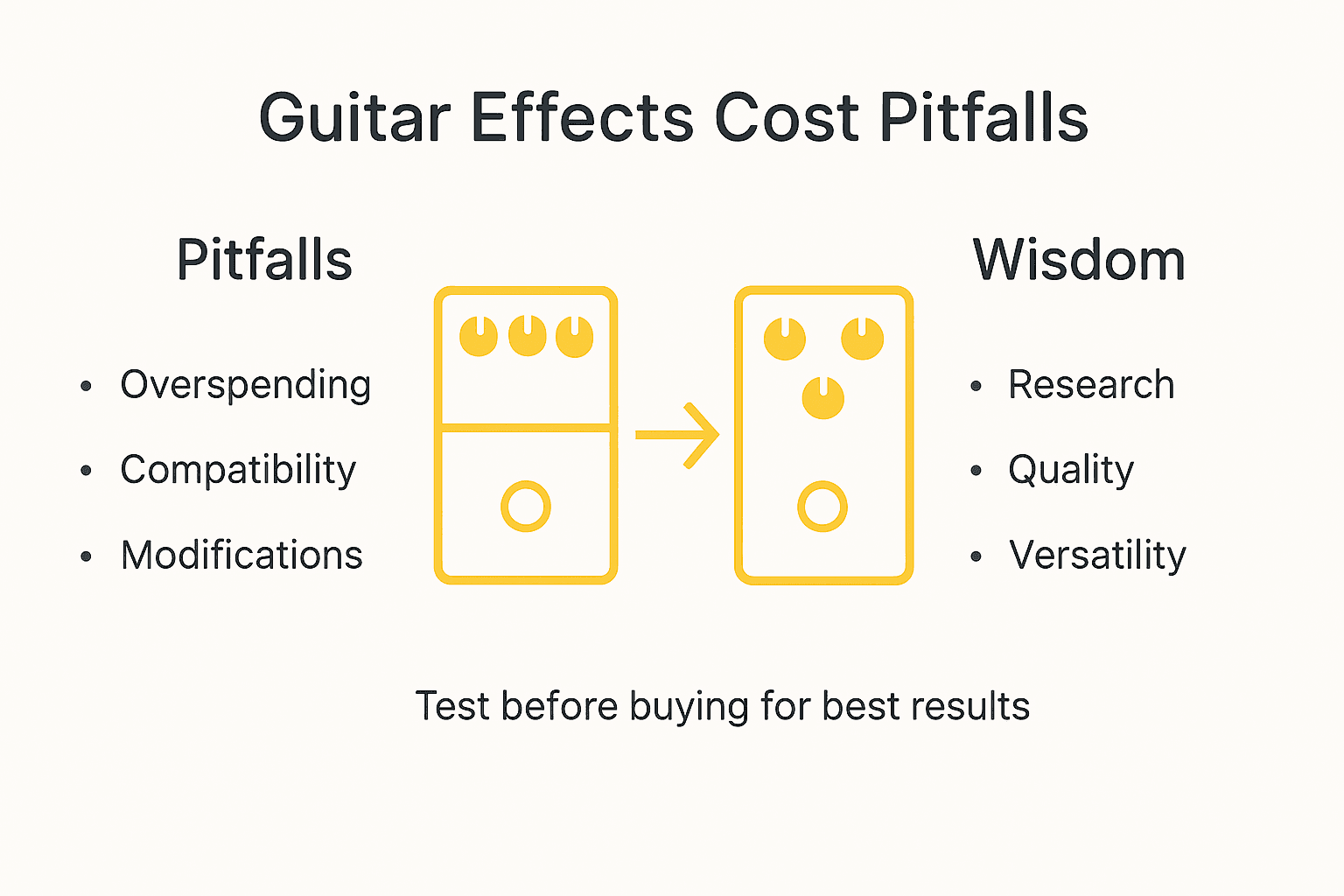
Guitar Budget Wisdom: Research and test pedals thoroughly before purchasing, and prioritise versatile, high-quality effects that genuinely expand your sonic palette rather than collecting gear for collection’s sake.
Transform Your Tone with Expertly Selected Guitars and Effects
Crafting your unique guitar sound requires the right combination of quality instruments and thoughtfully chosen effects. The article highlights key challenges such as navigating complex pedal categories, avoiding signal degradation, and making cost-effective choices that truly enhance your tone. At MusicStreet, we understand these crucial pain points and are here to support your journey with expert setup, personalised advice, and premium guitars that respond perfectly to your effects rig.

Explore our carefully curated collection where every guitar is inspected for optimal performance so you can confidently experiment with distortion, modulation, and time-based effects knowing your tone potential is fully unlocked. Visit MusicStreet to discover instruments designed for sonic exploration and benefit from our ongoing customer support. Whether buying new or pre-loved, start shaping your signature sound today with trusted gear and tailored guidance at MusicStreet. Learn more about how to select and maintain your setup by checking our educational content and buying guides available on the site.
Frequently Asked Questions
What are guitar effects and how do they work?
Guitar effects are electronic devices that manipulate the electrical signal from an electric guitar, altering its sound. They use various electronic components to modify characteristics like tone and volume, allowing musicians to create unique sonic textures.
What are the main categories of guitar effects pedals?
The main categories of guitar effects include distortion (adds grit), modulation (creates movement), time-based effects (adds depth with delay and reverb), filter effects (shapes tone), and dynamics effects (controls signal consistency). Each category serves a distinct function in sound design.
How should I arrange my effects pedals in a signal chain?
A typical signal chain starts with dynamics pedals (like compressors), followed by filter effects (like wah), then distortion pedals. Modulation effects should be placed after gain stages, with time-based effects (delay and reverb) at the end. This order helps preserve sound clarity and maintains tonal integrity.
What common mistakes do guitarists make when using effects pedals?
Common mistakes include buying too many pedals without a clear understanding of their tonal needs, improperly arranging pedals in the signal chain, and neglecting power management. Focus on choosing versatile pedals that enhance your sound and regularly evaluate their impact on your overall tone.




Share:
Role of a Guitar Tech: Elevating Your Instrument
7 Best Guitar Strings 2025 for UK Players: Expert Picks