


Every british guitarist faces the challenge of finding the perfect action for their instrument as even a tiny change in string height can reshape your entire playing experience. More than 80 percent of discomfort and unwanted fret buzz is linked to incorrect guitar action. Understanding how this measurement influences playability, tone, and comfort gives you the freedom to tailor your setup for true enjoyment and improved performance. If you are searching for your next reliable instrument, a solid grasp of action helps you choose with confidence.
Table of Contents
- What Guitar Action Really Means
- Types Of Guitar Action: High Vs Low
- How Action Affects Sound And Comfort
- Setting And Adjusting Guitar Action
- Common Mistakes And What To Avoid
Key Takeaways
| Point | Details |
|---|---|
| Understanding Guitar Action | Guitar action is the distance between strings and fretboard, impacting playability, tone, and intonation. Finding the right balance is essential for each player’s technique and preference. |
| Impact of Action Height | Low action facilitates ease of play, ideal for fast genres, while high action enhances tone quality and sustain, preferred in styles like blues. |
| Adjustment Techniques | Precise adjustments to the nut and saddle are crucial for optimal action; professional guidance is recommended to avoid errors. |
| Common Mistakes | Many assume lower action equals better playability; this can lead to fret buzz and intonation issues without proper measurement and understanding. |
What Guitar Action Really Means
Guitar action refers to the precise distance between your guitar’s strings and the fretboard, typically measured at the 12th fret. This seemingly small measurement has an enormous impact on how your instrument plays and feels. Guitar action techniques define the fundamental relationship between your playing style and instrument responsiveness.
At its core, guitar action determines how much pressure you need to press strings down to produce clean notes. A low action means strings sit closer to the fretboard, requiring less finger strength to play chords and notes. Conversely, a high action increases the distance between strings and frets, demanding more finger pressure and potentially causing discomfort during extended playing sessions.
The nuances of guitar action extend beyond mere comfort. It directly influences your instrument’s playability, tone, and intonation. Too low an action might result in unwanted string buzz against the frets, while too high an action can make playing feel stiff and challenging. Experienced guitarists understand that finding the perfect action is a delicate balance unique to each player’s technique and preference.
Pro tip: When checking your guitar’s action, use a precise ruler or specialised action gauge to measure string height at the 12th fret for the most accurate assessment.
Types Of Guitar Action: High vs Low
Guitar action variations fundamentally transform how an instrument feels and performs. Guitar action characteristics range between low and high settings, each offering distinct advantages for different playing styles and musical genres. Understanding these variations helps musicians select the most suitable setup for their technique and musical preferences.
A low action guitar means strings sit closer to the fretboard, requiring minimal finger pressure to produce notes. This setup excels in genres demanding speed and precision, such as heavy metal, rock, and technical styles where rapid fingerwork is crucial. Low action facilitates quick chord changes and smooth soloing but risks creating unwanted fret buzz if not precisely adjusted.

Conversely, a high action demands more finger strength and deliberate fretting technique. This configuration provides greater string vibration, enhanced sustain, and clearer tone projection. Blues, folk, and slide guitar players often prefer higher action for its rich harmonic qualities and increased dynamic range. The additional string height allows more expressive playing techniques and reduces the likelihood of unintended note interference.
Pro tip: Experiment with different action heights using small incremental adjustments, tracking how each change impacts your playing comfort and sound quality.
Here’s a concise comparison of low and high guitar action characteristics for quick reference:
| Action Type | Playing Comfort | Sound Qualities | Typical Musical Styles |
|---|---|---|---|
| Low Action | Easier on the fingers | Can cause fret buzz | Metal, rock, technical genres |
| High Action | Requires more strength | Enhanced sustain, clarity | Blues, folk, slide guitar |
How Action Affects Sound And Comfort
Guitar action is a critical factor that directly influences both the sound quality and physical experience of playing an instrument. String action’s impact extends far beyond simple string height, creating a complex interplay between player technique and instrument responsiveness. The precise distance between strings and fretboard determines not just playability, but the entire sonic character of the guitar.
From a comfort perspective, action height dramatically affects the physical effort required to play. A lower action reduces finger fatigue by minimising the force needed to press strings, making it ideal for players with smaller hands or those prone to hand strain. However, this comfort comes with potential sonic trade-offs. Too low an action can produce unwanted fret buzz, where strings contact frets during vibration, creating an unpleasant, muted sound that undermines note clarity and sustain.
Sound quality transforms significantly with action changes. Higher action allows strings more room to vibrate, potentially producing richer harmonics and enhanced tonal depth. This configuration particularly benefits styles like blues and folk, where nuanced string vibration contributes to expressive playing. Conversely, genres demanding rapid playing such as metal and technical rock prefer lower actions that facilitate quick finger movements and precise note articulation. The optimal action represents a delicate balance between physical comfort, playing style, and desired tonal characteristics.
Pro tip: Consider having a professional guitar technician measure and adjust your guitar’s action, ensuring optimal balance between comfort and sound quality.
Setting And Adjusting Guitar Action
Adjusting guitar action requires precision and understanding of your instrument’s unique characteristics. Guitar action modification techniques involve careful manipulation of the nut and saddle heights to achieve optimal playability. While seemingly complex, these adjustments can dramatically improve your guitar’s performance and playing comfort.
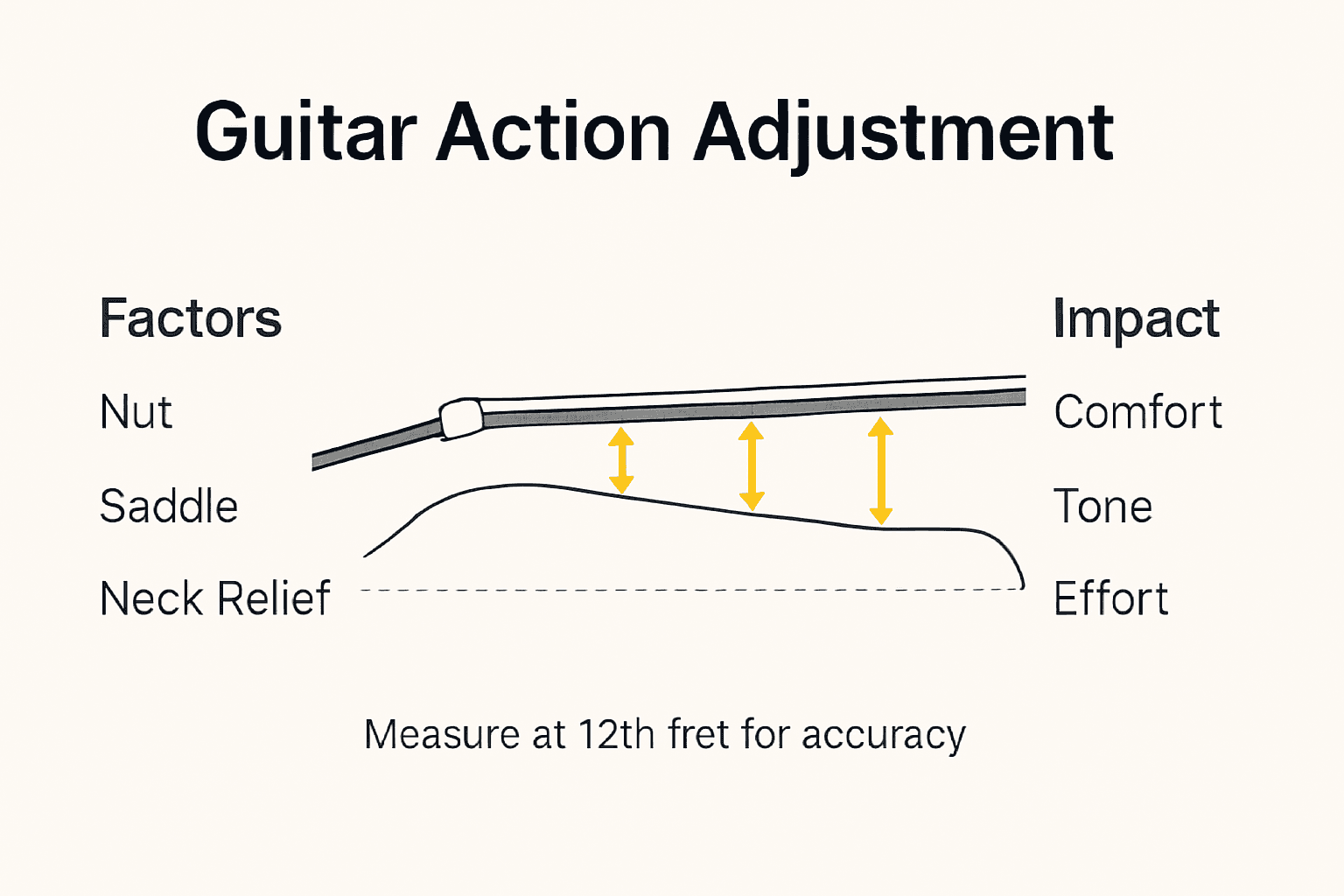
For acoustic guitars, action adjustment typically involves two primary components: the nut and saddle. The nut, located at the headstock end of the fretboard, controls string height at the first fret. If the action is too high here, it can make initial string pressing challenging. Conversely, the saddle at the bridge determines string height across the fretboard, particularly influencing action in higher fret positions. Careful measurement and incremental adjustments are crucial to prevent unintended consequences like fret buzz or intonation problems.
Different guitar types require unique approaches to action setting. Electric guitars often allow more straightforward adjustments through bridge and truss rod modifications, while acoustic guitars demand more nuanced techniques. Professional guitar technicians typically use specialised tools to measure string height precisely, ensuring each adjustment maintains the instrument’s structural integrity. Factors such as neck relief, string gauge, and playing style all contribute to determining the ideal action for an individual musician.
Review this summary to understand how different guitar parts influence action:
| Component | Primary Influence | Complexities Involved |
|---|---|---|
| Nut | String height at 1st fret | Affects initial fretting effort |
| Saddle | String height at bridge | Alters action along fretboard |
| Truss Rod | Neck curvature/relief | Impacts overall string clearance |
Pro tip: Invest in a precise action gauge and consult a professional technician if you’re uncertain about making adjustments, as improper modifications can potentially damage your instrument.
Common Mistakes And What To Avoid
Navigating guitar action adjustments requires careful consideration and a nuanced approach. Guitar action adjustment pitfalls emerge when musicians oversimplify the complex interplay between different instrument components. Understanding these potential errors can save both time and potential damage to your beloved instrument.
One of the most critical mistakes is assuming that lower action automatically equates to better playability. While reduced string height can facilitate faster playing, it often introduces unintended consequences such as persistent fret buzz and compromised intonation. Beginners frequently make the error of making sweeping adjustments without understanding how neck relief, nut height, and saddle positioning interact. Each modification creates a cascading effect that impacts the guitar’s overall performance, making incremental and holistic adjustments crucial.
Technical errors can also arise from using inappropriate tools or lacking precise measurement techniques. Many guitarists attempt action modifications without proper gauges or understanding of their specific instrument’s characteristics. Different guitar types demand unique approaches electric guitars might allow more straightforward bridge adjustments, while acoustic instruments require more delicate interventions. Professional technicians emphasise the importance of considering individual playing style, string gauge, and instrument construction when making any action-related changes.
Pro tip: Always document your original setup measurements before making any adjustments, allowing you to return to a known baseline if modifications prove unsuccessful.
Find Your Perfect Guitar Action With MusicStreet
Understanding guitar action is essential for every guitarist seeking the perfect balance between playability and sound quality. Whether you struggle with uncomfortable high action or fret buzz from a low setup, finding that precise string height tailored to your playing style can transform your experience. At MusicStreet, we specialise in electric, acoustic, and bass guitars, offering expert setup services that ensure your instrument matches your preferences and technique.

Start exploring our carefully selected range of quality guitars and benefit from professional inspections and adjustments designed just for you. Visit MusicStreet today to find your ideal guitar action setup and enjoy free UK delivery on qualifying orders. Take advantage of our personalised support and step into a world where your guitar feels and sounds exactly as it should.
Frequently Asked Questions
What is guitar action?
Guitar action refers to the distance between the guitar’s strings and the fretboard, typically measured at the 12th fret. It affects playability, comfort, and sound quality.
How does action height affect playability?
Lower action makes it easier to press the strings down, ideal for fast playing, while higher action requires more finger strength but offers greater sustain and clarity of tone.
What are the advantages of low action versus high action?
Low action is beneficial for genres requiring speed and precision, while high action allows for richer sound quality and dynamic range, making it suitable for styles like blues and folk.
How do I adjust my guitar’s action correctly?
Adjusting action involves modifying the nut and saddle heights. Always make small, incremental adjustments and consider consulting a professional to avoid issues like fret buzz or intonation problems.






Share:
Find Your Perfect Match: How to Choose Your First Guitar
Role of a Guitar Tech: Elevating Your Instrument