


Most British guitarists underestimate how much string gauge choices shape their sound and playing comfort. In fact, even a slight change in string thickness can make a dramatic difference in tone, feel, and even instrument maintenance. Understanding the basics is not just for professionals. This guide offers clear insights and practical tips to help British musicians pick the right string gauge for their style, skill level, and instrument care.
Table of Contents
- String Gauge Explained: What It Means
- How String Gauge Affects Tone and Feel
- Choosing the Right Gauge for Your Style
- Impact on Guitar Setup and Maintenance
- Common String Gauge Mistakes to Avoid
Key Takeaways
| Point | Details |
|---|---|
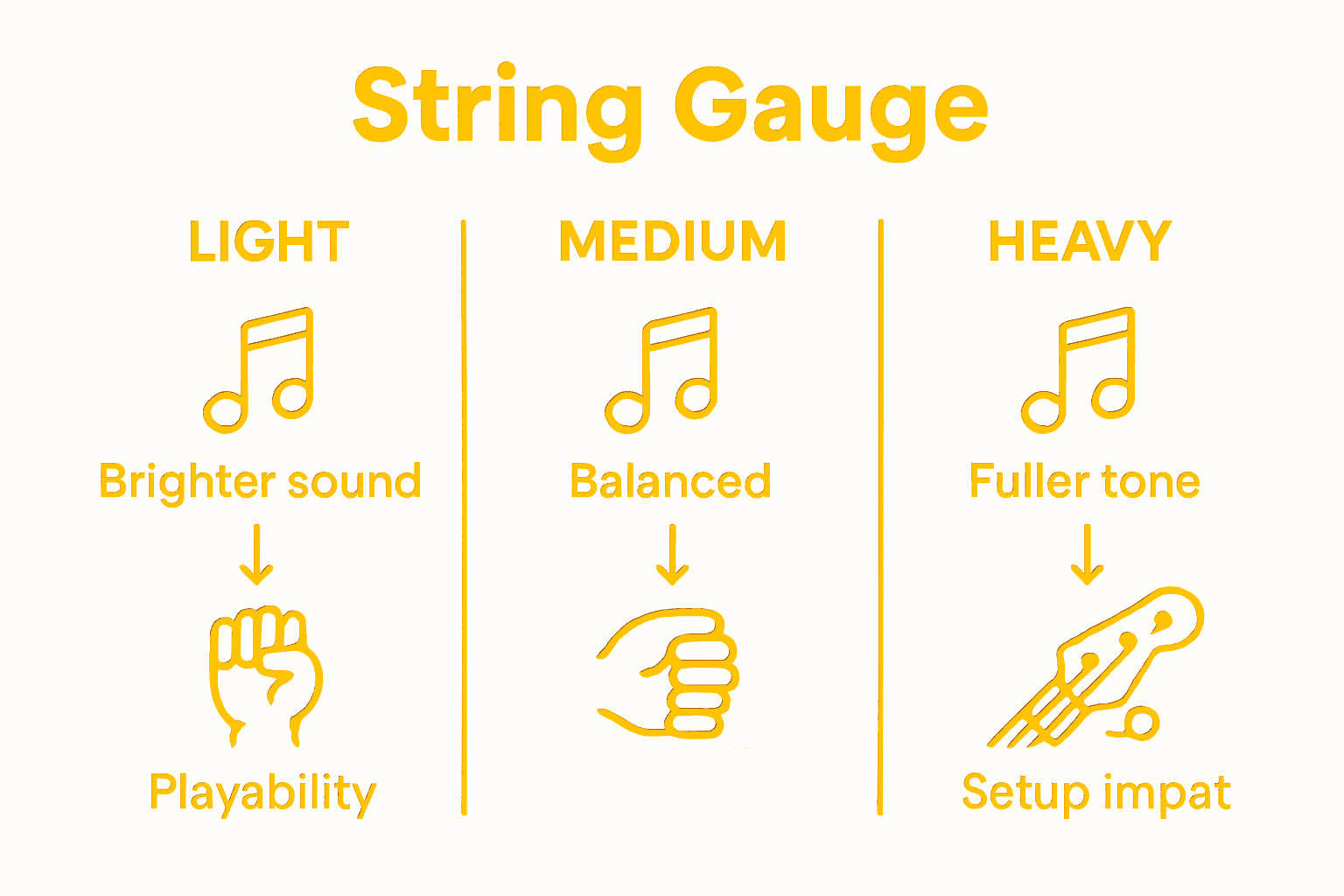
| Understanding String Gauge | String gauge refers to the thickness of guitar strings, affecting both sound quality and playability. Thicker strings produce richer tones, while thinner strings offer brighter sounds. |
| Choosing the Right Gauge | Selecting the appropriate string gauge is crucial for matching your playing style and comfort. Experimenting with different gauges can enhance tonal expression and playability. |
| Impact on Guitar Setup | Changing string gauges affects the guitar’s neck tension and overall setup, necessitating adjustments to maintain optimal performance. Regular maintenance is essential after gauge changes. |
| Common Mistakes to Avoid | Avoid drastic gauge shifts without proper preparation, as this can harm the instrument. Choose gauges based on personal technique rather than genre assumptions for optimal performance. |
String Gauge Explained: What It Means
When diving into the world of guitar playing, string gauge is a fundamental concept that dramatically influences your instrument’s sound and playability. At its core, string gauge refers to the diameter or thickness of guitar strings, which impacts the overall tonal characteristics of your instrument.
The relationship between string diameter and sound is intricate. Thicker strings produce deeper, richer tones with more pronounced low-end frequencies, while thinner strings generate brighter, crisper sounds with enhanced high-end clarity. This variation occurs because heavier gauge strings vibrate more slowly and create more substantial sound waves, resulting in a more robust acoustic or electric guitar tone.
Musicians choose string gauges based on multiple factors, including playing style, musical genre, and personal comfort. Beginners often prefer lighter gauge strings because they require less finger strength to press down, reducing hand fatigue. Conversely, blues and rock guitarists frequently select medium to heavy gauges for enhanced sustain and fuller sound. Jazz and fingerstyle players might opt for balanced gauges that provide nuanced tonal flexibility.
Here’s a comparison of string gauge types and their typical usage:
| String Gauge Type | Typical Diameter Range | Common Uses | Key Benefits |
|---|---|---|---|
| Extra Light | 0.008–0.038 inches | Folk, beginners, light strumming | Easiest to press, minimal tension |
| Light | 0.009–0.042 inches | Indie, general purpose | Brighter tone, easier bends |
| Medium | 0.010–0.046 inches | Rock, blues, versatile styles | Balanced feel, solid sustain |
| Heavy | 0.011–0.054 inches | Jazz, heavy strumming, drop tunings | Richer tone, more volume, stability |
Pro Tip: String Selection Strategy: Always experiment with different string gauges and keep a log of how each set impacts your playing comfort and sound quality. Start with a standard gauge and gradually explore lighter or heavier sets to discover your perfect match.
How String Gauge Affects Tone and Feel
The relationship between string gauge and guitar performance is nuanced, with profound implications for both sound and playability. String gauge significantly impacts tonal characteristics and physical interaction with the instrument, creating a complex interplay between musician and musical tool.
Tonal variations emerge prominently through string thickness. Lighter gauge strings produce brighter, more trebly sounds with increased sustain, characterised by their delicate vibration and reduced mass. Heavier gauge strings, in contrast, generate deeper, more robust tones with pronounced attack and enhanced low-end frequencies. These differences arise from the physical properties of string mass and tension, which directly influence vibrational characteristics.

Playability represents another critical dimension of string gauge selection. Lighter strings demand less finger strength, making them ideal for beginners or players with smaller hands. Blues and rock musicians often gravitate towards medium to heavy gauges for their powerful sound projection and enhanced dynamic range. Jazz and fingerstyle performers might select balanced gauges that offer subtle tonal nuances and comfortable playing dynamics.
Playing Technique Tip: String Selection Strategy: Systematically experiment with different string gauges, maintaining a detailed log of how each set influences your playing comfort, sound quality, and overall musical expression. Begin with standard gauges and progressively explore lighter and heavier sets to discover your unique tonal sweet spot.
Choosing the Right Gauge for Your Style
Selecting the perfect string gauge is an art form that requires understanding your musical personality and technical requirements. String tension and gauge directly influence the balance between playability and musical expression, making it crucial to match your strings to your individual playing style.
Different musical genres demand unique string characteristics. Rock and blues guitarists typically favour medium to heavy gauges, which provide robust sound projection and enhanced sustenance. These thicker strings enable aggressive picking techniques and deliver powerful, punchy tones. Conversely, folk and indie musicians often gravitate towards lighter gauges that facilitate intricate fingerpicking and produce brighter, more delicate soundscapes. Jazz players frequently choose balanced gauges that offer nuanced tonal flexibility and comfortable playing dynamics.
Your personal physical attributes and technique also play a significant role in gauge selection. Players with smaller hands or less developed finger strength might prefer lighter gauges, which require less pressure to fret notes. Experienced musicians with greater hand strength can explore heavier gauges that provide more tonal depth and sustain. Acoustic guitarists must additionally consider their instrument’s construction, as some guitars respond differently to varying string tensions.
Instrument Setup Tip: Gauge Matching Strategy: Consult a professional guitar technician to assess your instrument’s setup and recommend the most suitable string gauge for your playing style, ensuring optimal sound quality and comfortable playability.
Impact on Guitar Setup and Maintenance
String gauge is not merely a tonal consideration but a critical factor in overall guitar maintenance and structural integrity. High-tension strings can significantly impact the instrument’s neck and setup, requiring careful management to preserve your guitar’s long-term performance and playability.
The mechanical stress imposed by different string gauges directly influences your guitar’s structural components. Heavier gauge strings generate increased tension on the neck, potentially causing subtle but consequential changes in neck relief, action, and overall instrument geometry. Acoustic guitars are particularly sensitive to these variations, with thicker strings potentially warping the neck or altering the bridge’s position over time. Electric guitarists must also consider how string tension interacts with their instrument’s truss rod and bridge system.
Regular maintenance becomes paramount when changing string gauges. Professional guitarists recommend periodic neck adjustments and comprehensive setup evaluations to counteract the structural impacts of string tension. This might involve truss rod adjustments, bridge realignment, and careful monitoring of neck curvature. Vintage or delicate instruments require even more meticulous attention, as extreme string tensions can cause irreversible damage to historic or finely crafted guitars.
For quick reference, here’s how changing string gauge may affect your guitar setup:
| Gauge Change | Potential Setup Impact | Maintenance Required |
|---|---|---|
| Lighter to Heavier | Increased neck tension, raised action | Truss rod adjustment, check intonation |
| Heavier to Lighter | Decreased tension, possible fret buzz | Lower action, possible nut resizing |
| Minor Gauge Shift | Subtle feel changes | Minor tuning tweaks |
Guitar Care Tip: Tension Management Strategy: When switching between string gauges, schedule a professional setup to ensure your instrument’s structural integrity remains optimal. Monitor your guitar’s neck relief and action closely during the first few weeks after changing string gauges.
Common String Gauge Mistakes to Avoid
String gauge selection is a nuanced process that requires careful consideration and informed decision-making. Guitarists often make critical errors when choosing string gauges without understanding their comprehensive impact, potentially compromising both instrument performance and personal playing experience.
One prevalent mistake involves abruptly switching between drastically different string gauges without proper preparation. Jumping from ultra-light to heavy gauge strings can create significant stress on the guitar’s neck, potentially causing misalignment or structural damage. This sudden tension change affects the instrument’s setup, requiring professional adjustment or potentially leading to permanent neck warping. Beginners frequently underestimate the mechanical implications of string gauge transitions, treating them as a simple cosmetic change rather than a sophisticated technical modification.
Another common error is selecting string gauges based solely on genre conventions without considering individual playing technique and physical capabilities. Some musicians mistakenly believe that heavier strings automatically equate to better tone or professional status. In reality, string gauge should be a personalised choice that balances comfort, technique, and desired sonic characteristics. Smaller-handed players might struggle unnecessarily with thick strings, while more experienced musicians could find lighter gauges limiting their expressive potential.
Technical Wisdom Tip: Gradual Transition Strategy: When changing string gauges, incrementally adjust by moving up or down one gauge size at a time. This approach allows your instrument and playing technique to adapt smoothly, minimising potential structural stress and maintaining optimal playability.
Find Your Perfect String Gauge with Expert Help at MusicStreet
Choosing the right string gauge can transform your playing experience but it can also feel overwhelming. Whether you are struggling with finger fatigue, seeking richer tone, or worried about how heavier strings might affect your guitar’s setup, you are not alone. MusicStreet understands these challenges and offers a personalised service tailored to your individual needs. From advising on the ideal gauge to providing expert instrument setup, we help you achieve comfort and sound quality in harmony.

Explore our wide range of high-quality guitars and accessories at MusicStreet. Benefit from professional inspection, expert setup, and ongoing support so you can confidently experiment with different string gauges without risking your guitar’s health. Start your journey to perfect tone and effortless playability today by visiting our store online or booking a consultation. Don’t wait to experience the difference the right strings can make.
Frequently Asked Questions
How does string gauge affect the tone of my guitar?
String gauge significantly impacts the tone of your guitar. Thicker strings produce deeper, richer tones with enhanced low-end frequencies, while thinner strings create brighter, crisper sounds with more high-end clarity.
What string gauge should I use as a beginner guitarist?
Beginners often prefer lighter gauge strings (like extra light or light) because they require less finger strength to press down, which helps reduce hand fatigue while learning.
Can changing string gauge affect my guitar’s setup?
Yes, changing string gauge can affect your guitar’s setup. Heavier strings create more tension, which may require adjustments to the neck and action to maintain optimal playability and prevent structural stress.
Is it important to experiment with different string gauges?
Absolutely! Experimenting with different string gauges allows you to discover the one that best matches your playing style and comfort. Keeping a log of how each set impacts your sound and playability can help you find your ideal strings.








Share:
Master Electric Guitar Skills: Tips for Aspiring Musicians
Discover the Best Sound with Blackstar Amp and More