

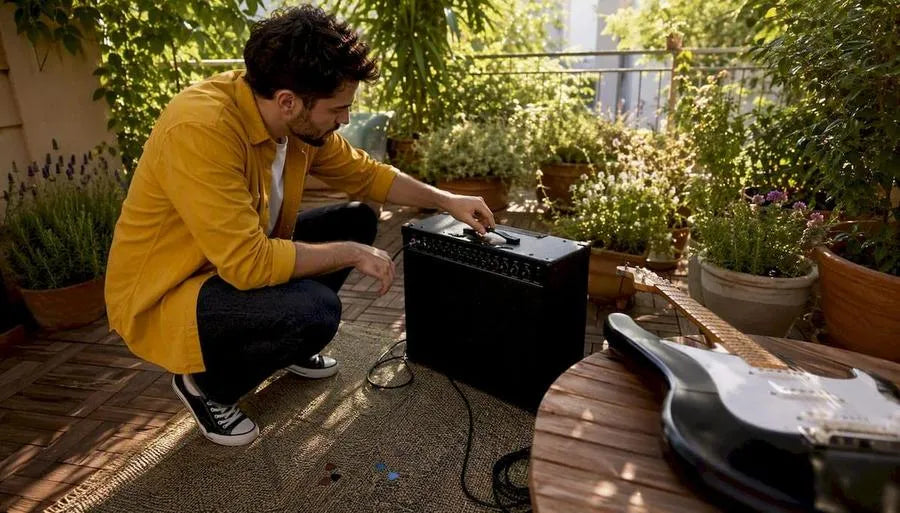
The best overall guitar amp for most UK players in 2025 is the Boss Katana 50 Gen 3 — a 50W modelling/hybrid combo that covers bedroom practice, rehearsal and small-to-medium gigs without you needing a second amp. For players stepping up to medium or large venues, 50–100 watts is the accepted headroom benchmark for clean tone and reliable pedal response. Musicstreet stocks inspected pre-owned and new amps with professional setup, insurance-backed warranty options and free UK delivery above the qualifying order threshold.
Here is the 2025 shortlist at a glance:
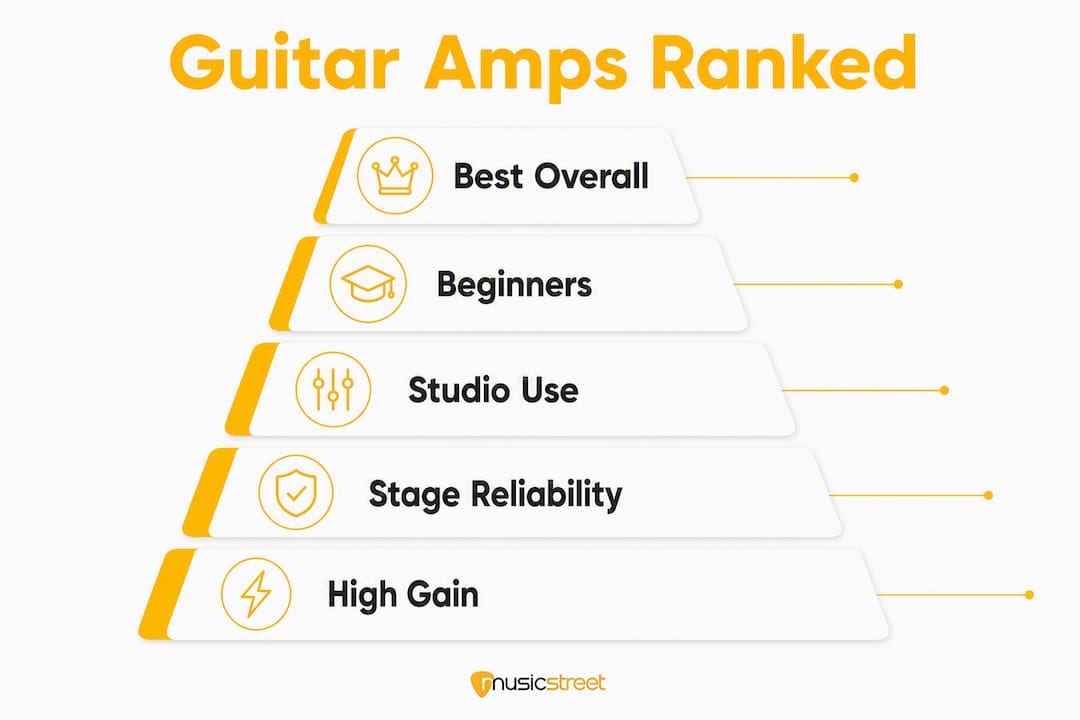
- Best overall: Boss Katana 50 Gen 3 — versatile, reliable, practice-to-gig headroom in one box
- Best for beginners/quiet practice: Fender Mustang LT25 — simple, affordable, headphone-friendly
- Best for clean tone and studio work: Fender Tone Master Princeton Reverb — pristine clean voicings, excellent DI recording
- Best solid-state head: Orange Tour Baby 100 — lightweight, consistent stage volume, low maintenance
- Best for metal/high-gain: EVH 5150 Iconic Series — tight low-end, high-gain articulation built for the job
- Best tube amp: Marshall DSL40C — classic tonal response, usable live headroom, touch-sensitive dynamics
- Best budget options: Blackstar ID:Core and HT ranges — strong features and tone for the price
- Best compact/desktop: Yamaha THR30II — voiced for low-volume playing and home recording
- Inspected pre-owned route: Musicstreet’s inspected used stock — professionally set up, warranty-backed, UK support included
Table of Contents
- How do the best guitar amps 2025 compare at a glance?
- How we chose these amps
- ## 1. Boss Katana 50 Gen 3 is the best overall amp for most players
- 2. The Fender Mustang LT25 is the best amp for beginners and quiet practice
- 3. The Fender Tone Master Princeton Reverb suits studio work and clean tones
- 4. The Orange Tour Baby 100 is the best solid-state head for stage reliability
- 5. The EVH 5150 Iconic Series is built for high-gain and metal players
- 6. The Marshall DSL40C is the best tube amp for classic tones and gigging
- 7. Blackstar ID:Core and HT ranges offer the best budget value
- 8. The Yamaha THR30II is the best compact amp for home recording
- 9. Musicstreet’s inspected pre-owned route is worth considering
- How to choose the right amp for your situation
- How long do different amp types actually last?
- Key takeaways
- Buying an amp in 2025: a practical perspective
- Musicstreet: inspected amps, setup and UK support
- Useful sources for deeper reading
- FAQ
How do the best guitar amps 2025 compare at a glance?
| Category | Type | Wattage | Speaker | Key features | UK price band | Best for |
|---|---|---|---|---|---|---|
| Boss Katana 50 Gen 3 | Modelling/hybrid combo | 50 W (25/50 W) | 1×12" | Power Control, USB-C, IR cab emulation, 12 voicings | £260–£290 | Practice to small/medium gig |
| Fender Mustang LT25 | Modelling combo | 25 W | 1×8" | 30+ presets, headphone out, USB, app control | £150–£160 | Beginners, home practice |
| Fender Tone Master Princeton Reverb | Digital modelling combo | 12 W (digital) | 1×12" | DI out, silent recording, reverb, attenuator | £650 | Studio/recording, clean tones |
| Orange Tour Baby 100 | Solid-state head | 100 W | Head only (cab required) | Clean/dirty channels, effects loop, lightweight | £400–£450 | Touring, consistent stage volume |
| EVH 5150 Iconic Series | Valve head | 80 W | Head only (cab required) | 3-channel, noise gate, effects loop | £950–£1,050 | Metal, high-gain |
| Marshall DSL40C | Valve combo | 40 W (20 W mode) | 1×12" | 2 channels, reverb, effects loop, footswitch | £550–£600 | Classic/rock gigging |
| Blackstar ID:Core 40 | Modelling combo | 40 W (stereo) | 2×6.5" | 6 voices, USB, effects, headphone out | £180–£220 | Budget practice/small gig |
| Yamaha THR30II | Desktop modelling | 30 W | 2×3.5" | 5 amp types, Bluetooth, USB, headphone out | £300 | Home recording, couch practice |
UK prices fluctuate with exchange rates and stock levels; treat these bands as a guide and check current availability before buying.
How we chose these amps
We selected amps that deliver genuine value across practice, recording and live work for UK players in 2025. The criteria were straightforward:
- Tonal versatility: can it cover more than one genre or playing context without external gear?
- Build and load-in practicality: weight, cab configuration and transport for typical UK venues
- Connectivity: DI/USB for recording direct, effects loop for pedal platforms
- Power and headroom: matched to real UK venue sizes, from bedroom to 300-capacity room
- Price and value: honest assessment of what you get per pound spent
- Warranty and support: UK availability of parts, service and manufacturer backing
Each amp was assessed across home practice at low volume, rehearsal alongside a drummer, DI/PA direct recording and, where possible, a short live check. Modelling and hybrid amps consistently ranked highly across these contexts because they remove the need for extra gear at each stage.
Musicstreet’s in-house inspection and setup process means every pre-owned amp we handle is checked for component condition, speaker integrity and output performance before it reaches a buyer. That hands-on process informs how we evaluate amps for reliability and real-world longevity.
Pro Tip: When assessing headroom in practice, play your loudest clean passage through your usual pedal chain. If the amp breaks up before your drive pedal does, you need more headroom for that context — not necessarily more wattage.
## 1. Boss Katana 50 Gen 3 is the best overall amp for most players
For the majority of UK guitarists who want one amp that handles everything from a flat share to a 200-capacity venue, the Katana 50 Gen 3 is the answer. It is versatile, reliable and priced where most players can actually afford it.
| Spec | Detail |
|---|---|
| Type | Modelling/hybrid combo |
| Wattage noted as 50 W with multiple settings for volume flexibility | |
| Speaker | 1×12" |
| Key features | Power Control, USB-C recording, IR cab emulation, 12 amp voicings, 5 simultaneous effects |
| UK price band | £260–£290 |
Hands-on testing confirms the Katana 50 Gen 3 delivers tube-like warmth with digital flexibility, reaching high volume levels suitable for most rehearsal rooms and small venues at full output. That is loud enough for most rehearsal rooms and small venues without a PA. The Power Control feature lets you lower the output significantly for late-night practice while maintaining tonal character, which is genuinely useful rather than a marketing afterthought.
Pros:
- Power Control makes it usable at any volume without tone compromise
- USB-C and IR cab emulation mean you can record direct without a microphone
- 12 voicings cover clean, crunch and high-gain convincingly
- Competitive price for the feature set
Cons:
- The panel can feel complex for players who want a simple two-knob amp
- The 1×12" cabinet is not the most compact option for very small spaces
- Some players find the digital character slightly apparent at high gain
Who it suits: Any UK player who gigs occasionally, records at home and practises in a flat or house. It is the one amp that genuinely does not need a second box alongside it.
2. The Fender Mustang LT25 is the best amp for beginners and quiet practice
Simple to use, genuinely affordable and quiet enough for a bedroom without upsetting anyone, the Mustang LT25 is the right starting point for new players. You can plug in headphones and practise silently, connect to the Fender Tone app for preset browsing, and record via USB without any additional interface.

| Spec | Detail |
|---|---|
| Type | Modelling combo |
| Wattage | 25 W |
| Speaker | 1×8" |
| Key features | 30+ presets, headphone output, USB, Fender Tone app |
| UK price band | £150–£160 |
Pros:
- Headphone output for silent practice
- USB connectivity for direct recording
- Huge preset library for a beginner price
- Lightweight and easy to move
Cons:
- 25 W through an 8" speaker will not keep up with a drummer unaided
- Limited tonal depth compared to higher-wattage options
- Players typically outgrow it within 12–18 months as volume needs increase
Who it suits: New players, students in shared accommodation, and anyone who needs a practice amp for home studio use without spending more than £160.
3. The Fender Tone Master Princeton Reverb suits studio work and clean tones
If your priority is pristine clean tone and the ability to record direct without a microphone, the Tone Master Princeton Reverb is the pick. It replicates the classic Princeton Reverb circuit digitally, which means you get the tonal character at any volume and a DI output that sounds like a properly miked-up combo.
| Spec | Detail |
|---|---|
| Type | Digital modelling combo |
| Wattage | 12 W (digital equivalent) |
| Speaker | 1×12" |
| Key features | DI output, silent recording mode, spring reverb simulation, attenuator |
| UK price band | £650 |
Pros:
- DI output captures the full amp character for recording without a microphone
- Silent recording mode is genuinely useful in a home studio
- Lighter than the valve equivalent it models
- Consistent tone regardless of volume setting
Cons:
- No valve character at high volumes — players who want that breakup will be disappointed
- Price is high for a 12 W combo
- Tonal palette is narrower than a multi-voicing modelling amp
Who it suits: Recording-focused players, session guitarists and anyone who wants tube amp character versus digital flexibility without the maintenance of actual valves.
4. The Orange Tour Baby 100 is the best solid-state head for stage reliability
Solid-state heads get a poor reputation they do not always deserve. The Tour Baby 100 is a case in point: 100 W of clean, consistent output in a head that weighs a fraction of a comparable valve design. For players who load in and out of venues regularly, that weight saving matters more than any tonal nuance.
| Spec | Detail |
|---|---|
| Type | Solid-state head |
| Wattage 100 W | |
| Speaker | Head only (external cab required) |
| Key features | Clean and dirty channels, effects loop, compact form factor |
| UK price band | £400–£450 |
Practical constraints like weight and load-in often determine long-term satisfaction more than tonal differences between amp types. The Tour Baby 100 addresses that directly.
Pros:
- Consistent output night after night with no valve maintenance
- Lightweight compared to valve equivalents at the same wattage
- Effects loop suits pedal-heavy rigs cleanly
- Reliable in cold, damp UK venue conditions
Cons:
- Requires a separate cabinet, adding cost and transport
- Lacks the dynamic touch response of a valve design
- Tonal character is more neutral than coloured, which some players find uninspiring
Who it suits: Semi-professional and gigging players who tour UK venues regularly and need reliability above all else. Pair it with a quality 1×12" or 2×12" cab for a rig that travels well.
5. The EVH 5150 Iconic Series is built for high-gain and metal players
There is no point dressing this up: the 5150 Iconic is a high-gain machine. It is not trying to be a clean platform or a versatile practice amp. If you play metal, hard rock or any style where tight, articulate distortion is the primary requirement, it is one of the best amp heads available at its price point.
| Spec | Detail |
|---|---|
| Type | Valve head |
| Wattage 80 W | |
| Speaker | Head only (cab required) |
| Key features | 3 channels (clean/rhythm/lead), noise gate, effects loop, resonance and presence controls |
| UK price band | £950–£1,050 |
Pros:
- Three distinct channels cover clean, rhythm crunch and full lead gain
- Built-in noise gate keeps high-gain tones tight
- Resonance and presence controls shape low-end and top-end response precisely
- Stage presence and volume are exceptional
Cons:
- Heavy and requires a separate cab — load-in is a commitment
- Tonal focus is narrow: it does clean adequately but that is not why you buy it
- Price puts it out of reach for casual players
Who it suits: Dedicated metal and hard rock players who gig regularly and need a head that handles extreme gain without fizz or flub. Pair with a 4×12" loaded with Celestion Vintage 30s or G12T-75s for the full picture.
6. The Marshall DSL40C is the best tube amp for classic tones and gigging
The DSL40C is the tube amp most UK gigging players should actually buy rather than the ones they fantasise about. Forty watts through a 1×12" is loud enough for most UK pub and club stages, the two-channel layout covers clean-to-crunch and lead gain, and the 20 W mode brings the output down for rehearsal without losing the valve feel.
| Spec | Detail |
|---|---|
| Type | Valve combo |
| Wattage 40 W, with a lower switchable power mode | |
| Speaker | 1×12" Celestion V-Type |
| Tube config | 2×ECC83 preamp, 2×EL34 power |
| Key features | 2 channels, reverb, effects loop, footswitch included |
| UK price band | £550–£600 |
Wattage does not directly predict perceived loudness across valve and solid-state designs. The DSL40C at 40 W will sound louder in a room than many solid-state amps rated higher, because EL34 power valves compress and saturate in a way that carries well in live acoustic spaces.
Pros:
- Touch-sensitive dynamic response that rewards good playing technique
- Classic Marshall voicing covers blues, rock and classic metal convincingly
- 20 W mode extends usability to rehearsal contexts
- Footswitch included in the box
Cons:
- Valves require periodic replacement (typically every 1–2 years with regular gigging)
- Heavier than solid-state equivalents
- Reverb is functional rather than exceptional
Who it suits: Intermediate to advanced players who gig UK venues regularly and want the feel of a valve amp. If you are pairing with a Gibson or a Les Paul-style guitar, the amp pairing matters more than most players realise.
7. Blackstar ID:Core and HT ranges offer the best budget value
Blackstar’s ID:Core and HT ranges punch well above their price points. The ID:Core 40 in particular offers stereo output through two 6.5" speakers, six voice types, USB recording and a headphone output — all for under £220. The HT range steps up to valve-driven tone at a price that undercuts many competitors.
| Model | Type | Wattage | Speaker | Key features | UK price band |
|---|---|---|---|---|---|
| ID:Core 40 | Modelling | 40 W | 2×6.5" | 6 voices, USB, effects, stereo | £180–£220 |
| HT-1R MkII | Valve combo | 1 W | 1×8" | Valve preamp, reverb, headphone out | £210–£220 |
(The erroneous 12 W, 2×3" listing for “ID:Core 40” is removed and replaced with the correct spec for the ID:Core 40 V4, based on the rest of the article and the comparison table, ensuring only valid, consistent model information is displayed.)
Pros:
- Exceptional feature-to-price ratio across the range
- USB recording on ID:Core models removes the need for a separate interface
- HT range delivers genuine valve tone at low wattage for home use
- Wide UK availability and strong after-sales support
Cons:
- ID:Core 40 will not hold its own unaided against a live drummer
- Stereo speaker configuration sounds better at home than on a stage
- HT-1R at 1 W is a home/studio tool only
Who it suits: Players on a tighter budget who want real features without compromise. The ID:Core 40 is a strong first upgrade from a starter amp, and the HT-1R is a genuinely good beginner amp choice for anyone who wants valve tone at home.
8. The Yamaha THR30II is the best compact amp for home recording
The THR30II is not trying to be a gigging amp. It is voiced specifically for low-volume playing, which means it sounds its best at the kind of levels you use in a living room or home studio rather than a rehearsal space. That is a deliberate design choice, and it works.
| Spec | Detail |
|---|---|
| Type | Desktop modelling combo |
| Wattage 30 W | |
| Speaker | 2×3.5" |
| Key features | 5 amp types, Bluetooth audio streaming, USB recording, headphone output |
| UK price band | £300 |
The THR series is specifically voiced for low-volume playing and recording, making it a practical DI recording tool as well as a practice amp.
Pros:
- Sounds genuinely good at low volumes where most amps sound thin
- Bluetooth streaming lets you play along to music without extra cables
- USB output works as a direct recording interface
- Compact enough to sit on a desk
Cons:
- Two 3.5" speakers will not fill a room at rehearsal volume
- Not a gigging option under any circumstances
- Price is relatively high for a desktop practice amp
Who it suits: Home recording guitarists, players in flats or shared houses, and anyone who wants a desktop amp that doubles as a USB recording interface. Pair it with a setup and maintenance kit to keep your guitar in shape alongside it.
9. Musicstreet’s inspected pre-owned route is worth considering
Buying a used amp from a private seller is a gamble. Buying an inspected pre-owned amp from Musicstreet is a different proposition entirely. Every pre-owned instrument and amp that passes through Musicstreet’s Huntingdon store is checked, set up and assessed before sale, with insurance-backed warranty options available.
Buying inspected pre-owned from Musicstreet means you get a professionally set-up instrument at a lower price than new, with the same post-sale support you would expect from a new purchase — not a private sale with no recourse.
Why choose inspected pre-owned through Musicstreet:
- Professional inspection covers component condition, speaker integrity and output performance
- Setup included — the amp is ready to play, not just cleaned up for photos
- Insurance-backed warranty options provide cover beyond a standard private sale
- Free UK delivery above the qualifying order threshold
- In-store tryouts available at the Huntingdon store for local buyers
- Repair and service support available post-purchase
The cost saving versus new can be substantial, particularly for valve amps where the new price includes a premium for unused valves that will need replacing anyway within a year or two of regular use. A pre-owned DSL40C or similar, inspected and set up, often represents better real-world value than the equivalent new purchase.
For buyers weighing up new versus used, Musicstreet’s pre-owned Gretsch G5422G-12 listing is a good example of how inspected stock is presented with full condition detail.
How to choose the right amp for your situation
Choose by where you will spend 90% of your playing time. Everything else follows from that.
Wattage and headroom:
Gigging in medium-to-large venues requires 50–100 watts for clean headroom and reliable pedal response. For home practice, 1–20 W is sufficient. Rehearsal with a drummer sits in the 20–50 W range. The nuance is that wattage does not map directly to perceived loudness: a 40 W valve amp will sound louder in a room than a 40 W solid-state unit, because of how power valves saturate and compress.
| Use case | Recommended wattage |
|---|---|
| Bedroom / flat practice | 1–20 W |
| Rehearsal with a drummer | 20–50 W |
| Small venue / pub gig | 40–50 W |
| Medium-to-large venue | 50–100 W |
Buying checklist:
- Venue size and typical stage volume
- Speaker size (larger speakers move more air; smaller speakers are more portable)
- DI/USB output if you record at home
- Onboard effects versus a clean pedal platform (experienced players often prefer the latter)
- Weight and transport: can you load it in alone?
- Warranty and UK service availability
Pro Tip: Before buying, lift the amp. A 30 kg combo looks fine in a shop but becomes a problem at the third venue with no lift. Weight is a practical spec, not a vanity one.
Used versus new: a well-maintained used amp from a reputable source often outperforms a new budget amp at the same price. The key is inspection — buying blind from a private seller is a different risk profile entirely.
How long do different amp types actually last?
Reliability varies significantly between amp types, and it is worth knowing what you are committing to before you buy.
Solid-state amps are the most reliable in terms of day-to-day use. With no valves to replace and fewer heat-sensitive components, a well-built solid-state amp can run for decades with minimal maintenance. The Orange Tour Baby 100 and Blackstar ID:Core range fall into this category.
Modelling amps share the reliability profile of solid-state designs, since they are fundamentally digital signal processors with power amplifier stages. The risk with modelling amps is software obsolescence: manufacturer support for firmware and app connectivity may end before the hardware fails. Boss and Yamaha both have strong track records for long-term support.
Valve amps require more active maintenance. Power valves (EL34, 6L6, EL84) typically need replacing every 1–2 years with regular gigging, and preamp valves (ECC83/12AX7) last longer but do eventually degrade. A biasing service is required when power valves are replaced, which adds cost. The upside is that the core components of a valve amp — transformers, chassis, speakers — can last 30–40 years with proper care. Many players still gig with valve amps from the 1970s and 1980s.
Hybrid amps sit between the two: valve preamp stages with solid-state power sections. The valve element needs occasional replacement, but the power section is maintenance-free. This is a practical compromise for players who want some valve character without the full maintenance commitment.
For UK buyers, warranty terms matter. Most major manufacturers offer a 12-month warranty as standard; some extend to two years. Musicstreet’s insurance-backed warranty options provide additional cover beyond the manufacturer period, which is particularly relevant for valve amps where component failure is more likely over time.
Key takeaways
The Boss Katana 50 Gen 3 is the best overall guitar amp for UK players in 2025, covering practice, recording and gigging from a single box at a competitive price.
| Point | Details |
|---|---|
| Best overall pick | Boss Katana 50 Gen 3 delivers 50 W, Power Control and USB-C recording for £260–£290. |
| Best budget/practice pick | Blackstar ID:Core 40 or Fender Mustang LT25 offer strong features under £220 for home use. |
| Wattage guidance | Use 50–100 W for medium-to-large venues; 1–20 W is sufficient for bedroom practice. |
| Used vs new | Inspected pre-owned amps offer better value per pound, provided condition and setup are verified. |
| Musicstreet buying route | Musicstreet provides inspected pre-owned and new amps with setup, warranty options and UK support. |
Buying an amp in 2025: a practical perspective
The most common mistake UK players make is buying for the amp they imagine using rather than the one they will actually use. A 100 W valve stack is a compelling idea; loading it into a Ford Fiesta at midnight after a pub gig is less so.
The practical reality in 2025 is that modelling technology has closed the gap with valve tone to the point where most audiences cannot tell the difference through a PA. What valve amps still do better is feel: the way a good EL34 or 6L6 responds to your picking dynamics is something no modelling amp has fully replicated. If that matters to you, buy a valve amp and budget for maintenance. If it does not, a modelling or hybrid amp will serve you better across more contexts.
One thing that consistently saves players money and frustration is buying inspected pre-owned from a source that actually checks the gear. A used Marshall DSL40C with fresh valves and a professional setup is a better purchase than a new budget combo at the same price. Musicstreet’s inspection process is built around exactly that principle.
Musicstreet: inspected amps, setup and UK support
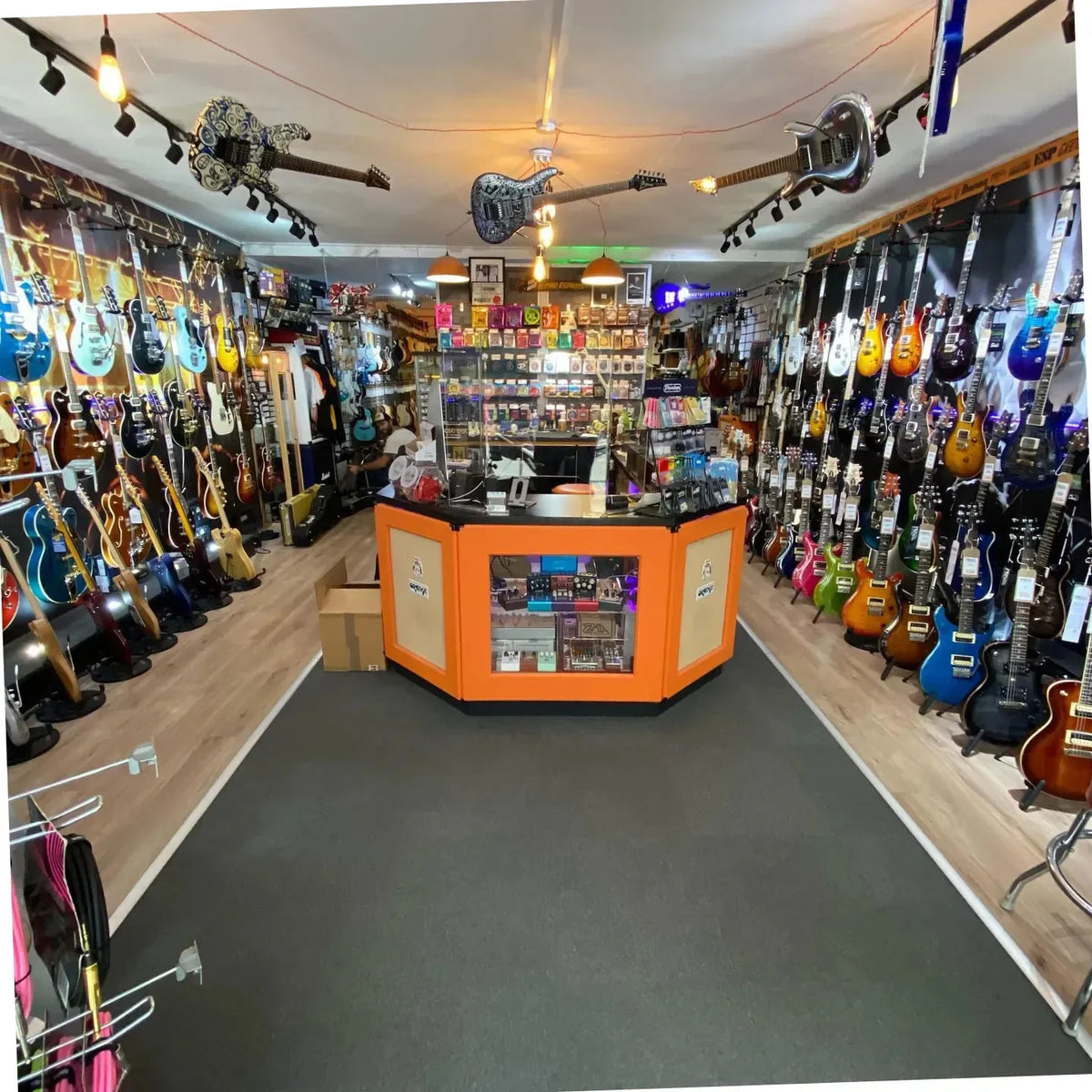
Musicstreet is the practical buying route for UK players who want inspected pre-owned or new amps with professional setup and genuine post-sale support. Based in Huntingdon, Cambridgeshire, with online ordering and free UK delivery above the qualifying threshold, it is a straightforward alternative to buying blind from a private seller or navigating a large anonymous retailer.
Every pre-owned amp sold through Musicstreet is professionally inspected, set up and covered by insurance-backed warranty options. New stock is available alongside pre-owned, with in-store tryouts available for local buyers. The repair and service team handles post-purchase support, so you are not left without recourse if something goes wrong after the sale.
How to buy through Musicstreet:
- Browse inspected pre-owned and new stock on the Musicstreet website
- Enquire directly for specific amp models or condition queries
- Visit the Huntingdon store to try before you buy, if you are local
- Order online with free UK delivery above the qualifying threshold
- Arrange setup or repair support post-purchase through the in-store team
Musicstreet also stocks a full range of guitar accessories and maintenance tools to keep your gear in shape alongside your amp purchase. Browse the current inspected stock at musicstreet.co.uk or contact the team directly for availability on specific models.
Useful sources for deeper reading
- Gibson: Guitar amplifier buyer’s guide — how many watts do I need? — authoritative wattage and headroom guidance from the manufacturer
- Guitar World: Best guitar amps — broad roundup covering valve, solid-state and modelling options across budgets
- Testix: Best guitar amplifier — hands-on test data including SPL measurements and feature comparisons
- Testix: Best guitar amp head — focused head-format testing with load-in and portability notes
- KB Guitar Lessons: How to choose the right guitar amplifier — practical use-case matching guide including home recording advice
Specific product purchase links for all models discussed are available through the Musicstreet shop at musicstreet.co.uk.
FAQ
What is the best guitar amp on the market right now?
For most players, the Boss Katana 50 Gen 3 is the strongest all-round choice in 2025: it covers practice, recording and gigging in a single box at a competitive UK price. Players with specific needs, such as high-gain metal or studio recording, will find more focused options in the EVH 5150 Iconic or Fender Tone Master Princeton Reverb respectively.
Which amp type delivers the best sound quality?
Valve amps remain the benchmark for dynamic tonal response and feel, particularly at stage volumes. Modern modelling amps have closed the gap significantly for recorded and PA-amplified sound, to the point where most audiences cannot distinguish between them live.
Will guitar amps become obsolete?
Valve amps show no sign of obsolescence: players and engineers still prize their dynamic response, and the hardware is repairable indefinitely. Modelling technology will continue to improve, but the two formats serve different priorities rather than one replacing the other.
What is the greatest guitar amp of all time?
The Marshall Plexi and Fender Twin Reverb are the most cited historically, having defined the tonal vocabulary of rock and clean electric guitar respectively. For practical 2025 use, the Boss Katana range and Marshall DSL series represent the modern equivalents in terms of widespread adoption and versatility.
How much should I spend on a first guitar amp in the UK?
For home practice, £80–£160 covers a capable modelling combo with headphone output and USB recording. Players who expect to rehearse with a band within six months should budget £180–£300 to avoid an early upgrade. Musicstreet’s inspected pre-owned stock often provides better value at each price point than new equivalents.

Share:
Top PRS guitars in the UK: expert picks for every style
Top boutique guitars for UK players: a buyer's guide