


An acoustic-electric guitar includes a built-in pickup and preamp, enabling amplification for stage use. A standard acoustic guitar produces sound solely through resonance without electronics. The choice depends on performance needs, with acoustic-electrics offering greater versatility for live and recording scenarios.
An acoustic-electric guitar is defined as an acoustic guitar fitted with a built-in pickup system and preamp, allowing it to be amplified through external equipment. A standard acoustic guitar, by contrast, produces sound purely through hollow body resonance with no electronics involved. Understanding the difference between acoustic and acoustic electric guitars matters because it directly shapes where you can play, how you sound on stage, and what you spend. Brands like Martin, Yamaha, and Taylor offer both types, so the choice is not about quality. It is about what your playing life actually demands.
What are the main differences between acoustic and acoustic electric guitars?
The core structural difference is electronics. An acoustic guitar is a self-contained instrument. String vibrations move into the hollow body, resonate through the soundboard and internal air, and project outward as sound. No cables, no power, no signal chain required.
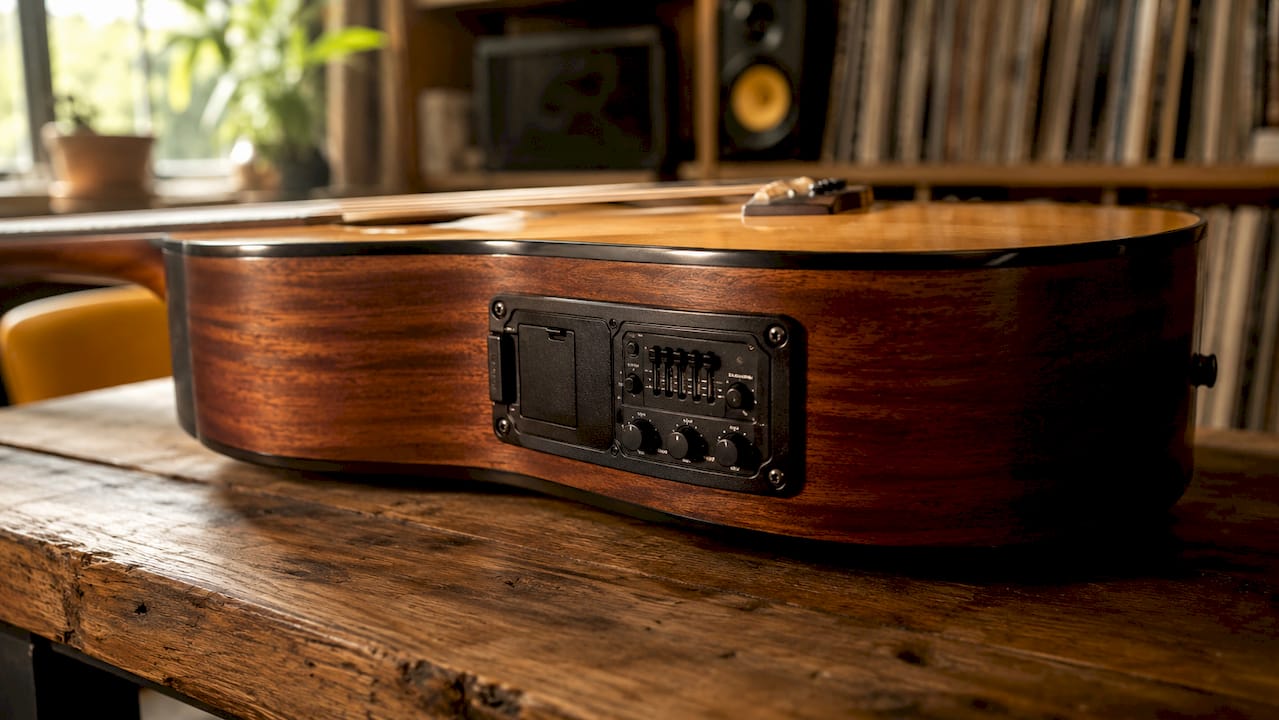
An acoustic-electric guitar adds a pickup system to that same body. The pickup can be a piezoelectric transducer located under the saddle, a small internal microphone, or a magnetic pickup positioned near the soundhole. Each type captures string vibration differently and converts it into an electrical signal that feeds an amplifier or PA system.
Beyond the pickup itself, acoustic-electrics include a preamp unit, typically mounted on the upper bout of the guitar body. This preamp houses volume and tone controls, and often a built-in tuner. The electronics add a small amount of weight and shift the balance of the instrument slightly, which is worth noting before you buy.
Key components found in acoustic-electric guitars
- Pickup: piezo under the saddle, internal microphone, or soundhole magnetic pickup
- Preamp: onboard unit controlling volume, bass, mid, and treble
- Output jack: usually mounted on the strap button or side of the body
- Battery compartment: most preamps run on a standard 9V battery
- Built-in tuner: included on the majority of modern acoustic-electric preamps
Standard acoustic guitars have none of these components. Their bodies are lighter, their controls are absent, and their signal chain ends at the soundhole.
How do acoustic and acoustic electric guitars differ in sound?
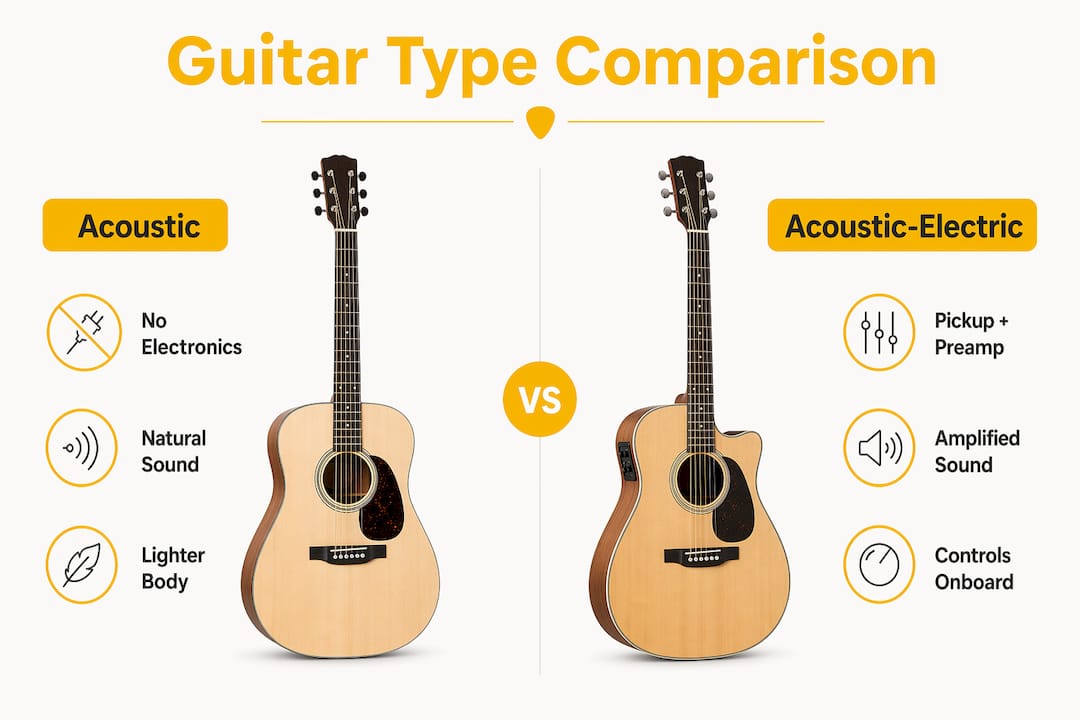
The tonal character of a pure acoustic guitar is warm and natural. Acoustic guitars produce a resonant tone that suits folk, country, blues, and singer-songwriter styles particularly well. That sound is fixed. You cannot boost the bass or cut the treble without an external equaliser.
An acoustic-electric gives you that same natural resonance when played unplugged. Plug it in, and you gain tonal control through the onboard preamp. You can shape the sound to suit the room, compensate for a boomy stage, or add presence in a mix. Acoustic-electrics combine rich acoustic tones with the ability to plug into amplifiers or PA systems, which makes them far more adaptable in live settings.
Playability between the two types is nearly identical. Both use the same string gauges, the same scale lengths, and the same action heights. Acoustic-electric electronics do not change string tension or action compared to a standard acoustic of the same build. If you find a dreadnought acoustic physically demanding, an acoustic-electric dreadnought will feel the same under your fingers.
Pro Tip: If you are buying your first guitar and plan to play at home and at open mic nights, an acoustic-electric gives you the flexibility to do both without buying a second instrument.
The one area where sound diverges is amplified tone. Piezo pickups, the most common type, can sound slightly bright or thin through a flat PA system. Many players use a dedicated acoustic guitar amplifier or a preamp pedal to warm the signal up. This is a known characteristic of the format, not a flaw, and it is easily managed with a little EQ.
What are the benefits and use cases of each guitar type?
Choosing between the two types comes down to where and how you play. Below is a direct comparison of the benefits each type offers.
| Feature | Acoustic guitar | Acoustic-electric guitar |
|---|---|---|
| Amplification | None, natural projection only | Plug into amp or PA system |
| Onboard controls | None | Volume, tone, EQ, tuner |
| Weight | Lighter, no electronics | Slightly heavier |
| Versatility | Limited to unamplified settings | Home, stage, studio, busking |
| Maintenance | Minimal | Battery replacement, electronics care |
| Typical genres | Folk, country, singer-songwriter | Folk, pop, country, rock, studio |
| Cost | Generally lower | Higher due to electronics |
Acoustic guitars are self-contained with no amplifier needed, which makes them ideal for home practice, campfire playing, and intimate acoustic sessions. There is nothing to set up and nothing to go wrong electronically.
Acoustic-electrics are built for players who perform live or record regularly. They allow amplified sound without external microphones, which simplifies stage setup considerably. A busker playing a busy street market, a guitarist performing at a wedding, or a session player recording a demo all benefit from having a single instrument that covers every scenario.
Modern acoustic-electrics increasingly feature onboard effects like reverb, delay, and chorus. Yamaha’s TransAcoustic range, for example, generates reverb and chorus effects through the guitar body itself using an actuator, meaning you hear the effect acoustically without plugging in at all. This technology is reducing the need for external pedals in smaller venues and practice settings.
Pro Tip: If you play acoustic sets in venues without a dedicated sound engineer, an acoustic-electric with a built-in tuner and EQ gives you control over your own sound from the instrument itself.
What should you consider when buying acoustic or acoustic electric?
Several practical factors should guide your decision before you spend any money.
- Where you play most often: Home practice only? A standard acoustic is sufficient. Regular gigs or open mic nights? An acoustic-electric pays for itself in convenience.
- Budget: Acoustic-electrics cost more at every price point because of the added electronics. A quality acoustic-electric from Yamaha or Fender starts around £200–£300, while a comparable pure acoustic can be found for less.
- Simplicity versus versatility: Acoustic guitars require no batteries, no cables, and no maintenance beyond the instrument itself. Acoustic-electrics add a battery to monitor and electronics that can occasionally develop faults.
- Recording needs: If you record at home, an acoustic-electric lets you plug directly into an audio interface. A standard acoustic requires a decent microphone and room treatment to capture well.
- Future-proofing: Many players start on acoustic and later wish they had bought an acoustic-electric. If you have any intention of performing live within the next year, buy the acoustic-electric from the start.
For players still weighing up their first purchase, Musicstreet’s beginner guitar buying guide covers the physical and practical considerations in detail. The acoustic vs electric comparison is also worth reading if you are still deciding between acoustic formats and a full electric setup.
One misconception worth addressing directly: beginners often fear acoustic guitars will be too hard to play, but the physical challenge relates to string tension and action, not to whether the guitar has electronics. An acoustic-electric does not play any easier than its acoustic equivalent. Both require the same finger strength and technique to play well.
Key takeaways
The core difference between acoustic and acoustic electric guitars is the presence of a built-in pickup and preamp, which determines whether the instrument can be amplified and how much tonal control the player has.
| Point | Details |
|---|---|
| Electronics define the difference | Acoustic-electrics have pickups and preamps; standard acoustics have neither. |
| Playability is the same | String tension and action are identical between equivalent acoustic and acoustic-electric models. |
| Acoustic suits simplicity | Pure acoustics are lighter, cheaper, and require no maintenance beyond the instrument itself. |
| Acoustic-electric suits performance | Built-in pickups and EQ make acoustic-electrics the practical choice for live and studio use. |
| Modern features add value | Onboard effects like reverb and chorus on models such as the Yamaha TransAcoustic reduce the need for external gear. |
My view after years behind the counter
The acoustic-electric debate is one I have had hundreds of times with players at every level, and the honest answer is that most people underestimate how quickly they will want to perform. A guitarist who buys a pure acoustic for home practice often returns within eighteen months looking for an acoustic-electric because an opportunity to play live has appeared.
The argument for buying a standard acoustic is real. They are simpler, often better value at entry level, and the absence of electronics means one less thing to think about. For a player who genuinely only wants to sit in a bedroom and learn, a well-set-up acoustic from a brand like Yamaha or Martin is a fine choice.
But I have seen too many players limit themselves unnecessarily. The acoustic-electric does not compromise the acoustic experience. Unplugged, it sounds and plays like any acoustic of the same build. Plugged in, it opens every door a performing musician needs. The acoustic-electric versus acoustic comparison is not really about sound quality. It is about what you want your playing life to look like in two years’ time.
The Yamaha TransAcoustic technology genuinely surprised me when I first played it. Hearing reverb and chorus through the guitar body without a cable or pedal in sight changes how you think about what an acoustic instrument can be. That kind of onboard innovation is making acoustic-electrics more compelling at every price point, and I expect that trend to continue.
Buy for where you are going, not just where you are now.
— Music
Find your next guitar at Musicstreet

Musicstreet is a specialist UK guitar retailer based in Huntingdon, Cambridgeshire, stocking both acoustic and acoustic-electric guitars from leading brands. Whether you are buying your first instrument or upgrading to a gigging setup, the team at Musicstreet offers expert advice, professional instrument inspection, and post-sale support that most online retailers cannot match. Every guitar is set up before it leaves, and free UK delivery is available on qualifying orders. Browse the full acoustic and acoustic-electric range at Musicstreet and find the instrument that fits your playing life, not just your budget.
FAQ
What is the main difference between acoustic and acoustic electric?
An acoustic guitar produces sound through hollow body resonance alone. An acoustic-electric adds a built-in pickup and preamp, allowing the instrument to be amplified through an amp or PA system.
Does an acoustic-electric guitar sound different unplugged?
An acoustic-electric sounds the same as a comparable acoustic guitar when played unplugged. The electronics only affect the sound when the guitar is connected to an amplifier or PA system.
Is an acoustic-electric guitar harder to play than a standard acoustic?
No. String tension and action are the same on acoustic-electric and standard acoustic guitars of equivalent build. The electronics do not affect playability in any way.
Are acoustic-electric guitars good for beginners?
Acoustic-electric guitars are a strong choice for beginners who plan to perform live, as they offer the same playing experience as a standard acoustic with the added flexibility of amplification when needed.
Do acoustic-electric guitars need batteries?
Most acoustic-electric guitars use a 9V battery to power the onboard preamp. Battery life varies by model and usage, but most players replace the battery every few months with regular use.







Share:
Electric guitar pickups explained: a complete guide
Acoustic guitar brands list: the 2026 buyer's guide