


- A top guitar shop offers knowledgeable staff, carefully curated instruments, and genuine after-sales support.
- Choosing such a store fosters long-term growth through personalized guidance, community engagement, and quality care.
Not every guitar shop is created equal, and any experienced musician will tell you that the difference between a good shop and a great one is felt the moment you walk through the door. The quality of staff knowledge, the depth of stock, and the level of after-sales care vary enormously across the UK guitar retail landscape. This guide walks you through precisely what to look for, how to compare your options, and how to make the most of every shop visit so you walk away with an instrument that genuinely fits your playing style, budget, and long-term goals.
Table of Contents
- What makes a guitar shop stand out?
- Comparing guitar shop offerings: services, selection, and support
- Finding your perfect instrument: how to maximise your in-shop visit
- Beyond guitars: accessories, trade-ins, and aftercare
- Why a great guitar shop is more than just a retailer
- Explore the best of what a top guitar shop offers
- Frequently asked questions
Key Takeaways
| Point | Details |
|---|---|
| Knowledgeable staff matter | The best guitar shops are defined by friendly, expert staff who help you find your perfect fit. |
| Compare services, not just prices | Pay attention to selection, aftercare, and advice when choosing where to buy. |
| Make the most of in-store visits | Hands-on testing and expert guidance in the shop ensure you pick the right guitar. |
| Accessories and aftercare count | A shop’s range of accessories and support services add lasting value to your purchase. |
What makes a guitar shop stand out?
The most obvious marker of an excellent guitar shop is also the hardest to fake: genuinely knowledgeable staff who enjoy talking about instruments. Not sales targets. Not scripted upsells. Real conversations about tonewoods, pickup configurations, neck profiles, and which guitar will actually suit your playing style at your current level. That kind of interaction is rare, and it is worth seeking out deliberately.
Beyond staff quality, a standout shop curates its selection rather than simply stocking everything. The best shops stock instruments that have been properly inspected and set up before they reach the floor. A guitar that plays well out of the box is a sign that someone backstage cares deeply about quality control, and that care flows through every part of the business.
Here are the hallmark qualities you should look for in any quality guitar shop:
- Knowledgeable, approachable staff who will tailor recommendations to your specific needs rather than your budget ceiling
- A curated instrument range that includes both new and pre-loved guitars across multiple price points
- Professional setups and inspections before any instrument is sold
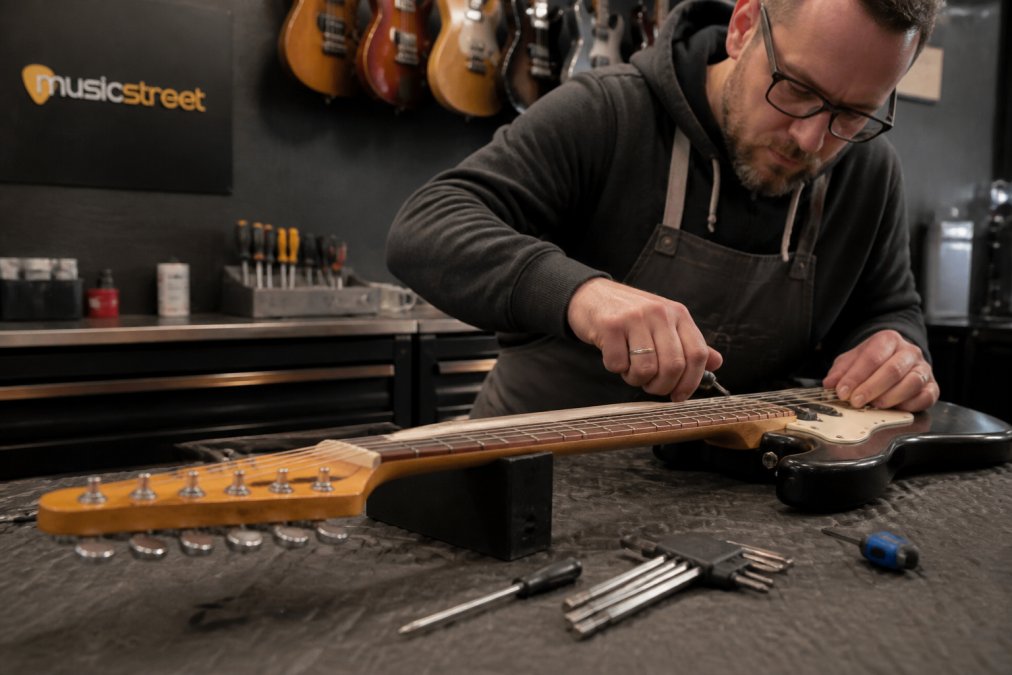
- Genuine after-sales support, including repairs, re-stringing, and follow-up advice
- Community-minded events such as demo evenings, workshops, or meet-the-maker sessions
- Transparent return and trade-in policies that protect your investment long after the sale
“A guitar shop is not just a place to buy an instrument. It is a resource, a community hub, and, at its best, a place where musicians grow.” This distinction becomes crystal clear when you compare a truly service-led shop with a generic retailer simply shifting boxes.
The guitar store experience at a quality boutique retailer is fundamentally different from browsing an anonymous warehouse. Musicians who have benefited from helpful staff and expert services consistently note that the personal connection made during their visit influenced their long-term satisfaction with the instrument they chose. That is not coincidence. It is the natural result of buying from people who actually care.
Personalised support matters at every skill level, too. Beginners benefit enormously from honest guidance that steers them away from instruments that will frustrate their progress. Intermediate players often need help identifying the specific qualities they are chasing in tone or playability. Experienced players want access to unique models, careful comparisons, and knowledgeable conversation at their level. A shop that can serve all three groups well is genuinely exceptional.
Comparing guitar shop offerings: services, selection, and support
Once you understand what a great shop looks like in principle, the next step is learning how to compare your real-world options. The differences between an independent boutique and a national chain are significant, and they affect your experience long after the purchase is made.
Here is a practical comparison of what different shop types typically offer:
| Feature | Independent boutique | National chain retailer |
|---|---|---|
| Staff expertise | Deep, specialist knowledge | Varies widely by location |
| Instrument curation | Carefully selected stock | Large volume, less curated |
| Pre-sale setup | Standard on most instruments | Rarely included |
| After-sales support | Strong, often personal | Structured but impersonal |
| Unique or rare models | Frequently available | Limited to mainstream brands |
| Trade-in flexibility | Negotiable and personal | Fixed, often lower value |
| Community events | Regular and musician-led | Occasional and promotional |
The numbers do not always favour boutique shops on price, but the evidence gathered across customer reviews suggests that musicians who prioritise service over cost consistently report higher long-term satisfaction. Price is one data point. The full picture includes setup quality, staff advice, and what happens if something goes wrong.
When comparing guitar shops, work through this checklist in order:
- Visit in person first. No website or catalogue replaces picking up the guitar and hearing it through an amp.
- Ask about setup standards. Find out whether instruments are professionally adjusted before sale.
- Check return and exchange terms. A confident shop stands behind what it sells.
- Enquire about repairs and ongoing servicing. The best shops want a long-term relationship, not a one-off transaction.
- Look at the breadth of accessories and complementary products. A shop stocked with quality cases, strings, pedals, and leads understands the full musician’s toolkit.
- Assess the staff interaction. Do they ask about your playing before reaching for a product? That instinct is everything.
Pro Tip: If a shop is reluctant to let you spend time with an instrument or seems impatient during a demo, that tells you something important about how they will treat you after the sale.
Exploring guitar shopping tips for the current market can sharpen your preparation considerably, and mastering guitar shopping as a skill means you are never at the mercy of a pushy sales environment. Knowledge is your best tool before you even set foot in the shop.
Finding your perfect instrument: how to maximise your in-shop visit
Walking into a guitar shop without preparation is a bit like arriving at a restaurant without knowing what kind of food you are hungry for. You might get lucky, but you are just as likely to leave underwhelmed or overwhelmed. A focused visit, on the other hand, can be genuinely transformative.
Follow this sequence to get the most from any in-shop guitar experience:
- Research before you go. Identify two or three instrument styles or models that match your playing goals. Know your budget range and be honest with yourself about it.
- Bring your own context. If you play with a particular amp or pedal setup, mention this to staff. The guitar that sounds great through a clean Fender-style amp may behave very differently through heavy gain.
- Ask specific questions. Rather than “What guitar should I buy?”, ask “I play mostly blues and I want something warm on the neck position. What would you put in my hands?” Good staff love targeted questions.
- Audition systematically. Start with instruments at or slightly above your budget. Play the same riff or chord progression on each so you have a consistent reference point for comparison.
- Check the physical details. Run your fingers along the fret edges for sharpness. Check the nut slots. Press the strings down at the first fret and check for comfortable action. Hold the neck in playing position and sight down it from the headstock.
- Trust your instincts about feel over tone. Tone can be shaped with pickups, amps, and pedals. The way a guitar feels in your hands is far harder to change.
- Ask about return policy and warranty. Knowing you have a safety net removes the pressure from the decision and helps you choose with confidence.
Learning to audition guitars in store is a skill in itself, and it becomes significantly easier once you know what you are listening and feeling for. If you are buying your first instrument, a structured beginner guitar buying guide can help you approach that first visit with genuine confidence rather than anxiety.
Knowledgeable staff who genuinely listen are an irreplaceable resource during this process. Do not be shy about asking them to play the instrument for you so you can hear it from the listener’s position. A great shop welcomes that kind of engagement, because it proves you are serious about finding the right guitar rather than simply buying the cheapest option available.
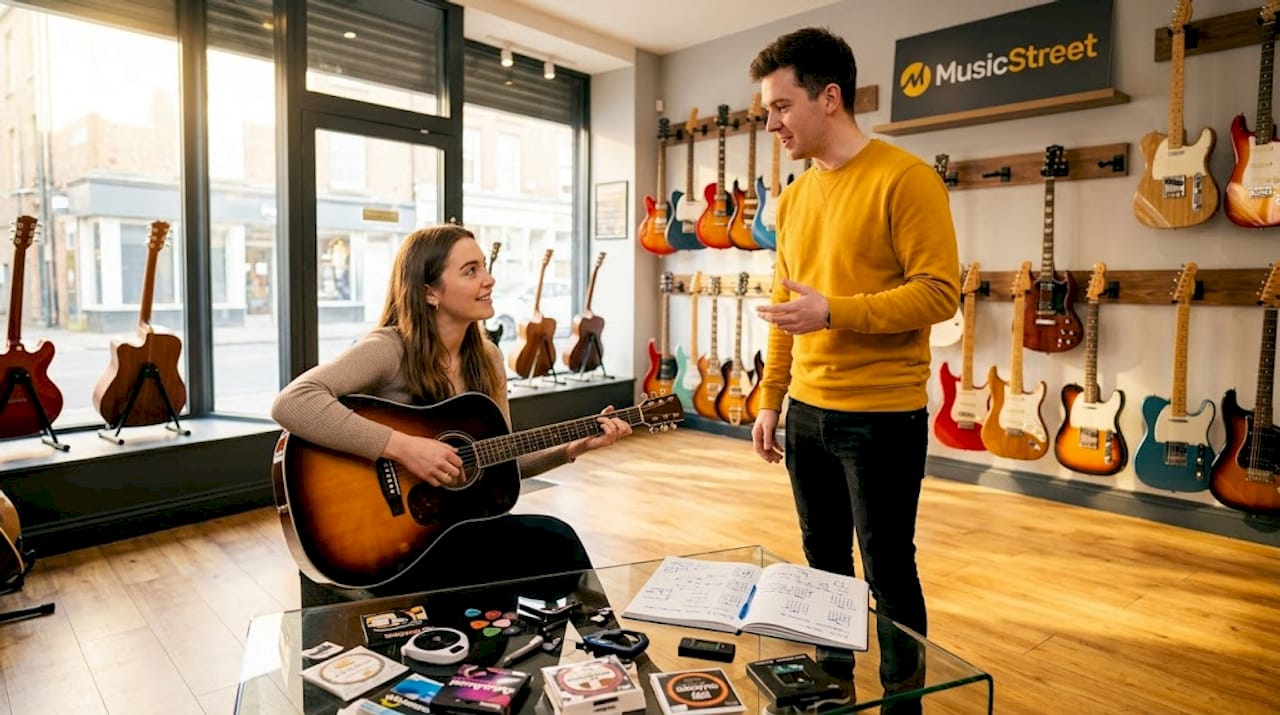
Pro Tip: Book a visit during a quieter period, midweek mornings are often ideal, so staff have more time to spend with you. The experience during a busy Saturday afternoon is very different from a relaxed Tuesday morning session.
Beyond guitars: accessories, trade-ins, and aftercare
The value a top guitar shop provides does not end at the point of sale. In fact, for many musicians, the ongoing relationship with their shop becomes one of the most important parts of their musical journey.
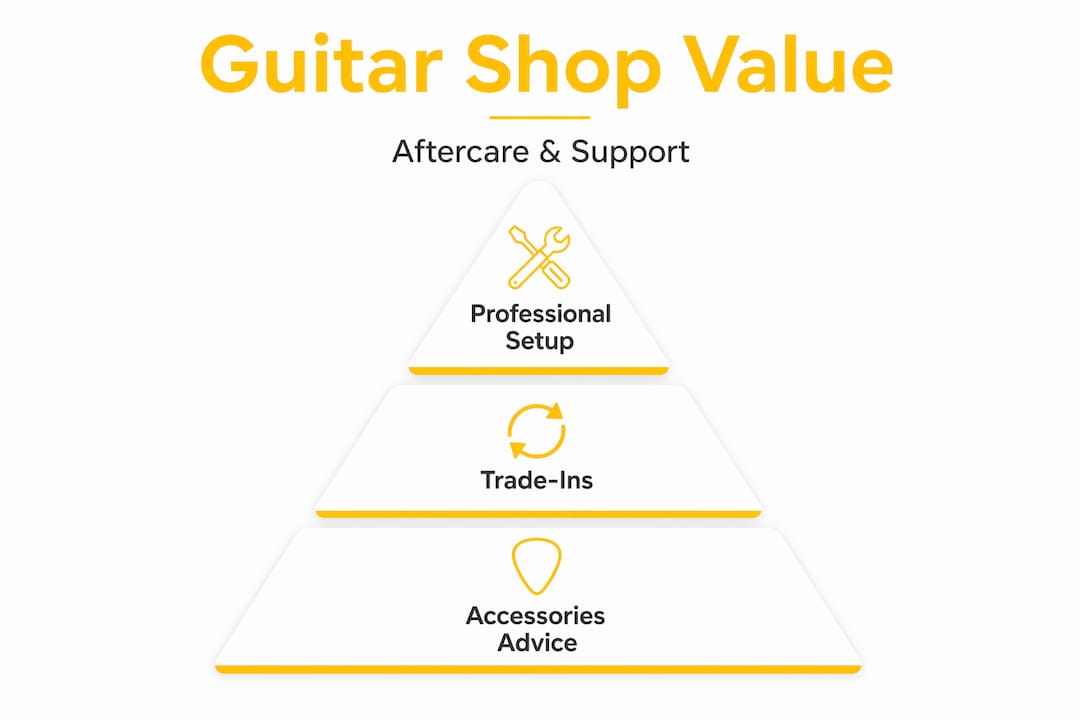
Accessories are a perfect example of this extended value. Buying strings, leads, pedals, straps, and cases from a shop whose staff know your setup means you get recommendations that actually fit your rig. That personal context is absent in anonymous online shopping.
Essential accessories every guitarist should consider:
- Spare strings in your preferred gauge, always worth having a few sets in reserve
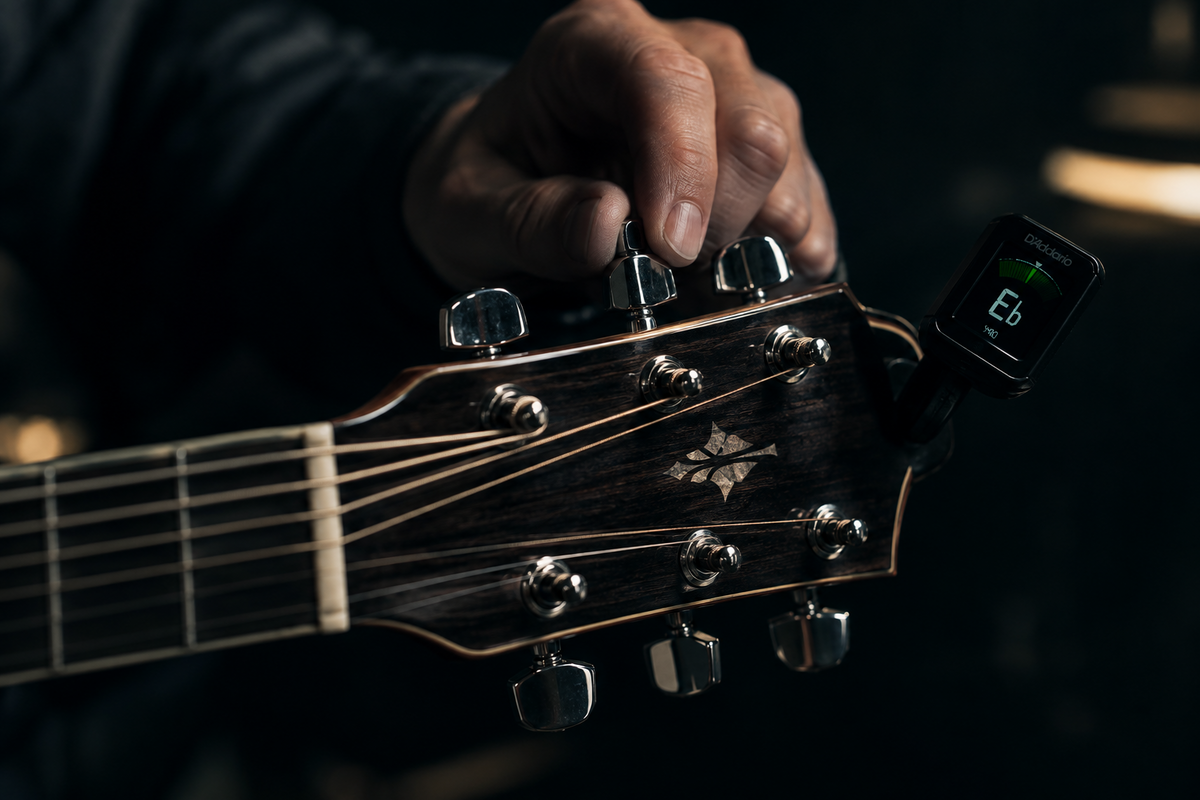
- A quality tuner, whether clip-on, pedal, or app-based, accurate tuning is non-negotiable
- A padded or hard-shell case appropriate for how you transport the guitar
- A guitar lead of appropriate length for your playing environment
- A capo if you play acoustic or folk styles frequently
- A guitar stand or wall hanger for safe storage at home
Trade-ins are another underused resource. Many musicians hold onto old instruments long past the point where they actively play them, simply because they are unsure of their value or the process. A reputable shop can offer a fair trade-in assessment and apply the value as credit towards your next instrument, meaning you do not need a large cash outlay to upgrade. Reading up on guitar trade-in advice before you visit can help you walk in with realistic expectations and negotiate more effectively.
Here is a quick overview of what quality aftercare looks like across different service categories:
| Aftercare service | What it involves | Why it matters |
|---|---|---|
| Professional setup | Action, intonation, and truss rod adjustment | Optimises playability for your style |
| Fret dressing | Levelling and polishing worn frets | Extends instrument life significantly |
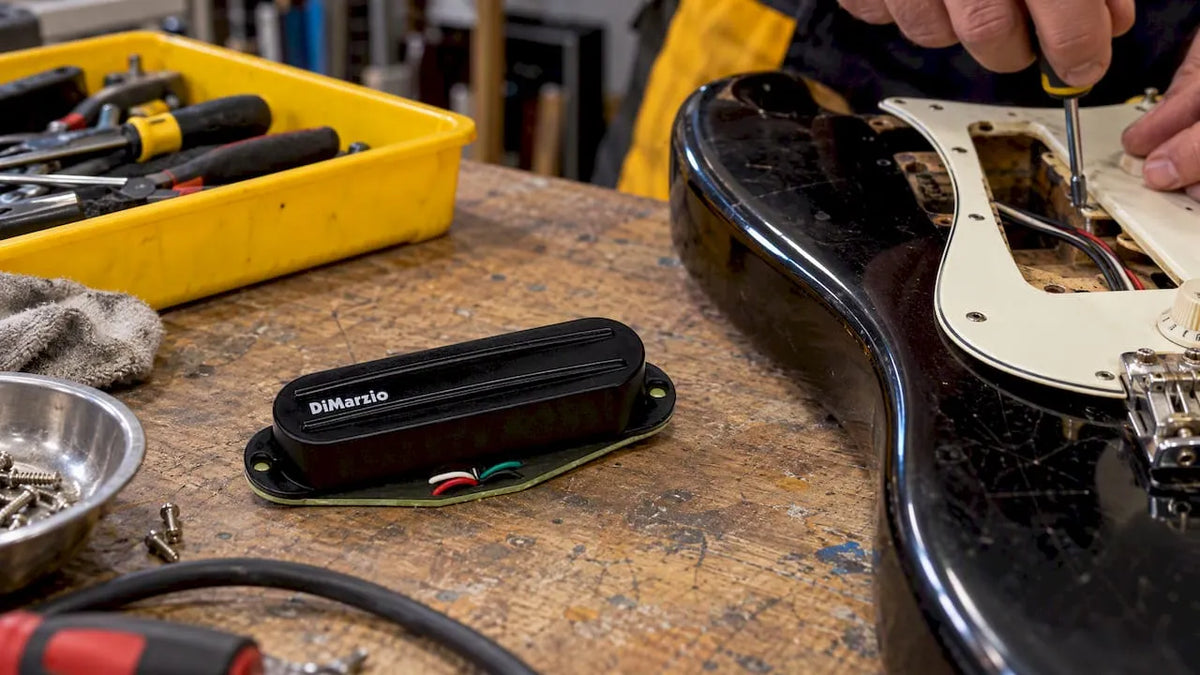
| Electronics repair | Rewiring, pickup swaps, jack replacement | Keeps your guitar sounding its best |
| Nut replacement | Replacing a worn or poorly cut nut | Improves tuning stability and tone |
| Deep clean and polish | Full body and fretboard conditioning | Protects the instrument long term |
The evidence from third-party review signals for boutique guitar retailers consistently points to aftercare as a key differentiator from larger chains. Musicians return to shops that look after them, and that loyalty is built through reliable repair work, honest assessments, and staff who remember your name and your instrument. Checking out a thorough guitar accessories guide can also help you build out your kit intelligently rather than buying impulsively.
Why a great guitar shop is more than just a retailer
Here is a view we hold firmly at MusicStreet, and it shapes everything we do: the best guitar shops are not just convenient places to exchange money for instruments. They are genuine musical communities, and the musicians who engage with them fully tend to grow faster, play better, and enjoy the process far more than those who shop purely on price through anonymous online channels.
Think about what actually happens in a great shop. A beginner comes in nervous about spending money on their first electric guitar. A member of staff spends forty minutes with them, plays three guitars so the customer can hear the difference, explains the setup that was done before it reached the floor, and sends them home with an instrument that is genuinely ready to play. Six months later, that customer returns more confident, asks about upgrading their amp, and starts a conversation about the next guitar they want to build towards. That is not a retail transaction. That is a relationship.
Online platforms can offer lower prices. They can offer broader nominal selection. What they cannot offer is the moment when an experienced guitarist says, “Actually, forget the spec sheet. Play this one. I think you will immediately understand what I mean.” That kind of exchange happens in a physical space between people who care, and it is worth travelling for.
We also believe that smart musicians treat their guitar shop as a continuous resource, not a one-time destination. Returning for setups, repairs, accessories, and simply to stay connected with what is new in the market builds a relationship that pays dividends over years. The guitar store experience at its best is one of the genuinely pleasurable constants in a musician’s life, and it is something no algorithm can replicate.
Explore the best of what a top guitar shop offers
If this guide has helped clarify what to look for in a guitar shop, the natural next step is finding somewhere that actually delivers on all of it. At MusicStreet, we stock a carefully curated range of electric, acoustic, and bass guitars alongside a full selection of accessories, all supported by professional setups, honest expert advice, and genuine post-sale care.
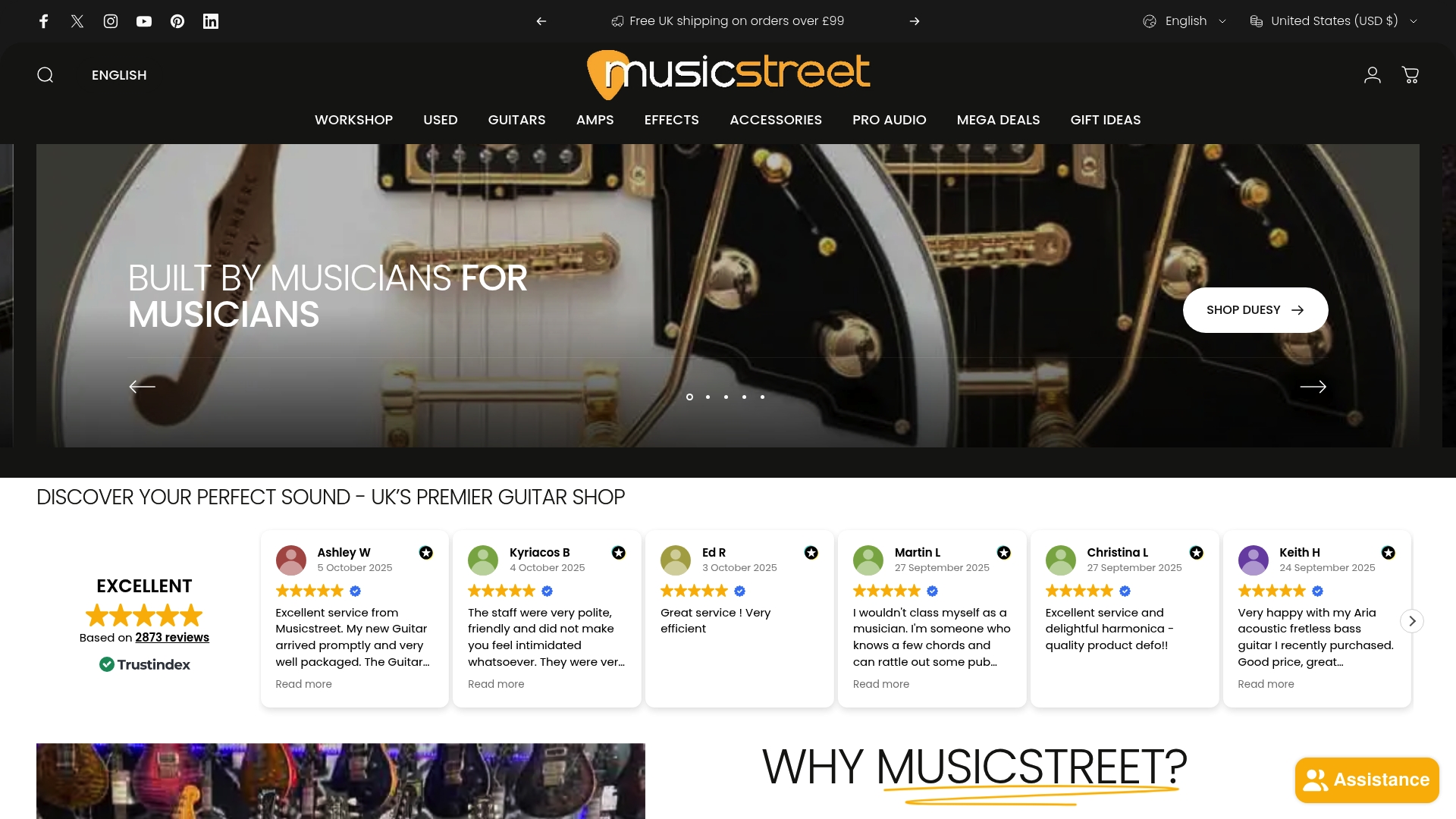
Whether you are searching for your first guitar, looking to upgrade to something that properly reflects your playing level, or exploring the pre-loved market for a boutique instrument at a sensible price, we want to help. Visit us in Huntingdon, Cambridgeshire, or browse our full range and explore our guitar shop online today. Our team is ready to have the kind of conversation that actually helps you find the right instrument.
Frequently asked questions
What is the best way to try a guitar in a shop?
Spend real time with the instrument rather than a quick strum: ask the staff to recommend two or three comparable models, play each with the same reference piece, and listen for feel and tone rather than price. Helpful staff and expert guidance can make a significant difference to how useful that comparison session becomes.
Do guitar shops accept trade-ins for used instruments?
Many reputable guitar shops offer trade-in deals that let you exchange a used instrument for credit towards your next purchase, often providing better value than selling privately. The terms vary, so it is worth asking about the assessment process and how the credit is applied before you commit.
What accessories should I buy with my first guitar?
Essentials include spare strings in your chosen gauge, a reliable tuner, and a padded case for safe transport. A knowledgeable staff member can help you select exactly what you need based on your specific instrument and playing environment.
Are staff recommendations at guitar shops reliable?
At reputable shops, staff recommendations are consistently among the most valuable aspects of the buying experience. Customer praise for helpful staff repeatedly highlights knowledgeable advice as a key reason musicians return to the same shop again and again.





Share:
Yamaha Pacifica 112V Review: The Best Beginner Guitar in 2026?
Set guitar intonation accurately for better sound