


For most UK players buying guitar amplifiers as usable kit rather than display pieces, a low- to mid-watt tube combo or a versatile modelling amp gives the best balance of tone, practicality, and long-term value. Musicstreet stocks both new and inspected pre-owned options across all amp categories, so you can try before you commit.
Three quick decision markers:
- Use case first: home practice needs 1–20W; small pub gigs or rehearsal rooms need 20–50W; PA-supported stages change the equation entirely (more on that below)
- Must-have feature: a DI/XLR output or headphone jack is non-negotiable if you record or play late at night
- Maintenance tolerance: if you want to pick it up and go without thinking about valves, a solid-state or modelling combo is the smarter call
Key takeaways
Choosing the right playable amp comes down to matching wattage and features to your actual use case, then verifying condition before you buy.
| Point | Details |
|---|---|
| Match wattage to venue | 1–20W for home practice, 20–50W for small gigs, 50W+ or DI for larger unaided stages. |
| Prioritise DI and headphone outputs | These two features cover recording, silent practice, and live PA routing in one amp. |
| Factor in total cost of ownership | Tube amps need periodic servicing; budget £80–£150 per service interval on top of purchase price. |
| Try before you buy | In-store testing at volume reveals tone, noise, and control feel that specs cannot show. |
| Musicstreet for inspected stock | Musicstreet’s pre-owned amps come with condition reports, warranty terms, and post-sale support. |
Table of Contents
- What should you check before buying a guitar amp?
- Which amp type suits your playing style?
- How does wattage map to real UK playing situations?
- Which features actually matter for practice, gigs, and recording?
- What should you expect at each UK price band?
- Where should you try and buy a playable amp in the UK?
- What makes a guitar amp genuinely collectible?
- Do collectible amps hold or grow in value?
- How do you verify authenticity in vintage amp collecting?
- Where should you buy collectible or pre-owned amps in the UK?
- What do restoration and repair costs look like for vintage amps?
- Legal and insurance considerations for high-value amps
- What the spec sheet never tells you
- Musicstreet has the amps, the expertise, and the aftercare
- Sources
- FAQ
What should you check before buying a guitar amp?
Getting this right before you walk into a shop (or click “buy”) saves a lot of regret. Work through these in order.
Prioritise your use case:
- Home practice: low wattage, headphone output, compact footprint
- Rehearsal or small gigs: enough headroom to cut through a drum kit, ideally 20–50W
- PA-supported stages: a reliable DI output matters more than raw wattage
- Recording: flexibility, low-noise DI, or a low-watt tube amp for natural saturation
Technical checkpoints (use this as your in-store or online checklist):
- Wattage and headroom for your loudest likely situation
- Speaker size: 10″ for punch and portability, 12″ for fuller harmonic depth
- Channel count: clean plus at least one gain channel covers most players
- Attenuator or power-soak option if you want tube tone at lower volumes
- Headphone or USB direct output for silent practice and home recording
- Effects loop for running time-based effects (reverb, delay) after the preamp
- Footswitch compatibility for live channel switching
For pre-owned amps specifically:
- Power it up and let it idle for five minutes before playing; listen for hum or crackle
- Check the speaker cone for tears, dents, or voice-coil rub
- Inspect the cabinet for structural damage, not just cosmetic wear
- Ask for any documented service history, especially for tube amps
- Confirm the seller’s return or warranty terms in writing
Pro Tip: Turn the volume up to gigging level during a test, then back down sharply. A healthy amp goes quiet cleanly. Persistent hiss, motorboating, or a slow fade suggests a capacitor or tube issue that will cost money to fix.
See the guitar amplifier features checklist for a deeper breakdown of what each feature actually does.
Which amp type suits your playing style?
| Type | Tone character | Maintenance | Weight | Ideal wattage | Typical UK price band |
|---|---|---|---|---|---|
| Tube/valve | Warm, dynamic, touch-sensitive | Higher (periodic tube replacement) | Heavier | 5–50W | £300–£500+ |
| Solid-state | Clean, consistent, reliable | Low | Lighter | 10–100W | £80–£600 |
| Modelling | Highly versatile, digital emulation | Very low | Light | 20–100W | £100–£500 |
| Hybrid | Valve preamp warmth, SS power | Low to moderate | Moderate | 20–80W | £200–£500 |
Who benefits most from each:
- Tube/valve: players who want natural breakup and touch response; studio and boutique-gig players prepared to service valves periodically
- Solid-state: gigging players who need reliability and lighter loads; great for solid-state reliability on the road
- Modelling: players who want many tones without buying several amps; ideal for home, small gigs, and recording; see what amp modelling actually means for a full explanation
- Hybrid: players who want valve character without full valve maintenance; a good middle ground for regular gigging
How does wattage map to real UK playing situations?
For home practice, 1–20W is sufficient; 20–50W suits small gigs and rehearsals; larger venues without PA support may need 50–100W. Those ranges assume solid-state. Valve amps run louder than their wattage suggests because of the way they clip, so a 15W tube combo often keeps pace with a 30W solid-state.
Use-case map:
- Home practice (1–20W): portability and quiet options matter most; headphone output is the priority
- Rehearsal/small pub gig (20–50W): enough headroom to stay clean at volume; a 12″ speaker helps with stage presence
- PA-supported gig: a 15–22W tube amp works as a stage monitor while the PA handles the room; a DI output splits your signal to front-of-house without extra gear
- Studio recording: a 10–15W valve amp delivers power-amp saturation at manageable volumes; modelling amps give flexibility for direct recording without mic placement
Speaker size shapes the result too. 10″ speakers are punchy with strong midrange; 12″ speakers deliver fuller harmonic complexity — worth knowing when you are choosing between a compact combo and a larger cabinet.
Which features actually matter for practice, gigs, and recording?
Three features will affect almost every UK player’s daily use: a DI/XLR output, a headphone or USB direct output, and an attenuator or power control.
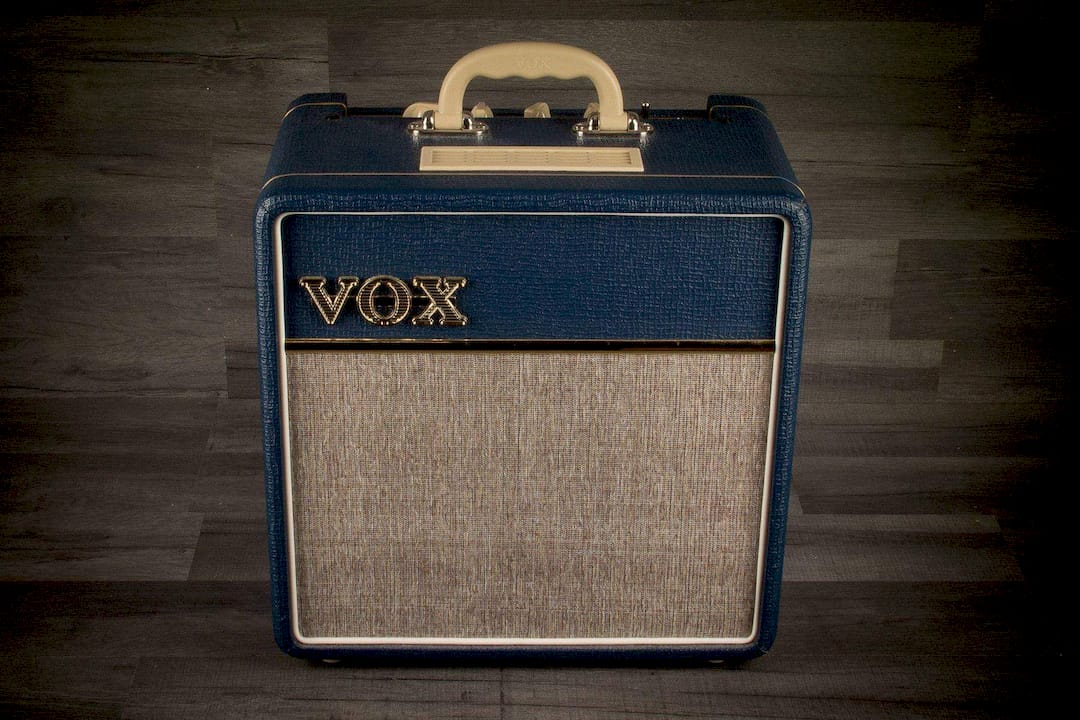
Practice amps typically include headphone outputs and basic effects. Performance amps prioritise XLR/DI outputs, multiple channels and effects loops. The DI output simplifies front-of-house routing at gigs and lets you record direct without a microphone. The headphone output means you can practise at midnight without complaints. An attenuator lets a tube amp run at full power-stage saturation while the speaker volume stays low.
Secondary features worth checking:
- Built-in reverb and delay (saves a pedal board slot)
- Footswitch input for channel switching on stage
- MIDI control for modelling amps with preset recall
- Onboard tuner (surprisingly useful mid-gig)
- Amp modelling presets if you want multiple amp voices in one unit
Pro Tip: When testing DI output in a shop, plug a set of headphones or a small monitor into the DI/XLR and play through it. If the tone is thin, harsh, or unusable without a cab-sim switch, that amp will cause problems at every gig where you go direct.
What should you expect at each UK price band?
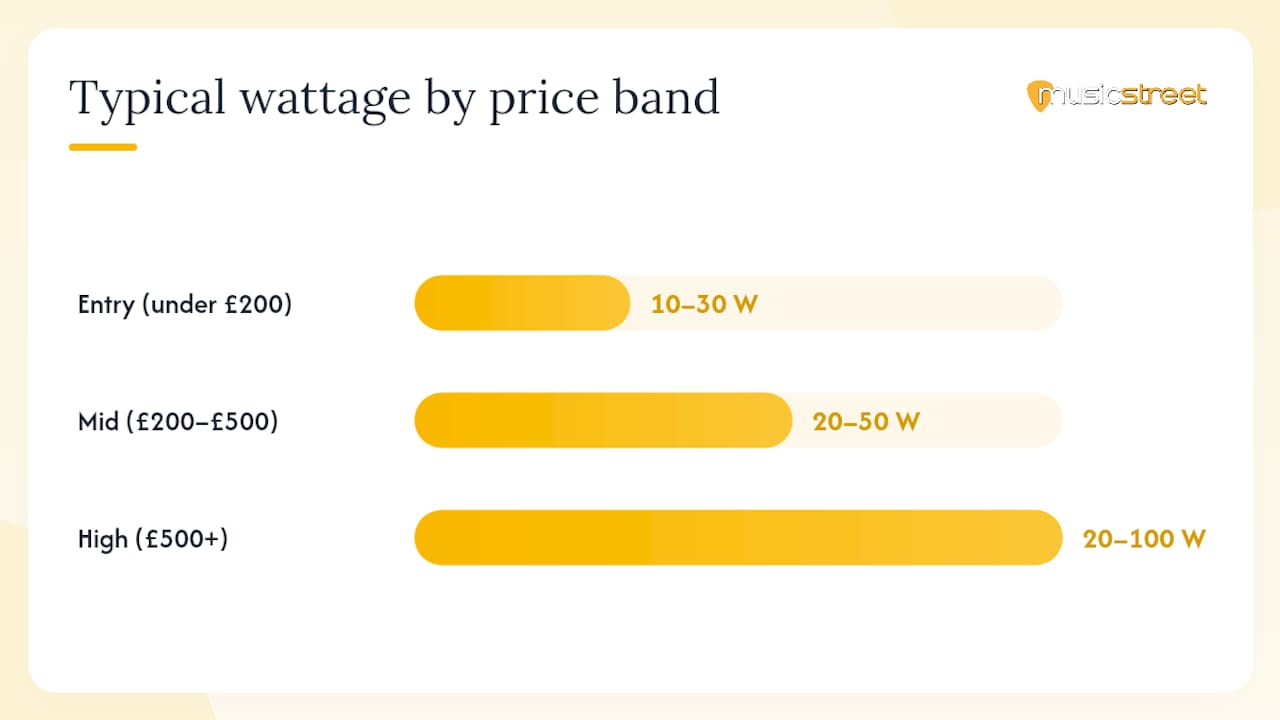
The best playable value for most buyers sits in the mid-range band of £200–£500, where you get multiple channels, decent effects, and reliable build quality without paying for boutique components.
| Band | Typical wattage | Common features | Service notes |
|---|---|---|---|
| Entry (under £200) | 10–30W | Single or two channels, basic reverb, headphone out | Low maintenance; solid-state or entry modelling |
| Mid (£200–£500) | 20–50W | Two channels, effects loop, DI out, footswitch | Modelling or hybrid; occasional valve check if tube |
| High (£500+) | 20–100W | Full feature set, quality speakers, attenuator, MIDI | Tube amps need periodic servicing; factor in cost |
One thing players underestimate: tube amps carry a higher total cost of ownership. Valve replacement, a professional bias check, and a decent protective cover add up. Budget an extra £50–£150 per service interval if you go the tube route.
Where should you try and buy a playable amp in the UK?
Try in-store wherever possible. Playing through an amp at volume, in a real acoustic space, tells you things no spec sheet can. If you are buying pre-owned online, require a clear condition report, photos of the speaker cone and chassis, and written return terms before you pay.
In-store testing checklist:
- Play at the volume you actually use, not bedroom level
- Switch every channel and test every control for scratchy pots
- Listen for hum at idle with the guitar unplugged
- Test the DI output if you plan to use it live
For pre-owned amps:
- Ask when the tubes were last replaced and whether a service record exists
- Check the speaker for physical damage and the cabinet joints for separation
- A professional inspection at Musicstreet covers these points as standard
Aftercare: routine valve replacement on a regularly gigged tube amp typically runs every 12–18 months depending on use. A full service including capacitor check costs more; ask a technician for a written estimate before authorising work.
Pro Tip: Ask the technician to quote separately for tubes, capacitors, and labour. A bundled “full service” quote can obscure where the money is actually going, and sometimes only the tubes need replacing.
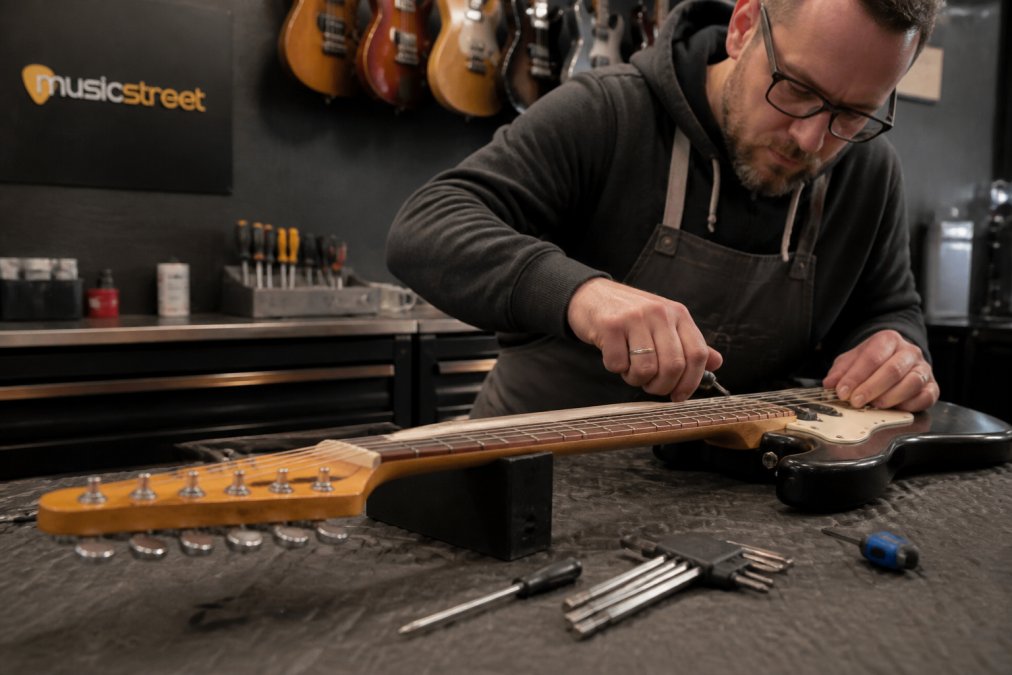
A CruzTools Groovetech Guitar Player Tech Kit covers the basic adjustments and checks you can do yourself between professional services.
What makes a guitar amp genuinely collectible?
The term “guitar amplifiers for collectors” covers two distinct audiences. Most readers here want playable kit. But some amps carry genuine collector value, and understanding the criteria helps you spot a well-priced pre-owned amp versus one that is overpriced on the basis of age alone.
Rarity, provenance, and historical significance are the three pillars. An amp is rare when production numbers were limited, a model was discontinued quickly, or it was hand-built in small quantities. Provenance means documented ownership history: original receipts, repair records, or a credible chain of custody from a known player or studio. Historical significance ties an amp to a specific sonic era or recording, such as a model used on a landmark album.
Condition matters differently for collectors than for players. A collector may accept cosmetic wear but will reject any modification to original circuitry. A player may prefer a recapped, serviced amp that sounds great over a “correct” but unreliable original.
Do collectible amps hold or grow in value?
Certain vintage amp models have appreciated over decades, but the market is narrow and illiquid compared to, say, vintage guitars. Values depend heavily on condition, originality, and demand from a small pool of specialist buyers. An amp that commands a premium today may sit unsold for months if the market softens.
For most UK players, treating an amp as an investment is a secondary consideration at best. A well-maintained, original-condition amp from a respected manufacturer will typically hold its value better than a modified or heavily worn example. But the primary reason to buy a playable amp should always be that it sounds good and suits your needs.
How do you verify authenticity in vintage amp collecting?
Fakes and misrepresented amps exist, though they are less common than in the vintage guitar market. The main risks are incorrect date stamps, replaced transformers presented as original, and cosmetic restoration that obscures previous damage.
Cross-reference the serial number against manufacturer records where these are publicly available. Check that transformer codes, potentiometer date codes, and speaker codes are internally consistent with the claimed production year. Original solder joints have a specific aged appearance; fresh solder on a supposedly untouched amp is a flag. For high-value purchases, commission an independent inspection from a qualified amp technician before completing the transaction.
Where should you buy collectible or pre-owned amps in the UK?
Reputable dealers who provide condition reports, inspection records, and clear return policies are the safest route. For playable pre-owned amps, Musicstreet offers professionally inspected stock with honest condition reporting and warranty-backed terms. Private sales through auction platforms carry more risk and fewer protections; factor that into the price you are willing to pay.
For vintage and collectible pieces specifically, specialist auction houses and dealers with documented provenance records offer more accountability than general second-hand marketplaces. The vintage audio and collectibles community can also be a useful reference point for understanding what original condition looks like before you inspect a specific piece.
What do restoration and repair costs look like for vintage amps?
A basic service on a vintage tube amp, covering tube replacement and a safety check, typically runs £80–£150 at a UK technician. A full restoration including capacitor replacement, transformer testing, and cabinet work can reach £300–£600 or more depending on the amp’s complexity and parts availability. Original-specification components for rare models cost significantly more than modern equivalents.
Factor these costs into any pre-owned purchase. An amp priced attractively may require immediate work that erases the apparent saving. Always ask for a written estimate before buying a vintage piece that has not been recently serviced.
Legal and insurance considerations for high-value amps
Standard home contents insurance rarely covers musical instruments at full replacement value, and a high-value amp left in a vehicle overnight is typically excluded from most policies. Specialist musical instrument insurance, available from providers such as Allianz Musical Insurance and Musicguard in the UK, covers instruments and amplifiers for performance, transit, and storage at agreed value.
For amps worth over £1,000, document the purchase with a receipt, photograph the serial number and condition, and keep copies off-site. If you are buying at auction, confirm that title passes cleanly to you and that there are no outstanding finance agreements on the item. This is general guidance; confirm current policy terms with your insurer and, for high-value transactions, consult a solicitor.
What the spec sheet never tells you
The most useful thing about an amp is rarely in the description. Wattage figures, channel counts, and effects lists are easy to compare. What they cannot tell you is how the amp responds when you dig in hard, whether the clean channel stays clean at the volume you actually play, or how the DI sounds through a real PA.
Players who buy on specification alone often end up with an amp that looks right on paper but feels wrong in the room. The attenuator that seemed like a luxury becomes the feature you use every single session. The effects loop you almost ignored turns out to be the reason your reverb sounds right. These things only reveal themselves when you play the amp, at volume, through your own guitar.
That is why trying before buying is not just good advice. It is the only reliable method.
Musicstreet has the amps, the expertise, and the aftercare
Musicstreet offers in-store tryouts at its Huntingdon, Cambridgeshire shop, professionally inspected pre-owned stock with honest condition reports, and setup and repair services to keep your amp gig-ready. Every pre-owned item comes with warranty-backed terms and clear return conditions, so you know exactly what you are getting.

Browse inspected pre-owned listings including the Yamaha FGC-TA TransAcoustic and Yamaha FGX5 alongside amp accessories and maintenance tools. Free UK delivery applies on qualifying orders, and the team is available for post-sale support and technical advice. Visit the store or browse online to find your next amp with confidence.
Sources
FAQ
What wattage amp do I need for gigging in UK pubs?
Most UK pub gigs use PA support, so a 15–22W tube amp or a 30–50W solid-state combo is sufficient as a stage monitor. A reliable DI output lets you split directly to the front-of-house desk.
Are tube amps worth the extra maintenance for a gigging player?
Tube amps deliver touch-sensitive tone that many players prefer, but they require periodic valve replacement and careful transport. If you gig regularly and want low hassle, a solid-state or modelling amp is a practical alternative.
What is the difference between a practice amp and a performance amp?
Practice amps prioritise headphone outputs and compact size; performance amps prioritise XLR/DI outputs, multiple channels, and effects loops for live integration. Some mid-range combos cover both roles adequately.
How do I check a pre-owned amp before buying?
Power it up, let it idle for five minutes, and listen for hum or crackle. Test every channel and control, inspect the speaker cone for damage, and ask for any service history. A professional inspection at Musicstreet covers all of these as standard.
What insurance do I need for a high-value amplifier in the UK?
Standard home contents insurance often excludes musical instruments at full replacement value. Specialist providers such as Allianz Musical Insurance and Musicguard offer cover for performance, transit, and storage at agreed value.






Share:
Best guitar cases 2025: what UK players need
The essential guitar equipment list for beginners