
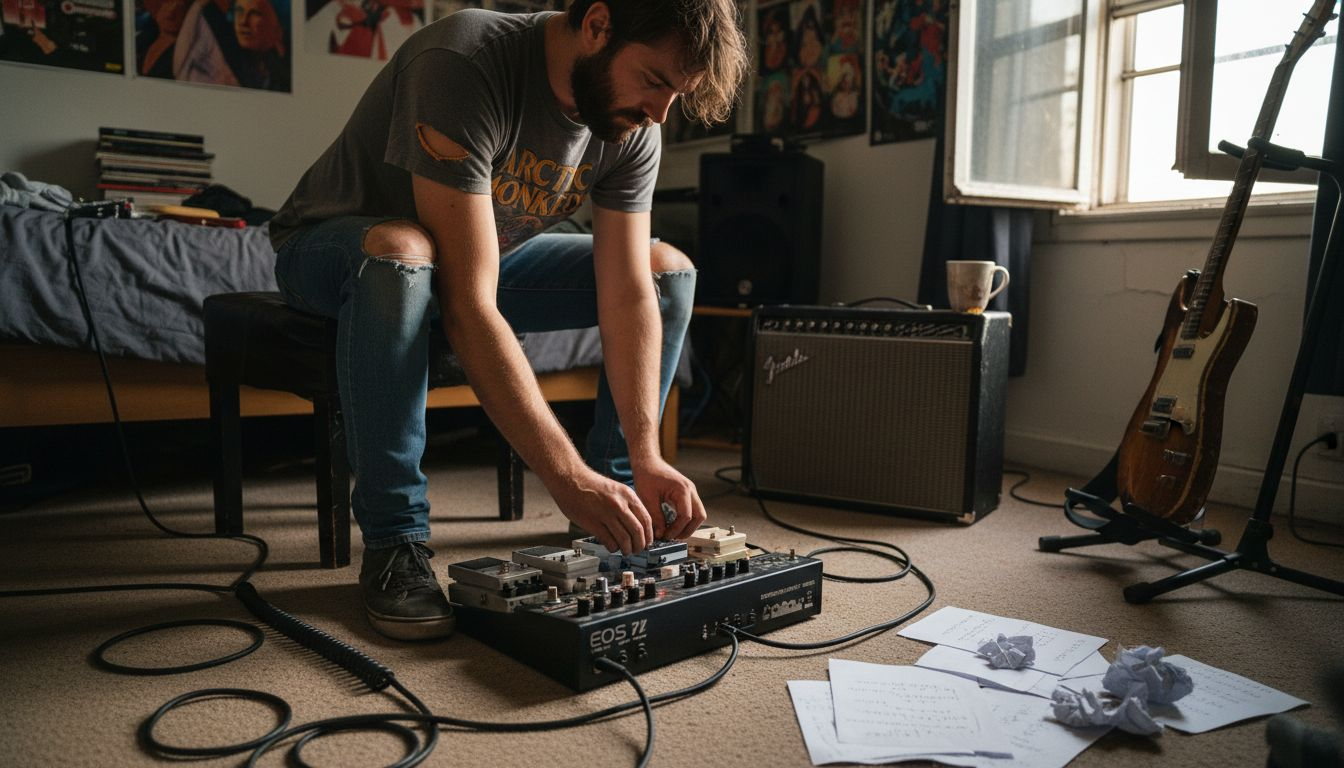
Finding your signature guitar sound can feel overwhelming when faced with so many pedal options. For British musicians, guitar effects pedals open up a world of creative tone shaping, but navigating the differences between distortion, modulation and time-based effects can be confusing. This guide breaks down the core categories and practical uses of effects pedals, helping you discover which combinations best suit your music style and playing needs.
Table of Contents
- What Are Guitar Effects Pedals?
- Core Categories Of Guitar Effects
- How Modulation, Gain, And Time Effects Differ
- Choosing Effects For Your Playing Style
- Avoiding Common Mistakes With Pedals
Key Takeaways
| Point | Details |
|---|---|
| Understanding Pedals | Guitar effects pedals offer musicians the ability to shape and manipulate the sound of electric guitars across various genres. |
| Core Categories | The primary categories of effects include Distortion, Modulation, Time-Based, Filter, and Dynamic effects, each serving unique purposes in sound creation. |
| Signal Chain Importance | Proper arrangement of pedals in a signal chain is crucial to achieving optimal sound quality and preventing unwanted noise. |
| Tailoring to Style | Choosing effects should align with your musical genre and personal style, allowing for a distinctive auditory expression. |
What Are Guitar Effects Pedals?
Guitar effects pedals are compact electronic devices designed to transform and enhance the sound of electric guitars. Electronic audio processing units allow musicians to manipulate their instrument’s tone, creating unique sonic textures that define musical styles across genres.
These ingenious devices work by intercepting the guitar’s electrical signal and applying various modifications before it reaches the amplifier. Effects pedals provide musicians with extraordinary sound-shaping capabilities, ranging from subtle tone adjustments to dramatic sonic transformations. Typically housed in sturdy metal enclosures that can withstand stage use, these pedals connect directly to a guitar’s output and create incredible sonic possibilities.
Guitar effects pedals generally fall into several key categories:
- Distortion/Overdrive Pedals: Add grit and aggression to guitar sounds
- Modulation Pedals: Create chorus, phaser, and vibrato effects
- Time-Based Pedals: Produce delay and reverb sounds
- Filter Pedals: Modify frequency ranges and create unique tonal characteristics
- Dynamic Pedals: Control volume, sustain, and signal compression
Signal processing through these devices allows guitarists to craft personalised sounds that distinguish their musical style. Digital and analog pedals offer different sonic characteristics, giving musicians extensive tonal exploration options.
Pro tip: Always connect your effects pedals in a logical signal chain, typically starting with dynamics pedals and ending with time-based effects for optimal sound quality.
Core Categories Of Guitar Effects
Guitar effects can be classified into several distinct categories, each offering unique sound manipulation capabilities. Guitar effects units fundamentally transform audio signals by applying specific processing techniques that dramatically alter an instrument’s sonic characteristics.
The primary categories of guitar effects encompass a wide range of sonic possibilities, enabling musicians to craft intricate and personalised sounds. Distortion effects create aggressive, overdriven tones, while modulation effects introduce complex textural changes to the guitar’s signal.
Here are the core categories of guitar effects:
-
Distortion/Overdrive Effects:
- Add grit and aggression to guitar sounds
- Create saturated, compressed tonal qualities
- Range from mild crunch to extreme fuzz
-
Dynamic Effects:
- Control volume and signal dynamics
- Include compressors and volume pedals
- Help balance and smooth out playing techniques
-
Modulation Effects:
- Create pitch and time-based variations
- Include chorus, phaser, and flanger pedals
- Generate swirling, oscillating sound textures
-
Time-Based Effects:
- Add spatial and temporal dimensions to sound
- Encompass delay and reverb pedals
- Create echoes and simulate acoustic environments
-
Filter Effects:
- Modify frequency ranges
- Include wah-wah and equalizer pedals
- Shape tone by cutting or boosting specific frequencies
Advanced guitar effect pedals offer musicians unprecedented sound-shaping capabilities, transforming traditional guitar tones into complex, layered sonic experiences. Each category provides distinct sonic characteristics that can be combined to create truly unique musical expressions.
To help you identify which effects best suit your musical needs, here is a quick reference comparing popular pedal types and their key uses:
| Effect Type | Typical Uses | Common Genres |
|---|---|---|
| Overdrive/Distortion | Enhancing sustain and tonal grit | Blues, Rock, Metal |
| Modulation | Adding movement and texture | Indie, Pop, Fusion |
| Time-Based | Creating ambience and spatial depth | Ambient, Jazz, Rock |
| Filter | Shaping frequency and tonal colour | Funk, Rock, Fusion |
| Dynamic | Balancing volume and articulation | Jazz, Pop, Blues |
Pro tip: Experiment with combining effects from different categories to discover your unique sound, but always start with subtle settings and gradually increase complexity.
How Modulation, Gain, And Time Effects Differ
Guitar effects processing techniques reveal three distinct sonic manipulation approaches that dramatically transform an instrument’s sound. Each effect category operates through unique mechanisms, creating entirely different auditory experiences for musicians.
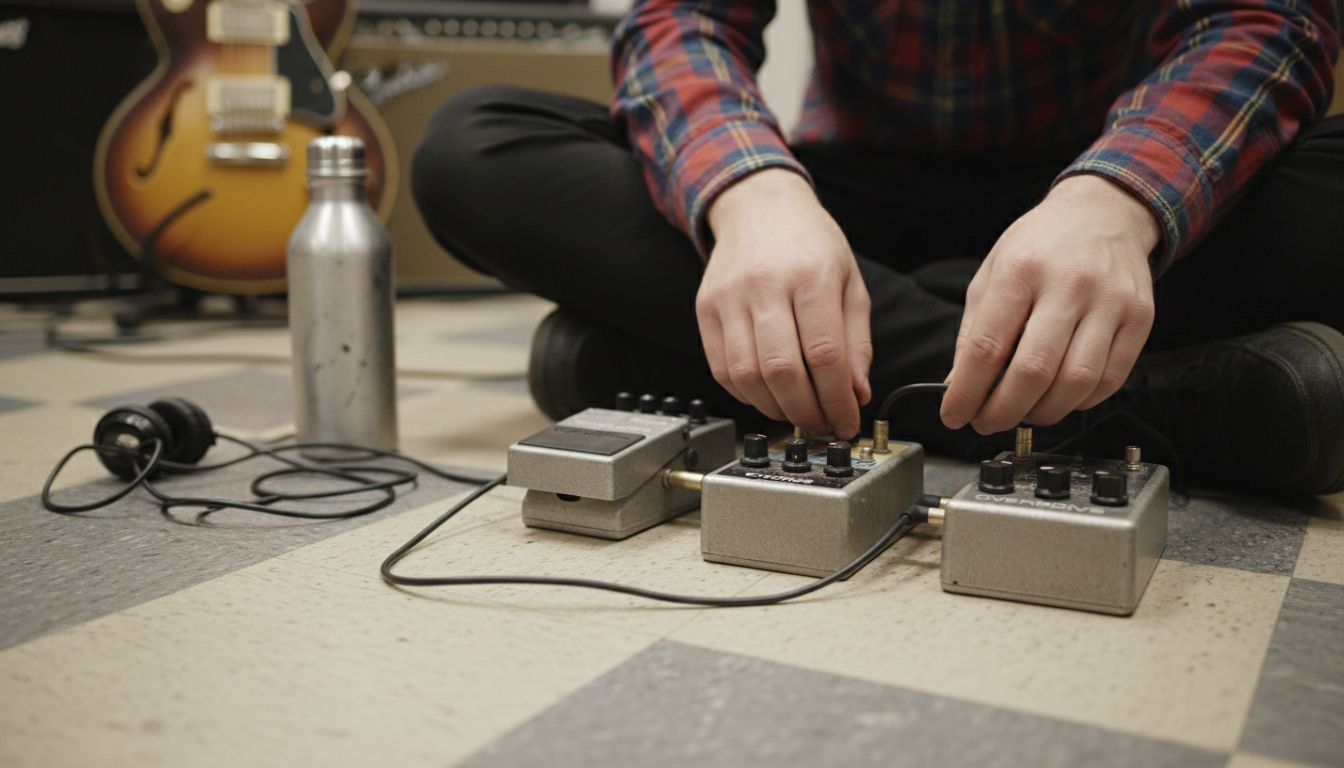
The fundamental differences between modulation, gain, and time effects lie in how they interact with the original guitar signal. Gain effects fundamentally increase signal amplitude, adding aggression and harmonic complexity, while modulation effects introduce dynamic variations in pitch and texture.
Here’s a detailed breakdown of each effect category:
Gain Effects:
- Increase signal strength and distortion
- Create saturated, compressed tonal qualities
- Range from subtle overdrive to extreme fuzz
- Primarily alter signal amplitude and harmonic content
Modulation Effects:
- Generate pitch and phase variations
- Include chorus, phaser, and vibrato pedals
- Create swirling, oscillating sound textures
- Introduce movement and complexity to the original signal
Time-Based Effects:
- Manipulate signal timing and spatial characteristics
- Encompass delay and reverb technologies
- Create echoes and simulate acoustic environments
- Add depth and dimensionality to sound
Delay-line modulation techniques demonstrate how these different effect types fundamentally reshape audio signals. Gain effects increase signal strength, modulation effects create movement, and time effects expand sonic space.
Musicians can combine these effect types to craft complex, personalised tones that transcend traditional sound boundaries. Understanding their unique characteristics enables more nuanced and creative sound design.
Pro tip: Start experimenting with effects by using minimal settings and gradually increasing complexity to understand how each effect type transforms your guitar’s fundamental sound.
Choosing Effects For Your Playing Style
Guitar effects selection strategies depend fundamentally on understanding your musical genre and personal sonic aspirations. Every guitarist’s journey involves discovering which effects complement their unique playing style and musical expression.
The relationship between musical genre and effect choice is intricate and deeply personal. Blues guitarists typically seek warm, expressive tones with subtle overdrive, while metal musicians often prefer aggressive, high-gain distortion that cuts through dense sonic landscapes.
Here’s a breakdown of effects by musical style:
Blues and Classic Rock:
- Overdrive pedals for warm, saturated tones
- Subtle delay for added depth
- Mild compression to even out dynamics
- Vintage-style reverb for ambient qualities
Metal and Hard Rock:
- High-gain distortion pedals
- Noise gate to control unwanted feedback
- Pitch shifters for dramatic sonic variations
- Modulation effects for complex textures
Jazz and Fusion:
- Clean, transparent overdrive
- Subtle chorus and reverb
- Compressor for precise note articulation
- Delay for creating atmospheric sounds
Indie and Alternative:
- Varied modulation effects
- Experimental time-based delays
- Soft clipping overdrive
- Innovative pitch-shifting technologies
Selecting guitar effects requires understanding your musical context and personal tonal preferences. Experimentation is key to developing a signature sound that truly represents your artistic voice.
Pro tip: Start with a single, versatile pedal and gradually build your effects collection, focusing on quality over quantity.
Avoiding Common Mistakes With Pedals
Guitar effects pedal configuration demands careful consideration to prevent common pitfalls that can compromise your sound quality. Understanding these potential errors helps musicians create more refined and professional sonic landscapes.
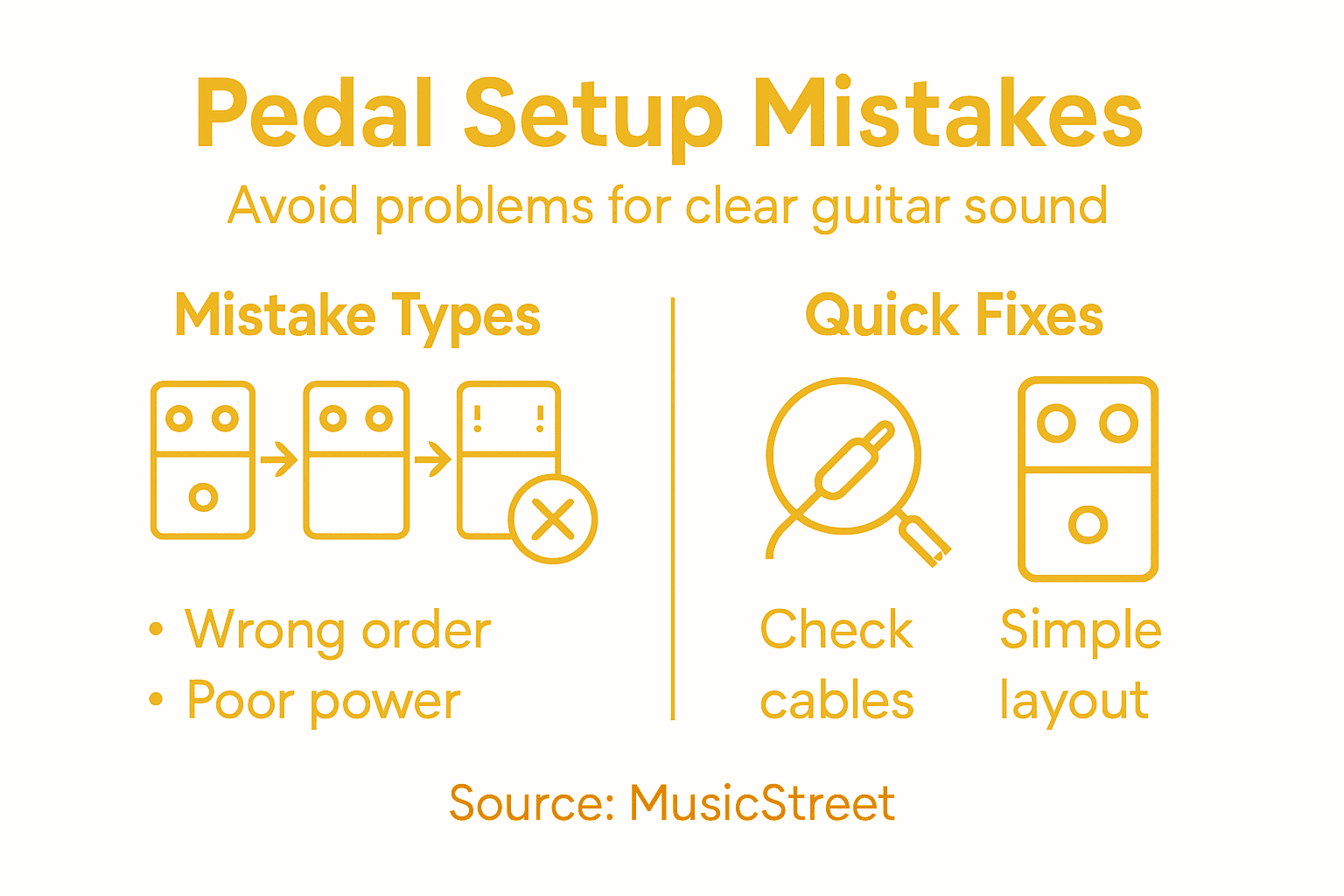
The journey of crafting an effective pedal setup involves strategic decision-making and technical awareness. Signal chain management is crucial, as improper pedal placement can introduce unwanted noise and muddy your overall tone, potentially undermining your musical expression.
Common mistakes guitarists frequently encounter include:
Signal Chain Errors:
- Placing time-based effects before distortion pedals
- Neglecting proper signal routing order
- Introducing excessive noise through incorrect connections
- Failing to use buffer pedals in complex setups
Technical Misunderstandings:
- Overloading pedalboards with unnecessary effects
- Misunderstanding individual pedal parameters
- Relying on effects to compensate for poor technique
- Ignoring cable and power supply maintenance
Signal Management Challenges:
- Creating excessively cluttered sound profiles
- Not understanding each effect’s specific role
- Failing to balance effect intensity
- Neglecting true bypass and buffered bypass considerations
Pedal configuration techniques require patience and systematic learning. Guitarists should approach their effects setup as a careful art form, understanding each component’s unique contribution to their overall sound.
Maintaining a balanced, thoughtful approach to effects pedals ensures cleaner, more intentional musical expression. Experiment carefully, listen critically, and build your setup incrementally.
For clarity when building your pedalboard, here is a summary of common missteps and their potential impact on sound quality:
| Mistake Category | Example Problem | Likely Outcome |
|---|---|---|
| Poor Signal Chain | Delay before distortion | Muddy, unbalanced effects |
| Excessive Effects | Overcrowded pedalboard | Loss of clarity and definition |
| Neglected Maintenance | Faulty cables or power supply | Drop in sound reliability |
| Misunderstood Controls | Incorrect pedal settings | Unintended or harsh sounds |
Pro tip: Start with a minimal pedal setup and progressively add effects, ensuring each new addition genuinely enhances rather than complicates your sound.
Elevate Your Guitar Sound with Expert Effects and Gear
Understanding the nuances of guitar effects pedals such as distortion, modulation, and time-based effects is crucial for crafting your unique sonic identity. Many guitarists face the challenge of selecting the right pedals while avoiding common mistakes like poor signal chain configuration or overpowering effects. Whether you seek warm overdrive tones for blues or complex textures for indie and alternative styles, finding quality equipment paired with knowledgeable guidance is essential.
At MusicStreet, we specialise in providing a carefully curated range of electric, acoustic, and bass guitars alongside premium effects pedals and accessories to help you explore and refine your sound. Our personalised service, expert instrument setup, and post-sale support ensure you get the most from your gear. Experience confidence in your purchase knowing each instrument and pedal has undergone professional inspection.

Discover how the right effects can transform your playing style by browsing our collection today. Visit MusicStreet for competitive pricing and free UK delivery options. Start building your ideal pedalboard and guitar setup now with trusted support from our Huntingdon store team. Explore our featured products and step closer to achieving the distinctive sound you have been searching for.
Frequently Asked Questions
What are the main categories of guitar effects pedals?
Guitar effects pedals can be classified into several core categories: distortion/overdrive effects, dynamic effects, modulation effects, time-based effects, and filter effects. Each category offers unique sound manipulation capabilities that enhance your musical expression.
How do modulation, gain, and time effects differ from one another?
Gain effects increase the signal amplitude, adding distortion and harmonic complexity. Modulation effects create dynamic variations in pitch and texture, producing swirling sounds. Time-based effects manipulate timing and spatial characteristics, adding echoes and simulating acoustic environments.
How can I choose the right effects pedals for my playing style?
Choosing the right effects pedals hinges on your musical genre and personal tonal preferences. For example, blues guitarists typically favour warm overdrive, while metal musicians often prefer high-gain distortion. Experimentation will help you identify what works best for your unique sound.
What common mistakes should I avoid when using guitar effects pedals?
Common mistakes include improper signal chain management, overloading your pedalboard with unnecessary effects, and neglecting maintenance of cables and power supplies. Understanding each pedal’s role and maintaining a balanced setup will enhance your sound quality.


Share:
Why Custom Shop Guitars Transform Player Experience
Complete Guide to Electric Guitars: Everything You Need to Know