

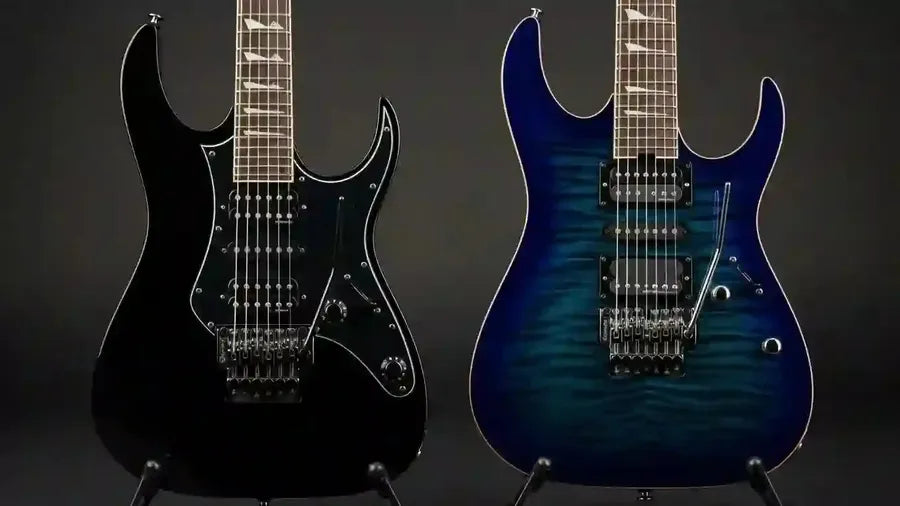
Ibanez RG vs. S Series: Which iconic shred machine is right for you?
By Tony Rawson — Founder, MusicStreet | Authorised Ibanez UK dealer
By Tony Rawson, MusicStreet
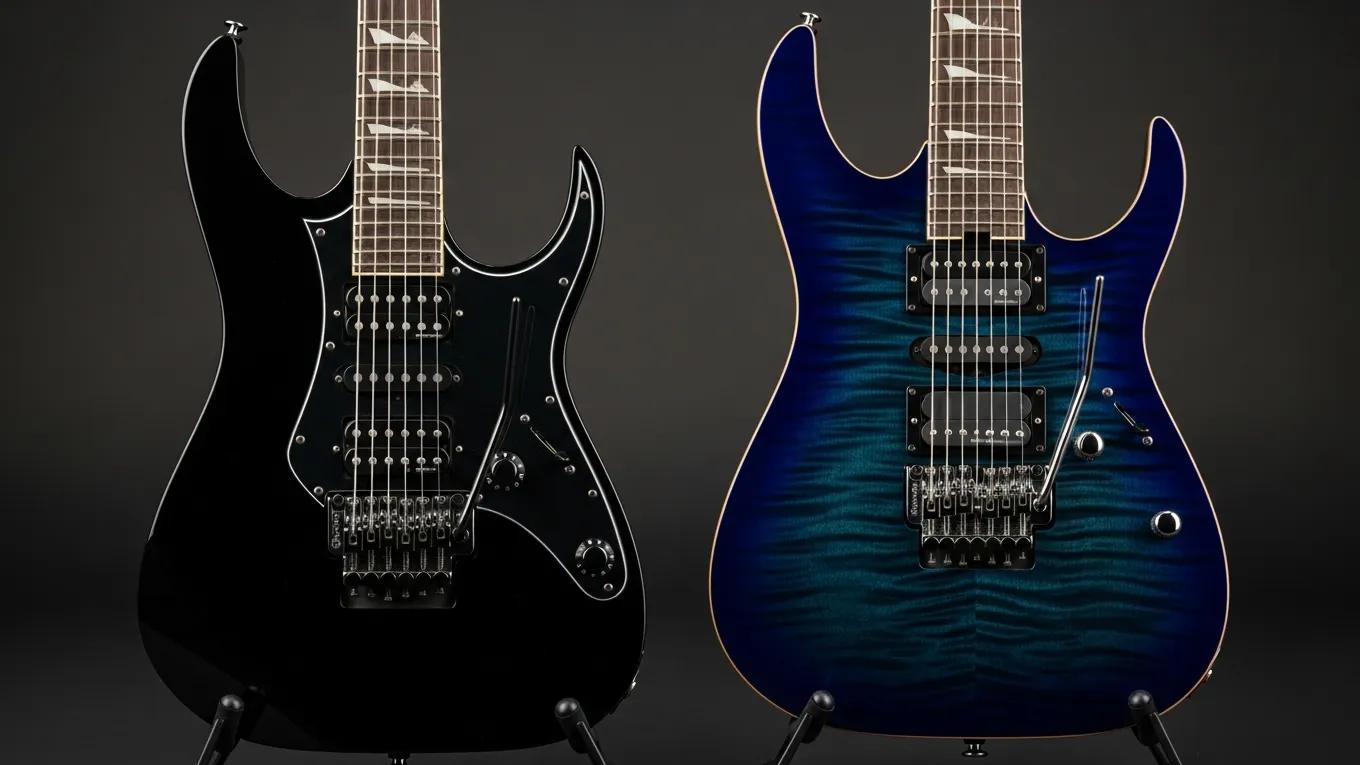
The Ibanez RG and S Series are two of the most recognisable electric guitars out there — favourites for shredders, gigging players and studio pros alike. Each line brings distinct strengths: the RG leans into raw, aggressive performance, while the S trades mass for comfort and tonal breadth. Below we’ll run through their key traits, how they feel under your hands, tonal differences and which types of players each best suits. Whether you’re buying your first proper electric or upgrading to a pro-level instrument, this guide will help you pick the right tool for the job — and show how MusicStreet can help you try and set it up perfectly.
Key Features
Both series show Ibanez’s attention to playability and build quality, but they approach that goal differently. The RG is built around high-output pickups and a fuller-bodied shape, which gives it an aggressive, cutting voice that suits metal and hard rock. The S Series prioritises an ultra-thin, ergonomic body for comfort during long sets. Both usually come with the Wizard-style neck profile — slim and fast — which makes either platform excellent for fast runs, legato work and technical solos.
To appreciate why these specs matter, it helps to understand how design choices interact with playing technique and tonal behaviour.
Electric guitar performance techniques — a quick overview
This summary highlights common techniques and tools that shape a guitarist’s sound — everything from power chords and wah-wah to advanced fingertapping. By examining how these techniques are described in the literature, we can see which design choices (pickups, neck shape, bridge type) support particular playing approaches.
Electric guitar performance techniques: Meaning and identity in written discourse, 2015
Differences in Playability
Playability is where the two series really diverge. RG models tend to feel more substantial: a fuller body and a slightly beefier construction give a stable platform for aggressive picking and heavy-handed techniques. That solidity helps when you’re attacking the strings or using a floating tremolo. The S Series, by contrast, is all about ease of use — its sculpted, lightweight body sits comfortably against you and makes long practice sessions or marathon gigs far less tiring.
Ergonomics matters not just for comfort but also for staying healthy as a player — good instrument design reduces strain and the risk of repetitive‑use injuries over time.
Ergonomic design in guitar making
Modern instrument design increasingly uses new manufacturing methods to tailor shape and balance to the player. Well-considered contours and lighter construction can improve comfort and reduce injury risk, while still delivering strong acoustic performance.
Ergonomic Acoustic Guitar Design Using Additive Manufacturing, PF Mayuet, 2023
Sound Quality
Tone is a major deciding factor. The RG lineup is voiced for aggression and clarity at high gain — high-output humbuckers, tight low end and biting mids that cut through a dense mix. The S Series tends to be more even across the frequency spectrum, offering a wider palette that handles cleans, crunch and lead tones well. Both can be dialled to suit many styles, but your preferred genre and amp settings will usually tip the balance.
Suitability for Various Playing Styles
If your playing centres on modern metal, shredding and fast lead work, the RG often has the edge thanks to its focused attack and neck stability. If you need an all‑rounder that’s comfortable for long sessions, or you play styles ranging from blues and jazz to rock, the S Series brings more tonal flexibility without wearing you out on stage.
The RG Series: The Benchmark
The RG name has set expectations for fast necks and aggressive tone for decades. Its combination of design and hardware has influenced many modern production guitars.
Body & Construction


RGs typically use basswood or mahogany bodies that contribute to a resonant, punchy response. The aesthetic is sharp and aggressive, with contours and finishes that underline the model’s performance intent. Build quality across the range is solid, making RGs reliable for both stage and studio work.
The RG Sound & Hardware
RGs are often fitted with powerful humbuckers that deliver tight, assertive tone and excellent note definition at high gain. Locking tremolo systems and robust hardware keep tuning stable even with heavy whammy use, which is why many lead players prefer the RG for expressive, high-energy playing.
The S Series: The Sleek Alternative
The S Series offers a contrasting philosophy: less mass, more comfort and tonal versatility. It’s the choice for players who want speed without the bulk.
Body & Construction
S models use thin, contoured bodies that sit close to the player and reduce fatigue. Lightweight tonewoods and smooth heel contours make upper-fret access effortless, and the overall balance is tuned for comfort without compromising stability.
The S Sound & Hardware
The S Series usually ships with pickups and hardware chosen for flexibility — clear cleans, defined crunch and articulate leads are all in the S’s wheelhouse. Its tremolo systems are user-friendly and responsive, encouraging expressive playing while staying straightforward to maintain.
Head-to-Head Comparison
| Feature | RG Series (Standard) | RG Series (Prestige) | S Series (Premium) | S Series (Prestige) |
|---|---|---|---|---|
| Body Wood | Basswood | Alder | Ash / Mahogany | Mahogany / Maple |
| Body Thickness | Full (standard) | Full (standard) | Ultra-thin S profile | Ultra-thin S profile |
| Approx. Weight | 3.4–3.6 kg | 3.3–3.5 kg | 2.8–3.1 kg | 2.8–3.0 kg |
| Neck Profile | Wizard III | Super Wizard HP | Wizard III / Nitro Wizard | Super Wizard HP |
| Fingerboard Radius | 430mm (16.9") | 430mm (16.9") | 430mm (16.9") | 430mm (16.9") |
| Bridge | Edge Zero II / Fixed | Lo-Pro Edge | Edge Zero II / Fixed | Lo-Pro Edge |
| Pickups | Quantum (upgrade candidate) | DiMarzio Fusion Edge | DiMarzio / Bare Knuckle | DiMarzio |
| Made In | Indonesia / China | Japan | Indonesia | Japan |
| Price Range | £350–£500 | £1,500–£2,000 | £600–£1,100 | £1,500–£1,800 |
Weight & Comfort
Weight and balance influence how a guitar feels after an hour on a strap. The RG’s fuller body gives a reassuring heft that some players prefer, while the S’s lighter profile and contours make it noticeably kinder on the shoulders and back — especially during long rehearsals or festival sets.
Tone & Resonance
The RG favours focused, aggressive tones tailored for high-gain playing. The S delivers a rounder, more open resonance that adapts well to clean and overdriven sounds. Which you choose will depend on whether you need a specialised attack or a more adaptable tonal foundation.
Playability & Bridge Choice
Bridge type affects tuning stability and maintenance. RG models often use locking tremolos that offer huge expressive range but require a bit more set-up work. S models typically have simpler tremolo or fixed-bridge options that are easier to manage — a practical advantage for many gigging players.
Recommended Models at Each Budget
Here’s a practical breakdown of recommended RG and S models by budget, so you can see which best matches your price range and priorities.
Under £500 — Entry Level
- Ibanez RG350DXZ (~£399): A classic entry-level RG. Basswood body, Edge Zero II tremolo, Wizard III neck and Quantum pickups. The neck and hardware are the highlights at this price; many players upgrade pickups later.
- Ibanez S Series Standard (e.g., S521) (~£449): A comfortable S option with a fixed bridge and mahogany body. Lighter and easier to play for long sessions, though the fixed bridge limits tremolo experimentation.
£500–£900 — Mid Range (Premium)
- Ibanez RG1070PBZ (~£849): The Premium RG sweet spot — ash body, DiMarzio Fusion Edge pickups, Nitro Wizard neck and Edge Zero II tremolo. Noticeable step up in tone, finish and playability.
- Ibanez S671ALB (~£699): S Premium entry with ash body, DiMarzio pickups and Edge Zero II. Great value: the S body’s weight advantage plus quality pickups make this an excellent all‑rounder.
£900–£1,500 — Upper Mid Range (Premium / Iron Label)
- Ibanez S1070PBZ (~£999): Top of the S Premium range with poplar burl top over mahogany, Fusion Edge pickups and Super Wizard HP neck. Shows what the S body can do both visually and tonally.
- Ibanez RGIX6FDLB (Iron Label) (~£1,099): RG Iron Label — stripped-back, matte finish, DiMarzio D Activator pickups and a fixed bridge. Built for players wanting raw aggression without tremolo tuning concerns.
£1,500+ — Prestige (Japanese-Made)
- Ibanez RG5320C (~£1,799): Prestige flagship with alder body, Fusion Edge pickups, Super Wizard HP neck and Lo‑Pro Edge tremolo. Made in Japan — a benchmark for production metal guitars.
- Ibanez S6570SK (~£1,699): S Prestige with mahogany/maple build, DiMarzio pickups, Lo‑Pro Edge and Super Wizard HP neck. The S concept at its finest, crafted in Japan.
Which Should You Choose?
Your playing style and priorities decide the winner. If speed, attack and a tone that bites through high-gain rigs are top priorities, the RG is likely the better match. If comfort, tonal flexibility and a lighter feel matter more, the S Series will probably suit you better.
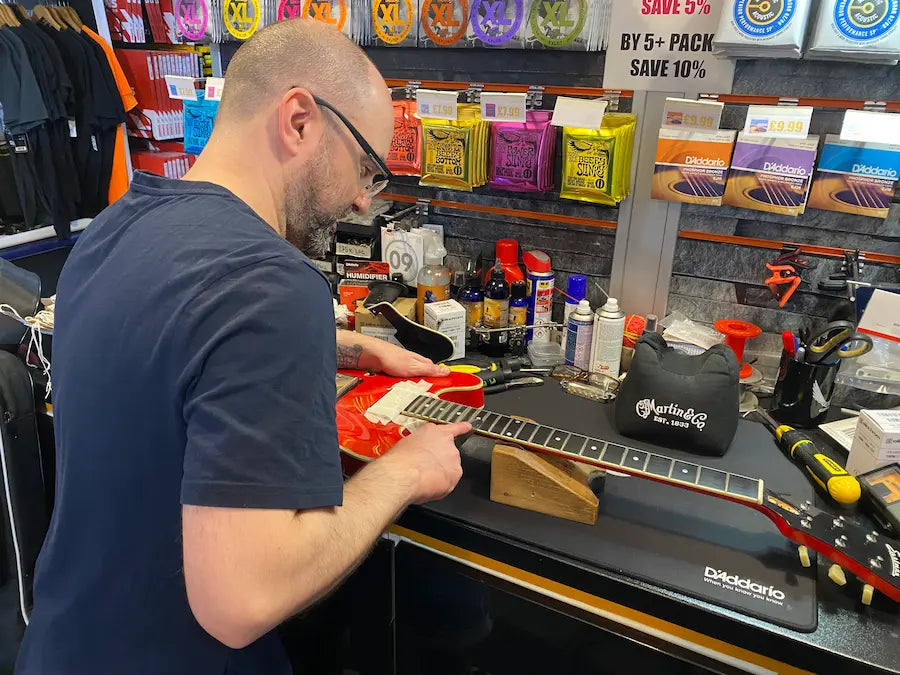
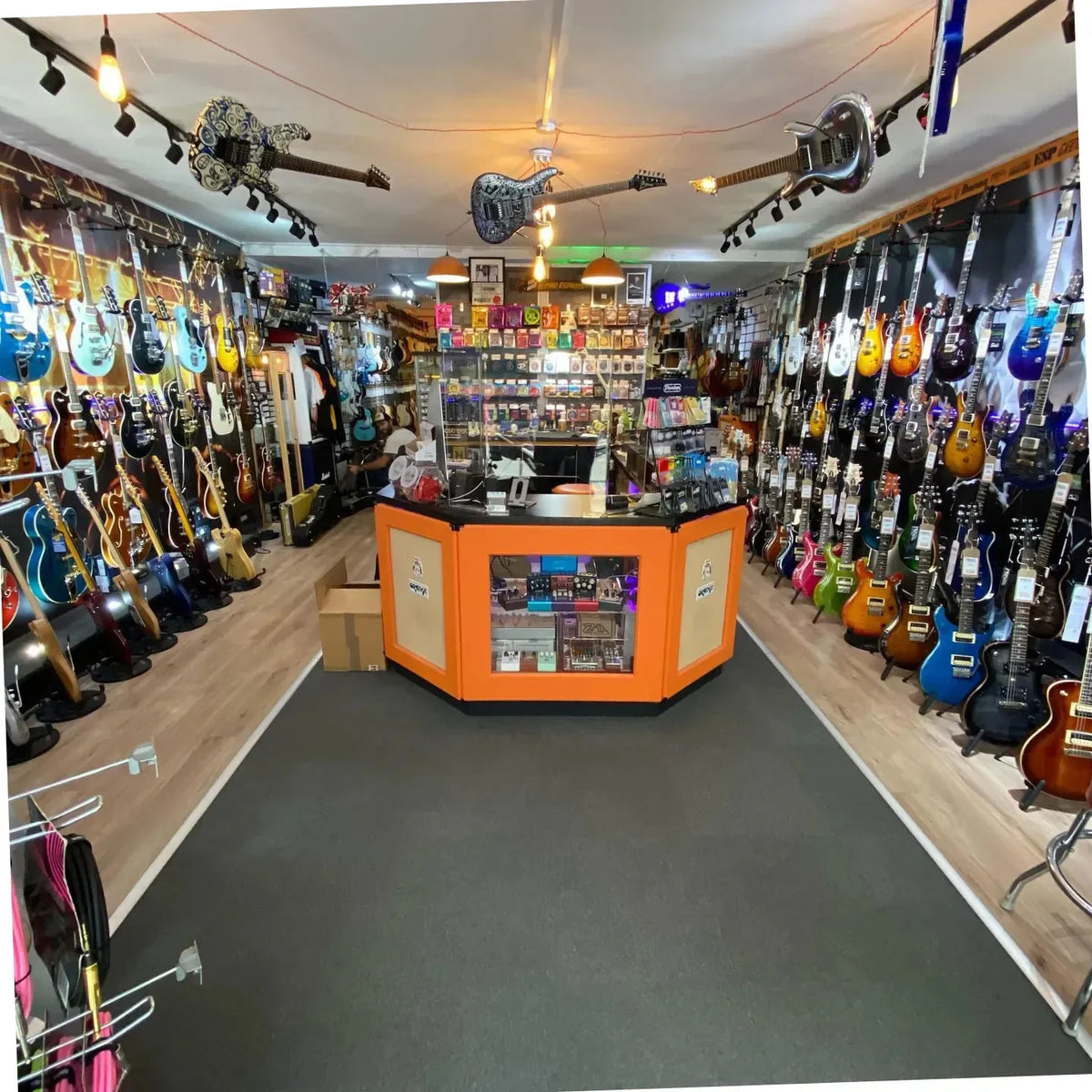
At MusicStreet we understand how much the right guitar affects your playing. Our team can help you compare models side‑by‑side, test them through amps you play with, and set them up to your preferred strings and tuning before you take it home.
The MusicStreet Difference
Founded in 2014, MusicStreet is one of the UK’s respected independent guitar shops. We combine years of hands-on experience with a workshop that sets up each instrument to perform. From your first guitar to a top-tier Prestige model, we offer honest advice, expert setups and a genuine passion for great instruments — helping you focus on what matters most: playing.
Frequently Asked Questions
Is the Ibanez S Series good for metal?
Yes — especially in Iron Label and Premium spec. Many S models in those tiers ship with DiMarzio or Bare Knuckle pickups and Wizard-family necks, and offer fixed‑bridge or Edge Zero II options. Mahogany-bodied S guitars give a warmer, richer tone than basswood RGs, which suits progressive, technical and fusion styles as well as many modern metal approaches. The reduced weight is also a real advantage for live players.
What is the difference between the Ibanez RG and S body?
The main differences are body thickness and tonewood. The RG typically uses a full-thickness double-cutaway body (commonly basswood or ash) weighing around 3.4–3.6 kg. The S is a sculpted, ultra-thin profile (mahogany or maple) at roughly 2.8–3.1 kg — a noticeable 400–500g saving on a strap. That reduced mass also colours the tone: mahogany on the S usually yields warmer, more harmonically complex sound than basswood.
Which Ibanez is better for drop tunings — RG or S?
Both series offer fixed-bridge models that handle drop tunings reliably. For very low tunings (drop B, drop A and below), a fixed bridge — Gibraltar Standard II on many S models or a Mono Rail on some RGs — is the safest choice because it removes the tuning instability of floating tremolos. If you play mostly in drop tunings, pick the body shape you prefer and choose the fixed-bridge variant. MusicStreet will set fixed-bridge Ibanez guitars to your requested tuning and string gauge before dispatch.
Is the Ibanez RG or S Series better for beginners?
For budget-conscious beginners the RG Standard range (e.g. RG350DXZ, RG421) often represents stronger value — good necks and hardware for the price. The S Series really shines at Premium and Iron Label levels, where pickup and body quality justify the higher cost. If you’re starting out on a tight budget, an RG Standard is a sensible choice; if you’re a developing player ready to invest in a higher-end instrument, consider the S Premium or Iron Label lines.

Share:
Fixed bridges: your guide to stability and tone
Your guide to buying Martin guitars online with confidence