


Gibson currently builds seven core Les Paul families, and each one exists to solve a different problem for a different player. The Standard is the archetypal rock and blues machine. The Custom dresses the same shape up for stage presence and jazz warmth. Classic and Modern split vintage feel from contemporary playability. Studio and Tribute strip away cosmetics to hit a lower price without sacrificing tone. Junior and Special go back to basics with P-90 pickups and slab bodies. Then there’s the small, expensive world of vintage ‘Bursts’, where a genuine 1959 Les Paul Standard can fetch six figures.
-
New to electric guitars? A Studio or a Junior gets you real Les Paul tone without the outlay.
-
Gigging regularly? A Standard or Modern handles stage volume, weight and switching flexibility.
-
Chasing vintage PAF humbucking pickups tone or collector value? Look at a 50s/60s reissue Standard or an original ‘Burst’, if your budget stretches that far.
Musicstreet stocks new and pre-owned examples across most of these families, which makes side-by-side comparison a lot easier than guessing from photos online.
Key Takeaways
Choosing between Les Paul types comes down to matching pickup type, weight and price tier to how and where you actually play.
| Point | Details |
|---|---|
| Standard is the benchmark | Maple cap, mahogany body and humbuckers define the classic Les Paul sound. |
| Custom suits stage presence | Multilayer binding, gold hardware and ebony fingerboard add polish and sustain. |
| Studio and Tribute save money | Same core tone as a Standard with less ornamentation and a lower price. |
| Junior and Special favour simplicity | Single or double P-90 pickups deliver raw midrange for practice and small gigs. |
| Musicstreet reduces buying risk | Hands-on inspection, expert setup and warranty support apply across new and pre-owned Les Paul stock. |
Table of Contents
-
Les Paul Classic vs Les Paul Modern: vintage feel or contemporary spec?
-
Studio and Tribute: value-focused Les Pauls that still sound right
-
Buying and trying a Les Paul: why hands-on inspection matters
What are the main types of Les Paul guitars?
The seven current families break down clearly once you know what each one prioritises. Here’s how they stack up on the things that actually affect your buying decision.
| Family | Typical price tier | Best suited to | Pickups | Woods/build | Standout tonal trait |
|---|---|---|---|---|---|
| Standard | Mid to high | Gigging players, rock/blues leads | Humbuckers (PAF-style or Burstbucker) | Mahogany body, maple cap, set neck | Thick, singing sustain |
| Custom | High | Stage presence, jazz, fusion | Humbuckers, historically up to three | Mahogany, ebony fingerboard, multilayer binding | Smooth, refined output |
| Classic | Mid | Traditionalists who want vintage specs | Vintage-voiced humbuckers | Vintage neck radius, lighter relief | Woody, open vintage tone |
| Modern | Mid to high | Players wanting contemporary ergonomics | Push/pull humbuckers, coil splits | Weight-relieved body, asymmetric neck | Versatile, brighter top end |
| Studio/Tribute | Entry to mid | Studio work, value seekers | Standard humbuckers | Simplified binding and inlays | Same core tone, fewer frills |
| Junior/Special | Entry | Students, punk/blues players | Single or double P-90 | Slab mahogany body | Raw, biting midrange |
For a lightweight gigging option, the Modern’s weight relief wins. For pure recording clarity, a Standard with PAF-style humbuckers is hard to beat. You can browse the wider Gibson electric range on the Gibson electric guitars overview if you want to see how Les Pauls sit against the SG and other Gibson shapes.
How do Les Paul models actually differ under the hood?
Every meaningful difference between Les Paul types comes down to five things: pickup type, top construction, weight relief, neck profile and hardware. Get these right and the model name almost stops mattering.
-
Pickup type: humbuckers dominate the Standard, Custom, Classic and Modern lines for warmth and hum cancellation, while P-90 pickups power the Junior and Special for a grittier, more open sound.
-
Top construction: a carved maple cap over a mahogany body (Standard, Custom) adds brightness and definition; a plain mahogany top (Junior, Special) sounds darker and more compressed.
-
Weight relief: chambering or Ultra Modern weight relief cuts several pounds off the classic solid-body heft, a real factor if you’re standing for a three-hour set.
-
Neck profile: vintage-spec necks (Classic) run chunkier; Modern necks are slimmer and often asymmetric for faster playing.
-
Hardware: locking tuners, push/pull pots and coil-splitting appear mainly on Modern and Supreme-tier instruments.
Two spec numbers worth memorising: Les Pauls run a scale length shorter than a Fender-style 25.5 inch scale, which gives them slacker string tension and a fatter feel. And most current models ship with a two-humbucker layout, though Junior and Special variants use one or two P-90s instead.
Pro Tip: A guitar with identical pickups can sound noticeably different depending on chambering. Less wood in the body tends to open up the upper mids, so if you’ve compared two “identical” Standards and one sounded brighter, weight relief is probably why.
Gibson Les Paul Standard: the 50s, 60s and Modern versions
The Standard is what most people picture when they hear the word “Les Paul”: a carved maple cap over mahogany, a glued-in set neck, and two humbuckers driving a thick, vocal midrange. It’s the benchmark every other family gets measured against.
The story starts with the 1958 to 1960 Cherry Sunburst run, the guitars collectors now call ‘Bursts’. Gibson had introduced humbucking pickups in 1957, and pairing them with the sunburst finish created the tone and look that still defines the model. Today’s 50s and 60s reissues chase that era’s specs closely: rounder or slimmer neck profiles depending on year, period-correct pickup covers, and nitrocellulose finishes on higher-tier builds.
Modern Standards diverge in useful ways:
-
Ultra Modern weight relief for lighter stage weight
-
Push/pull coil-splitting for single-coil tones without swapping pickups
-
Slightly slimmer neck profiles, aimed at faster players
-
Burstbucker Pro or similar updated humbucker voicings
Tonally, a 50s-spec Standard leans into thick, singing lead tone and chunky rhythm work, the sound behind decades of rock and blues records. A Modern Standard trades a little vintage character for versatility, useful if you split time between genres. Buying new, expect consistent quality control; buying vintage or a used 60s-style reissue like the Gibson Les Paul Standard 60’s Unburst, check fret wear and finish condition carefully before committing.
Gibson Les Paul Custom: the ‘Black Beauty’
The Custom exists for players who want Les Paul tone with more visual drama and a smoother top end. Its nickname, ‘Black Beauty’, comes from the original ebony-finished version launched decades ago, and the aesthetic has barely changed since.
What sets it apart:
-
Multilayer body and headstock binding, sometimes called “the tuxedo” for good reason
-
Gold-plated hardware across bridge, tuners and pickup covers
-
Ebony fingerboard with block or split-block inlays
-
Historically offered with two or three humbuckers, depending on era
That extra binding and denser hardware add a touch of mass and a slightly smoother, more compressed high end compared with a Standard, which suits jazz players and anyone wanting a Les Paul that reads as formal on stage. If you want maximum sustain and refined output rather than raw grit, the Custom over-delivers where a Standard feels merely good.
Les Paul Classic vs Les Paul Modern: vintage feel or contemporary spec?
Despite the similar name, Classic and Modern sit at opposite ends of the same idea. The Classic keeps vintage-style neck radii, period-correct pickup voicings and simpler electronics. The Modern adds weight relief, a contoured heel for easier upper-fret access, locking tuners and push/pull switching for coil splits.
Traditionalists who chase a specific era’s feel tend to gravitate to the Classic; players who gig across genres or want extra tonal options usually prefer the Modern’s flexibility. Neither is objectively better, they solve different problems.
Buying tip: always try both neck profiles in person if you can. The difference between a vintage 50s-style “C” profile and a slim Modern asymmetric neck is far more noticeable in your hand than on a spec sheet.
Studio and Tribute: value-focused Les Pauls that still sound right
Gibson launched the Les Paul Studio in 1983 specifically to strip cosmetic extras and hit a lower price without touching the tone-producing parts. Less binding, simpler dot or trapezoid inlays, and a plainer finish, but the same Tune-O-Matic bridge and humbucker pairing that defines the Standard’s sound.
Tribute models push that idea further, using more affordable finishes and slightly simplified hardware to land at an even friendlier price point. Both lines keep the core recipe, mahogany body, maple cap where applicable, set neck, so the tone stays close to a full-price Standard.
Price tier and buyer profile: Studio and Tribute models sit firmly at the entry-to-mid price bracket. They suit studio musicians who care more about mic’d-up tone than stage looks, and first-time buyers who want an authentic Les Paul sound without paying for aesthetics they won’t notice through an amp.
Les Paul Junior and Special: back to basics
The Junior and Special trace back to the mid-1950s, when Gibson built slab mahogany bodies fitted with P-90 pickups to create affordable student instruments. Decades later, both models remain genuinely popular, not just cheap alternatives.
The Junior runs a single P-90 through a simple wraparound bridge, a flat slab body with no maple cap, and just volume and tone controls. Punk, garage rock and raw blues players love it for exactly that simplicity, there’s nothing between your hands and the amp.
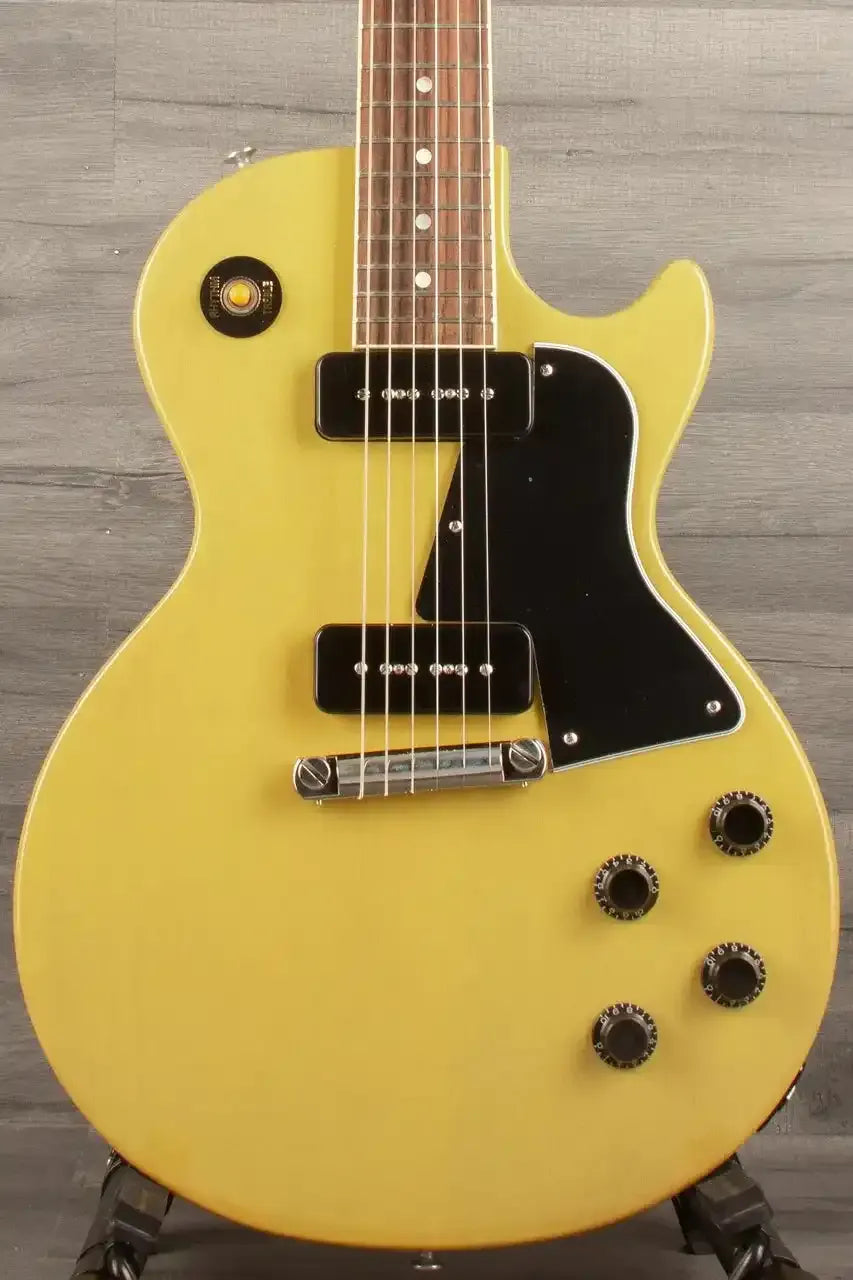
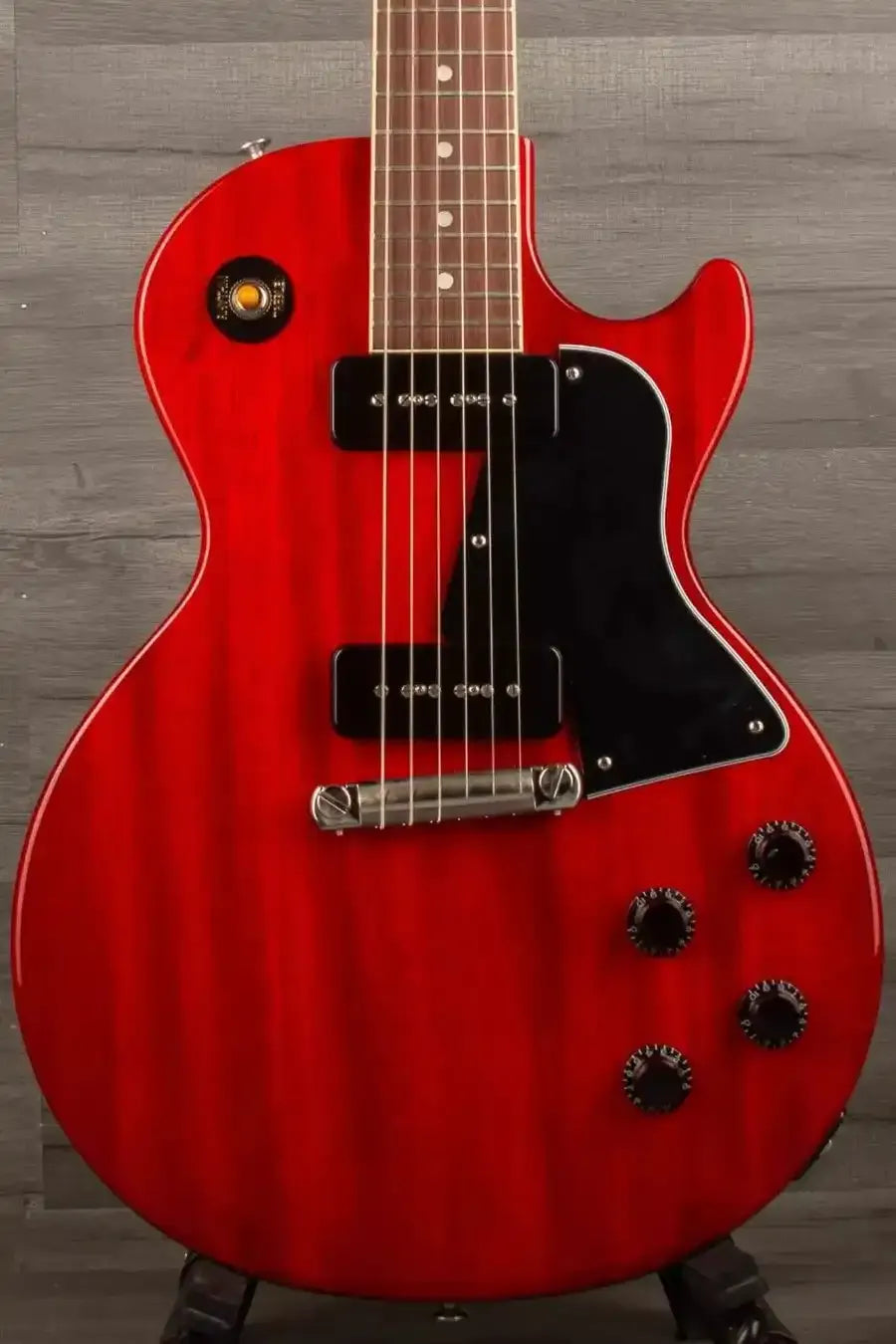
The Special adds a second P-90 and an extra control or two, sitting between the Junior and the Standard in versatility. Both models suit practice, low-stakes gigging and anyone who prefers a barking midrange over polished sustain. Musicstreet’s current stock includes the Gibson Les Paul Special Vintage Cherry and the Gibson Les Paul Special TV Yellow, two finish options on the same stripped-down formula.
Rare and short-lived Les Paul variants worth knowing
A handful of uncommon Les Paul types occasionally turn up on the used market, and it’s worth recognising them before you buy.
-
Les Paul Recording: fitted with low-impedance pickups and an unusual control layout aimed at studio engineers rather than gigging players.
-
Les Paul Professional: a related short-run variant with its own switching quirks.
-
Various limited or artist-run models: often distinguished by unique inlays, finishes or electronics not seen elsewhere in the catalogue.
These guitars are rare, but rarity doesn’t automatically mean practicality, some of these control layouts are genuinely awkward for live use. If a listing claims rarity or artist provenance, ask for documentation and, ideally, get a specialist to check serial numbers before you pay a premium.
Why do vintage ‘Burst’ Les Pauls sell for six figures?
The short answer: scarcity, timing and tone converged for about three years in the late 1950s, and it’s never been fully repeated since.
The timeline runs like this: Goldtop launches in 1952, PAF humbuckers arrive in 1957, the Cherry Sunburst ‘Burst’ era runs 1958 to 1960, Gibson redesigns the shape entirely into the SG in 1961, and the single-cutaway Les Paul doesn’t return to production until 1968. That narrow 1958 to 1960 window is where nearly all the legendary examples come from.
Scarcity is measurable. Estimates put 1959 shipments at roughly 643 units, with the full 1958 to 1960 sunburst run totalling around 1,406 guitars. That’s a tiny population for an instrument this famous, which is why the 1959 Les Paul Standard is widely called the holy grail of electric guitars.
If you’re ever evaluating a genuine vintage ‘Burst’, check for original PAF humbuckers, attractive top figuring, finish checking consistent with age, and serial numbers matching Gibson’s shipping ledgers.
Pro Tip: A pristine, unplayed vintage ‘Burst’ isn’t automatically the best buy. Some collectors prize honest wear and a well-documented history over showroom condition, because it proves the guitar hasn’t been refinished or had parts swapped.
How do you choose the right Les Paul for your needs?
Work through these steps in order, whether you’re buying new or used:
-
Define how you’ll actually use it. Studio work favours a Standard or Custom; gigging favours a Modern’s lighter weight; learning favours a Junior or Special.
-
Inspect the neck and frets. Look for consistent fret height, no sharp edges, and a neck that’s straight without excessive relief.
-
Test every pickup and switch position. Confirm both pickups work cleanly, and if it has coil-splitting, check that too.
-
Check weight and balance. Play it standing up. Some Standards are notably heavier than Modern equivalents with weight relief.
-
Verify provenance on anything sold as vintage. Ask for serial numbers and, where possible, matching documentation.
Ask the seller directly about setup history, warranty terms, and return policy. A specialist retailer should answer all three without hesitation. Watch for red flags: mismatched replacement parts, a refret with uneven fretwork, or modifications the seller can’t explain clearly. If budget is the main constraint, it’s worth comparing a Junior against other beginner electric guitars under £500 before deciding.
Buying and trying a Les Paul: why hands-on inspection matters
Photos and spec sheets only tell you so much. A guitar’s neck feel, weight distribution and pickup output vary even within the same model line, which is exactly why trying before buying matters.
Musicstreet handles this with:
-
In-store tryouts on new and pre-owned Les Pauls before you commit
-
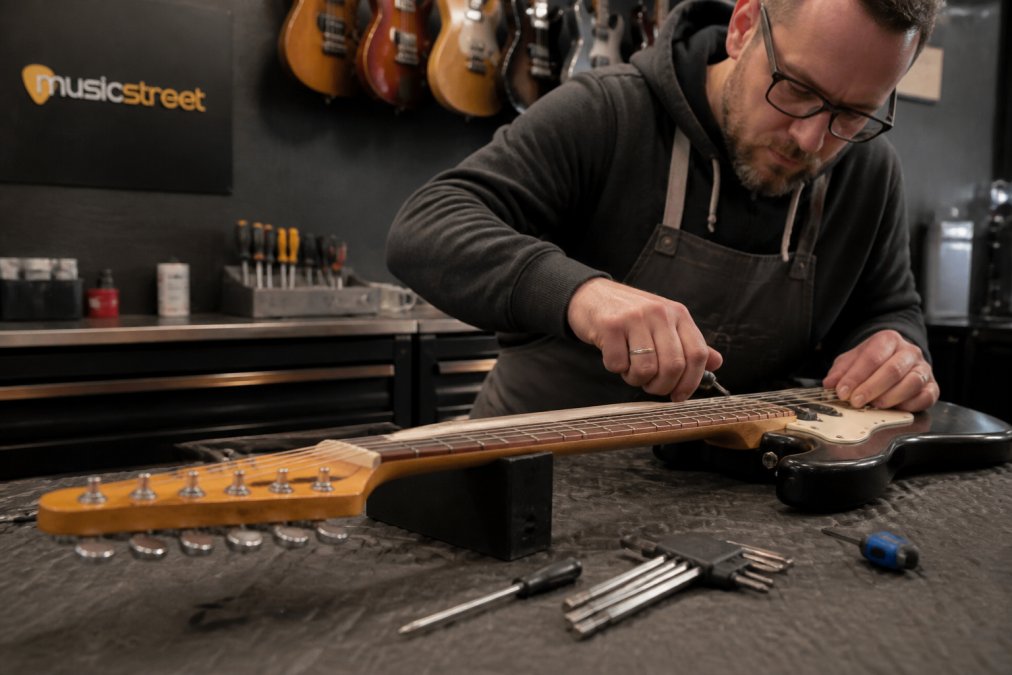
Professional inspection of every used guitar, checking frets, electronics and structural condition
-
Expert setup included, so the guitar plays correctly the moment it leaves the shop
-
Warranty support and free UK delivery on qualifying orders
Buying from a specialist retailer that inspects instruments properly reduces the risk of inheriting someone else’s undocumented repair or worn-out electronics, a real concern with any guitar built decades ago.
Author perspective: vintage feel versus modern versatility
Vintage ‘Bursts’ have a mythology that modern reissues will never fully replicate, and honestly, that’s fine. Original PAF humbuckers and decades-old wood do something a factory can’t recreate on demand. But most players don’t need that. They need a guitar that stays in tune, doesn’t weigh nine pounds, and sounds right through a gigging rig.
My honest recommendation: buy the vintage-spec reissue, not the vintage guitar, unless collecting is genuinely the goal. Save the six-figure hunt for when you’re buying for love of the object itself, not for what comes out of the amp.
Try, buy or service your next Les Paul with expert help
Musicstreet gives you something a listings site can’t: someone who has physically inspected the guitar before it reaches you. Every pre-owned instrument gets checked for structural issues, electronics faults and setup accuracy, not just photographed and shipped.
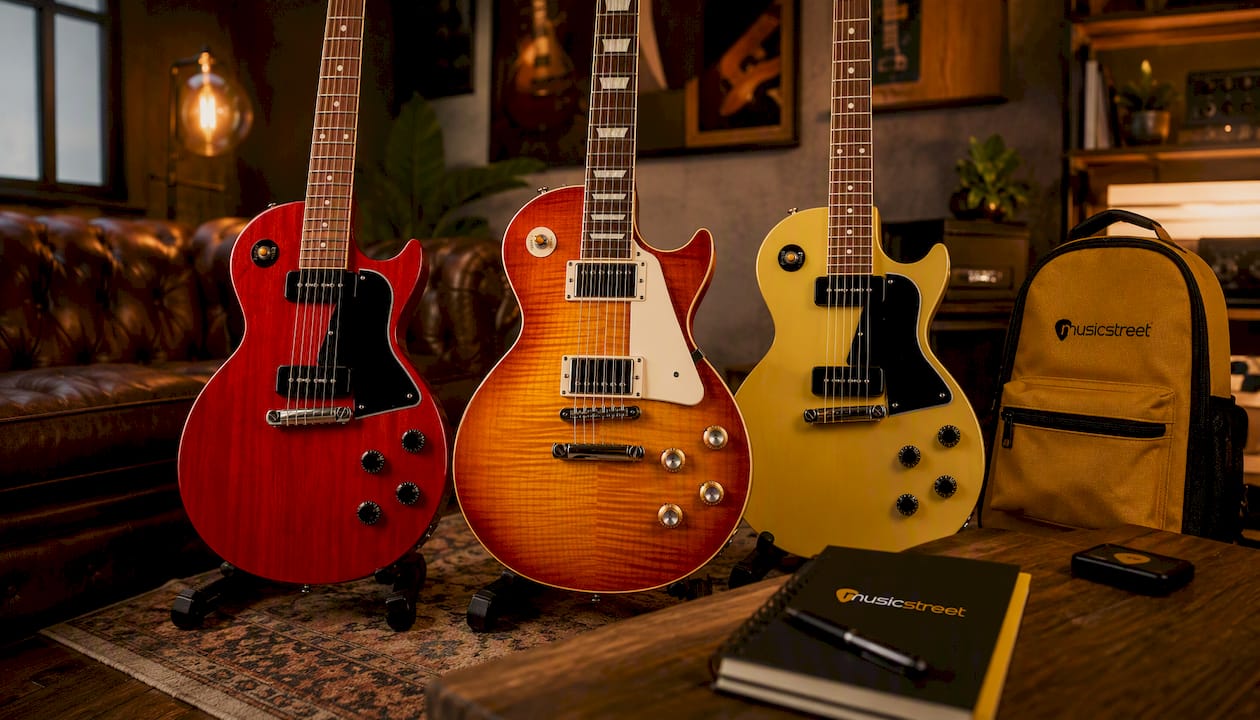
If a Studio-style tone with vintage colouring appeals, browse the Gibson Les Paul Standard 60’s Unburst, a pre-owned example already inspected and set up. Want the P-90 growl of a stripped-down model instead? The Gibson Les Paul Special Vintage Cherry and the Gibson Les Paul Special TV Yellow are both currently in stock. Every guitar comes with warranty support and a clear returns policy, and orders over the qualifying threshold ship free within the UK. Get in touch or visit the Huntingdon store to try before you buy.
Sources
-
Types of Gibson Les Paul models: Everything you need to know - Gibson Gazette
-
Gibson Les Paul: how it changed from 1952 to 1978 | Guitar World
FAQ
What are the different models of Les Paul guitars?
The main current families are Standard, Custom, Classic, Modern, Studio, Tribute, Special and Junior, each distinguished by pickups, ornamentation and construction detail as Gibson’s model guide outlines.
Which Les Paul model is the best?
There’s no single best model, a Standard suits gigging rock and blues players, a Custom suits stage presence and jazz warmth, and a Studio or Junior suits players prioritising value.
What is the holy grail Les Paul?
The 1959 Les Paul Standard, produced during the 1958 to 1960 Cherry Sunburst run, is widely considered the holy grail of electric guitars due to its scarcity and tone.
What are the 8 types of guitars?
Guitar types generally span acoustic, classical, electric, bass, resonator, twelve-string, archtop and semi-hollow body instruments, a broader category than the Les Paul family alone, which sits within the solid-body electric group.
Is a Les Paul Studio worth buying over a Standard?
Yes, if budget matters more than cosmetics. The Studio keeps the same Tune-O-Matic bridge and humbucker pairing as a Standard, only trimming binding and inlay work to reach a lower price.






Share:
Electric guitar body styles: a player's guide
How do you change your guitar strings: step-by-step for beginners