


- The choice of plectrum significantly impacts a guitarist’s tone, technique, and playing comfort.
- Plectrum materials and shapes influence sound character, attack, and feel across different genres.
- Experimenting systematically with various picks helps players find their ideal tool for expressive playing.
Many guitarists spend hours researching their next guitar, agonising over tone woods and pickup configurations, yet grab the nearest pick without a second thought. That single decision, overlooked and undervalued, can shape your entire playing experience. A plectrum is a small device used to pluck and strum the strings of instruments like the guitar, and while it may seem trivial, it directly influences your tone, technique, speed, and comfort. This guide walks you through everything you need to know about plectrums — what they are, which types exist, how they affect your sound, and how to choose the right one for your style.
Table of Contents
- What is a plectrum?
- Types of plectrums and their materials
- How plectrums affect your playing style and tone
- Tips for choosing the right plectrum
- A seasoned guitarist’s take on plectrum choice
- Find your perfect plectrum at MusicStreet
- Frequently asked questions
Key Takeaways
| Point | Details |
|---|---|
| Plectrum definition | A plectrum is a small tool used to pluck or strum strings, shaping both sound and technique. |
| Material and type matter | Different shapes and materials influence your playing feel, tone, and genre suitability. |
| Experiment for best results | Trying various plectrums helps you discover the pick that enhances your musical style. |
| Regular replacement | Plectrums wear out and should be replaced regularly to maintain optimal sound and control. |
What is a plectrum?
The word “plectrum” comes from the Greek word plēktron, meaning something to strike with. In modern music, it refers to the small, flat implement guitarists and other string players use to set their strings vibrating. As the dictionary confirms, a plectrum is used to pluck strings on instruments ranging from guitars to mandolins and lyres, and is commonly called a guitar pick in everyday conversation.
A plectrum is more than just a piece of plastic between your fingers. It is the first point of contact between you and your instrument — the tool that translates your intention into sound.
Understanding the anatomy of a plectrum helps you make better choices. Most picks have three key features: a tip, which makes contact with the string; a body, which provides the gripping surface; and an edge bevel, which is the angle along the sides that affects how smoothly the pick glides across each string. These seemingly small details have a measurable impact on your articulation and tone.
Plectrums are made from a wide variety of materials:
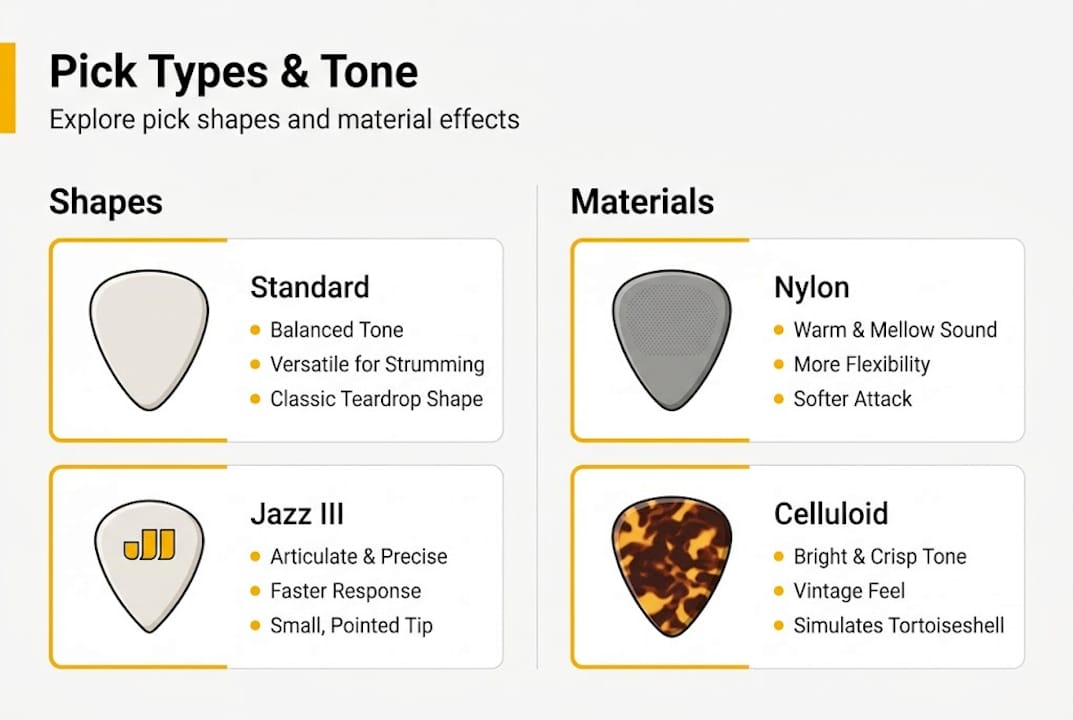
- Celluloid — one of the oldest materials, producing a warm, vintage tone favoured by many blues players
- Nylon — flexible and smooth, popular for strumming and acoustic playing
- Delrin (acetal) — stiff and consistent, widely used by rock and metal guitarists
- Tortex — a modern alternative to genuine tortoiseshell, offering excellent grip and control
- Metal — produces a bright, articulate attack often used in heavy genres
- Wood and bone — natural materials that provide a unique warmth and organic feel
- Carbon fibre — extremely durable with a crisp, precise tone
The distinction between using a plectrum and playing fingerstyle is significant. Fingerstyle playing, common in classical guitar and many folk traditions, uses the fingertips or nails directly on the strings, producing a softer, more nuanced sound. A plectrum, by contrast, delivers a more consistent, often brighter attack. Neither approach is superior — they simply serve different musical purposes, and many experienced players practise both techniques to expand their expressive range.
Historically, plectrums were crafted from natural materials including genuine tortoiseshell, bone, and ivory. As regulations rightly restricted these materials, manufacturers developed synthetic alternatives that often outperform the originals in durability and consistency. Today’s guitarists benefit from a remarkable variety of options that earlier musicians could never have imagined.
Types of plectrums and their materials
With a clear definition in mind, let us examine the main types and materials musicians use when choosing a plectrum.
Shape is one of the most overlooked variables in pick selection. Plectrums come in several distinct profiles, each suited to different playing styles and hand sizes. Knowing the differences helps you make an informed decision rather than simply grabbing whatever is on the counter at your local music shop.
As dictionaries confirm, a plectrum is a small piece of plastic, metal, ivory, or similar material used to pluck strings on instruments including the guitar, mandolin, and lyre. The variety of shapes available today reflects just how personal and nuanced this choice can be.
Common plectrum shapes:
- Standard (351 shape) — the most widely used shape, suitable for almost all styles and comfortable for beginners
- Jazz III — smaller and pointed, allowing faster, more precise single-note runs favoured by lead guitarists
- Teardrop — narrower than the standard, offering more control over pick placement
- Thumb pick — worn on the thumb, leaving other fingers free for fingerpicking hybrid techniques
- Finger pick — worn on individual fingers, commonly used in banjo and fingerstyle guitar playing
- Triangle (shark fin) — large with three usable tips, popular for strumming and rhythm playing
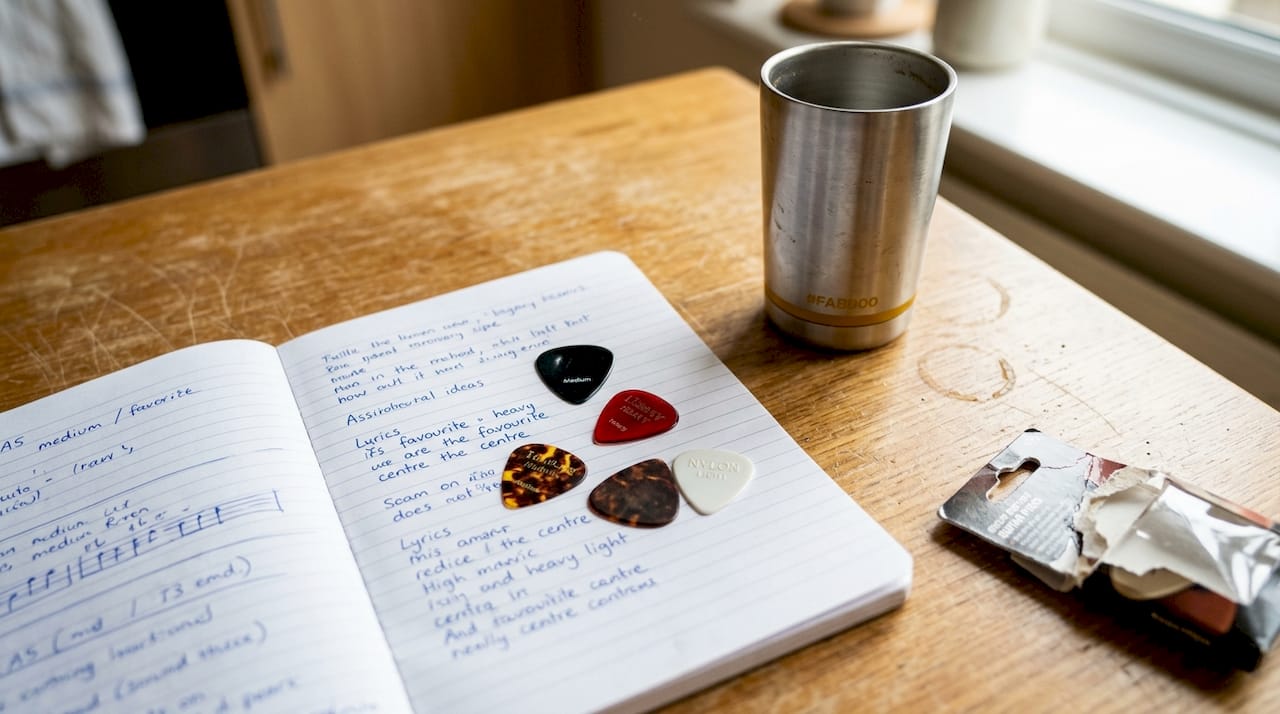
The material of your pick shapes the character of your tone in ways that are immediately audible once you start experimenting. Here is a quick comparison of the most popular options:
| Material | Flexibility | Tone character | Best suited for |
|---|---|---|---|
| Nylon | High | Warm, rounded | Acoustic strumming |
| Celluloid | Medium | Vintage, bright | Blues, classic rock |
| Tortex | Medium to low | Balanced, articulate | Versatile, rock |
| Delrin | Low | Punchy, defined | Rock, metal |
| Metal | Very low | Bright, cutting | Heavy metal, bass |
| Wood | Low | Warm, natural | Folk, acoustic |
| Carbon fibre | Very low | Crisp, precise | Lead guitar, jazz |
For guidance on selecting guitar picks based on your specific genre or instrument, it is worth reading through structured comparison resources before you buy.
Pro Tip: If you play acoustic rhythm guitar primarily, begin with a medium nylon pick. If you lean towards electric lead work, experiment with a Jazz III in Tortex or Delrin. The difference in your articulation and control will be immediately noticeable.
Surface texture also plays a role. Picks with grip holes, ridged edges, or textured coatings reduce slippage during intense playing. For players who tend to sweat or whose picks spin in their fingers mid-song, this feature alone can be transformative.
How plectrums affect your playing style and tone
With an understanding of types and materials, it is crucial to see how these elements shape your sound and technique.
Thickness is the single most consequential variable most guitarists overlook. Plectrums are typically categorised by thickness in millimetres, and the difference between a thin and an extra heavy pick can fundamentally change how you interact with your guitar. This is where the plectrum’s role in plucking strings becomes directly relevant to your musical output.
| Thickness category | Approximate range | Best application |
|---|---|---|
| Extra light (thin) | 0.38 mm to 0.45 mm | Acoustic strumming, beginners |
| Light | 0.46 mm to 0.60 mm | Rhythm guitar, folk |
| Medium | 0.61 mm to 0.80 mm | Versatile, most genres |
| Heavy | 0.81 mm to 1.20 mm | Lead guitar, electric |
| Extra heavy | 1.21 mm and above | Jazz, metal, bass |
Here is how thickness and stiffness affect your actual playing experience:
- Thin picks flex noticeably when they hit a string. This flex produces a softer attack with a subtle “swish” sound, ideal for strumming open chords on an acoustic. The downside is reduced control for precise single-note runs.
- Medium picks offer a balance between flexibility and rigidity. They suit a wide range of techniques, making them the default recommendation for beginners and intermediate players exploring different styles.
- Heavy picks provide minimal flex, transferring more energy directly into the string. This results in a louder, more defined attack with greater dynamic control, ideal for lead passages and genres demanding precision.
- Extra heavy picks are favoured by jazz guitarists seeking a dark, warm tone and by heavy metal players who need the stiffest possible attack for rapid, accurate picking.
- Textured or bevelled picks allow the tip to release from the string more efficiently, reducing drag and enabling faster playing without sacrificing tone.
The guitar accessories guide covers how tools like plectrums sit within the broader ecosystem of your guitar setup, including strings, straps, and tuners.
Some well-known players have become closely associated with specific picks. Brian May of Queen is famous for using a sixpence coin as his pick, producing the bright, layered sound central to his signature tone. David Gilmour of Pink Floyd favours medium gauge picks to support his legato, expressive bends. Jazz legend Pat Metheny uses a thick plectrum to achieve his characteristically warm and rounded tone. These examples illustrate that the best guitar accessories are not always the most expensive ones — they are the most considered.
Pro Tip: Record yourself playing the same riff with three different pick thicknesses. Listening back is far more revealing than playing live, because you will hear exactly how the attack and tone character shift with each pick.
Tips for choosing the right plectrum
After considering the impact of different plectrums, the next step is learning how to pick the one suited to you.
Choosing a plectrum is not a one-time decision. Your ideal pick may change as your technique develops, your genre preferences shift, or you switch between instruments. The best approach is systematic experimentation guided by a clear understanding of your needs.
- Identify your primary playing style. Are you mainly a rhythm player strumming chords, or a lead player focusing on single-note runs? Rhythm players typically benefit from thinner, more flexible picks, while lead players gain more from heavier, stiffer options.
- Consider your instrument. A thick pick on a light-gauge acoustic strung with phosphor bronze strings may feel overly rigid and dampen your dynamics. A thin pick on an electric through a high-gain amplifier may produce unwanted string noise and lack of definition.
- Experiment with at least three different materials. Pick variety packs are widely available and inexpensive. Work through nylon, Tortex, and Delrin at minimum before settling on a material that feels natural in your hand.
- Evaluate grip during extended playing. Some picks feel great for five minutes but become slippery after twenty. Practise a full set length with your pick of choice before committing to it as your go-to option.
- Pay attention to wear patterns. How a pick wears over time tells you a great deal about your technique. Uneven wear on one side of the tip may indicate a picking angle issue worth correcting.
- Do not ignore the bevel. A pick with a pronounced edge bevel releases from the string more cleanly. For fast alternate picking, this is not a luxury — it is a practical necessity.
The must-have accessories list for any serious guitarist should include a small selection of different picks rather than a single default option. Having variety available means you can adapt to different musical situations rather than forcing every style through one tool.
Common mistakes players make when choosing a plectrum include always defaulting to medium picks out of habit, ignoring how their pick interacts with their specific string gauge, and neglecting to try smaller or larger shapes simply because they seem unfamiliar. Players chasing the custom guitar benefits of a highly personalised instrument should apply the same thoughtful approach to their pick selection.
Pro Tip: Keep a small notebook or use a notes app to record your impressions after trying each pick. Note the material, thickness, and what you played. This simple habit shortens the trial-and-error process considerably.
A seasoned guitarist’s take on plectrum choice
Here is the honest truth that most guides skip over. The plectrum is not just a functional tool — it is an expressive one. We have seen players spend months perfecting their amp settings and years choosing their guitar, yet they never once deliberately chose their pick. That is a missed opportunity.
The guitar pick selection insights available today are extensive, but no resource replaces actual time spent experimenting. What we have found, working with guitarists of every level, is that players who invest even a single afternoon trying different picks almost always discover an option that changes how they feel about their playing. It is not a dramatic revelation — it is a quiet shift in confidence and comfort that accumulates over every practice session.
Your plectrum is where your intention meets your instrument. Get that right, and everything downstream improves.
Find your perfect plectrum at MusicStreet
Armed with new insights on plectrums, you might be ready to try a few options for yourself.

At MusicStreet, we stock a wide range of plectrums suited to every playing style, genre, and budget. Whether you are just starting out and need a beginner-friendly variety pack, or you are an experienced guitarist hunting for that perfect Jazz III in a specific material, we have options to suit you. Our team brings genuine expertise to every conversation, both online and in our physical store in Huntingdon, Cambridgeshire. Explore our full selection of guitars and accessories and find the pick that genuinely suits your playing.
Frequently asked questions
What is the main function of a plectrum?
A plectrum is used to pluck or strum the strings of instruments like guitars, producing a clearer and often more consistent sound than fingers alone. It also allows for faster picking speeds and greater tonal definition in many styles.
Can I use anything as a plectrum?
While some players improvise with coins or credit cards, purpose-made plectrums of plastic, metal or similar materials are optimised for comfort, consistent tone, and durability. Improvised options often damage strings or lack the precise bevel needed for smooth playing.
How do I choose the right plectrum for my style?
The ideal plectrum depends on your genre, technique, and comfort — a plectrum used for strumming suits a different thickness and shape than one used for fast lead work. Experiment with different shapes and materials to discover what feels and sounds best for your specific approach.
Do plectrums wear out quickly?
Yes, frequent use leads to wear, and how quickly depends on material, thickness, and playing style — plectrums made of plastic tend to wear faster than metal or carbon fibre options. Checking the tip of your pick regularly and replacing it when it becomes uneven keeps your tone consistent.



Share:
Multiscale guitars: superior playability and tone explained
The essential types of guitar tones for every style