


Learning to play guitar is a journey rather than a single destination. Ask ten players how long it took them to learn, and you’ll get ten different answers. That’s because progress depends on the time you invest, the quality of your practice, and what “good” means to you. In this guide, we draw on research, educational resources, and real players’ experiences to help you set realistic expectations and create a plan that leads to success. We’ve also included links to relevant pages on Music Street. Use them as you work through each stage of your journey.
A realistic timeline for learning guitar
Beginner / first six months
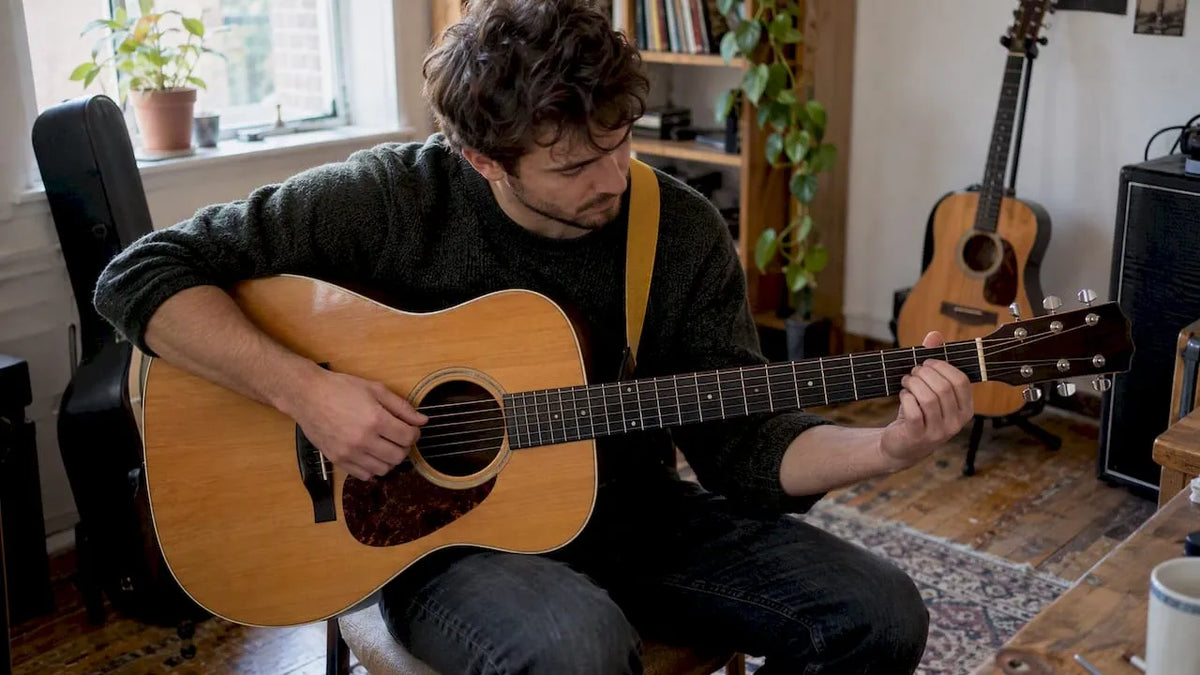
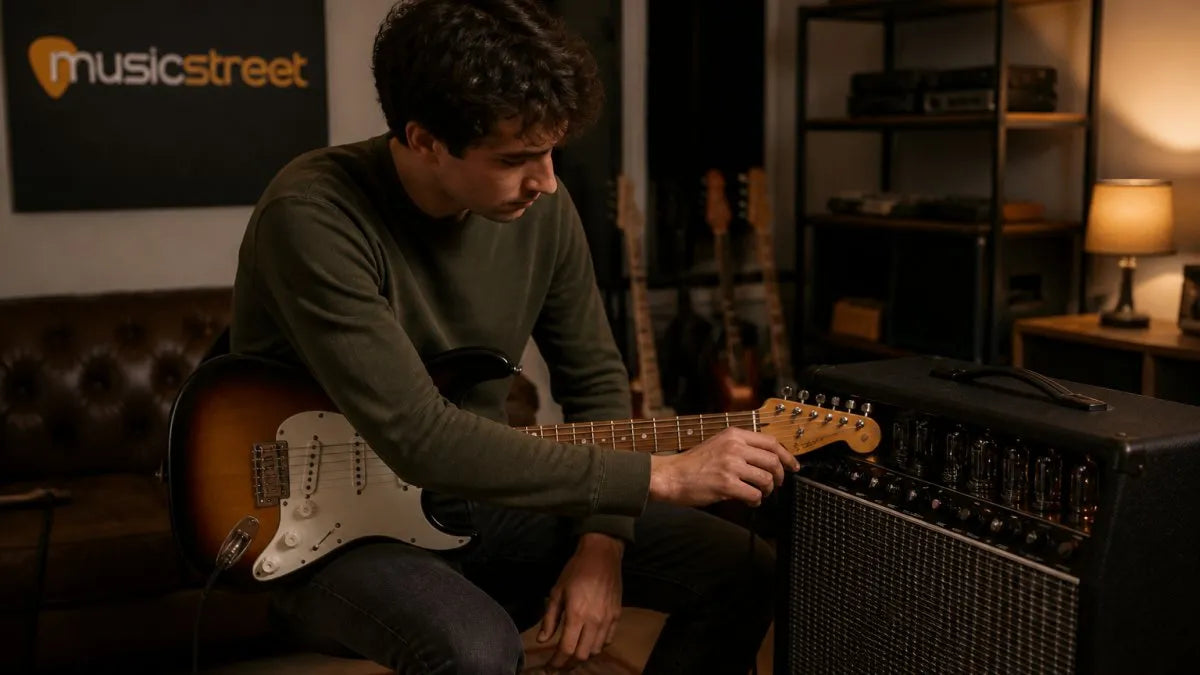
When you’re just starting, you’ll learn how to hold a guitar, tune it, and play basic open chords. Tomas Michaud notes that most students can play simple songs they feel good about within three to six months. Another guide on Zager Guitar suggests that beginners and first-timers typically spend 1-6 months learning fundamentals, such as holding the guitar correctly, tuning, strumming patterns, and single-string plucking. During this period, you’ll build calluses, develop hand strength, and coordinate both hands.
Music Street tip: Starting with a comfortable instrument makes those first months more enjoyable. Our starter guitar collection includes affordable, professionally set-up electric and acoustic guitars that are ideal for beginners.
Advanced beginner / six months to one year
After six months, you’ll know the most common open chords and will start to learn simple barre chords. Michaud calls this the advanced beginner phase and places it between six months and a year. Zager’s timeline aligns with this, listing the “intermediate” phase at 1-2 years during which players begin to incorporate riffs, blues licks, and basic improvisation. Many learners hit their first plateau during this period because progress is slower than in the first month. Stick with it; solid fundamentals now will make later stages easier.
Intermediate / one to two years
By the time you’ve been playing for a year or two, you should be comfortable switching chords and may know some scales. Michaud points out that this intermediate phase is when players realise how much there is still to learn. According to Hub Guitar, the amount of progress you make depends on total practice hours rather than years. The site notes that four hours of daily practice for six months equates to 720 hours, enough to make “shocking progress”, while 30 minutes per day would take four years to achieve the same. Focused practice and good technique during this stage lay the groundwork for future mastery.
Music Street tip: Consider upgrading to a higher‑quality instrument as your skills grow. Browse our electric guitars or acoustic guitars collections to find an instrument that inspires you.
Advanced / two to five years and beyond
Beyond two years, your playing becomes more expressive and confident. Michaud refers to this as the advanced intermediate phase (2-5 years) during which players have mastered barre chords, their chord vocabulary expands, and they may start improvising. Zager Guitar calls the 2-3 year mark “pro” and the 5-6 year mark “advanced”. Hub Guitar warns that achieving “expert” or “professional” levels can take 5,000-10,000 hours of practice, which is several years of dedicated playing. Don’t let big numbers scare you; playing guitar is about enjoying the process.
Music Street tip: As you advance, explore different genres and experiment with gear. Our bass guitars and 3/4 mini guitar collections offer new sounds and challenges.
Factors that influence how fast you learn
Practice time and quality
The single biggest factor is how much focused practice you put in. Hub Guitar stresses that total lifetime hours are the only meaningful metric. Consistency is more important than cramming: practicing 30 minutes daily beats practicing four hours once a week because you retain muscle memory and avoid starting from scratch. Remember that 720 hours (about two hours a day for a year) yields significantly more progress than sporadic practice.
Guidance and learning resources
Instruction from a teacher, online course, or structured method keeps you on track and prevents bad habits. Following a curriculum such as Music Street’s Strumming Success guide helps you progress systematically. Community advice also matters; many players on Reddit report learning basic chords within a few months and feeling comfortable after two to three years of consistent practice.
Instrument quality and setup
A poorly set‑up guitar can discourage even the most enthusiastic beginner. Music Street professionally sets up every guitar before shipment and offers comprehensive after‑sales support at musicstreet.co.uk. Starting with a comfortable instrument means you’ll practice longer without fighting high action or buzzing frets. If you’re unsure where to begin, our workshop and secondhand guitars pages include advice on choosing and maintaining instruments.
Accessories and tools
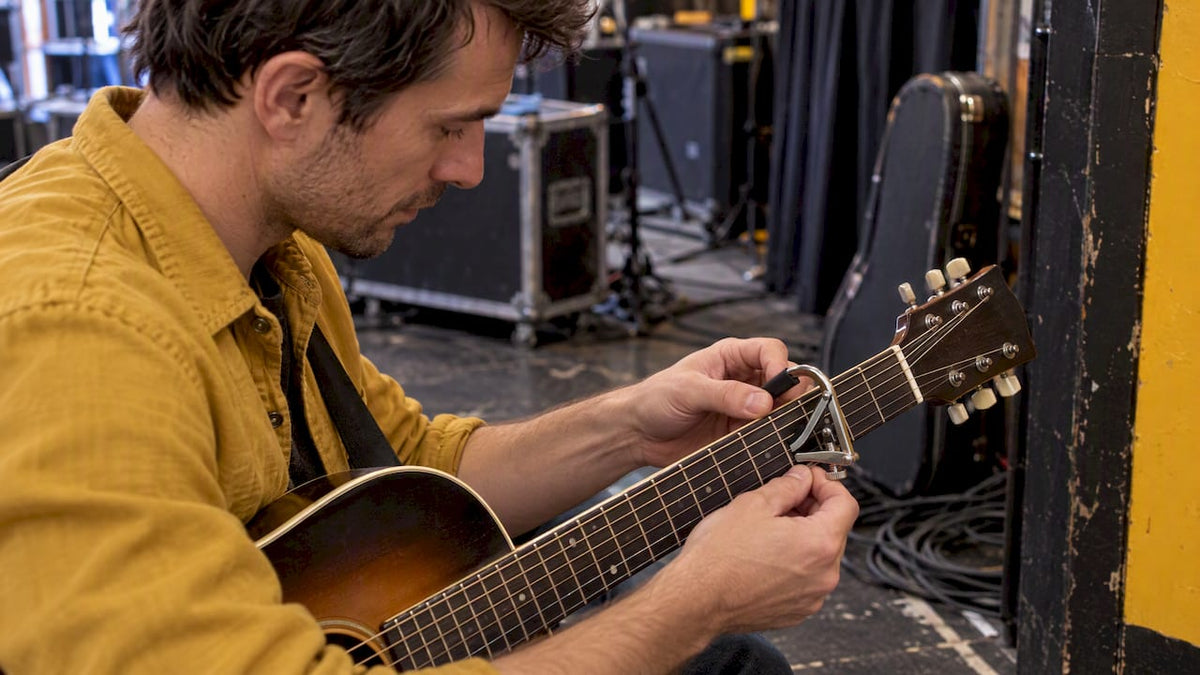
Small accessories make practice more productive. A clip‑on tuner ensures your guitar always sounds its best; a metronome helps develop timing. Browse our tuners/metronomes and capos to equip your practice space. Don’t overlook comfort: a good guitar strap and supportive chair help you practice longer. Our blog post on guitar strap materials explores the differences.
Tips to learn guitar faster
- Set clear goals. Decide whether you want to strum songs around the campfire, play lead guitar in a band, or write your own music. Goals guide your practice and keep you motivated. Zager’s guide recommends breaking your journey into stages and focusing on fundamentals first.
- Practice regularly and mindfully. Short, daily practice sessions build muscle memory and prevent frustration. Use a metronome, record yourself, and focus on problem areas rather than mindlessly playing what you already know.
- Learn songs you love. The National Guitar Academy emphasises playing music you enjoy; it makes practice fun and encourages you to stick with it. Choose songs with chords you’re working on and gradually increase difficulty.
- Seek feedback. Taking lessons or jamming with others exposes you to new ideas and corrects mistakes. Even online forums can provide guidance and encouragement.
- Upgrade your gear as you improve. A higher‑quality guitar, better amp, or inspiring effects pedal can reinvigorate your practice. Check out Music Street’s guitar amps and effects pedals when you’re ready to expand your setup.
Frequently asked questions
Can I learn guitar on my own?
Yes. Many players teach themselves using online tutorials and books, and resources like 7 Essential Guitar Tools can help. However, self‑teaching requires discipline. Structured lessons shorten the learning curve and ensure proper technique.
How long until I can play my favourite song?
If your favourite song uses simple open chords, you could be playing a simplified version within 3-6 months. More complex songs with barre chords or intricate picking patterns may take a year or more. Break songs into sections and learn one part at a time.
Do I need an expensive guitar to learn?
No. A well‑set‑up beginner instrument is more important than price. In fact, an entry‑level guitar that’s comfortable and stays in tune will encourage you to practice. Music Street’s starter range includes affordable, gig‑ready guitars, and we also have mega deals for budget‑friendly options.
What if progress feels slow?
Plateaus are normal. Michaud notes that after the first 6-12 months, progress often feels slower even though you’re still improving. Revisit fundamentals, set new goals, and maybe learn a new genre to stay inspired. Remember, according to Hub Guitar, consistent practice time is the best predictor of progress.
Final thoughts
Learning guitar isn’t a race; it’s a lifelong relationship with music. The time it takes to learn depends on your goals, dedication, and the quality of your practice. Most players can strum simple songs within a few months, become comfortable within a couple of years, and continue improving for decades. By setting realistic expectations, practicing thoughtfully, and equipping yourself with the right tools and instruments, you’ll enjoy every step of the journey. Music Street is here to support you with high‑quality gear, expert advice, and inspiring resources.

Share:
Impulse Response Explained: Essential for Guitarists
Why Guitarists Are Using Amp Modellers Today