

Table of Contents
- Why Turnaround Times Vary Between Guitar Repair Shops
- Typical Guitar Repair Timeframes in Huntingdon
- Understanding Guitar Setup Cost and What It Includes
- How to Prepare Guitar for Repair and Speed Up the Process
- Essential Electric Guitar Maintenance Tips to Prevent Repairs
- What to Expect When You Visit a Guitar Repair Shop in Huntingdon
- Book Your Guitar Repair with Realistic Expectations
- Frequently Asked Questions
Last Updated: 5 September 2026
Why Turnaround Times Vary Between Guitar Repair Shops
The single most common question we hear is about guitar repair shop huntingdon turnaround times, and the honest answer is that no two quotes are ever the same. A setup might take a few days, while a neck reset can consume several weeks of workshop time. The difference comes down to the condition of the instrument, the complexity of the work, and how many jobs are already queued on the bench.
Most repairs follow a simple diagnostic pattern: the luthier inspects the instrument, identifies the fault, and estimates the labour involved. A guitar that has been stored in a damp garage will need more than a quick truss rod tweak. Moisture damage, warped necks and corroded electronics all add hours to the job.
Here is what separates a realistic quote from an optimistic one: the shop's honesty about its current workload. A reputable repair specialist will tell you upfront if they are booked out for weeks, rather than promising an impossible deadline. Advice on choosing a repair technician from the UK's Music Industries Association recommends asking exactly how many instruments are ahead of yours before you commit.
Typical Guitar Repair Timeframes in Huntingdon
A realistic guitar repair shop huntingdon turnaround sits somewhere between 3 days and 6 weeks depending on the work required. Simple adjustments rarely need more than a week, while structural repairs can stretch into a second month. The table below reflects typical workshop schedules.
Job Type |
Typical Timeframe |
Complexity |
|---|---|---|
Full setup and restring |
1-2 days |
Low |
Fret dressing and polish |
1-2 days |
Medium |
Electronics replacement |
2-3 days |
Medium |
Full refret |
2-3 weeks |
High |
Neck reset or crack repair |
4-6 weeks |
Very High |
These estimates assume the parts are in stock and no hidden damage emerges during the work. If your bridge needs replacing or the truss rod is seized, expect the timeline to stretch.
Quick Fixes: Setup, Fret Dressing and Electronics
The fastest jobs are the ones that keep a guitar playable. A full setup, which covers string height, intonation and neck relief, is typically completed within a few days. Fret dressing, where the luthier levels and polishes the frets to remove divots, adds a little more time because the finish needs to cure properly before the guitar is reassembled.
Electronics work, such as replacing a faulty pickup or a crackling volume pot, usually takes under a week. These repairs are straightforward for an experienced technician, provided the correct replacement parts are available. The main delay is sourcing components rather than the labour itself.
Longer Jobs: Refrets, Neck Resets and Crack Repairs
Structural work is where patience becomes essential. A full refret involves removing every old fret, cleaning the fingerboard, pressing in new wire, and levelling the entire surface. That process alone can occupy a luthier for several days, and most shops will not rush it because a poor refret ruins the instrument's playability.
Neck resets and crack repairs are the most time-intensive jobs in any workshop. A neck reset requires removing the neck, correcting the angle, and allowing the joint to cure under clamp pressure. Crack repairs often involve injecting glue, clamping the wood and refinishing the affected area. Guidance on guitar maintenance and repair standards from the Guild of Master Craftsmen notes that rushing structural repairs leads to recurring failures, which is why reputable luthiers refuse to cut corners.
Understanding Guitar Setup Cost and What It Includes
Guitar setup cost varies between shops depending on the scope of work, the quality of strings used, and whether any fret work is included. A basic setup typically covers adjusting the truss rod, setting the bridge height, checking the nut slots and intonating the strings. Some shops bundle a restring into the price, while others charge it separately.
When comparing quotes, ask precisely what the setup includes. A cheaper price might only cover a truss rod adjustment, leaving the nut and intonation untouched. A thorough setup addresses all the contact points that affect playability, which is why experienced players rarely skimp on this service.
At MusicStreet, every new and pre-owned guitar is set up by players before it reaches the sales floor, so you know exactly how the instrument should feel. For repair work, the in-house team will give you a clear breakdown of the guitar setup cost before any labour begins.
How to Prepare Guitar for Repair and Speed Up the Process
Preparing your guitar properly before handing it over can genuinely shorten the time it spends in the workshop. A clean, well-documented instrument lets the luthier start diagnosing immediately rather than cleaning off years of grime first.
- Loosen the strings and wipe down the body, neck and fingerboard
- Remove any accessories such as strap locks or pickguards you want to keep
- Note any specific issues, like a buzzing fret at the 7th position or a tuner that slips
- Include the original case or a padded gig bag for safe transport
- Mention any recent changes, such as new strings or a different gauge
Clear communication about the problem saves the technician from guessing. If you know the guitar has been knocked or dropped, say so. That context often points directly to the fault and avoids unnecessary dismantling.
Essential Electric Guitar Maintenance Tips to Prevent Repairs
The best electric guitar maintenance tips all come back to one principle: control the environment and clean regularly. Guitars are made of wood, and wood responds to temperature and humidity. Keeping your instrument in a room with stable conditions, away from radiators and damp walls, prevents the most common structural faults.
Wipe the strings down after every session with a dry microfibre cloth. This simple habit removes the sweat and skin oils that corrode strings and fret wire. Change strings every few months or when they start to sound dull, and clean the fingerboard with a suitable conditioner each time you restring.
Check the hardware occasionally. Loose output jacks, worn nuts and dirty potentiometers are all early warning signs. Catching these issues early turns a minor adjustment into a quick fix rather than a full repair. Fender's official guide to caring for your electric guitar recommends a professional setup at least once a year to keep the instrument playing at its best.
What to Expect When You Visit a Guitar Repair Shop in Huntingdon
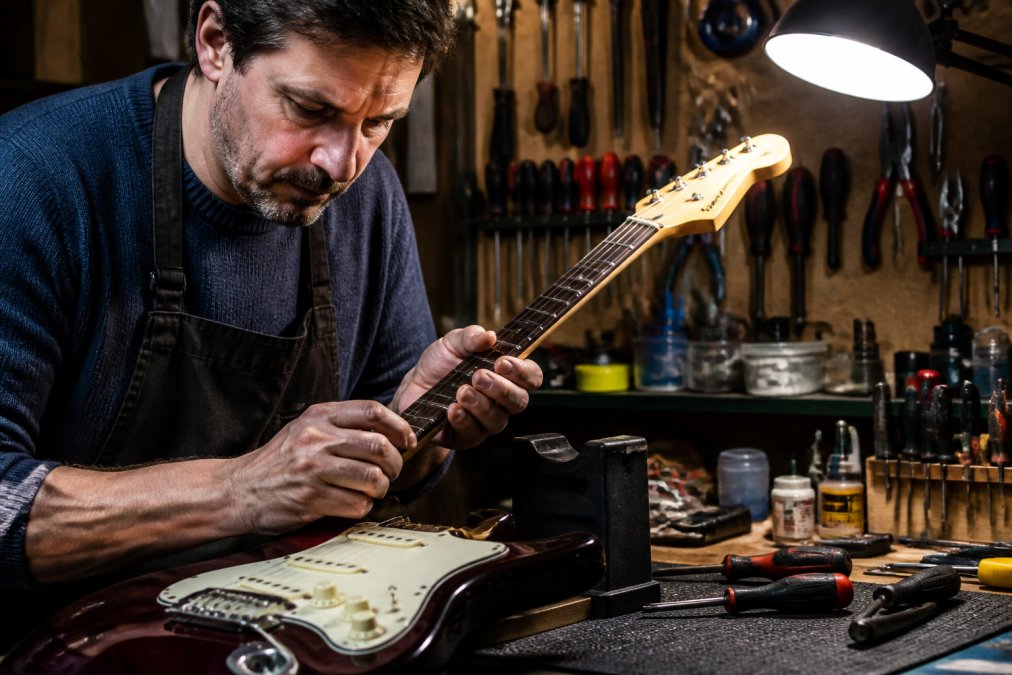
Walking into a professional guitar repair shop in Huntingdon should feel reassuring, not intimidating. You will be asked to describe the problem, and the technician will likely want to handle the guitar and check the neck, frets and electronics before giving you a quote.
A trustworthy shop will explain the fault in plain language and give you a realistic timeframe. If the work is urgent, such as a broken string on the night before a gig, shops may accommodate a quick fix if the schedule allows. For more involved repairs, expect a call when the work is complete rather than a rigid collection date.
Bring your guitar in its case with any relevant history. Knowing whether the instrument has had a recent setup or a previous repair helps the luthier diagnose faster. You should leave with a written estimate and a clear understanding of when the work will be finished.
Book Your Guitar Repair with Realistic Expectations
Planning around a guitar repair shop huntingdon turnaround means asking the right questions before you leave your instrument behind. Confirm the estimated completion date, ask whether parts need ordering, and check if any rush fees apply for urgent work. A realistic timeframe protects both you and the technician from disappointment.
Most repairs are completed within two to three weeks, but structural work demands more time. Build that buffer into your schedule, especially if you have gigs or recording sessions coming up. The extra week in the workshop is worth it when the guitar returns playing better than it has in years.
Our team at MusicStreet combines a family-run ethos with a fully equipped in-house repair workshop serving Huntingdon and Cambridgeshire. Whether you need a quick setup, a complex refret, or advice on keeping your instrument in top condition, we treat every guitar as if it were our own. Get in touch with us to book your repair and experience the difference of dealing with players who understand what your instrument means to you.
Frequently Asked Questions
How long does a professional guitar setup usually take?
A standard setup, including truss rod adjustment, action and intonation work, typically takes 24 to 48 hours. This allows the neck to settle after adjustment before the final fine-tuning. Always ask for a specific collection time when you drop your guitar off, rather than assuming it will be ready the next day.
Why do guitar repair shops have different turnaround times?
Turnaround times differ based on the technician's current workload, the complexity of the work needed, and whether replacement parts must be ordered. The best approach is to call ahead, describe the issue, and ask for an estimated completion date before committing to the repair.
How often should I have my guitar professionally serviced?
Most players benefit from a professional setup once a year, especially if you play regularly. Guitars are sensitive to humidity and temperature changes, which can shift the neck and affect the action. If you notice fret buzz, strings sitting too high, or tuning instability, book a service sooner rather than later. Regular maintenance, including cleaning and restringing, will help you avoid more costly repairs down the line.
Can I get a same-day guitar setup in the local area?
Same-day setups are sometimes possible for minor adjustments, but they are not guaranteed. A full setup requires time for the neck to settle after the truss rod is adjusted. If you have a gig or recording session, call the shop in advance to explain your deadline. Repairers may do their best to accommodate urgent requests when the workload allows.





Share:
5 Essentials to Start a UK Recording Studio, Room First, £300–£500
Three acoustic guitar sizes: shop tests to find your best fit