


Your acoustic guitar deserves more than occasional dusting. Many players struggle to maintain consistent tone and longevity, often discovering too late that neglect leads to costly repairs and diminished sound quality. This comprehensive guide walks you through essential maintenance steps, from gathering the right tools to performing routine checks, ensuring your instrument stays in peak condition. Whether you’re a beginner learning proper care or an experienced musician refining your maintenance routine, these practical techniques will help you preserve your guitar’s voice for years to come.
Table of Contents
- Key takeaways
- Essential tools and preparation for acoustic guitar maintenance
- Step-by-step acoustic guitar maintenance process
- Proper storage and routine checks to maintain your guitar
- Find premium acoustic guitars and maintenance tools at MusicStreet
- Frequently asked questions
Key Takeaways
| Point | Details |
|---|---|
| Essential maintenance tools | Gather the right equipment before touching the guitar to ensure safe and effective care. |
| Tuning and winding gear | Digital clip on tuner and a string winder speed up restringing and help maintain accurate pitch. |
| Regular cleaning routine | Regular cleaning and fret maintenance preserve playability and tone over time. |
| Safe string removal | Loosen each string completely before cutting or unwinding to avoid dangerous whipping action. |
| Proper storage and environment | Store maintenance tools in a dedicated case near the guitar and use a humidifier to maintain proper moisture levels. |
Essential tools and preparation for acoustic guitar maintenance
Before touching your guitar, gather the right equipment. Using the proper maintenance tools is critical for effective guitar care and prevents accidental damage during routine work. Quality tools make maintenance faster, safer, and more thorough.
Start with these fundamental items. A string winder speeds up string changes dramatically, whilst a digital clip-on tuner ensures accurate pitch after restringing. Microfibre cloths are essential for cleaning without scratching the finish. Lemon oil conditions the fretboard, preventing dryness and cracking. A guitar humidifier maintains proper moisture levels, particularly crucial during winter months. String cutters provide clean cuts without fraying, and a soft-bristled brush reaches tight spaces around the bridge and soundhole.
Each tool serves a specific purpose in your maintenance routine. The string winder reduces hand fatigue and cuts restringing time by half. Your tuner becomes indispensable for checking intonation after every maintenance session. Microfibre cloths lift oils and dirt without leaving residue, unlike paper towels that can scratch lacquer finishes. Lemon oil penetrates unfinished rosewood or ebony fretboards, restoring natural moisture and preventing the wood from becoming brittle.
| Tool | Primary use | Recommended frequency |
|---|---|---|
| String winder | Fast string removal and installation | Every string change |
| Digital tuner | Accurate pitch verification | After every maintenance session |
| Microfibre cloths | Body and neck cleaning | Weekly |
| Lemon oil | Fretboard conditioning | Every 3-6 months |
| Guitar humidifier | Humidity regulation | Daily during dry seasons |
| String cutters | Clean string trimming | Every string change |
Invest in quality over quantity when building your toolkit. Cheap string winders break easily, leaving you frustrated mid-change. A reliable digital tuner costs slightly more but provides consistent accuracy for years. Purchase dedicated guitar cleaning products rather than household alternatives, as generic cleaners often contain harsh chemicals that damage finishes.
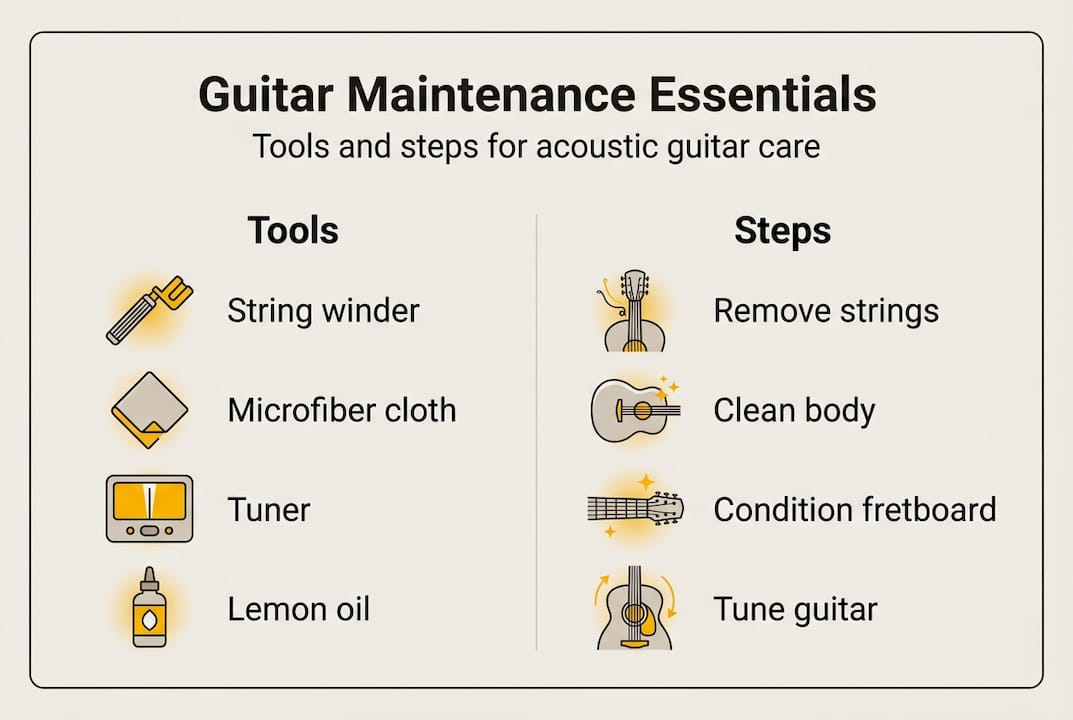
Pro Tip: Store all maintenance tools in a dedicated case or drawer near your guitar. This creates a consistent maintenance station, making regular care more convenient and increasing the likelihood you’ll maintain your schedule.
Explore essential guitar tools to build your complete maintenance kit. A comprehensive guitar maintenance guide provides additional context for using these tools effectively throughout your instrument’s lifetime.
Step-by-step acoustic guitar maintenance process
Now execute your maintenance routine systematically. Following these steps in order ensures thorough care whilst minimising risk to your instrument. Regular cleaning and fret maintenance preserve playability and sound quality over time.
Step 1: Remove strings safely
Loosen each string completely before cutting or unwinding. Cutting strings under tension creates dangerous whipping action and can damage the bridge or soundhole. Use your string winder to speed the process, turning each tuning peg until the string hangs loose. Some players remove all strings simultaneously, whilst others prefer changing one string at a time to maintain neck tension. Removing all strings allows complete fretboard access for deep cleaning. Changing strings individually maintains consistent tension and helps beginners avoid confusion about string placement.
Step 2: Clean the body and neck
Wipe down the entire guitar body with a dry microfibre cloth, removing surface dust and fingerprints. Pay special attention to areas where your hand contacts the neck, as skin oils accumulate quickly in these spots. For stubborn grime, slightly dampen your cloth with water or approved guitar polish. Never spray liquid directly onto the guitar, as moisture can seep into seams and damage internal bracing. Work in small circular motions, following the wood grain direction.

Step 3: Clean and condition the fretboard
Proper fret cleaning extends fretboard life and brightness of tone significantly. Apply a small amount of lemon oil to a clean cloth, not directly to the fretboard. Rub the oil into unfinished rosewood or ebony, allowing it to penetrate for several minutes. Wipe away excess oil thoroughly, as residue attracts dirt. Use a soft brush or cotton bud to clean around each fret, removing built-up grime from the fret edges. Maple fretboards with finish require only a damp cloth, never oil.
Step 4: Replace strings and tune accurately
Thread new strings through the bridge, ensuring proper seating in the bridge pins. Wind strings neatly on tuning pegs, overlapping each wrap slightly for stability. Leave appropriate slack before winding: roughly three finger widths for lighter strings, four for heavier gauges. Tune each string to pitch, then stretch gently by pulling upward at the 12th fret. Retune after stretching, as new strings lose tension quickly during the first few hours.
Step 5: Final polish and tuning check
Give the entire guitar a final wipe with a clean, dry cloth. Check tuning stability after 10 minutes, as new strings continue settling. Inspect your work, ensuring no tools or materials were left inside the soundhole. Play each string individually, listening for buzzing or dead spots that might indicate improper installation.
| Cleaning agent | Best for | Avoid using on |
|---|---|---|
| Lemon oil | Unfinished rosewood/ebony fretboards | Finished maple fretboards, guitar body |
| Guitar polish | Glossy polyurethane finishes | Unfinished wood, matte finishes |
| Microfibre cloth with water | General cleaning, matte finishes | Electronics, inside soundhole |
| Specialised fret cleaner | Metal fret wire only | Fretboard wood |
Pro Tip: Warm your guitar to room temperature before applying lemon oil. Cold fretboards absorb oil poorly, whilst slightly warm wood accepts conditioning more readily. Place your guitar near (not on) a radiator for 10 minutes before maintenance.
Consult detailed guides on cleaning a guitar and fret cleaning for advanced techniques and troubleshooting common issues during maintenance sessions.
Proper storage and routine checks to maintain your guitar
Maintenance extends beyond active cleaning sessions. How you store your acoustic guitar between playing sessions dramatically affects its long-term condition and playability. Storing your guitar properly prevents warping and cracking that result from environmental extremes.
Maintain humidity between 45-55% in your guitar storage area. Acoustic guitars contain thin wood panels that expand with moisture and contract when dry. Excessive humidity causes the top to swell, raising action and creating buzzing. Insufficient humidity leads to shrinkage, resulting in sharp fret ends, cracks in the top or back, and loose bracing. Purchase a digital hygrometer to monitor conditions accurately. During winter months when central heating dries indoor air, use a guitar humidifier inside your case or a room humidifier in your storage space.
Temperature stability matters as much as humidity control. Store guitars in rooms maintaining 18-24°C consistently. Avoid locations near radiators, air conditioning vents, or windows receiving direct sunlight. Rapid temperature changes cause wood to expand and contract repeatedly, weakening glue joints and finish integrity over time.
Never store your acoustic guitar in attics, garages, or car boots. These spaces experience extreme temperature swings and humidity fluctuations that cause irreversible damage to wood and glue joints. Even short-term exposure during transport requires protective measures.
Select appropriate storage based on your playing frequency. Daily players can use wall hangers or floor stands in climate-controlled rooms. Guitars played weekly benefit from gig bags offering basic protection whilst maintaining accessibility. Instruments stored for extended periods or transported regularly require hard cases providing maximum environmental protection and impact resistance. Review guitar case materials to understand protection levels different cases provide.
Implement these routine inspection checks to catch problems early:
- Examine tuning peg tightness weekly, ensuring smooth operation without excessive play
- Inspect the bridge for lifting or separation from the guitar top, particularly around the edges
- Check fretboard condition for dryness, indicated by a dull, greyish appearance requiring oil
- Look along the neck from the headstock, verifying it remains straight without warping
- Test string height at the 12th fret, noting any changes suggesting neck movement
- Examine all finish areas for new cracks, chips, or cloudiness indicating moisture damage
- Verify strap button security if your guitar includes them, tightening as needed
Perform quick daily checks if you play regularly. Before each session, scan your guitar visually whilst tuning. Listen for unusual sounds when playing: rattles suggest loose components, whilst buzzing indicates setup issues. After playing, wipe strings and body with a dry cloth, removing corrosive oils and sweat.
Schedule comprehensive inspections every three months. Remove strings completely, examining areas normally hidden beneath them. Check inside the soundhole with a torch, looking for loose bracing or cracks. Assess whether the fretboard needs conditioning. Verify all hardware remains secure and functional.
Learn safe guitar case packing techniques for transport situations. Proper packing prevents damage during travel whilst maintaining appropriate environmental conditions for your instrument.
Find premium acoustic guitars and maintenance tools at MusicStreet
Maintaining your acoustic guitar becomes simpler with quality tools and expert guidance. MusicStreet offers carefully selected acoustic guitars from renowned brands, each professionally set up and inspected before reaching you. Whether you’re searching for your first instrument or adding to your collection, you’ll find options suited to every playing style and budget.

Beyond guitars, MusicStreet stocks all essential maintenance tools discussed in this guide. From string winders and tuners to specialised cleaning products and humidifiers, everything needed for proper guitar care is available in one trusted location. The team provides personalised advice on selecting appropriate tools for your specific instrument and playing needs. Browse the complete selection at the premium guitar shop, where competitive pricing combines with insurance-supported warranties and free UK delivery on qualifying orders.
Frequently asked questions
How often should I perform acoustic guitar maintenance?
Light cleaning should happen weekly after playing sessions, focusing on wiping strings and body to remove oils and sweat. Deep maintenance including fretboard conditioning and thorough inspection occurs every three to six months, depending on playing frequency and environmental conditions. Players in humid climates or those playing daily may need more frequent attention, whilst casual players in stable environments can extend intervals slightly.
Can I use household cleaners on my acoustic guitar?
Never use household cleaners on your acoustic guitar, as they contain harsh chemicals damaging finishes and wood. Products like window cleaner, furniture polish, and kitchen degreasers strip protective lacquer and leave residue attracting dirt. Purchase cleaners specifically formulated for guitars, which safely remove grime whilst preserving finish integrity. When in doubt, a slightly damp microfibre cloth handles most cleaning needs without risk.
What is the best way to store an acoustic guitar during winter?
Store your guitar in a room maintaining 45-55% humidity and stable temperature between 18-24°C throughout winter. Central heating dramatically reduces indoor humidity, so use a guitar humidifier inside your case or a room humidifier in your storage space. Monitor conditions with a digital hygrometer, adjusting humidification as needed. Keep guitars away from radiators, heating vents, and exterior walls where temperature fluctuates most.
How do I know when to replace acoustic guitar strings?
Replace strings when they lose brightness and clarity in tone, typically after 40-60 hours of playing time. Visual indicators include discolouration, visible corrosion or rust spots, and a rough texture under your fingers. Strings also require changing when they no longer hold tune reliably or produce dead spots on certain frets. Many players change strings before important performances regardless of condition, ensuring optimal sound quality.







Share:
What is a solid state amp? Complete guide for guitarists
What is a P90 pickup? Tone, history and features