


For most players, a Fender tube combo is the place to start. The clean headroom, touch-sensitive response, and that characteristic sparkle are hard to replicate any other way. If you need more sounds in a lighter box, a modelling amp covers far more ground. Solid-state sits in between: reliable, consistent, and often the most practical choice for players who want something that just works.
The main Fender amp types break down like this:
- Tube (valve) combos and heads — best for gigging players and anyone chasing classic Fender clean tone
- Solid-state — best for beginners, players on a budget, or anyone who needs reliability above all else
- Modelling/digital — best for home players, recording, or guitarists who want many amp voices without a large pedalboard
- Hybrid — tube preamp with solid-state power section; a middle ground for players who want some valve character without full tube maintenance
- Bass and acoustic-specific amps — purpose-built for those instruments; not interchangeable with guitar amps
Three compact Fender tube options worth looking at immediately: the Fender '57 Custom Champ for bedroom and recording use, the Pro Junior IV Tweed for small gigs and studio work, and the Fender '57 Custom Deluxe for players who want more headroom and stage presence.
Key takeaways
Fender tube combos deliver the most authentic tonal response and work best as a pedal platform, while modelling amps offer the broadest range of sounds with the most built-in connectivity.
| Point | Details |
|---|---|
| Match type to player profile | Tube for gigging and tone-chasing; modelling for home and recording; solid-state for reliability and budget. |
| Wattage rule of thumb | 5–15W tube or 20–50W solid-state covers bedroom to small gig; larger venues need 50W+ or a PA feed. |
| Fender family names matter | Tweed, Blackface, and Silverface each mark real circuit changes with distinct tonal characters players reference when buying. |
| Maintenance is part of tube ownership | Check valves annually, clean pots and jacks regularly, and budget for a full service every 3–5 years. |
| Musicstreet recommendation | Try the '57 Custom Champ for recording, the Pro Junior IV for small gigs, or the '57 Custom Deluxe for more headroom. |
Table of Contents
- What each Fender amp type actually sounds and feels like
- Popular Fender models at a glance
- Tube vs solid-state vs modelling: what actually changes
- How to choose the right Fender amp for your situation
- Why players still talk about Tweed, Blackface, and Silverface
- Keeping your Fender amp sounding its best
- Features and connectivity worth knowing about
- Sources
- FAQ
What each Fender amp type actually sounds and feels like
Understanding the categories is not just academic. The circuit type shapes how an amp responds to your pick attack, how it handles pedals, and what it costs to keep running over years of playing.
Fender’s own buying guide classifies amplifiers into four main types: tube, solid-state, modelling, and hybrid. Here is what each one actually means in practice.
Tube (valve) amps use glass valves to amplify the signal. They compress naturally as the volume climbs, producing harmonic overtones that most players describe as “warm” or “alive.” They respond to how hard you pick, which is why a tube amp feels different at 3 on the dial versus 7. They also need periodic maintenance: valves wear out, and bias drifts over time.
Solid-state amps use transistors. The tone stays cleaner and more consistent at higher volumes, and there is nothing to replace or re-bias. They tend to be lighter and cheaper to produce, which is why most entry-level amps use this circuit. The trade-off is a slightly stiffer feel under the fingers, particularly noticeable when pushing into overdrive.
Modelling amps process the guitar signal digitally, simulating the behaviour of classic amp circuits. The Fender Mustang series is the obvious example: one box, dozens of amp voices, built-in effects, and USB connectivity. Modelling amps are versatile, often lighter, and budget-friendly, making them a strong choice for players who need many sounds without a large pedalboard.
Hybrid amps combine a tube preamp stage with a solid-state power section. You get some of the harmonic character of valves without the weight or cost of a full tube output stage.
| Type | Typical advantages | Clear drawbacks |
|---|---|---|
| Tube | Touch-sensitive, warm breakup, responds to dynamics | Heavier, needs periodic servicing, higher cost |
| Solid-state | Lightweight, reliable, consistent tone, affordable | Less dynamic feel, breakup less musical |
| Modelling | Versatile, built-in effects, USB/headphone output | Tone can feel processed; software updates required |
| Hybrid | Valve character with solid-state reliability | Compromise on both sides; fewer options available |
| Bass amp | Optimised low-frequency response, high headroom | Not suitable for guitar use |
| Acoustic amp | Transparent, full-range reproduction | No overdrive character; guitar amps colour the sound |
Popular Fender models at a glance
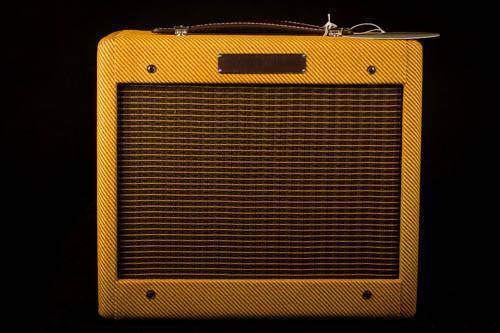
'57 Custom Champ: Five watts through an 8-inch speaker sounds quiet on paper, but this amp breaks up beautifully at manageable volumes. It is the recording engineer’s favourite for a reason: mic it up and it sounds enormous on tape. Ideal for home players who want real tube tone without waking the neighbours.
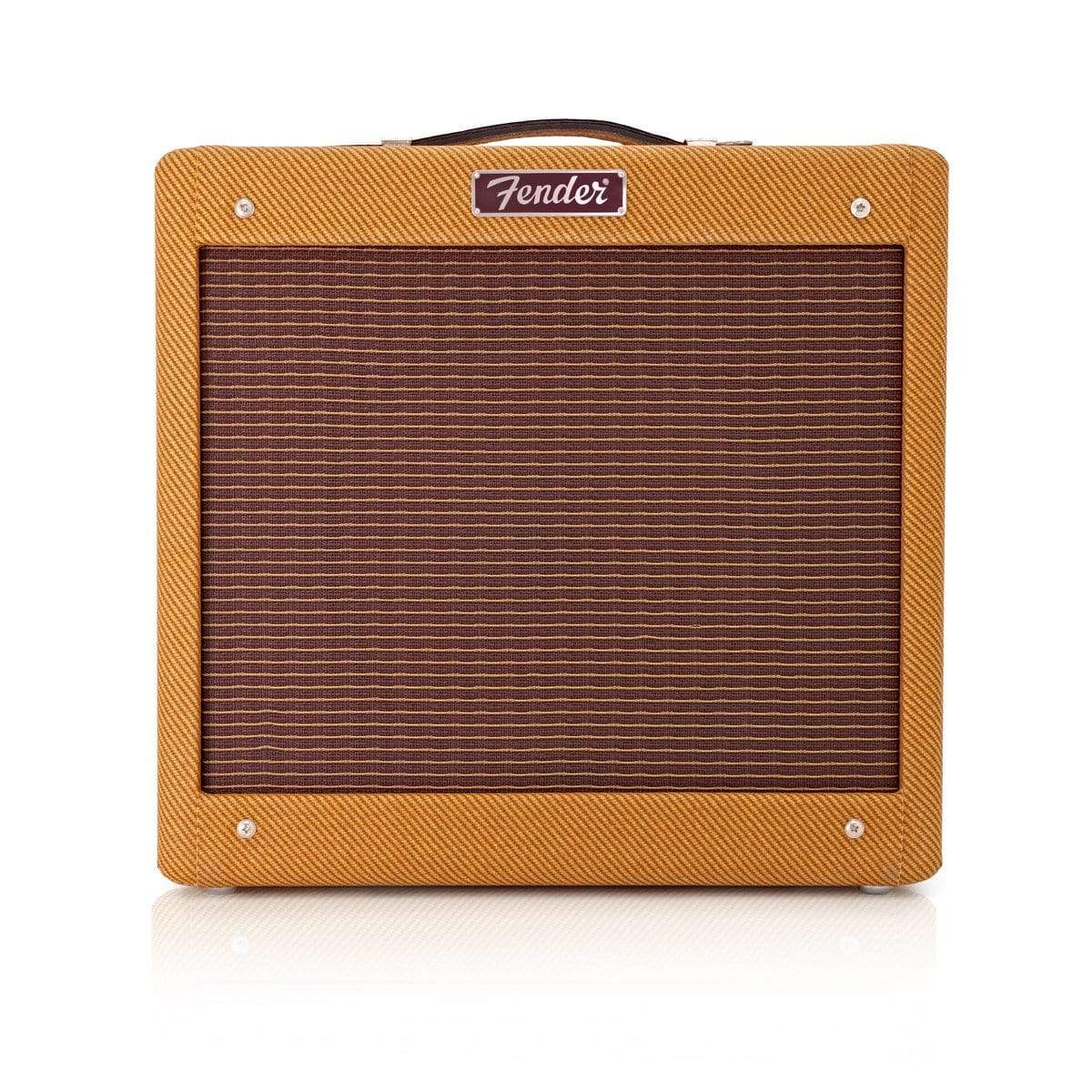
Pro Junior IV Tweed: Fifteen watts gives you enough headroom for small pub gigs when mic’d, and the 10-inch speaker keeps the low end tight. No reverb, no effects — just a clean input and a master volume. Players who run a pedalboard will appreciate how transparently it responds to drive pedals.
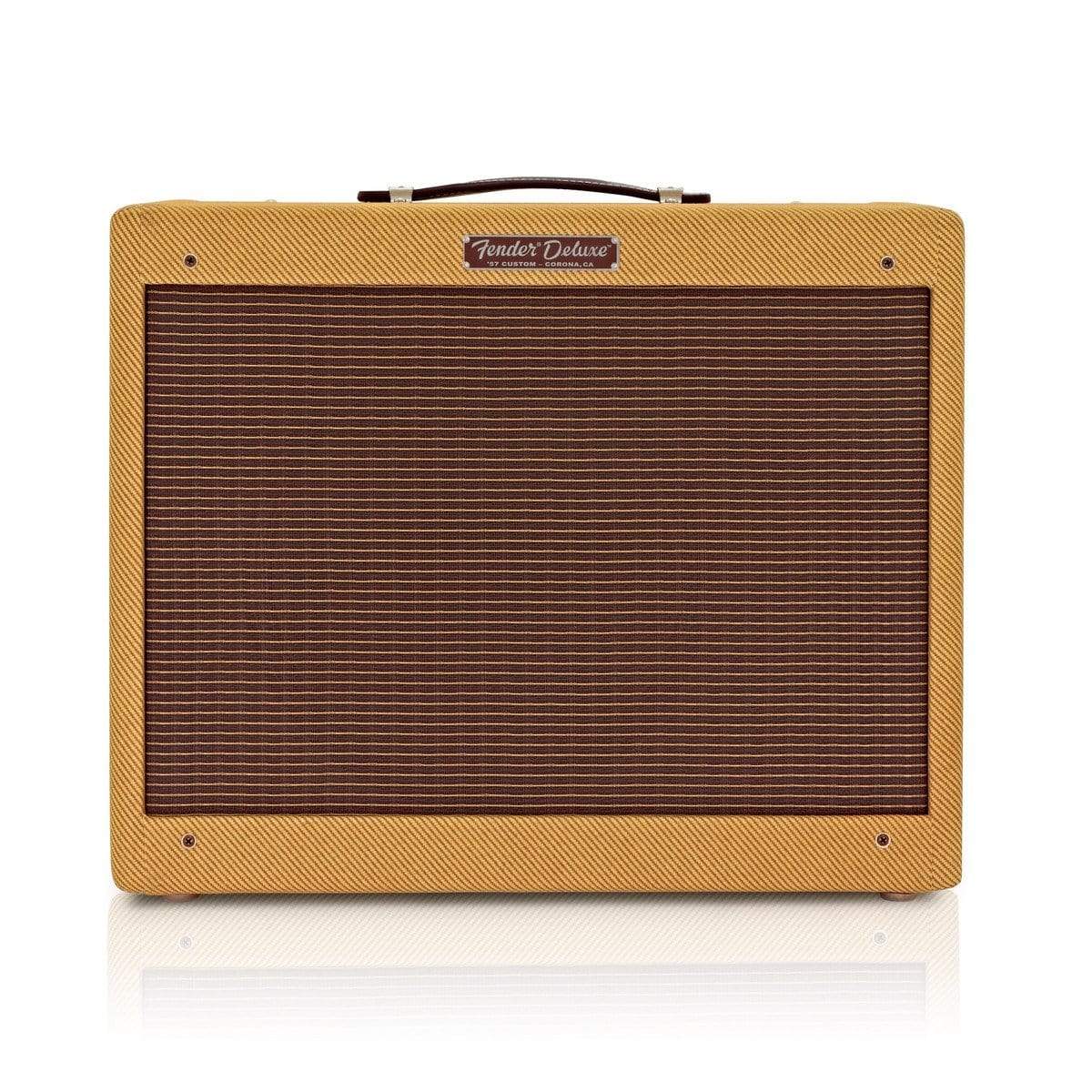
'57 Custom Deluxe: Twelve watts of Class A power through a 12-inch speaker. The Tweed-era circuit has a mid-forward character that cuts through a band mix more readily than later Blackface designs. A serious amp for players who know what they want.
Tube vs solid-state vs modelling: what actually changes
The four broad amp categories each handle your signal differently, and the differences are audible from the first note.
Tube amps warm and compress as they approach breakup. A 6L6 output valve (found in the Deluxe Reverb and Twin Reverb) delivers more clean headroom and a tighter low end than a 6V6 (found in the Blues Junior and smaller combos). The 6V6 breaks up earlier and has a softer, more compressed character — better for blues and classic rock at lower volumes. Fender’s “American clean” voicing, with its scooped mids and sparkling highs, is built around these valves and the large clean headroom they provide.
Solid-state amps stay cleaner longer and do not compress the same way. The feel under the fingers is stiffer, which some players prefer for funk or country where absolute note definition matters. Reliability is the real argument: no valves to replace, no bias to check, no unexpected noise between sets.
Modelling amps are the most versatile option. The Mustang series, for example, simulates dozens of classic circuits and lets you switch between them via an app. The trade-off is that the feel is less immediate than a real tube circuit, and some players find the tone slightly processed at high gain settings.
- Headroom: 6L6 tubes give the most clean headroom; 6V6 breaks up sooner; solid-state stays cleanest longest; modelling is adjustable
- Breakup character: Tube overdrive produces harmonic overtones; solid-state clipping is harder and less musical; modelling simulates both
- Pick attack response: Tube amps are the most dynamic; solid-state is consistent; modelling sits between the two
- Pedal interaction: Fender’s clean, scooped-mid voicing makes it an excellent pedal platform — drive pedals placed in front of a Fender clean circuit are how many players achieve their signature tones
- Weight and reliability: Solid-state wins on both counts; tube amps are heavier and need periodic servicing
- Long-term service cost: Budget for valve replacement every few years on a tube amp; solid-state and modelling amps have minimal ongoing costs
Pro Tip: Speaker size and tube type together determine perceived midrange more than almost any other variable. Swapping a 10-inch speaker for a 12-inch in the same amp shifts the low-mid response noticeably — the 12-inch sounds fuller and more authoritative, while the 10-inch stays tighter and more focused. If you find a Fender combo too scooped in the mids, try a speaker with a warmer voicing before changing the amp entirely.
How to choose the right Fender amp for your situation
Start with the context you play in most often. Buyer guides consistently recommend prioritising clean tone fidelity first, volume capability second, and built-in effects third.
Quick decision flow:
- Practice at home → 5–15W tube combo or 20–50W modelling/solid-state with headphone output
- Home recording → 5–15W tube combo (mic’d) or modelling amp with USB output
- Small pub or café gig → 15–22W tube combo, or 50W solid-state/modelling
- Medium venue → 22–40W tube combo or 50W+ solid-state
- Large venue → 85W+ tube amp or direct-to-PA from modelling amp
| Venue size | Recommended wattage | Cab or PA needed? |
|---|---|---|
| Bedroom / home practice | 5–20W tube or 20–50W solid-state/modelling | No |
| Small venue (café, pub) | 15–22W tube (mic’d) or 50W solid-state | Mic recommended |
| Medium venue (club) | 30–50W tube or 50–100W solid-state | Yes |
| Large venue (theatre, hall) | 85W+ tube or direct-to-PA | Yes |
Purchase checklist:
- What is your realistic budget? Quality tube designs start at a higher price point than basic solid-state units — do not expect a good tube amp at entry-level solid-state prices
- Do you need built-in effects, or do you run a pedalboard?
- Is a headphone output or USB recording output important?
- How often will you carry the amp? Weight matters more than most players admit before their first gig
- Will you be able to service a tube amp, or do you want something maintenance-free?
Red flags on used amps: crackling when you turn the controls (dirty pots that may need replacing), hum that does not disappear when you adjust the volume (could indicate a failing valve or grounding issue), and any burning smell from the chassis.
Why players still talk about Tweed, Blackface, and Silverface
These are not just cosmetic labels. Each family name marks a real circuit and voicing change, and you will encounter them constantly when researching vintage or reissue models. Fender’s amplifier history traces back to 1945 and runs through distinct families, each with its own tonal character.
- Tweed era (approx. 1948–1960): Lacquered tweed covering, cathode-biased circuits, mid-forward voicing with early breakup. Models: original Champ, Bassman, Deluxe. Warm, compressed, and harmonically rich at moderate volumes. The reissue '57 Custom Champ and '57 Custom Deluxe replicate this character faithfully.
- Brownface era (approx. 1959–1963): A transitional period with brown tolex and circuit refinements. Introduced vibrato and reverb circuits. Models: early Vibroverb, Concert. Slightly cleaner than Tweed with more headroom.
- Blackface era (approx. 1963–1967): Black control panel, fixed-bias circuits, the classic “American clean” sound. Models: Deluxe Reverb, Twin Reverb, Princeton Reverb. Scooped mids, sparkling highs, large clean headroom. The most imitated Fender sound in history.
- Silverface era (approx. 1967–1981): Silver control panel, some circuit changes that divided opinion among players. Later Silverface models are often considered tonally inferior to Blackface equivalents, though early Silverface amps are close to their predecessors.
- Rivera era (1982–1986): Paul Rivera redesigned the line with the II Series, adding master volume controls and more gain stages. More versatile but less “classic Fender” in character.
Keeping your Fender amp sounding its best
Three things every Fender amp owner should do: listen for bias drift or unusual noise (a sign valves are ageing), check and replace tubes on a sensible schedule, and clean pots and input jacks regularly to prevent crackling.
| Maintenance task | Recommended interval | Signs you need a tech |
|---|---|---|
| Visual valve inspection | Every 6 months | Discolouration, cracked glass, visible damage |
| Bias check (tube amps) | Annually or after valve change | Excessive hum, reduced output, harsh tone |
| Pot and jack cleaning | Annually | Crackling when turning controls or plugging in |
| Speaker inspection | Annually | Rattling, distortion at low volumes |
| Full service (tube amps) | Every 3–5 years | Any combination of the above |
Clean Fender tone starting point: Bass at 5, Middle at 4, Treble at 6, Presence at 5, Volume to taste. This gives you the classic scooped-mid sparkle without being harsh.
For overdrive pedals: Keep the amp clean (volume at 3–4) and let the pedal do the work. Fender’s clean circuit is designed as a pedal platform — pushing the amp itself into breakup works for Tweed-style tones, but the Blackface-era amps shine brightest when they stay clean and the drive comes from the pedal chain.
Pro Tip: New speakers need time to loosen up. A fresh 12-inch speaker in a Fender combo will sound stiff and slightly harsh for the first 20–30 hours of playing. Position the amp at a slight angle away from the wall in a small room to reduce low-frequency build-up while the speaker settles in.
Features and connectivity worth knowing about
Modern Fender amps vary considerably in what they offer beyond the basic guitar input and speaker output. Knowing which features matter for your setup saves you from buying the wrong model.
Built-in effects range from spring reverb (standard on most mid-range Fender combos) to full digital effects suites on the Mustang series. Spring reverb is analogue and sounds distinctly Fender; the digital reverb on modelling amps is more flexible but different in character.
Effects loops let you place time-based effects (delay, reverb, chorus) after the preamp stage, which keeps them sounding cleaner and more defined. Not all Fender amps include one — the Blues Junior does not, for example, while the Deluxe Reverb reissue does.
Headphone outputs are standard on modelling amps and some solid-state units. They are absent on most tube combos, which is a genuine consideration for flat-dwellers or anyone who practises late at night.
USB recording outputs appear on the Mustang GTX series and allow direct recording to a computer without a microphone or audio interface. For home recording, this is a significant practical advantage.
Bluetooth connectivity is available on current Mustang GTX models, allowing wireless connection to the Fender Tone app for patch editing and firmware updates. It also enables audio streaming from a phone, which is useful for playing along to backing tracks.
The Fender Mustang I (V2) is a good example of how much connectivity a modern modelling amp packs in at a modest price: USB output, headphone socket, and onboard effects all in a lightweight combo.
Musicstreet’s perspective on choosing a Fender amp
The most common mistake players make is buying on wattage alone. A 15-watt tube combo is louder than most people expect, and a 5-watt amp mic’d through a PA can fill a venue. Wattage matters, but speaker size, circuit type, and how the amp responds to your playing style matter more.
Musicstreet’s position is straightforward: try a tube combo first if tonal authenticity is the priority, and try a modelling amp if you need versatility and built-in connectivity. Both are legitimate choices, and neither is wrong for the right player. What we consistently see is that players who spend time with an amp before buying — whether in-store or through a thorough demo — are far more satisfied with their purchase than those who buy on spec alone.
The Musicstreet amp guide covers the practical considerations in detail, and the team at the Huntingdon store is available for hands-on demos and personalised recommendations. Professional inspection and expert setup are included with every amp sold, which removes much of the risk from buying a tube amp for the first time.
Ready to find your Fender amp?
Musicstreet stocks a curated selection of Fender amplifiers, from compact Tweed reissues to full-featured modelling combos, with expert setup included on every purchase.
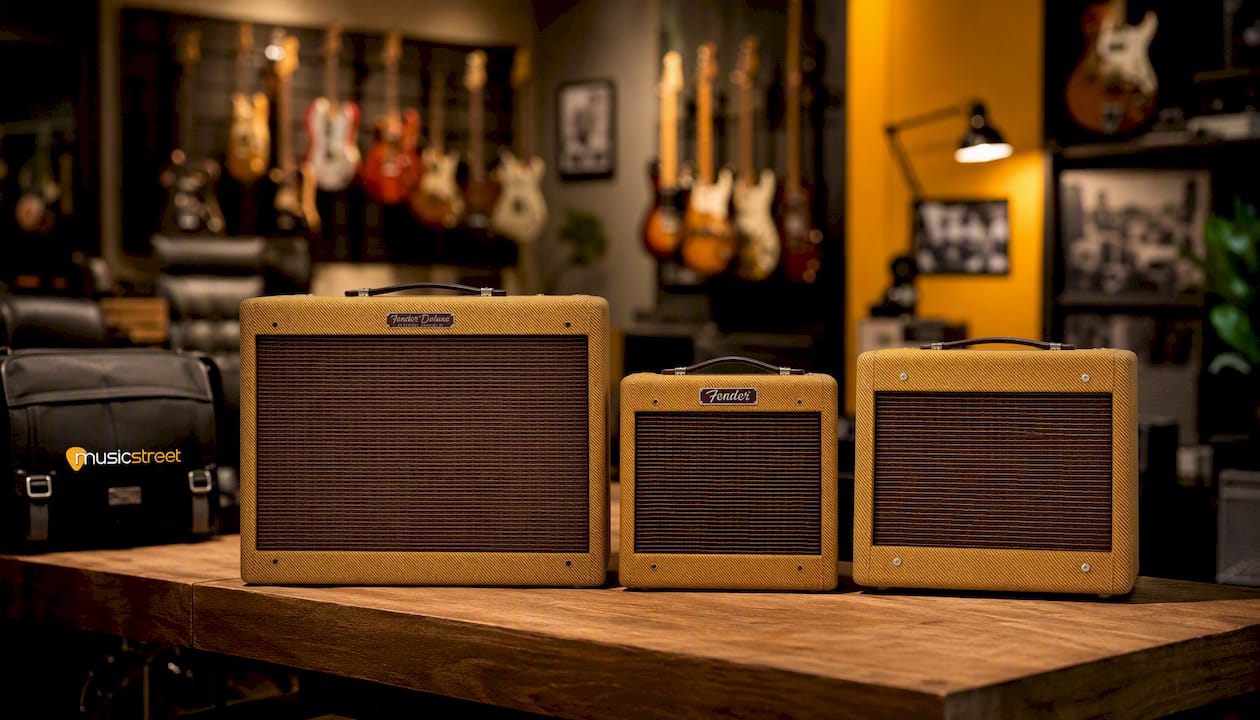
Three models available now that match the player profiles in this guide:
-
The Fender '57 Custom Champ Tweed — five watts of pure tube tone, ideal for bedroom players and recording
-
The Pro Junior IV Tweed — 15 watts, no frills, a superb pedal platform for small gigs and studio sessions
-
The Fender '57 Custom Deluxe Tweed — 12 watts of Class A power with the mid-forward character that cuts through any mix
Visit the Musicstreet store in Huntingdon to try these amps in person, or browse the full Fender amp selection online. Contact the team directly for personalised recommendations based on your playing style, budget, and the venues you play.
Sources
- Fender amplifiers — Wikipedia
- A Guitar Amp Buying Guide for Beginners | Fender
- The Complete Guide to Guitar Amp Types: Tube, Solid-State, Modeling, and Hybrid | Fader & Knob
- How to Choose Your First Guitar Amp — What to Buy and Why | ToneStakr
FAQ
What are the different types of Fender amps?
Fender produces four main amp types: tube (valve), solid-state (transistor), modelling (digital), and hybrid. The range also includes bass-specific and acoustic-specific amplifiers designed for those instruments.
What is the best Fender amp for beginners?
The Champion 20 is a practical starting point for beginners: solid-state, lightweight, and affordable, with basic built-in effects. Players ready to invest more should consider the Pro Junior IV or Blues Junior for real tube tone from the outset.
How much wattage do I need for gigging?
A 15–22W tube combo is sufficient for small venues when mic’d through a PA. Larger stages typically require 50W or more, or a direct feed from a modelling amp into the house system.
What is the difference between Blackface and Tweed Fender amps?
Tweed-era amps (approx. 1948–1960) have a mid-forward, compressed character that breaks up early. Blackface amps (1963–1967) are cleaner, with scooped mids and sparkling highs, the classic “American clean” sound most associated with Fender today.
Are Fender tube amps worth the extra cost?
For players who prioritise touch sensitivity, dynamic response, and the ability to use a pedalboard effectively, tube amps justify the higher price and ongoing maintenance. Solid-state and modelling amps are the more practical choice for players who need reliability and low running costs above all else.






Share:
How often should you change your guitar strings?
7 string guitar scale length: which one should you buy?