


Your First Guitar: 5 Common Hurdles and How to Tackle Them

Picking your first guitar isn’t just about looks or price — it’s about comfort, motivation and making steady progress. This guide walks you through the five stumbling blocks most beginners hit: choosing the right guitar type, finding the right size and neck feel, making sure the instrument is set up to play easily, budgeting for essential extras, and getting the most from in-store trials with expert guidance. By the end you’ll have practical steps for each decision and a clear idea of how Music Street’s team can help at every stage.
Top challenges beginners face when choosing their first guitar
When choosing a first guitar, beginners most often run into five key problems:
- Picking the right guitar type – Acoustic, electric or classical: this choice shapes playability and the music you’ll make.
- Finding the right size and feel – An ill-fitting guitar can cause sore hands and slow your progress.
- Making sure it’s set up to play easily – High action, poor intonation or fret buzz can derail practice.
- Missing essential accessories or under-budgeting – Skipping tuners, straps or spare strings can interrupt learning.
- Not testing guitars in-store or getting expert input – Skipping hands-on checks and advice risks buying an instrument that doesn’t suit you.
We’ll cover each of these in detail below — from comparing guitar types to test-driving instruments and planning your budget.
High dropout rates among new guitar players
Learning an instrument is tough to sustain: research from Fender suggests around 90% of new guitar players stop within their first year. That makes an encouraging, well-supported start critical to keeping people playing and improving.
That statistic underlines the point of this article: address these early problems and you’re far more likely to stick with the instrument and see real progress.
Why choosing the right guitar type matters for beginners
The type of guitar you pick sets the tone for your whole learning experience. Acoustic, electric and classical guitars differ in string tension, body shape and the accessories they need — all of which affect finger fatigue, the sound you get and how quickly you learn. Electric guitars usually have lighter strings and lower action, which can ease finger strain and speed up technique development. Getting this decision right at the start helps keep you comfortable and motivated as you build skills.
How guitar size affects comfort and playability for new players
Size matters. A guitar that fits your height and arm length makes fretting and posture easier, so you can practice longer without pain. A full-size guitar can overwhelm smaller players, while ¾ or ½ models let younger or shorter players reach the frets comfortably and build confidence faster. Choosing the right dimensions reduces fatigue and speeds up learning.
What role guitar setup plays in beginner success
A proper setup — the right string height, neck relief and intonation — makes the guitar respond under your fingers instead of fighting you. Lower action and even frets reduce buzzing and the force needed to fret notes, which helps you form chords and scales more easily. A well-set-up guitar encourages regular practice and prevents early frustration; skipping setup often hides progress behind poor tone and playability.
Why a professional setup matters for beginner playability
A professional setup adjusts action, neck relief and intonation to optimise playability, cutting down on finger discomfort and fret buzz. Many factory instruments benefit from this fine-tuning — it makes them easier to play, more reliable in tune and more enjoyable for new players, which supports consistent practice and faster improvement.
That practical benefit is exactly why we emphasise setup for beginners: a small adjustment can make a big difference to how much you enjoy playing.
Why beginners forget accessories and budgeting
It’s easy to get caught up in choosing the guitar and overlook essentials like tuners, picks, straps and spare strings. Not budgeting for maintenance or protective gear can interrupt practice when replacements are needed. Planning a starter kit keeps you ready to play and protects your investment.
How trying guitars in-store and getting expert advice helps
Testing guitars in person reveals subtle differences in neck feel, body resonance and electronics that photos can’t show. Expert staff can point out setup issues, recommend better-fitting models and help you avoid guitars with hidden problems. Combining hands-on testing with professional input helps you find an instrument that suits your body, style and budget.
How to choose between acoustic, electric and classical guitars
Choosing between acoustic, electric or classical comes down to the sound you want, where you’ll play and what feels best in your hands. Each type affects string tension, whether you need an amp and the styles it suits. Match those core features to your musical goals and environment to make learning smoother and keep your enthusiasm high.
Acoustic vs electric guitars for beginners
Electric guitars generally have lower string tension and slightly narrower necks, which can be gentler on the fingers. Acoustic guitars produce their sound acoustically and usually have heavier strings, offering immediate feedback that can help technique. Classical guitars use nylon strings that are softer on the fingers but often have wider necks, which suit fingerstyle playing more than tight chord work.
Which styles fit each guitar type?
Think about the music you want to play:
- Folk, country and singer-songwriter — steel-string acoustics are ideal for their clarity and projection.
- Rock, blues and pop — electric guitars offer pickups and tone-shaping that suit these genres.
- Classical, flamenco and fingerstyle — nylon-string guitars bring warmth and a responsive feel for finger technique.
Picking a guitar that matches the styles you love makes practice more fun and progress easier to hear.
Nylon vs steel strings: what beginners should know
| String Type | Tension & Feel | Benefit for Beginners |
|---|---|---|
| Nylon | Lower tension, softer surface | Easier on the fingertips, comfortable for chords and fingerstyle |
| Steel | Higher tension, brighter tone | Builds finger strength and gives the classic acoustic sound |
Nylon strings suit gentler practice sessions, while steel strings help develop strength and deliver the familiar acoustic tone. Your choice affects comfort and how quickly your technique develops.
How brands and models influence beginner choices
Trusted brands often mean consistent quality, reliable hardware and better support. Entry-level models from reputable makers are generally designed to balance tone, comfortable necks and durable finishes — all useful for beginners. A bit of research into beginner ranges can point you to dependable instruments that stay in tune and feel good as you improve.
Brand identity and purchase decisions
Studies show buyers often weigh brand heritage and identity alongside functional features. For many players, a brand’s reputation and history influence their choice — even beginners place value on the cultural and emotional side of an instrument.
That helps explain why brand and model matter: they can affect both practical reliability and the emotional connection you build with your guitar.
How to find the right guitar size and neck profile for comfort

A guitar that fits your body and hands reduces strain and speeds learning. An ergonomic fit encourages longer practice sessions, better posture and easier navigation of the fretboard.
Recommended guitar sizes by height and age
| Guitar Size | Player Height | Typical Age Range |
|---|---|---|
| ½ size | Up to 4’6” | 6–9 years |
| ¾ size | 4’6”–5’2” | 9–12 years |
| Full size | Above 5’2” | 13 years and older |
Smaller models help younger or shorter players reach the frets comfortably and develop coordination without overstretching.
How neck profile and body shape affect playability
Key comfort factors for beginners:
- Neck profile: Slimmer necks suit smaller hands and allow quicker finger movement.
- Fretboard radius: Flatter radii help with solos; more curved radii can make barre chords easier.
- Body shape: Cutaways give access to higher frets, while larger bodies usually offer fuller tone.
The right combination of neck and body design makes fretting and moving around the neck feel natural.
Common mistakes from ignoring size and comfort
Skipping fit checks can lead to:
- Hand cramps because the reach is too wide.
- Poor posture and back or shoulder strain.
- Frustration because basic chords feel awkward.
Addressing fit early avoids these hurdles and keeps practice enjoyable.
How to measure and test guitar fit before you buy
- Sit or stand how you’ll normally play and rest the guitar on your leg or strap.
- See if you can comfortably reach the frets up to the 12th while keeping your wrist relaxed.
- Strum open strings and try a few basic chords to check for finger strain.
- Check balance — the guitar shouldn’t tip forward or feel unsteady on one shoulder.
These checks help make sure the instrument feels right for your body and playing style.
Why guitar setup and playability are crucial for beginner retention
A well-set-up guitar sounds better and takes less effort to play, which makes practice more rewarding. Correct action, accurate intonation and smooth fretwork all contribute to an instrument that responds well and encourages regular playing.
What is guitar action and why it matters
Action is the string height above the fretboard, usually measured at the 12th fret. Lower action means you press less hard to fret notes, which reduces soreness and helps produce clearer sounds. For beginners, a good action setting makes learning far less painful and more accurate.
How intonation and fret buzz impact playing
Good intonation ensures notes stay in tune across the neck — important for training your ear and playing clean chords. Fret buzz happens when vibrating strings hit the frets, producing unwanted noise that can mask progress. Fixing these issues delivers a cleaner sound and gives you more confidence to practise.
Benefits of professional guitar setup services
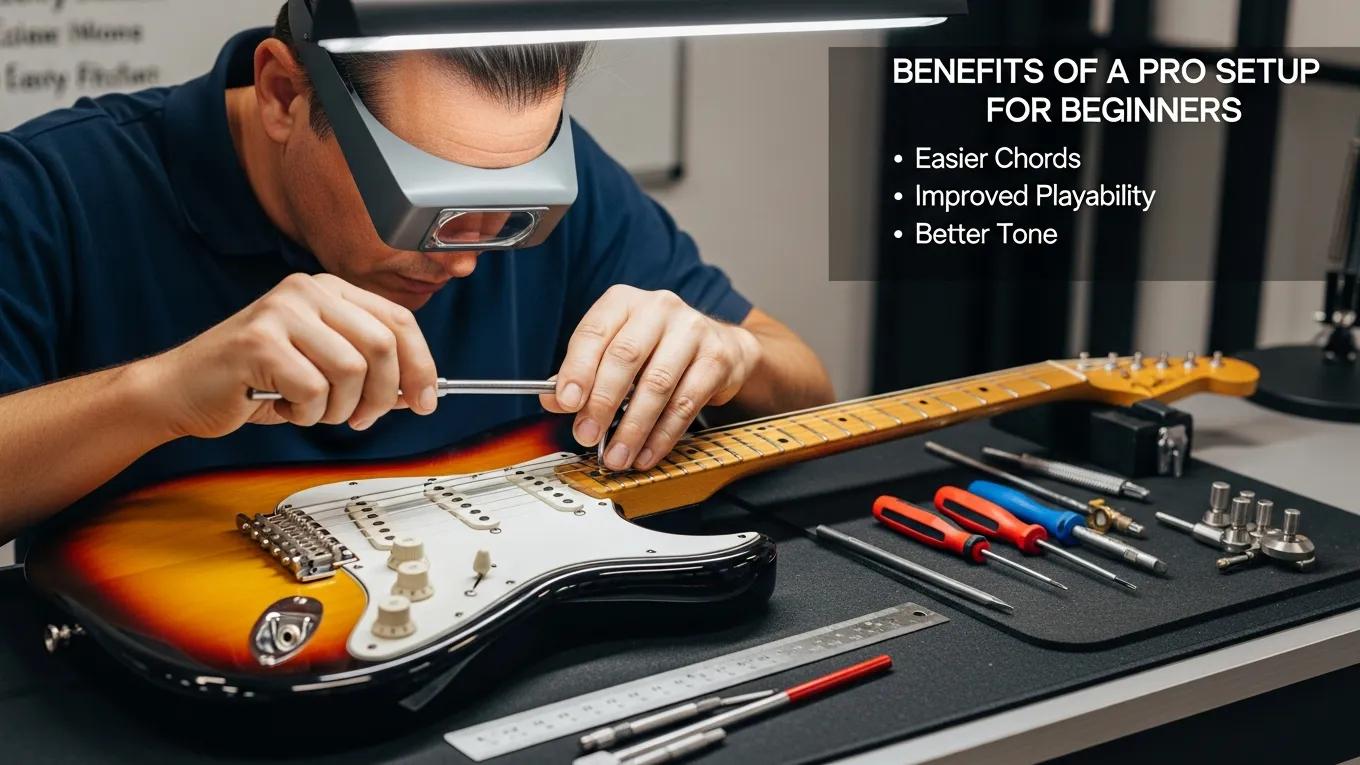
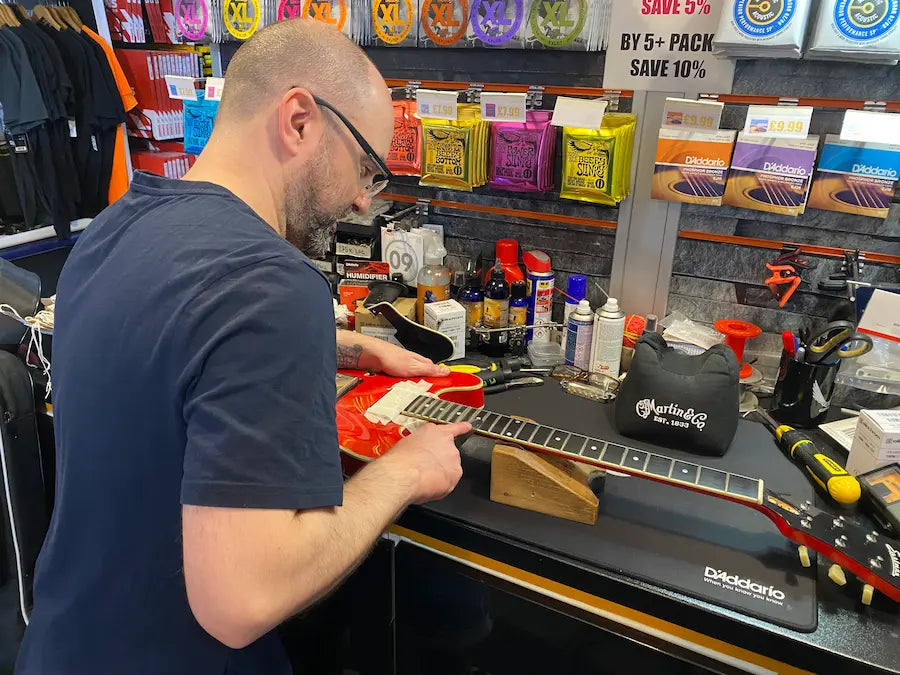
At Music Street, our setup service adjusts string height, neck relief and intonation to lift an instrument above factory defaults. Technicians will fit fresh strings, polish frets and lubricate moving parts so the guitar plays smoothly and sounds better. A professional setup makes the instrument easier to play and helps it last — a small investment that pays off through more enjoyable practice.
Simple setup checks and adjustments you can do at home
Beginner-friendly checks you can try:
- Use a feeler gauge (or a ruler) to check string height at the 12th fret.
- Run your finger along the neck edges to feel for sharp fret ends.
- Tune each string, then compare a harmonic and a fretted 12th-fret note to check intonation.
- Make tiny truss-rod adjustments only if you’re confident — or leave it to a technician.
These basic steps keep your guitar playable between professional setups.
Which accessories should beginners include and how to budget for them
Having the right accessories prevents interruptions and helps you care for your guitar. Budgeting for essentials up front keeps your learning on track and protects your instrument.
Must-have accessories for first-time players
Every beginner should have:
- A reliable clip-on tuner to stay in tune.
- A few medium-gauge picks for different playing styles.
- A comfortable strap for standing practice.
- A padded gig bag or case to keep the guitar safe on the move.
These items cover tuning, basic playing comfort and protection for your guitar.
How much to expect to spend on your first guitar and gear
Use this as a sensible starting budget:
- Your first guitar: £100–£300 for a solid beginner model.
- Accessory pack: £30–£60 for a tuner, picks, strap and gig bag.
- Professional setup: £20–£40 for an in-store adjustment.
Budgeting around £150–£400 gets you a dependable instrument, the right accessories and a quality setup.
Why beginner bundles and packages are useful
Bundles often combine a guitar with an amp (for electrics), straps and cables at a lower cost. They make sure components work together and usually include beginner-friendly features like headphone jacks on practice amps. Bundles offer good value and reduce the chance of forgetting essential items.
How forgetting accessories can slow progress
Without a tuner you’ll practise out of tune and miss ear training opportunities. No strap limits standing practice, and no case increases the risk of damage. Having the right gear avoids avoidable interruptions to learning.
How hands-on trials and expert advice help beginners choose
Trying guitars and getting advice from experienced staff gives you information you can’t get from photos alone. In-person testing confirms whether an instrument feels right, sounds how you expect and meets your musical goals.
What to focus on when testing a guitar before buying
- Comfort check — feel the neck thickness and string tension while fretting open chords.
- Sound check — strum open strings to hear projection and sustain.
- Action feel — run your hand along the fretboard to sense consistent string height.
- Electronics trial (for electrics) — plug into an amp and test pickups, volume and tone controls.
Following these steps helps you judge how the guitar actually plays, not just how it looks on paper.
What expert advice to ask for when choosing your first guitar
Useful questions for staff include:
- How the neck width matches your hand size.
- Which string gauges will be easier on your fingers and suit your tone.
- Pickup choices that suit the electric tones you want.
- How different finishes cope with humidity and wear.
- Practical tips for looking after your instrument long-term.
Taking on professional recommendations points you to models that are easier to play and built to last.
How Music Street supports beginners in-store
At Music Street we display carefully chosen beginner-friendly guitars and set aside space to try them out, all supported by knowledgeable staff. Our in-store services include personalised fittings, playability checks and short introductory lessons to help you make a confident choice.
Benefits of booking a beginner consultation or setup
A consultation gives you one-on-one time with a guitar specialist who can fine-tune the setup, recommend models and show you healthy playing posture. Our setup service tailors action, neck relief and intonation to your preferences so the guitar is comfortable and inspiring to play — helping you progress faster.
How to avoid common mistakes when picking your first guitar
Knowing the typical buying errors and how to sidestep them will keep your learning on track. Combine research, hands-on testing and expert support to build a solid foundation for steady improvement.
Frequent first-guitar buying mistakes
New players often:
- Choose a guitar only for its looks without checking playability.
- Ignore action and fret finish, which can cause buzzing.
- Fail to budget for essentials and maintenance.
- Underestimate the value of a good setup or a strap.
- Skip expert advice and assume all guitars play the same.
Avoiding these common errors keeps your focus on learning and enjoying the instrument.
How knowing about playability and setup prevents early frustration
Understanding that low action, correct intonation and smooth frets matter helps you prioritise setup. A responsive guitar cuts discomfort, encourages daily practice and builds muscle memory more effectively.
Why matching type and size to your needs matters
Choosing an instrument whose string tension, body depth and neck profile suit your build and musical goals makes playing more comfortable and rewarding. A good match removes barriers to learning and strengthens your connection with the guitar.
How to use expert resources to make better choices
Use buying guides, interactive tools and in-store consultations to inform your decision. Music Street’s online articles, workshops and personalised setup appointments combine to give you the confidence and knowledge to choose an instrument that supports your journey.
Picking a guitar that fits your style, size and budget helps you avoid early setbacks and accelerates progress. Pop in to Music Street for tailored advice, fittings and professional setup services that ensure your first guitar inspires steady improvement and lasting enjoyment.







Share:
How to practise guitar scales and boost your technique
Understanding Acoustic vs. Electric Guitars: Essential Differences for Beginner Musicians Explained