

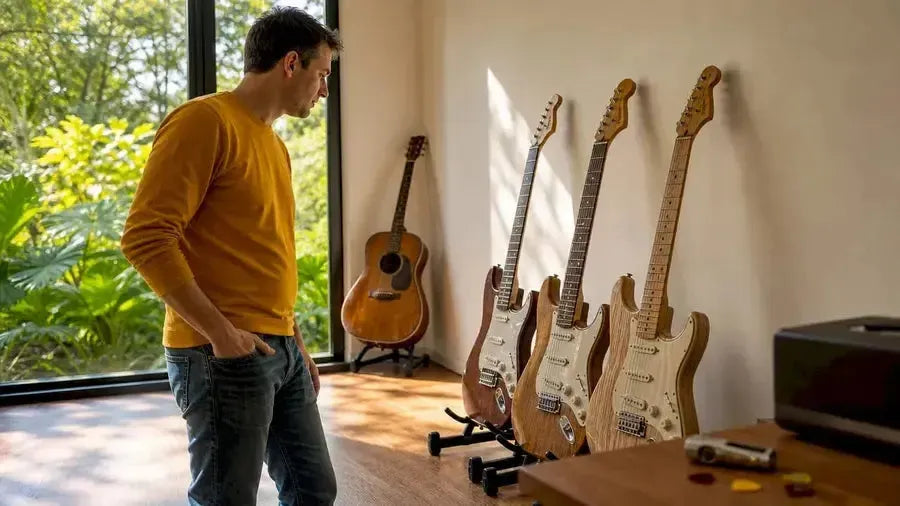
The choice of tonewood significantly influences a guitar’s weight, feel, and visual appeal, though it impacts amplified tone less than pickups do. Alder, mahogany, and ash are popular for their distinct sonic signatures and suitability across genres, while other woods like basswood and maple offer specialized aesthetic and tactile benefits. Ultimately, selecting the best wood depends on a player’s musical style, comfort preferences, and aesthetic taste.
The best electric guitar wood is defined by the balance it strikes between tonal character, physical weight, and visual appeal. Alder, mahogany, and ash are the three tonewoods that dominate production guitars from Fender, Gibson, and PRS, and for good reason. Each delivers a distinct sonic signature that shapes your instrument before a single pickup is wound. Whether you are buying your first electric or speccing a custom build, understanding electric guitar tonewoods is the single most useful thing you can do before parting with your money.
What are the best electric guitar woods and their tonal characteristics?
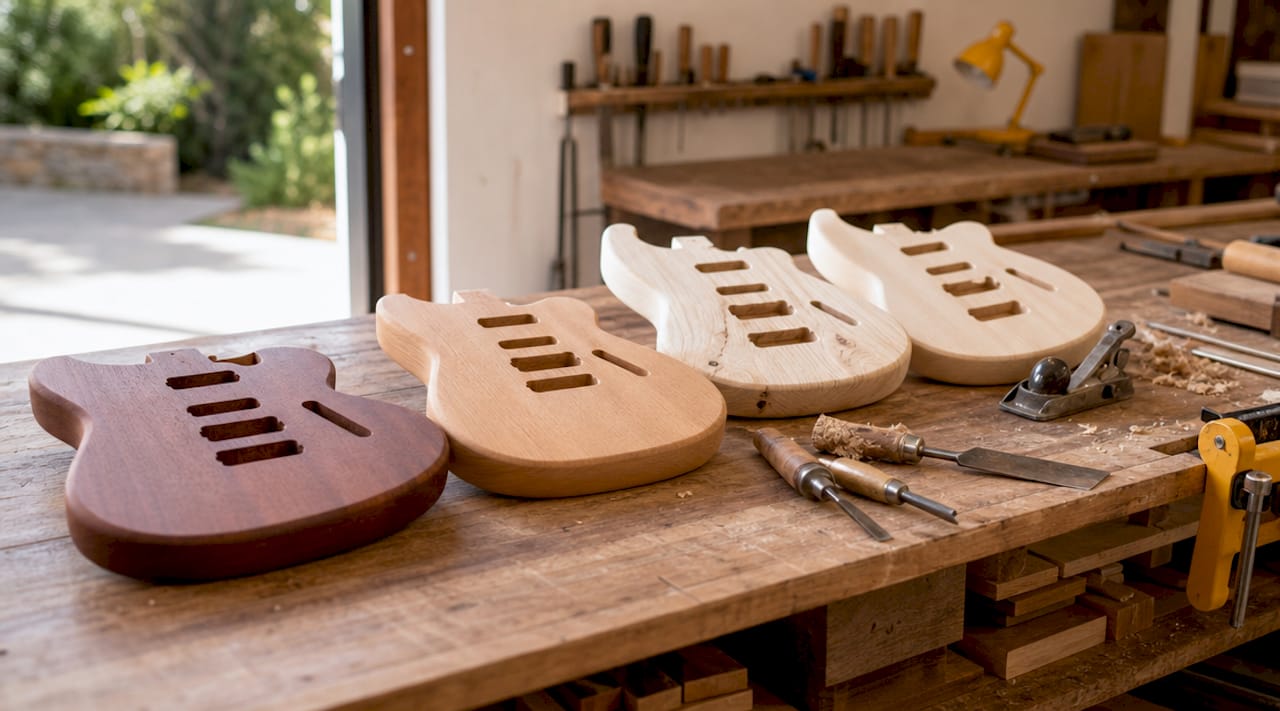
Choosing the right body material starts with understanding what each wood actually does. The types of guitar wood used in electric guitars fall into a handful of reliable categories, each with measurable differences in density, grain structure, and resonant character.
Alder is the most versatile and widely used body wood, featured in over 70% of classic Stratocaster models for its balanced tone and medium density. Its density ranges from 0.4 to 0.7 g/cm³, producing full lows, clear highs, and slightly scooped mids. That balanced frequency response is why alder suits so many genres without ever feeling like a compromise.
Mahogany produces warm, deep, and round sounds with smooth highs, and its density sits between 0.5 and 0.6 g/cm³. The result is a midrange-forward character with excellent sustain, which is precisely why Gibson has used it in Les Paul bodies for decades. Blues and rock players gravitate towards mahogany because it adds weight and warmth to driven tones.
Ash splits into two distinct varieties worth knowing. Swamp ash, with a density around 0.54 g/cm³, is lighter and more resonant than its northern counterpart, with scooped mids and an open, airy quality that suits country and funk perfectly. Hard ash is denser, brighter, and considerably heavier. The two woods behave so differently that treating them as interchangeable is a genuine mistake.
Basswood is a lightweight and soft wood with a neutral and full tone, popular in budget guitars and known for smooth low-end and reduced brightness. Its density ranges from 0.3 to 0.6 g/cm³, making it one of the lightest options available. Many Japanese-made guitars from the 1980s and 1990s used basswood to great effect, proving that affordable does not mean inferior.
| Wood | Density (g/cm³) | Tonal character | Best suited for |
|---|---|---|---|
| Alder | 0.4–0.7 | Balanced, full lows and highs | Rock, pop, blues, country |
| Mahogany | 0.5–0.6 | Warm, midrange-rich, sustained | Blues, rock, jazz |
| Swamp ash | ~0.54 | Bright, open, scooped mids | Country, funk, clean tones |
| Basswood | 0.3–0.6 | Neutral, smooth low-end | Budget builds, metal, rock |
| Maple | 0.6–0.75 | Bright, crisp, glassy | Tops, necks, jazz |
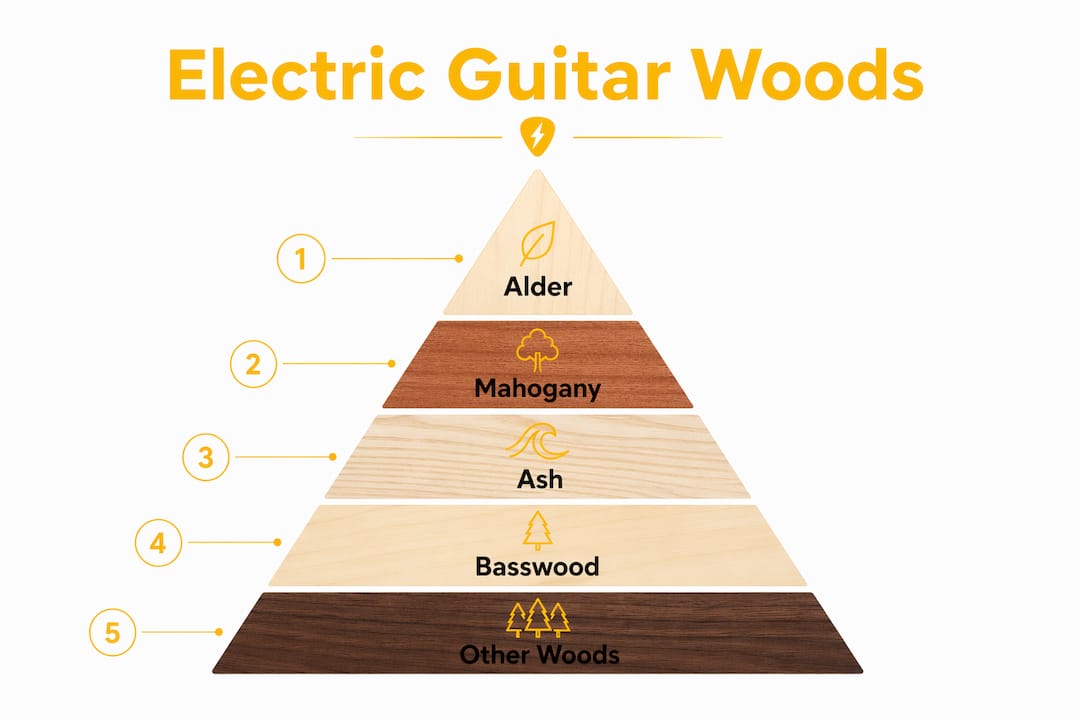
Beyond these five, woods like koa, korina, walnut, poplar, and cherry each appear in production and boutique guitars. Maple, with a density of 0.6 to 0.75 g/cm³, is too dense and bright for most full bodies, so builders typically use it as a carved top over a mahogany back, as seen on the Les Paul Standard. The combination layers maple’s clarity over mahogany’s warmth, producing a tonewood pairing that has defined rock guitar for 70 years.
Pro Tip: If you are buying a production guitar and the spec sheet lists “select hardwood” without naming the species, ask the retailer directly. Knowing the actual wood is not pedantry. It tells you what the guitar will weigh and how it will respond.
Does wood actually affect your amplified tone?
This is the most contested question in guitar building, and the honest answer is more nuanced than either camp admits. Expert Teemu Suomala highlights that wood choice mainly affects unplugged resonance, but the amplified tone mostly depends on pickups and electronics. That is not a dismissal of tonewoods. It is a clarification of where their influence is strongest.
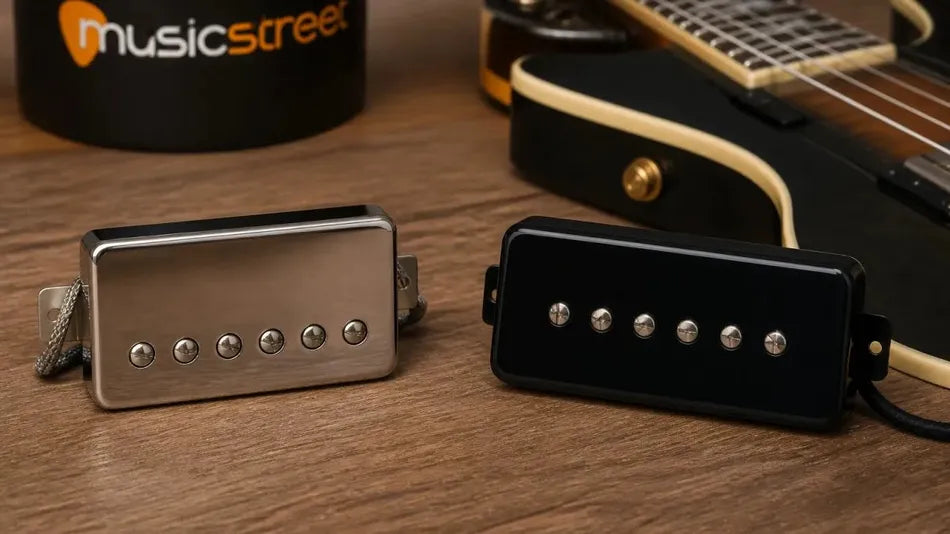
Magnetic pickups work by sensing string vibration within a magnetic field. They do not directly sense the body vibrating. The body wood influences how the strings vibrate and sustain, which in turn feeds into the pickup signal. Tests show that amplified tone is dictated primarily by pickups, strings, and electronics rather than body wood. This means swapping pickups will change your sound more dramatically than swapping body woods.
Where wood makes the most audible difference is in semi-hollow and hollow body guitars, where the acoustic chamber contributes directly to the amplified signal. A fully solid alder Stratocaster and a fully solid mahogany Les Paul will sound different through the same amp and pickups, but much of that difference comes from the pickup types fitted as standard rather than the wood alone. Separating those variables in a real-world context is genuinely difficult.
“The wood affects how the guitar feels and resonates in your hands. That tactile feedback influences how you play, which ultimately shapes your tone more than the wood itself does.” — Musicstreet
Pro Tip: Before attributing a tonal quality to the wood, swap the strings and adjust the pickup height. Both changes are free and will often produce a more dramatic result than changing the body material.
How do wood types affect weight, playability, and aesthetics?
The impact of wood on guitar sound is well documented, but its effect on comfort and appearance is equally significant for most players. A guitar you enjoy holding is a guitar you will practise more.
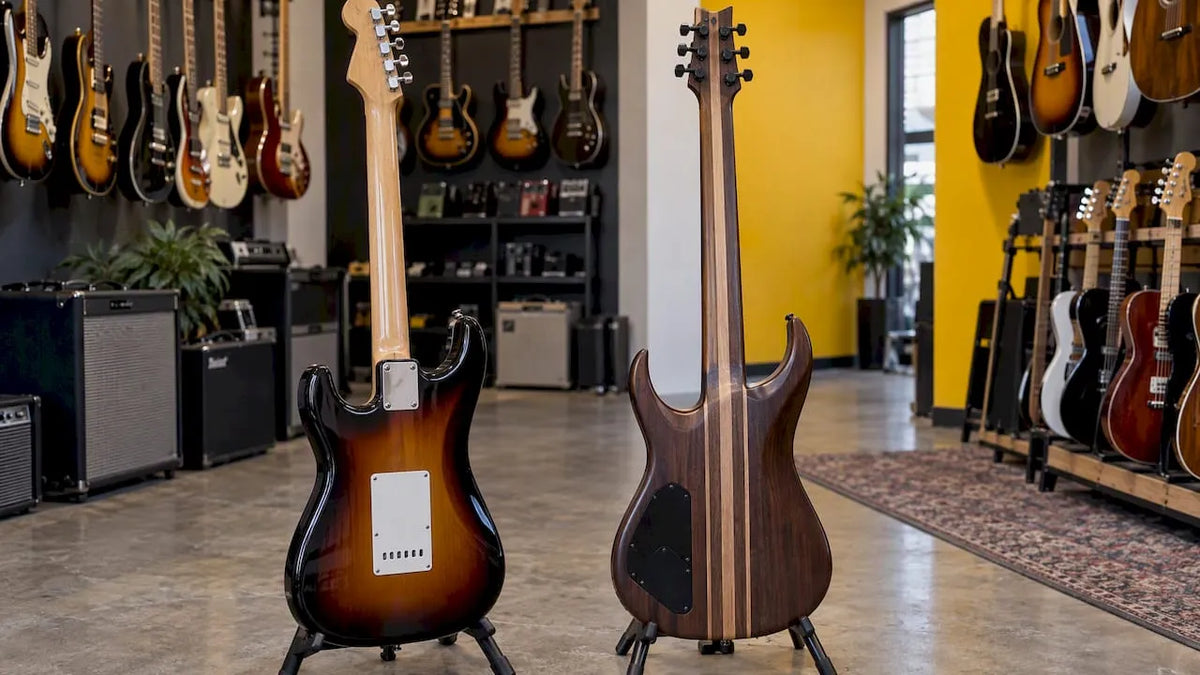
Weight is the most immediate physical difference between body woods. Heavier woods like mahogany increase guitar weight compared to lighter options like basswood or swamp ash. A mahogany Les Paul Standard typically weighs between 4 and 4.5 kg, while a swamp ash Telecaster can come in under 3 kg. Over a three-hour gig, that difference is felt in your shoulder and lower back, not just your ears.
Here is how the main woods compare on the factors that affect daily playability:
- Swamp ash: Light, resonant, and visually striking with open grain that takes translucent finishes beautifully. The grain pattern on a natural ash Telecaster is one of the most recognisable looks in guitar history.
- Alder: Medium weight, tight grain, and easy to finish. It is typically painted rather than stained because the grain is not visually dramatic. Most sunburst Stratocasters hide alder beneath the colour.
- Mahogany: Heavier, with straight to interlocked grain that accepts both opaque and natural finishes well. The warm reddish-brown colour of natural mahogany is a large part of the Les Paul’s visual identity.
- Basswood: Very light, with a plain, unremarkable grain. Almost always finished in opaque colours. Its workability is excellent, which is why it is a favourite for high-output metal guitars where looks are secondary to performance.
- Maple: Dense and heavy as a full body, but visually spectacular as a top. Figured maple, including flame and quilted varieties, commands a significant price premium and defines the look of many premium guitars.
Workability matters to builders and affects the final instrument. Basswood and alder are easy to rout and shape, keeping production costs lower. Maple and hard ash are harder on tooling and take longer to work, which contributes to higher retail prices on maple-topped instruments.
How to choose the best electric guitar wood for your style
There is no universally best wood. The right choice depends on your genre, your physical preferences, and what you want the guitar to look like. Here is a practical framework for making that decision.
-
Match the wood to your genre. Mahogany suits blues, classic rock, and jazz because its warmth and sustain complement driven, expressive playing. Swamp ash suits country, funk, and clean-toned playing because its brightness and openness cut through a mix. Alder is the safe choice for players who move between genres. You can read more about connecting wood to your tone on the Musicstreet blog.
-
Consider your body first. If you play standing for long periods, a lighter wood like swamp ash or basswood will serve you better than a dense mahogany slab. Weight relief routing can help with heavier woods, but a naturally light body is always preferable.
-
Think about the whole instrument. Body wood does not exist in isolation. A mahogany body paired with a maple neck produces a brighter result than an all-mahogany construction. A rosewood fretboard adds warmth; a maple fretboard adds clarity. The role of guitar woods across the whole instrument compounds in ways that matter.
-
Set a realistic budget. Alder and basswood are affordable and widely available. Premium figured maple tops, koa, and korina carry significant cost premiums. For beginners, basswood or alder delivers excellent results without the price tag.
-
Prioritise feel over specification. A guitar that resonates well in your hands when played unplugged will almost always feel more alive when amplified. Play before you buy whenever possible.
Pro Tip: When comparing two guitars with different woods, use the same amp settings and the same pick. Changing too many variables at once makes it impossible to isolate what the wood is actually contributing.
Key takeaways
The best electric guitar wood is not a single answer. It is the wood that best matches your tonal goals, physical comfort, and aesthetic preferences working together.
| Point | Details |
|---|---|
| Alder is the most versatile choice | Balanced tone and medium weight make it suitable for most genres and skill levels. |
| Mahogany delivers warmth and sustain | Best suited to blues, rock, and jazz players who want midrange richness and long sustain. |
| Wood affects feel more than amplified tone | Pickups and electronics shape amplified sound more than body wood in solid-body guitars. |
| Weight varies significantly between species | Swamp ash and basswood are noticeably lighter than mahogany, which matters over long sessions. |
| Match wood to the whole instrument | Neck and fretboard woods compound the body’s tonal character and should be chosen together. |
What I have learnt from years of handling tonewoods
After years of handling guitars at Musicstreet, the thing that surprises most players is how little the wood matters in isolation and how much it matters in context. I have played alder-bodied guitars that sounded warmer than mahogany ones, simply because the pickups were wound differently. I have also played two guitars built from the same batch of swamp ash that felt and sounded noticeably different from each other. Wood is a natural material and it behaves like one.
My personal preference leans towards swamp ash for clean-toned playing and alder for anything driven. Both are forgiving, light enough for long sessions, and they take a finish well. I find mahogany genuinely beautiful for studio work, but I would not choose it for a three-set gig without a good strap and some ibuprofen on standby.
The sustainability conversation around tonewoods is one the industry cannot ignore. Brazilian rosewood has been CITES-restricted since 1992. Honduran mahogany is increasingly scarce. Alternatives like roasted pine, paulownia, and thermally treated woods are appearing in serious production guitars, and some of them are genuinely excellent. Dismissing them because they are unfamiliar is the wrong instinct.
My honest advice is to spend less time worrying about the wood species on the spec sheet and more time playing the actual guitar. The instrument that makes you want to pick it up every day is the right one, regardless of what is written on the label.
— Musicstreet
Explore electric guitars at Musicstreet

Musicstreet stocks a carefully selected range of electric guitars spanning the most popular tonewoods, from alder-bodied Fender Stratocasters to mahogany-loaded Gibson Les Pauls and everything in between. Whether you are after the bright snap of a swamp ash guitar or the warm sustain of a mahogany body, the team at Musicstreet’s Huntingdon store can help you find the right match for your playing style and budget. Browse the full collection at Musicstreet and take advantage of free UK delivery, expert setup, and post-sale support that keeps your guitar playing its best.
FAQ
What is the best wood for an electric guitar body?
Alder is the most widely recommended body wood for its balanced tone, medium weight, and versatility across genres. Mahogany is the preferred choice for players who want warmth and sustain in blues and rock.
Does wood type really affect electric guitar tone?
Wood affects unplugged resonance and sustain, but amplified tone is dictated primarily by pickups and electronics. The difference between body woods is most audible in semi-hollow and hollow body instruments.
Is mahogany or alder better for rock guitar?
Mahogany suits heavier rock and blues because of its warm, midrange-rich character and strong sustain. Alder is more neutral and works well across rock subgenres, particularly where a cleaner, more balanced response is needed.
Why is swamp ash used in country and funk guitars?
Swamp ash has a density of around 0.54 g/cm³ and produces a bright, open tone with scooped mids that cuts through a mix cleanly. That articulate, airy quality suits the percussive picking styles common in country and funk.
What is the lightest wood used for electric guitar bodies?
Basswood is one of the lightest body woods available, with a density between 0.3 and 0.6 g/cm³. Swamp ash is also notably light and is preferred when both low weight and tonal brightness are priorities.





Share:
Electric guitar tips for beginners: build real skills fast
Guitar tips for beginners: build real skills fast