


The difference between acoustic and electric guitar comes down to three things: how they produce sound, how they feel to play, and which music styles they suit best. Acoustic guitars generate sound through the natural resonance of a hollow wooden body. Electric guitars use magnetic pickups to convert string vibration into an electrical signal, which an amplifier then projects. Both are legitimate starting points for a beginner, but choosing the wrong type for your musical goals can quietly drain your motivation before you ever get good.
What is the difference between acoustic and electric guitars in construction and sound?
Acoustic and electric guitars produce sound in fundamentally different ways, and that difference shapes everything else about them. An acoustic guitar has a hollow body with a soundhole. When you pluck a string, the vibration travels through the bridge into the body, which amplifies the sound naturally. No power socket required.
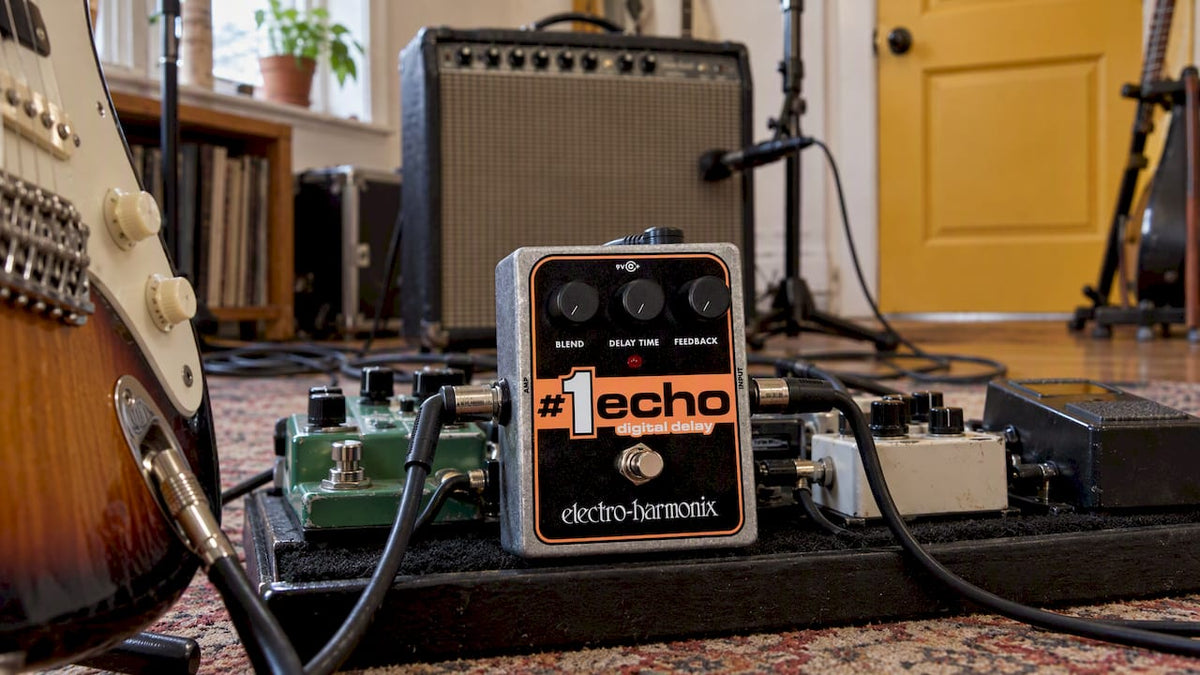
Electric guitars rely on a completely different mechanism. Magnetic pickups sit beneath the strings and detect their vibration as a fluctuating electrical signal. That signal travels through a cable to an amplifier, which produces the audible sound. Most electric guitars have solid bodies, though semi-hollow and hollow-body electric designs also exist. Each of these types of guitar bodies produces a distinct tonal character.

The tonal difference is significant. Acoustic guitars deliver warmth, natural sustain, and an organic quality that suits unplugged settings. Electric guitar sound is shaped by the pickups, the amplifier, and any effects pedals in the chain. That combination gives electric players a far wider palette of tones, from clean jazz to heavily distorted metal.
String materials also matter. Steel-string acoustics produce a bright, projecting tone. Classical acoustics use nylon strings, which are softer and warmer. Electric guitars use lighter steel strings designed to interact with pickups rather than project acoustically.
Pro Tip: If you want to hear the real character of an acoustic guitar, play it unplugged in a quiet room. If it sounds dull or thin without amplification, no amount of electronics will fix that.
| Feature | Acoustic guitar | Electric guitar |
|---|---|---|
| Sound source | Hollow body resonance | Magnetic pickups and amplifier |
| Body type | Hollow | Solid, semi-hollow, or hollow |
| String type | Steel or nylon | Light-gauge steel |
| Equipment needed | None | Amplifier, cable, and power |
| Tonal range | Natural, warm, organic | Wide, shaped by gear |
How do playability and physical feel differ between the two?
Physical comfort is one of the most underrated factors in choosing a guitar, and the two types feel very different in your hands. Acoustic guitars typically have higher action (the distance between the strings and the fretboard) and heavier string gauges. That combination demands more finger strength and callous development before playing feels comfortable.
Electric guitars have lower string tension and action, which makes fretting chords and bending strings noticeably easier. For a beginner, that physical ease can mean the difference between practising daily and giving up after a fortnight. The fingers still need to toughen up, but the process is less punishing.
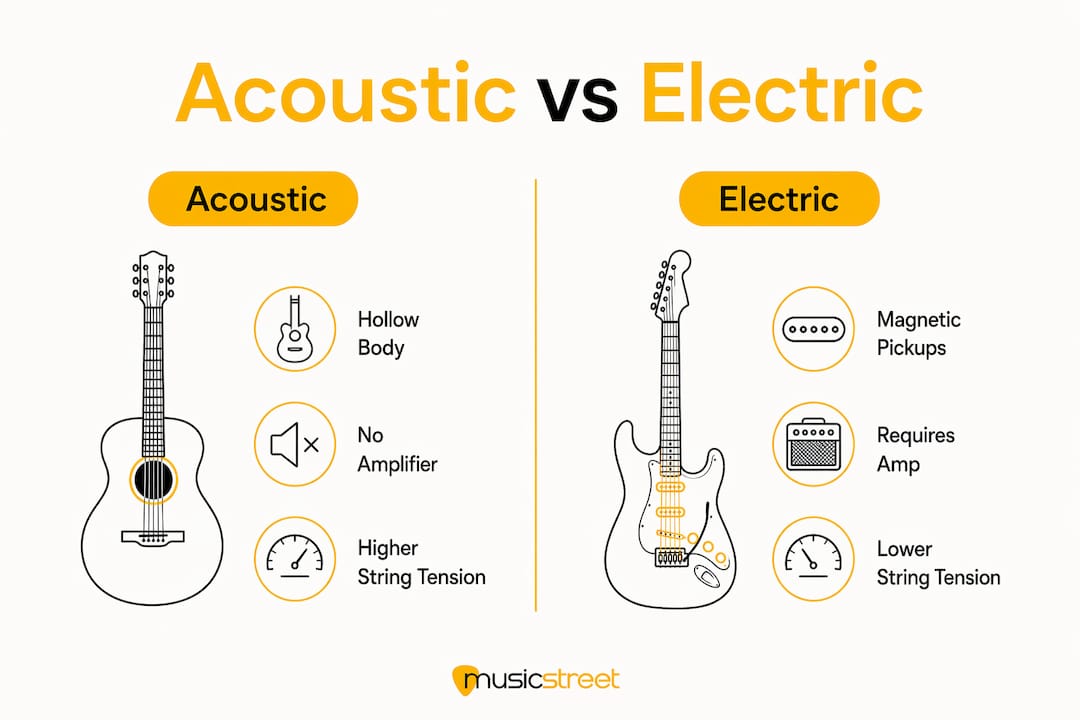
Neck profile and width also vary. Acoustic necks tend to be wider at the nut, which can stretch the fretting hand further on chord shapes. Electric necks are generally narrower and flatter, which many players find more comfortable for lead playing and fast runs.
Physical comfort significantly affects motivational success in learning. Beginners with hand sensitivity, joint concerns, or smaller hands often find electric guitars or classical nylon-string acoustics far easier to manage from day one.
Key playability differences to weigh up:
- String action: Acoustic guitars sit higher off the fretboard, requiring more finger pressure to fret cleanly.
- String gauge: Acoustic steel strings are heavier, building finger strength but causing more initial discomfort.
- Neck width: Acoustic necks are wider, which can challenge beginners forming barre chords.
- Bending strings: Electric guitars respond to bends with far less effort, which suits blues and rock techniques.
- Amplified feedback: Electric guitar amplification exposes every flaw sharply, which accelerates technical correction but demands precision from the start.
Pro Tip: Before buying, hold the guitar and fret a few chords. If your hand cramps within thirty seconds, the neck profile or string height may not suit your anatomy. A good setup from a luthier can lower the action significantly on most guitars.
Which music styles suit acoustic versus electric guitars?
Genre preference strongly dictates the best guitar type choice, more than price or complexity. This is the single most important question to ask yourself before spending any money.
Acoustic guitars are the natural home for:
- Folk and singer-songwriter: The acoustic’s warm, self-contained sound suits intimate performances and storytelling. Artists from Joni Mitchell to Ed Sheeran built careers on it.
- Country: Steel-string acoustics deliver the bright, twangy resonance that defines country rhythm playing.
- Classical and fingerstyle: Nylon-string classical guitars produce a soft, rounded tone ideal for intricate fingerpicking and formal repertoire.
- Worship and acoustic pop: The acoustic guitar’s natural projection works perfectly in church settings and stripped-back pop arrangements.
- Campfire and casual play: No amplifier means you can play anywhere, which suits players who want music as a social or relaxing activity.
Electric guitars are the better choice for:
- Rock and metal: Distortion and high-gain tones are only possible through an amplifier and effects chain. An acoustic simply cannot replicate them.
- Blues: The electric guitar’s ability to sustain notes and respond to picking dynamics makes it the definitive blues instrument.
- Jazz: Semi-hollow and hollow-body electrics produce the warm, round tones that define jazz guitar.
- Funk: Clean, percussive electric tones with a sharp attack suit funk rhythm playing in a way acoustics cannot match.
- Experimental and ambient: Effects pedals open up textures and sounds that have no acoustic equivalent.
Acoustic guitars excel in styles needing organic resonance without amplification, while electric guitars’ amplified sound enables a wide palette of tones shaped by equipment. If your musical heroes play electric, start electric. Trying to learn acoustic first “to build discipline” is advice worth questioning.
Practical considerations: cost, equipment, and portability
The acoustic guitar wins on simplicity. Acoustic guitars do not require amplification, making them ready to play the moment you take them out of the case. For a beginner on a budget, that matters. There are no cables to buy, no amplifier to research, and no settings to learn before you can make a sound.
Electric guitars carry additional costs. Electric guitars require amplifiers and cables, which add logistical complexity and initial investment. A beginner electric starter pack typically bundles the guitar, a small practice amplifier, a cable, and sometimes a tuner. That bundle approach keeps costs manageable, but the total outlay is higher than a comparable acoustic.
Portability is another real-world factor. An acoustic guitar goes anywhere without a second thought. An electric guitar needs power and an amplifier to be heard properly, which limits where you can practise. Flat dwellers and those sharing walls with neighbours often find acoustic guitars problematic for volume reasons, though a small electric through headphones solves that problem neatly.
The good news on skill transfer is clear. Chords, scales, and rhythm technique are transferable between acoustic and electric guitars. The muscle memory you build on one type carries across to the other. Most beginner curricula are identical between the two, which means switching types later does not mean starting from scratch.
| Consideration | Acoustic | Electric |
|---|---|---|
| Extra equipment needed | None | Amplifier, cable, power |
| Portability | High | Moderate |
| Noise level | Loud unamplified | Quiet through headphones |
| Beginner cost | Lower | Moderate to higher |
| Skill transferability | Full | Full |
For players who want the best of both worlds, electro-acoustic guitars are worth considering. The Yamaha FGC-TA TransAcoustic range, for example, produces reverb and chorus effects internally without needing an amplifier. That kind of versatility suits players who want acoustic playability with some electric-style tonal control.
Key takeaways
The single most important factor in choosing between acoustic and electric is the music that excites you, because motivation drives practice, and practice drives progress.
| Point | Details |
|---|---|
| Sound production | Acoustics use hollow body resonance; electrics use pickups and an amplifier. |
| Playability | Electric guitars have lower action and lighter strings, making them physically easier for most beginners. |
| Genre suitability | Acoustics suit folk, country, and singer-songwriter; electrics suit rock, blues, metal, and jazz. |
| Equipment costs | Acoustics need no extra gear; electrics require an amplifier and cable at minimum. |
| Skill transfer | Technique fundamentals transfer fully between acoustic and electric guitars. |
What I’ve learnt from watching players choose the wrong guitar
The most common mistake I see is a beginner buying an acoustic because someone told them it would “build character.” That advice ignores the single most important variable: what music makes you want to pick the instrument up every day.
Playing enjoyment correlates directly with practice consistency and skill development. A player who loves Jimi Hendrix but buys a steel-string acoustic because it seemed more sensible will practise less. That is not a theory. It plays out repeatedly.
Physical comfort matters more than most guides admit. I have seen adults with mild arthritis or hypermobile joints struggle through weeks of acoustic practice when a lighter-gauge electric would have kept them going. Physical comfort significantly affects motivational success, and there is no virtue in suffering through an instrument that hurts your hands.
My honest advice: play the music you love in your head, then buy the guitar that makes that sound. If you are torn, visit Musicstreet in Huntingdon and try both types in person. The one you do not want to put down is the right answer.
— Music
Guitars for every style at Musicstreet
Musicstreet stocks a carefully chosen range of acoustic, electric, and electro-acoustic guitars for players at every level, from first-timers to experienced musicians looking for their next instrument.
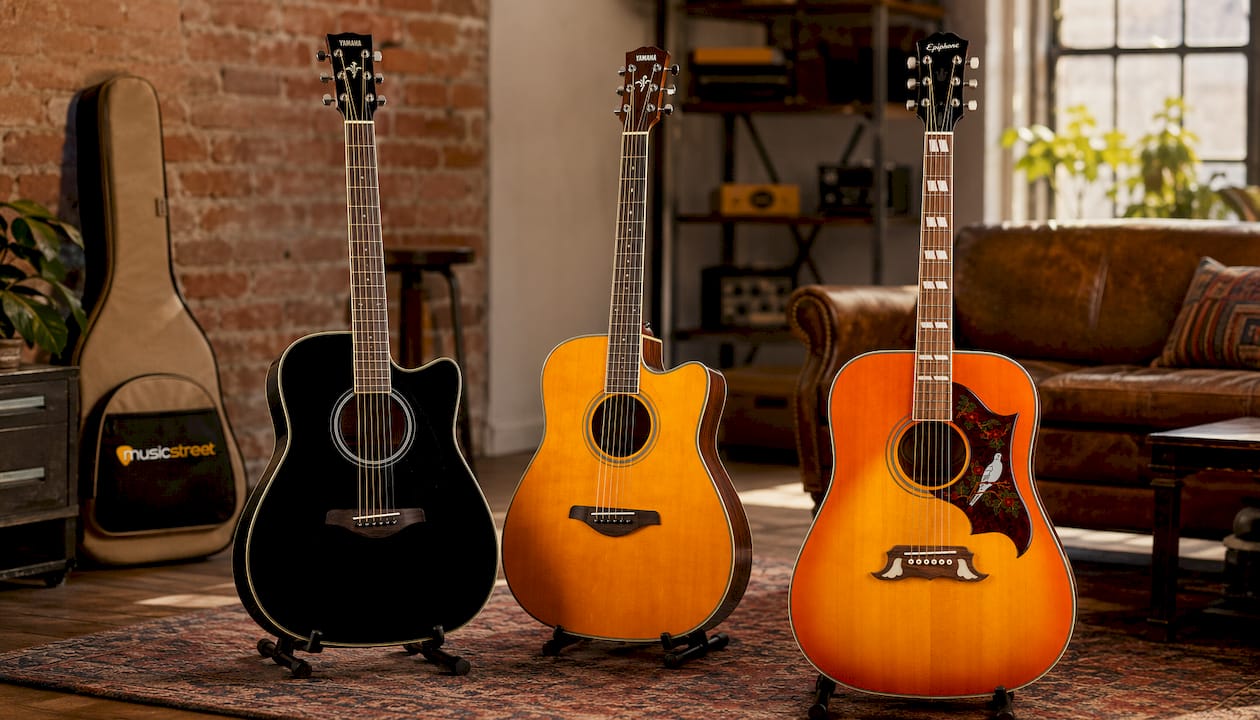
For players who want acoustic warmth with added tonal flexibility, the Yamaha FGC-TA in Black delivers built-in reverb and chorus effects without an amplifier. Players looking for a classic steel-string acoustic will find the Epiphone Dove Studio a beautifully accessible option with genuine character. Every guitar at Musicstreet is professionally inspected before dispatch, and the team offers expert setup advice to help you find the right fit. Free UK delivery is available on qualifying orders, and the physical store in Huntingdon welcomes players who want to try before they buy.
FAQ
What is the main difference between acoustic and electric guitars?
Acoustic guitars produce sound through natural body resonance with no equipment needed. Electric guitars use magnetic pickups and require an amplifier to produce their full sound.
Is acoustic or electric guitar easier for beginners?
Electric guitars are generally physically easier to play due to lower string action and lighter strings. However, the best choice depends on the music style that motivates you to practise.
Can I learn on acoustic and then switch to electric?
Yes. Core skills transfer readily between guitar types because chords, scales, and rhythm technique use the same muscle memory on both instruments.
Do electric guitars need a lot of extra equipment?
At minimum, an electric guitar requires an amplifier and a cable. Starter packs bundle these together, which keeps the initial cost manageable for beginners.
Which guitar suits acoustic vs electric for beginners choosing by genre?
Beginners drawn to folk, country, or singer-songwriter styles suit acoustic guitars. Those inspired by rock, blues, metal, or jazz will find an electric guitar the more natural fit from day one.




Share:
Top 5 acoustic guitar brands: your 2026 guide
Bass vs electric guitar: key differences explained