


Acoustic guitars are fully hollow and produce sound through natural resonance, while semi-acoustic guitars feature a hollow body with a solid center block and magnetic pickups. Semi-hollows blend acoustic warmth with electric amplification, making them suitable for genres like jazz and blues, unlike acoustics which excel in folk and country. They differ greatly in unplugged volume and feedback resistance, influencing their ideal playing environments and amplification needs.
The difference between acoustic and semi-acoustic guitar comes down to body construction and how each instrument produces sound. Acoustic guitars are fully hollow, generating tone entirely through the resonance of wood and air. Semi-acoustic guitars, known in the industry as semi-hollow electrics, combine a hollow body with a solid centre block and magnetic pickups, blending acoustic warmth with electric amplification. That single structural difference shapes everything: tone, volume, feedback behaviour, and which genres each guitar suits best.
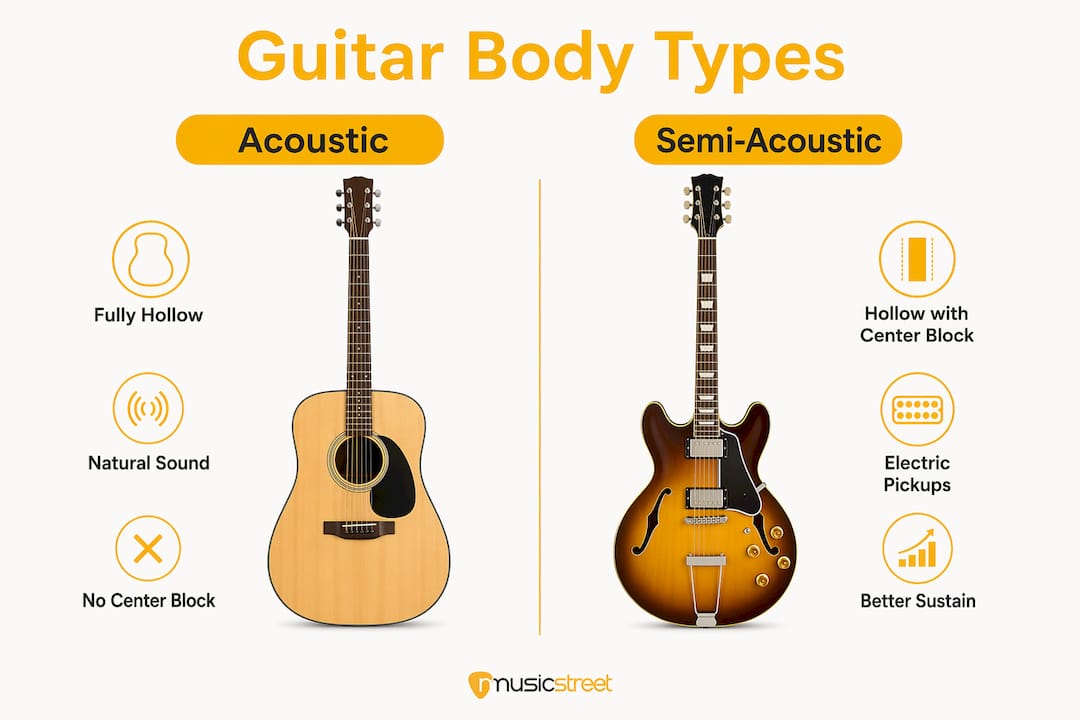
What are the body construction differences between acoustic and semi-acoustic guitars?
The fully hollow body of an acoustic guitar is its engine. Spruce or cedar tops, mahogany or rosewood backs and sides, and internal bracing work together to amplify string vibration into audible sound. No electronics are needed. The guitar is self-contained.
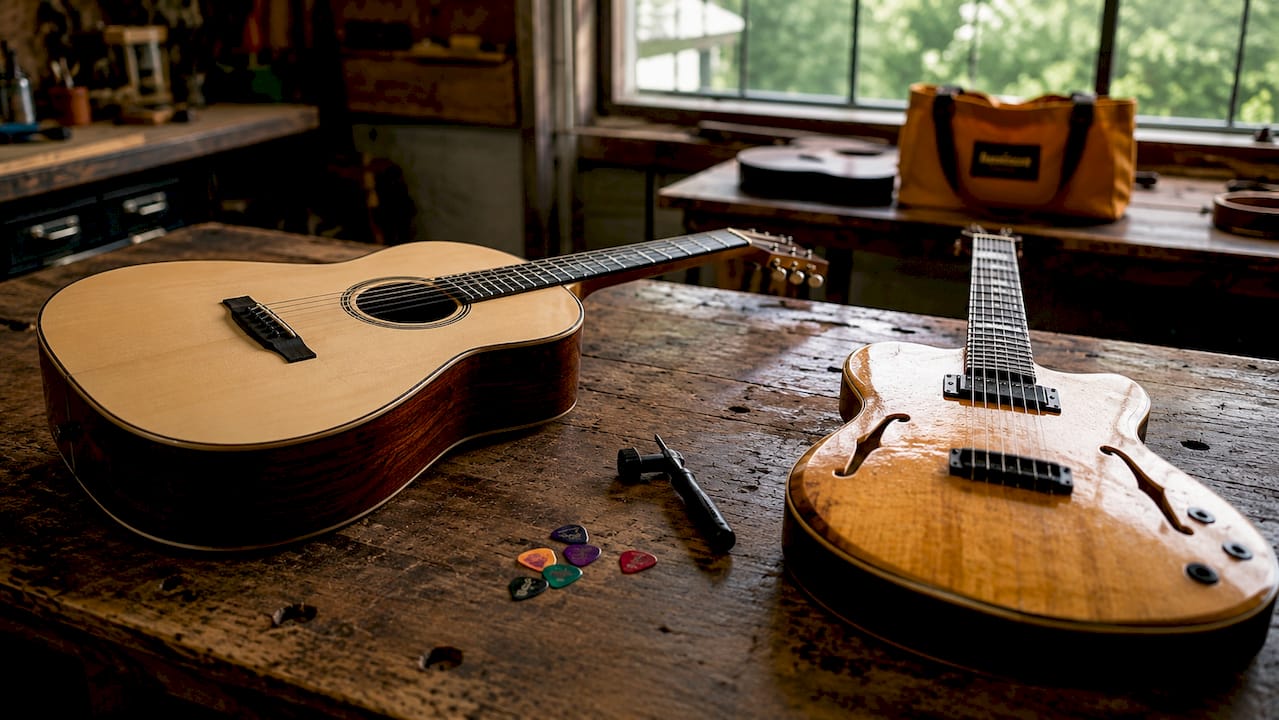
Semi-acoustic guitars take a different approach. They feature hollow wings on either side of a solid wooden centre block that runs through the middle of the body. That centre block reduces feedback by decoupling the top plate from the back, preventing the “howling” that plagues fully hollow guitars at high gain. The Gibson ES-335 is the most widely cited example of this design, and it remains the reference point for the semi-hollow format.
One distinction causes persistent confusion among buyers. Acoustic-electric guitars are pure acoustics fitted with piezo pickup systems and onboard preamps. They are not semi-hollow electrics. Semi-hollow electrics use magnetic pickups and are built for amplified performance. The bodies look similar at a glance, but the internal construction and electronics are entirely different.
| Feature | Acoustic | Semi-acoustic (semi-hollow electric) |
|---|---|---|
| Body type | Fully hollow | Hollow with solid centre block |
| Sound production | Acoustic resonance only | Magnetic pickups and body resonance |
| Feedback resistance | Low at high volume | High, due to centre block |
| Unplugged volume | Loud and full | Quieter than acoustic |
| Typical genres | Folk, singer-songwriter, country | Blues, jazz, indie rock |
Pro Tip: If sustain matters to you, choose a semi-hollow. The centre block anchors the bridge and pickups, which extends note decay compared to a fully hollow body.
How do acoustic and semi-acoustic guitars differ in sound unplugged?
Acoustic guitars are louder and fuller unplugged than any other guitar type. The fully hollow body projects sound across a room without amplification. That projection makes acoustics the natural choice for campfire sessions, open mic nights, and solo practice.
Semi-acoustic guitars are quieter unplugged than full acoustics. Their hollow chambers produce a warmer, mellower tone, but with noticeably less projection. This surprises many beginners who assume a semi-hollow will behave like an acoustic when unplugged.
Unplugged playing: acoustic guitar
- Loud, projecting tone suitable for unamplified performance
- Bright, resonant character shaped by tonewoods
- No need for amplification in small to medium spaces
- Feedback is rarely an issue at acoustic volumes
Unplugged playing: semi-acoustic guitar
- Quieter than a full acoustic, louder than a solid-body electric
- Warm, vintage tone with less treble brightness
- Not suited for unamplified performance in larger spaces
- Can still be heard in a quiet room, which matters for apartment practice
That last point is worth emphasising. Semi-acoustics are not silent unplugged. Players who want truly quiet practice should consider a solid-body electric with headphones, not a semi-hollow.
What role do pickups and amplification play?
Pickup type is the clearest technical dividing line between these instruments. Acoustic-electric guitars use piezo pickups, which detect the vibration of the saddle and top rather than the strings directly. A 9V battery powers the onboard preamp, which typically lasts 80–120 hours before needing replacement. The acoustic tone unplugged remains identical whether the battery is in or not.
Semi-hollow electrics use magnetic pickups, the same technology found in solid-body electrics. These pickups capture string vibration within a magnetic field and pass the signal to an amplifier. The hollow body adds warmth and resonance to the amplified tone, which is why semi-hollows sound distinctly different from solid-body guitars even through the same amplifier.
Key differences in electronics:
- Piezo pickups (acoustic-electric): natural, transparent acoustic tone when amplified; suited to acoustic amplifiers and PA systems
- Magnetic pickups (semi-hollow electric): warmer, rounder electric tone; suited to guitar amplifiers and effects pedals
- Onboard preamps (acoustic-electric): include EQ controls and often a tuner; run on 9V battery
- Volume and tone controls (semi-hollow electric): passive or active; no battery required in most passive setups
Pro Tip: Do not plug a semi-hollow electric into an acoustic amplifier expecting acoustic tone. The magnetic pickups produce an electric signal. Use a guitar amplifier designed for electric instruments.
The distinction between acoustic-electric semi-hollow and semi-hollow electric guitars is the single most common source of buyer confusion in this category. Knowing which pickup system a guitar uses tells you everything about how it should be amplified and what tone to expect.
Which guitar suits different playing environments and styles?
Environment shapes the right choice more than any other factor. The table below maps common playing situations to the most suitable guitar type.
| Playing environment | Best guitar type | Reason |
|---|---|---|
| Outdoor or unamplified performance | Acoustic | Maximum natural projection |
| Small venue with PA system | Acoustic-electric | Acoustic tone with amplification option |
| Blues or jazz gig with amplifier | Semi-hollow electric | Warm tone with feedback control |
| Indie or rock band rehearsal | Semi-hollow electric | Handles gain better than fully hollow |
| Apartment practice (quiet) | Solid-body electric with headphones | Essentially silent unplugged |
| Home practice, no neighbours | Acoustic or semi-hollow | Depends on preferred tone |
Semi-hollow guitars handle feedback far better than fully hollow guitars at higher volumes and gain levels. That makes them the preferred choice for blues, jazz, and indie rock players who need warmth without the feedback problems that hollow-body guitars introduce on stage.
Acoustic guitars dominate folk, country, and singer-songwriter contexts. Their natural volume and tonal richness need no amplification in intimate settings. For larger venues, an acoustic-electric gives the same unplugged tone with the option to plug in.
One mistake beginners make repeatedly: buying a semi-hollow for apartment practice expecting near-silence. Semi-hollow guitars remain significantly louder unplugged than solid-body electrics. If quiet practice is the priority, a solid-body electric with a headphone amplifier is the correct tool.
What should you consider when buying between these types?
Price is the first practical consideration. Pure acoustic guitars sit at the most accessible price points. Acoustic-electric models carry a premium for the pickup system and preamp. Semi-hollow electrics vary widely depending on build quality, pickups, and brand, but generally require a guitar amplifier as an additional purchase.
Common buying mistakes to avoid:
- Assuming a semi-hollow will sound like an acoustic unplugged. It will not project in the same way.
- Buying an acoustic-electric when you actually want a semi-hollow electric, or vice versa. These are different instruments with different electronics.
- Overlooking amplifier costs when budgeting for a semi-hollow electric.
- Choosing a guitar based on looks without playing it unplugged and plugged in.
- Ignoring weight. Semi-hollow bodies are often lighter than solid-body electrics, which matters for long gigs.
Playability differs between the two types as well. Acoustic guitars typically have higher action and heavier strings, which builds finger strength but can feel demanding for beginners. Semi-hollow electrics use lighter strings and lower action, making them physically easier to play. For a beginner deciding how to choose a guitar, this physical difference alone can determine whether they stick with the instrument.
Always try a guitar both unplugged and through an amplifier before buying. Tone changes significantly between the two states, and what sounds good in a shop unplugged may not suit your amplified playing style.
Key takeaways
The core difference between acoustic and semi-acoustic guitars is body construction: acoustics are fully hollow for natural projection, while semi-acoustics use a solid centre block with magnetic pickups for amplified warmth and feedback control.
| Point | Details |
|---|---|
| Body construction | Acoustics are fully hollow; semi-hollows have a solid centre block that controls feedback. |
| Unplugged volume | Acoustics project loudly; semi-hollows are quieter and warmer without amplification. |
| Pickup type | Acoustics use piezo pickups if fitted; semi-hollows use magnetic pickups for electric amplification. |
| Genre suitability | Acoustics suit folk and country; semi-hollows suit blues, jazz, and indie rock. |
| Buying pitfall | Semi-hollows are not quiet unplugged; solid-body electrics are the right choice for silent practice. |
What I have learned from years of matching players to guitars
The question I hear most often at Musicstreet is some version of: “Is a semi-acoustic basically an acoustic you can plug in?” The answer is no, and that misunderstanding costs players money and satisfaction.
A semi-hollow electric is an electric guitar with a warm character. It is not an acoustic guitar with a pickup bolted on. Once you understand that, the choice becomes much clearer. If you want to play unplugged in the garden or at a friend’s house, buy an acoustic. If you want to play in a band, record with warmth, or explore blues and jazz with an amplifier, a semi-hollow electric is a genuinely rewarding instrument.
The acoustic vs semi-acoustic debate also ignores a third option that suits many players: the acoustic-electric. It gives you a true acoustic experience unplugged and the ability to perform through a PA system. For singer-songwriters who occasionally gig, it is often the most practical single instrument.
My honest advice: do not buy based on how a guitar looks in a photograph. The tonal and physical differences between these types are significant. Play each type before committing. If you cannot visit a shop, read detailed specifications carefully, particularly the pickup type and body construction. Those two details tell you almost everything you need to know.
— Music
Guitars for every style at Musicstreet
Musicstreet stocks acoustic, acoustic-electric, and semi-hollow guitars across a range of budgets, with expert setup on every instrument before it leaves the shop.

The Yamaha FGX5 acoustic guitar is a standout acoustic-electric for players who want full acoustic tone with reliable amplification. For those drawn to the semi-hollow format, the Gretsch G5422G-12 delivers that classic warm resonance with the feedback control a live player needs. Every guitar at Musicstreet is inspected and set up by experienced technicians, and free UK delivery is available on qualifying orders. Browse the full range at musicstreet.co.uk.
FAQ
What is the main difference between acoustic and semi-acoustic guitars?
An acoustic guitar is fully hollow and produces sound through wood resonance alone. A semi-acoustic guitar has a solid centre block inside a hollow body and uses magnetic pickups for electric amplification.
Can a semi-acoustic guitar be played without an amplifier?
Yes, but it is quieter than a full acoustic. Semi-hollow guitars produce a warm, mellow tone unplugged, though they lack the projection needed for unamplified performance in larger spaces.
Are acoustic-electric and semi-acoustic guitars the same thing?
No. Acoustic-electric guitars are pure acoustics with piezo pickup systems added. Semi-acoustic guitars are electric instruments with hollow bodies and magnetic pickups. They require different amplifiers and produce different tones.
Which guitar type is better for beginners?
It depends on the playing context. Acoustics build finger strength and need no extra equipment. Semi-hollow electrics have lighter strings and lower action, making them physically easier to play, but they require an amplifier for full use.
Is a semi-acoustic guitar good for apartment practice?
Not if quiet practice is the goal. Semi-hollow guitars are louder unplugged than solid-body electrics. For silent practice, a solid-body electric with a headphone amplifier is the better choice.





Share:
What does reverb do to your sound?
How to choose a guitar pick: the complete guide