

Table of Contents
- Quick Comparison: Best Bass Guitar Brands for Intermediate Players
- How to Choose an Intermediate Bass Guitar
- Fender: The Benchmark for Intermediate Players
- Ibanez: Best Value for Modern Players
- Duesenberg: Boutique Choice for Experienced Intermediates
- Active vs Passive Bass Pickups
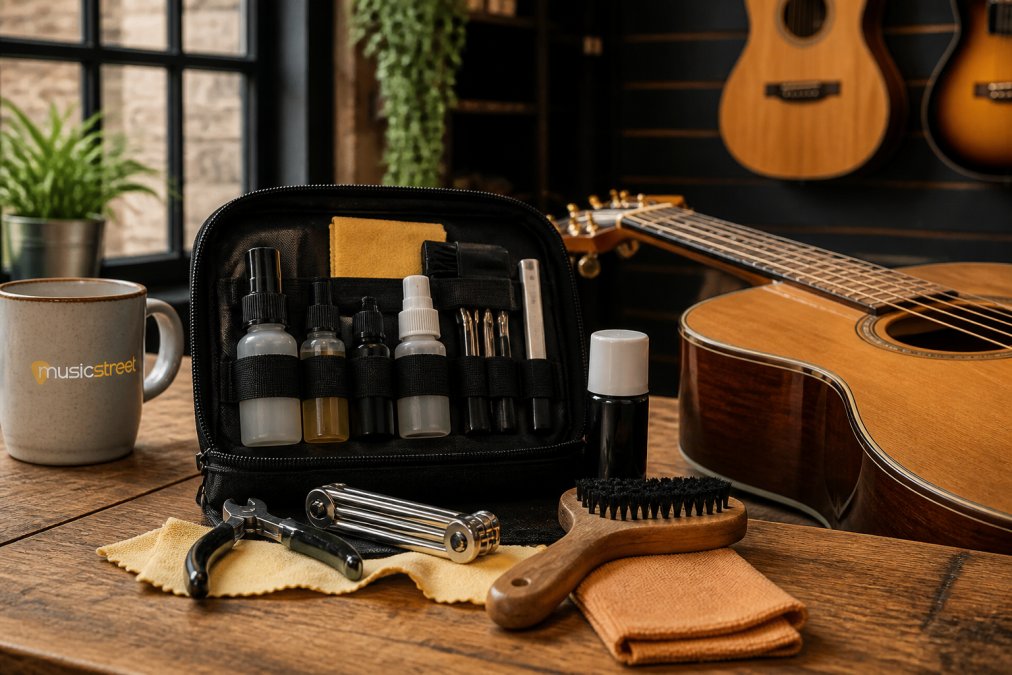
- Essential Bass Guitar Maintenance Tips
- Conclusion
- Frequently Asked Questions
Last Updated: September 25, 2026
Quick Comparison: Best Bass Guitar Brands for Intermediate Players
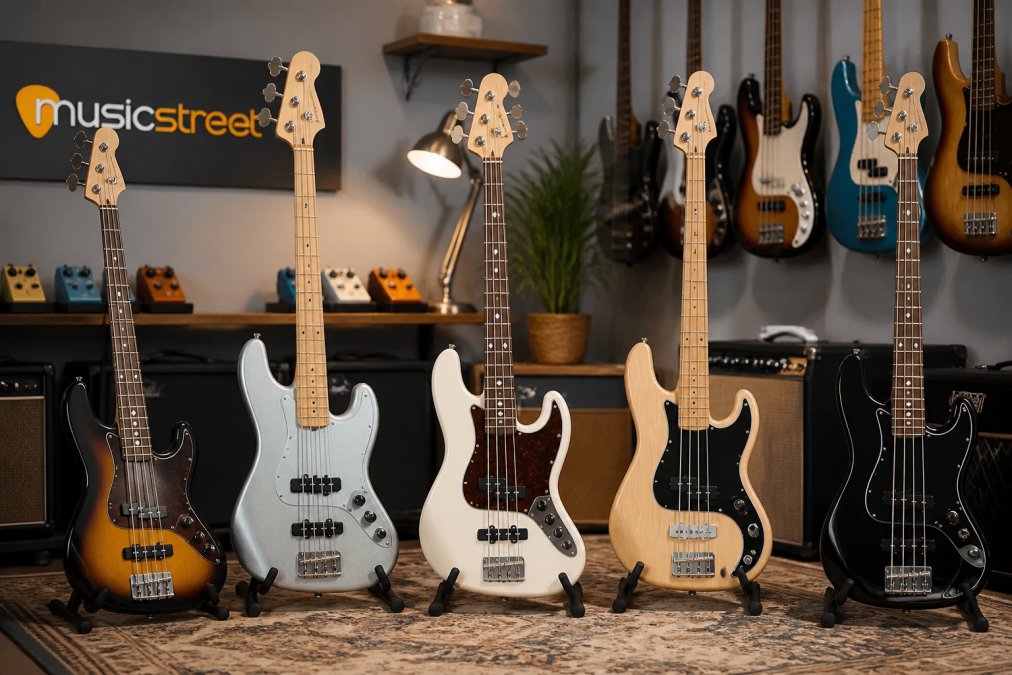
Finding the best bass guitar brands for intermediate players comes down to Fender for tone and resale, Ibanez for value and modern electronics, and Duesenberg for players ready to step into boutique territory. This guide from MusicStreet breaks down what each brand actually gives you at the till.

The step up from beginner to intermediate is the point where your instrument starts holding you back rather than helping you. You notice it in dead spots, in tuning that drifts mid-set, and in a neck that fights your hand instead of following it. According to MusicStreet's 2026 guide to bass guitars for all levels, intermediate players get the most out of brands that balance cost with professional-grade hardware, and Yamaha's consistent build quality is a good example of that balance.
Here is what most buying guides get wrong: they rank brands by reputation rather than by what happens in your hands. A well-set-up mid-range bass will outplay a badly set-up expensive one every single time.
| Brand | Typical Price Band | Pickup Type | Best For |
|---|---|---|---|
| Fender | £569-£1,759 | Passive | Classic tone, gigging, resale |
| Ibanez | £409-£629 | Active | Value, modern genres, home studio |
| Duesenberg | £1,499-£2,325 | Passive | Boutique feel, vintage character |
Below, we'll show you exactly how to choose between them without wasting money on the wrong spec.
How to Choose an Intermediate Bass Guitar
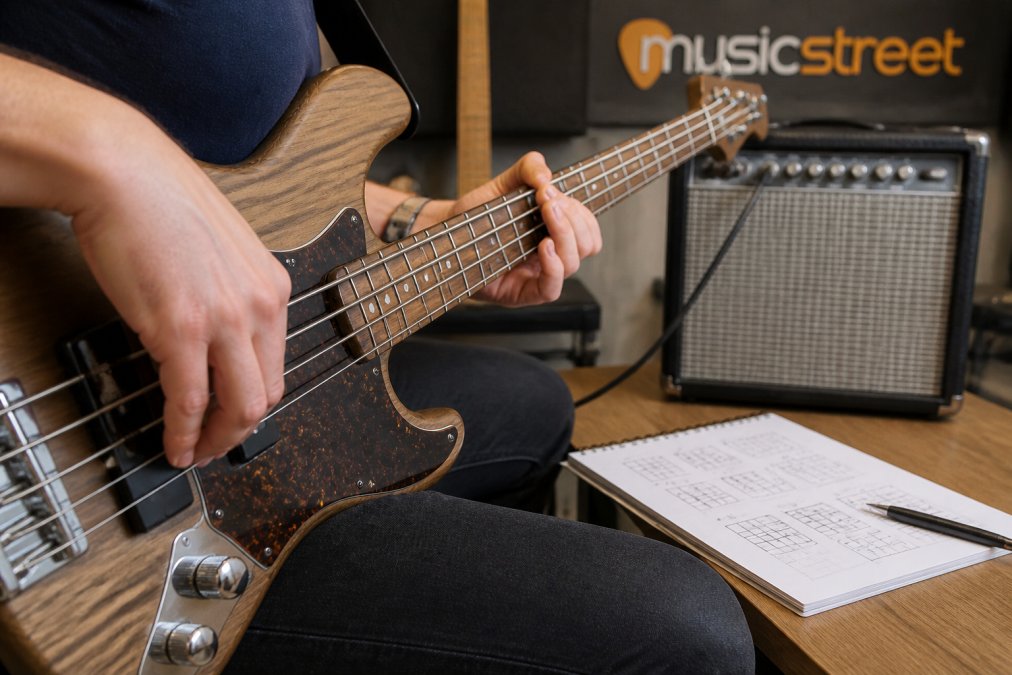
Choosing an intermediate bass guitar means matching three things to your playing: neck profile, budget, and pickup type. Get those right and almost any brand in this guide will serve you well for years.
Neck Profile and Scale Length
Neck profile decides how the bass feels after an hour of playing. A slim "C" or "D" shape suits smaller hands and faster passages, while a thicker profile gives more to push against for players who dig in hard.
Scale length matters just as much. The standard scale length is around 34 inches, giving you familiar string tension. A shorter scale, like the Mustang models, reduces reach and suits players with smaller hands or those who play a lot of root-note lines.
Budget and What You Get at Each Price
Spending between £400 and £700 gets you solid construction, reliable hardware, and electronics that hold up on stage. Above £1,000, you are paying for better pickups, finer fretwork, and finishes that age well.
What most guides miss is that setup matters more than the price tag. Every instrument we send out is checked and set up in our workshop first, because a £500 bass with proper action plays better than a £1,500 one straight out of the box.
Fender: The Benchmark for Intermediate Players
Fender is the benchmark because its Precision and Jazz models define what most people hear in their head when they think of a bass guitar. According to Guitar Chalk's 2026 roundup of the best bass guitars, the Fender Player Precision Bass is a top recommendation for intermediate players seeking traditional tones and value.
Ibanez SR500 Bass Guitar - Brown →
Where it still wins: the range covers every budget without dropping quality. The Ltd Edition Player Mustang® PJ Bass Guitar - Surf Pearl at £729 gives you both a Precision and a Jazz pickup in one short-scale instrument, with a shorter scale length and a "C"-shaped maple neck. Step up and the American Pro Jazz Bass at £1,479 adds V-Mod single-coil pickups and Posiflex graphite support rods that resist warping.
The honest limitation is price. Fender's American-made models sit well above the entry point, and you are partly paying for the name. Where it falls short for some players: if you want active electronics straight out of the box, you will not find them here.
Ibanez: Best Value for Modern Players
Ibanez delivers the most spec per pound of any brand in this guide. The SR400EQM at £409 pairs PowerSpan Dual Coil pickups with a 3-band EQ and a 3-way power tap switch, giving you humbucking, single-coil, and low-end-enhanced tones from one instrument. Such versatility simplifies the process of selecting a musical instrument by providing a reliable foundation for exploring diverse playing styles.
The SR500 at £629 pushes further with Bartolini MK1 pickups and a mid-frequency select switch that lets you jump between 250Hz and 600Hz. Its five-piece Jatoba and Bubinga neck stays stable despite being thin, and the Accu-Cast B20 bridge makes string changes quicker than most designs.
Where it falls short: the modern aesthetic and active tone are not for everyone. Players chasing a vintage thump will find Ibanez too clean and too flexible.
Duesenberg: Boutique Choice for Experienced Intermediates
Duesenberg is the boutique pick for intermediates who already know what they want. The Starplayer Bass at £2,325 is a semi-hollow, dual-pickup instrument with a medium scale, spruce top, and flamed maple back and sides.

The tone is the draw. Two Duesenberg Bass-Buckers deliver clear overtones with a rounded bottom end that sounds closer to a 1960s recording than anything else here. The brass bridge is fully adjustable, and the Z-tuners make string changes quick while holding tuning well.
The honest limitation is price and availability. This is a considered purchase, not an impulse one. If you want the same character for less, a used example at £1,499 offers the full warranty to be activated and arrives in as-new condition.
Active vs Passive Bass Pickups
Active pickups use a built-in preamp powered by a battery, while passive pickups send the signal straight to your amp with no power source. The difference changes both your tone and your workflow.
Active systems give you onboard EQ, more output, and the ability to shape your sound before it reaches the amp. That flexibility suits studio work and modern genres. Ibanez builds this in as standard.
Ibanez SR500 Bass Guitar - Brown →
Passive systems are simpler and need no battery. They respond to your playing dynamics more directly, and many players prefer how they sit in a mix without extra shaping. Fender and Duesenberg both stick with passive designs.
Which is better? Neither. Active suits players who want control at their fingertips; passive suits players who would rather shape tone at the amp. Try both before deciding.
Essential Bass Guitar Maintenance Tips
Essential bass maintenance comes down to four habits: fresh strings, a stable neck, clean electronics, and a proper setup. Skipping any of them shortens the life of your instrument.
- Change strings every four to six weeks if you gig regularly, longer if you practise at home
- Wipe the neck and body down after every session to remove sweat and oils
- Check neck relief twice a year, and more often if the weather swings
- Keep active basses charged with a spare battery in your case
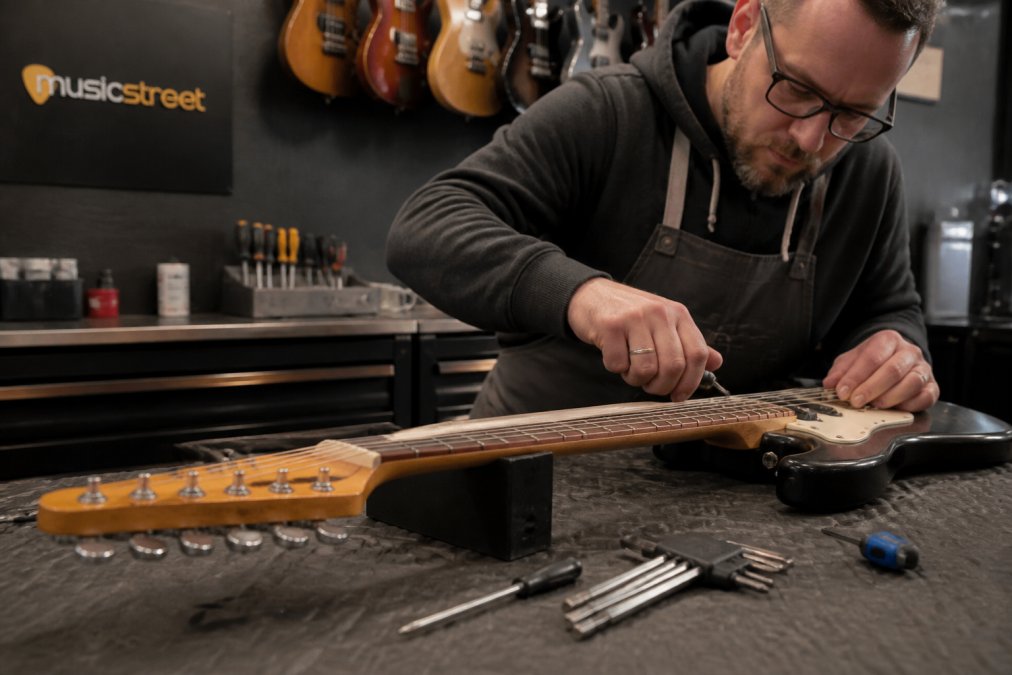
- Have a professional setup done at least once a year
According to BassBuzz's 2026 gear awards, the Yamaha TRBX304 was recognised as an overall winner for value in the intermediate category, largely because its construction holds up with minimal fuss. That reliability comes from the same habits above.
Conclusion
Picking between the best bass guitar brands for intermediate players gets easier once you know what you actually need: Fender for classic tone and resale, Ibanez for value and modern flexibility, Duesenberg for character and craft. The final call comes down to how the instrument feels in your hands. Explore the range of bass guitars available at MusicStreet to find your perfect match.
Frequently Asked Questions
What defines an intermediate bass guitar?
An intermediate bass sits between beginner and professional models. It typically features better hardware, more reliable electronics and improved construction. For example, the Ibanez SR400EQM-DEB at £409 offers PowerSpan Dual Coil pickups and a 3-band EQ, while the Fender Player Mustang PJ at £569 includes both Precision and Jazz pickups. These instruments suit players who have mastered the basics and want room to grow without paying custom shop prices.
How much should I spend on an intermediate bass guitar?
Most intermediate basses cost between £400 and £800. The Ibanez SR400EQM-DEB is £409, the Fender Limited Edition Player Mustang PJ is £569 and the Ibanez SR500 is £629. Spending more gets you better pickups and hardware, but you do not need to spend over £1,000 unless you want vintage reissues or boutique builds. Focus on feel and setup first, then consider upgrades.
Do intermediate bass guitars need professional setups?
Yes. Even a well-made bass benefits from a professional setup. Action, intonation and neck relief affect playability and tuning stability. A properly set up instrument is easier to play and sounds better. Many retailers include a free setup with purchase, so ask before you buy. If you buy used, budget for a setup to get the bass playing its best.
Should I buy a new or pre-owned bass guitar for my second instrument?
Both have merits. New basses come with warranties and the latest features. Pre-owned instruments can offer better value, especially if you want a higher-end model for less. For example, a used Duesenberg Starplayer Bass at £1,499 gives you boutique quality for less than the new £2,325 version. Inspect any pre-owned bass carefully or buy from a reputable dealer that checks condition and setup.
What is the difference between active and passive bass pickups?
Passive pickups work without a battery and deliver a traditional, warm tone. Active pickups use a preamp powered by a battery, offering more output and onboard EQ control. Active systems suit players who want to shape their sound precisely, while passive systems appeal to those who prefer a classic, plug-and-play feel. Neither is better; it depends on your playing style and genre.



Share:
Guitar Tuning: A Step-by-Step Guide for Beginners