

Table of Contents
- Why Matte Finishes Need Different Care
- What You'll Need Before You Start
- Step-by-Step: How to Clean Your Matte Finish Acoustic Guitar
- Best Guitar Cleaning Kit for Matte Finish
- How to Prevent Guitar Hardware Corrosion in Humid Climates
- How to Clean Guitar Fretboard
- Common Mistakes to Avoid
- Frequently Asked Questions
Last Updated: October 15, 2026
Why Matte Finishes Need Different Care
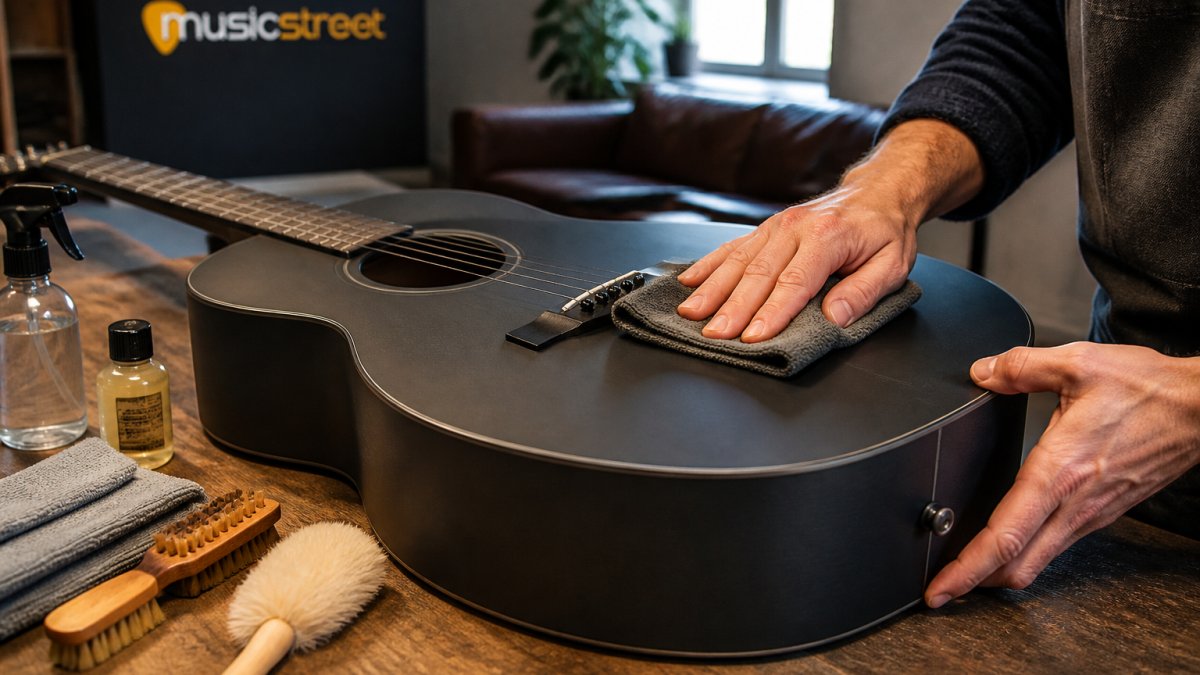
A clean matte finish acoustic guitar looks stunning. But they need a completely different cleaning approach than glossy instruments. The problem is that most standard guitar polishes are designed to add shine. On a matte finish, they'll leave streaks, build up residue, and permanently alter the texture you paid for.
Manufacturers like Taylor Guitars now recommend avoiding traditional waxes and polishes altogether on matte surfaces (Properly Cleaning Your Guitar). The issue runs deeper than just appearance. A matte finish is intentionally flat. Applying products made for gloss finishes can damage that finish permanently, something you can't undo.
The good news? Cleaning a matte finish is actually simpler than you'd think. It just requires the right approach and the right products.
What You'll Need Before You Start
Gather these items before you start cleaning. Having everything ready means you'll work faster and more carefully.
Essential supplies:
- Soft microfibre cloths (lint-free)
- Distilled water in a spray bottle
- A dedicated guitar detailer designed for matte finishes
- Small bowl for mixing water
- Dry cloth for final buffing
You don't need much. In fact, less is better with matte finishes. Avoid paper towels, they're abrasive and will scratch. Microfibre cloths are your best friend because they lift dust without scratching.
The MusicNomad Guitar Detailer (£11.99) is specifically formulated for all finish types, including matte. It's silicone-free and won't leave residue. If you prefer a water-based approach, distilled water alone works for light cleaning.

Step-by-Step: How to Clean Your Matte Finish Acoustic Guitar
Step 1: Remove Surface Dust
Dust is your enemy on a matte finish. It sits on the surface and becomes abrasive when you wipe it. Remove dust first, before you do anything else.
Use a dry microfibre cloth. Wipe gently across the body, neck, and headstock. Don't press hard. Let the cloth do the work. Move in one direction rather than circular motions, this reduces the chance of pushing dust into the finish.
Pay special attention to the areas where dust collects: along the binding, around the bridge, and in the curves of the body. These spots trap particles easily.
Step 2: Address Fingerprints and Smudges
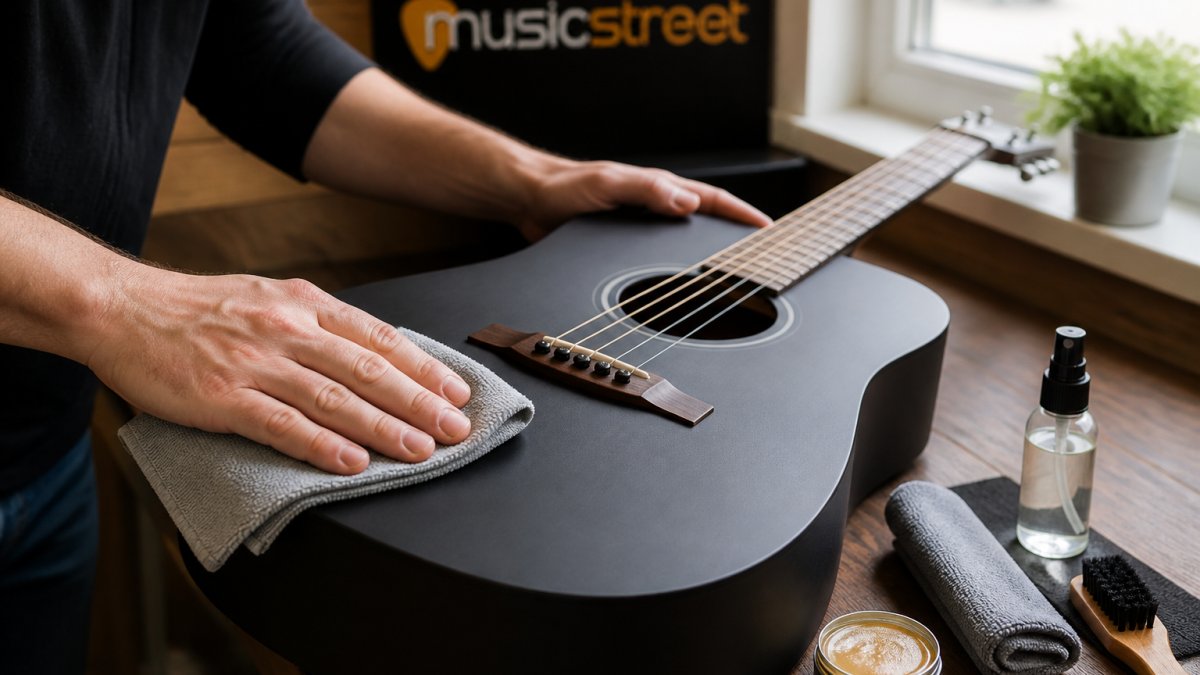
Fingerprints show up immediately on matte finishes. The oils from your hands leave marks that look worse than they are.
Spray a tiny amount of distilled water onto your microfibre cloth. Not the guitar, the cloth. Wipe the affected areas gently. The water dissolves the oils without damaging the finish. Let it air dry for a minute.
If water alone doesn't work, use a guitar detailer. Apply a small amount to the cloth and wipe. The MusicNomad Guitar Detailer is designed to clean without adding shine. It removes fingerprints, dust, and light grime in one step. Consistent care of this nature forms the bedrock of proper handmade guitar maintenance, ensuring that the instrument remains in peak condition for years to come.
Never spray liquid directly onto your guitar. Moisture can seep into the wood and cause damage.
Music Nomad - Guitar Detailer →
Step 3: Tackle Stubborn Marks
Some marks won't come off with water or standard detailers. Before you panic, try this method.
Mix a tiny amount of mild washing-up liquid with distilled water. Dampen your cloth with this solution. Wipe the stubborn area gently. Follow immediately with a dry cloth to remove excess moisture.
This approach works for sticky residue, old fingerprints, or light stains. It's stronger than water alone but still gentle on matte finishes.
Never use abrasive cleaners, harsh solvents, or products containing silicone. These will damage the matte texture permanently.
Best Guitar Cleaning Kit for Matte Finish
You don't need an expensive cleaning kit. A few quality items work better than a drawer full of products.
The essentials:
- MusicNomad Guitar Detailer (£11.99), water-based, silicone-free, designed for all finishes
- Microfibre cloths, buy a pack of at least three
- Distilled water, keeps minerals off your finish
- Soft brush, optional, for hard-to-reach areas
The MusicNomad Guitar Detailer is the only commercial product you really need. It's infused with UV protectants and anti-static agents. This means it cleans, protects, and reduces dust buildup all at once. For most daily cleaning, this single product handles everything.
If you prefer a minimalist approach, distilled water and microfibre cloths are genuinely enough. Many professional technicians recommend this method for routine maintenance. It costs almost nothing and won't damage your finish.
How to Prevent Guitar Hardware Corrosion in Humid Climates
Hardware corrosion is a real problem in humid environments. Tuning pegs, bridge pins, and metal hardware oxidise and lose function. Prevention is far easier than repair.
Keep humidity levels between 45 and 55 percent. Use a room humidifier or dehumidifier to maintain this range. A hygrometer (humidity meter) costs around £10 and tells you exactly where you stand.
Wipe your hardware regularly with a dry cloth. This removes moisture before it causes corrosion. Pay special attention after playing, your hands transfer sweat and moisture to the metal.
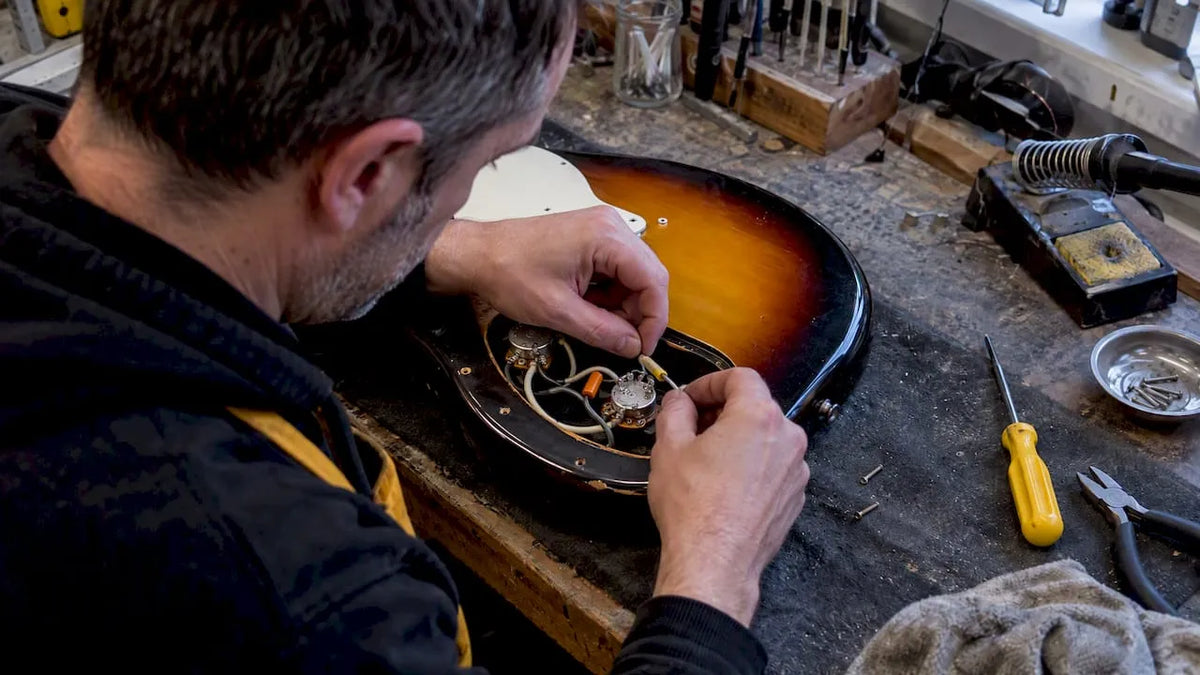
If corrosion appears, use a soft cloth slightly dampened with white vinegar. Wipe gently. The vinegar dissolves light rust without damaging the metal or finish. For heavy corrosion, take your guitar to a professional technician. At MusicStreet, our in-house workshop handles hardware restoration and replacement.
Store your guitar in a case when not in use. Cases provide a buffer against humidity swings. Avoid basements and attics, these spaces experience extreme humidity changes that damage instruments.
How to Clean Guitar Fretboard
The fretboard collects grime faster than any other part of your guitar. Sweat, dead skin cells, and dust build up between the frets.
Start with a dry brush. A soft-bristled fretboard brush removes loose debris without moisture. Brush gently along each fret, working from the headstock towards the body.
Music Nomad - Guitar Detailer →
For light cleaning, dampen a cloth with distilled water and wipe each fret. Dry immediately with a separate cloth. Never let water sit on the fretboard, it can cause swelling and lifting.
For stubborn grime, use a commercial fretboard cleaner designed for your fretboard material. Rosewood, ebony, and maple all require different products. Check your guitar's documentation to see what material your fretboard is made from.
Never use household cleaners or furniture polish on your fretboard. These contain chemicals that damage the wood and can seep into the instrument.
Common Mistakes to Avoid
Using glossy polishes on matte finishes. This is the most common error. Polishes designed for gloss finishes contain shine-enhancing ingredients. On matte surfaces, they leave visible streaks and permanently alter the texture.
Spraying liquid directly onto the guitar. Always apply liquid to the cloth first. Spraying the guitar risks moisture seeping into the wood through seams and joints.
Pressing hard when wiping. Matte finishes are delicate. Gentle pressure is all you need. Pressing hard can scratch the finish and create visible marks.
Cleaning too frequently. Over-cleaning causes more damage than under-cleaning. Wipe down your guitar once a week if you play daily. Less frequent players can go two weeks between cleanings.
Mixing cleaning products. Stick with one product or method. Mixing detailers, water, and vinegar can create chemical reactions that damage the finish.
Keeping your clean matte finish acoustic guitar in pristine condition doesn't require special knowledge or expensive products. Use the right tools, soft cloths, distilled water, and a dedicated guitar detailer, and your instrument will stay beautiful for years.
At MusicStreet, we help musicians choose and maintain guitars that inspire their playing. Our team can advise you on the best cleaning approach for your specific instrument. If your guitar needs professional cleaning, setup, or repair, visit us in-store or explore our range of guitar care products to get started. We stock the MusicNomad Guitar Detailer and other professional-grade cleaners trusted by technicians and players alike.
Frequently Asked Questions
Can you use standard guitar polish on a matte finish?
No, standard guitar polishes are designed to add shine and can permanently alter the texture of a matte finish. Manufacturers like Taylor Guitars advise against using traditional wax-based polishes on matte or satin finishes. Instead, use products specifically formulated for matte surfaces, such as water-based detailers designed to clean without adding gloss.
What is the best cloth to use for cleaning a matte acoustic guitar?
Microfibre cloths are ideal for matte finish guitars. They effectively remove dust, fingerprints and oils without scratching the surface. Regular wiping with microfibre cloths is the best preventive maintenance approach, as dust is abrasive and can scratch the finish if left to build up.
How often should I clean my matte finish acoustic guitar?
Clean your guitar weekly with a microfibre cloth to remove dust and fingerprints. This regular maintenance prevents grime buildup that would otherwise require stronger cleaning agents. After playing, a quick wipe-down takes just a minute and significantly extends the life of your matte finish.
Is it safe to use water on a matte guitar finish?
Water can be used for light cleaning, but it's important to use it sparingly and apply it to a cloth first, rather than spraying directly onto the guitar. For more effective cleaning and protection, consider water-based detailing products specifically formulated for guitars. Avoid soaking or excessive moisture to maintain the matte texture.




Share:
Amp Types for Beginners: 3 Picks Matched to Real Use Cases