


Selling guitars online involves choosing the right platform, pricing based on actual sold data, and ensuring safe payment and shipping methods. Reverb is the top choice for serious sellers due to its targeted audience and moderately high fees, whereas local options are best for lower-value guitars with no platform fees. Accurate pricing, detailed listings, and safety precautions are essential for achieving fair sales and a smooth transaction.
Trying to sell guitars online should be straightforward. In practice, it rarely is. You get lowball offers, confusing platform fees that eat into your profit, and the occasional time-waster who disappears after three messages. Whether you are offloading a battered practice guitar or trying to sell vintage guitars online for a fair price, the difference between a good outcome and a frustrating one comes down to three things: the platform you choose, how you price your instrument, and how you manage the sale from listing to handover. This guide covers all three in practical detail.
Table of Contents
- Key takeaways
- Where to sell guitars online: platform comparison
- Pricing and preparing your guitar for sale
- Creating your listing and staying safe
- Handling negotiations, disputes, and post-sale steps
- My honest take on selling guitars online
- Find your next guitar at Musicstreet
- FAQ
Key takeaways
| Point | Details |
|---|---|
| Platform fees vary significantly | All-in costs including payment processing can reach 8–10%, so calculate net profit before listing. |
| Research sold listings, not asking prices | Pricing 5–15% below average sold comps drives quicker sales without sacrificing serious value. |
| Specialist platforms attract better buyers | Dedicated guitar marketplaces bring in buyers who understand instrument value and pay accordingly. |
| Local sales suit lower-value guitars | For instruments under £400, fee-free local sales often net more than platform-based listings. |
| Secure payment and tracked shipping protect you | Verifying payment before despatch and using insured shipping reduces the risk of disputes and losses. |
Where to sell guitars online: platform comparison
Not all guitar selling websites are created equal. The platform you choose affects your fees, your audience, how quickly you sell, and how protected you are if something goes wrong.
Reverb is the go-to choice for most serious sellers. It is a specialist guitar marketplace with an audience of musicians who understand what instruments are actually worth. Reverb charges around 8–9% total once you factor in the 5% seller fee and approximately 3.2% payment processing. That sounds steep, but the trade-off is a buyer pool that will not insult you with an offer of £80 for a £400 guitar. Dedicated guitar marketplaces attract buyers who genuinely understand instrument value, which improves your chances of achieving a fair price.
eBay gives you the widest audience of any platform, but the fees are higher and the buyer base is less focused. For a £750 guitar, eBay fees land at roughly 6.7% all-in, which on a high-value sale is still significant. Auctions can work well for rare or collectable instruments where bidding competition pushes the price up, but for standard used guitars, a fixed-price listing with a clear description usually outperforms.
Facebook Marketplace and local classifieds suit guitars in the £100–£400 range where shipping costs and platform fees would erode too much of the sale price. Local platforms offer 0% fees and a fast turnaround, but you lose buyer protection entirely and need to be careful about safety when meeting strangers.
Here is a quick comparison to help you decide:
| Platform | Approx. fees | Audience | Sale speed | Buyer protection |
|---|---|---|---|---|
| Reverb | ~8–9% all-in | Specialist musicians | Moderate | Yes |
| eBay | ~6.7% all-in | Broad general public | Fast | Yes |
| Facebook Marketplace | 0% | Local buyers | Very fast | None |
| Consignment (specialist) | 20–30% | Collectors and players | Slow | Yes |
Pro Tip: Hidden payment processing fees are often not shown in the headline platform fee. All-in costs can run 3–4% higher than the number advertised. Always calculate your actual net payout before committing to a platform.
Pricing and preparing your guitar for sale
This is where most sellers go wrong. They check what other people are asking for similar guitars and use that as their benchmark. Asking prices are not market value. The number that matters is what guitars have actually sold for.
Here is a reliable process for getting your price right:
- Search completed sales. On eBay, filter by “Sold listings.” On Reverb, use the sales history feature. Look for guitars in the same condition, same model, and ideally the same year as yours.
- Grade your condition honestly. “Excellent” means near-perfect with minimal play wear. “Good” means used with visible scratches or dings. Overgrading is one of the fastest ways to lose a sale or trigger a dispute.
- Note your accessories and upgrades. Original hardcase, spare strings, strap, or professionally fitted pickups all add value. List them individually rather than bundling them vaguely as “extras.”
- Account for fees and shipping. Work backwards. If you want £500 in your pocket, and you are selling on a platform with 9% fees plus £20 shipping, you need to list at roughly £570.
- Price to sell, not to hold. Pricing 5–15% below the average sold price significantly speeds up the sale without leaving serious money on the table.
Your photos matter as much as your price. Use natural daylight, photograph every angle, and get close-up shots of any wear, scratches, or modifications. Buyers who can see exactly what they are getting are far more likely to commit. Trying to hide flaws in photos just creates disputes later.
Pro Tip: Include a photo of the headstock showing the serial number. It builds buyer confidence, confirms authenticity, and helps justify your asking price for premium brands.

For guidance on evaluating guitar value before you list, the Musicstreet blog has a detailed breakdown of what affects resale prices across different brands and conditions.
Creating your listing and staying safe
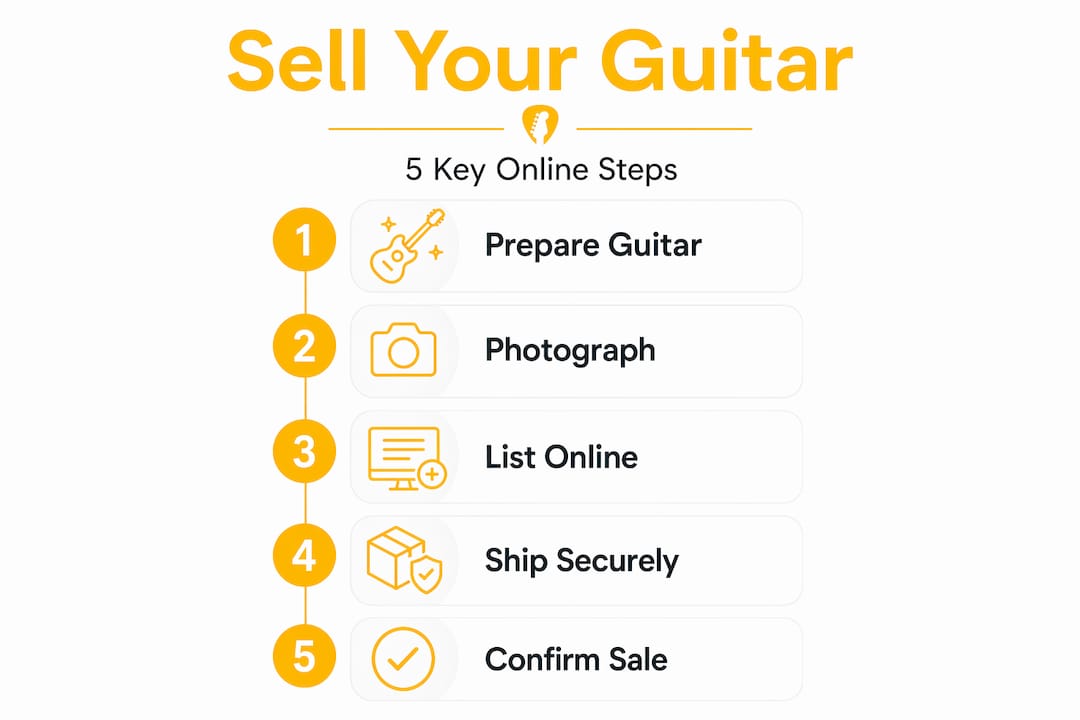
Once you know your platform and price, the listing itself needs to do two jobs: attract the right buyers and filter out the timewasters. Here is how to approach it.
- Write a complete description. Include the brand, model, year (if known), body material, neck profile, any modifications, and the overall condition. Do not just say “great guitar.” Say why it is great, and be honest about any issues.
- State your payment terms upfront. Accepted methods, your despatch timeline, and whether you offer returns. Clarity upfront prevents awkward conversations later.
- Respond promptly to enquiries. A buyer asking a genuine question who waits three days for an answer will have moved on. Most sales happen within 24 hours of a serious enquiry.
- Watch for scam signals. Offers that exceed your asking price, requests to pay via bank transfer outside the platform, or buyers who want to “send a courier” without viewing the item first are all red flags. Verifying payment before despatch and using tracked, insured shipping are non-negotiable for any sale above £100.
- For local sales, meet in public. A busy café, a music shop, or a public car park during daylight hours. Local sales carry no buyer protection, so your personal safety and payment security are entirely your responsibility.
Ship using a service that offers tracking and insurance. For a guitar worth £500, a standard uninsured parcel service is a serious risk. Use a specialist courier that handles musical instruments, and keep every receipt and tracking number until the buyer has confirmed receipt.
Handling negotiations, disputes, and post-sale steps
Even a well-prepared listing can throw up complications. Knowing how to handle them calmly makes the difference between a good transaction and a stressful one.
- Decide your floor price before negotiations start. If you are willing to accept £380 for a guitar listed at £450, know that before someone messages you. It stops you making a rushed decision mid-conversation.
- Counter, do not just refuse. If someone offers £300 for a £450 guitar, respond with “I can do £420 including the case” rather than a flat no. It keeps the dialogue moving and often leads to a sale.
- If a sale falls through, relist quickly. Do not sit on it waiting for the original buyer to come back. They rarely do. Reset your listing and move on.
- Pack your guitar properly. Double-box if possible, use plenty of bubble wrap around the headstock and neck joint, and never ship a guitar with strings at full tension. Buyer disputes often stem from shipping damage, and disputes almost always favour the buyer.
- Leave feedback and ask for it. Positive seller feedback builds your reputation and makes future listings more attractive to buyers. On platforms like Reverb, seller reputation genuinely affects your ability to command good prices.
Market timing matters more than most sellers realise. Even well-known guitars have sold below expectations due to poor timing and platform mismatches. Listing a high-value acoustic in January when buyers are post-Christmas skint will get you lower offers than listing in September when players are gearing up for the autumn gigging season.
My honest take on selling guitars online
I have watched a lot of people go into the process of selling a guitar with confidence and come out the other side feeling like they left money on the table. The most common reason is not choosing the wrong platform. It is pricing against the wrong data.
I have seen sellers look at what other people are asking for a Telecaster and set their price accordingly, not realising those listings have been sitting unsold for six months. The only number worth looking at is what actually sold and when. Once you anchor yourself to real transaction data, the pricing decisions become much cleaner.
My other observation is that sellers consistently underestimate the value of a specialist audience. When you sell vintage guitars online or anything above £600, the platform you choose matters enormously. A buyer on a general marketplace will often question the price and haggle aggressively because they have no frame of reference. A buyer on a dedicated guitar platform usually understands the market and is less likely to waste your time.
The uncomfortable truth about fees is that most sellers only feel them at the end. Calculate your fees before you list, not after. It changes every decision.
— Musicstreet
Find your next guitar at Musicstreet

If you are selling to fund your next purchase, or simply want to understand what your instrument is genuinely worth before listing it, Musicstreet is worth exploring. As a specialist guitar retailer with deep knowledge of brands like PRS, Gibson, Fender, and Martin, Musicstreet offers a trusted environment for players who take their instruments seriously. Browse the full range of new and pre-loved guitars at the Musicstreet premium guitar shop to see what the market looks like for quality instruments right now. You will also find practical resources on buying used guitars and expert shopping guides to help you spend wisely after your sale completes.
FAQ
What is the best platform to sell guitars online?
Reverb is widely considered the best platform to sell guitars online because it attracts a specialist audience of musicians who understand instrument value. For guitars under £400, fee-free local options can often net more after fees and shipping.
How do I price a used guitar correctly?
Search completed sales on Reverb or eBay rather than looking at active listings. Pricing 5–15% below the average sold price tends to produce a faster sale while still achieving fair market value.
How much does it cost to sell a guitar online?
Platform fees typically range from 6–10% all-in once payment processing is included. Local marketplaces charge nothing but offer no buyer protection, so factor that risk into your decision.
How do I avoid scams when selling a guitar?
Never accept overpayments, never ship before payment clears through the platform, and avoid any buyer who wants to communicate or pay outside the official platform system. Use tracked and insured shipping on every sale.
Is it worth selling a vintage guitar online?
Yes, but platform choice is critical. Specialist marketplaces attract buyers who genuinely understand vintage instrument value, which reduces the risk of underselling. Timing your listing to avoid slow buying periods also makes a significant difference to the final price.






Share:
Best Electric Guitars for Beginners in 2026
Stages of learning guitar: your complete roadmap