


TL;DR:
- The neck joint connects the guitar’s neck to its body, influencing comfort, repairability, and feel.
- Different joint types—bolt-on, set-neck, and neck-through—offer trade-offs in repair ease and aesthetics.
- Scientific research shows no significant difference in sustain among joint types; practical factors are more important.
Most guitarists spend hours debating pickups, strings, and tonewood, yet the neck joint quietly shapes every aspect of how an instrument plays, sounds, and holds up over time. It is the critical connection point between two of the guitar’s most important components, and yet it is often dismissed as a concern only for luthiers and repair technicians. In reality, understanding the neck joint gives you a genuine advantage when buying, maintaining, or modifying any guitar. Whether you are a beginner choosing your first electric or an experienced player planning a custom build, this knowledge belongs in your toolkit.
Table of Contents
- What is the neck joint and why does it matter?
- Comparing neck joint types: Bolt-on, set-neck, and neck-through
- Mythbusting: Do neck joints actually affect sustain?
- How neck joints influence customisation and maintenance
- Our perspective: What most guides miss about neck joints
- Ready to find your perfect guitar?
- Frequently asked questions
Key Takeaways
| Point | Details |
|---|---|
| Neck joint basics | The neck joint connects the neck and body, crucial for strength and feel. |
| Bolt-on flexibility | Bolt-on joints are best for easy maintenance, upgrades, and repairs. |
| Sustain fact-check | Research shows neck joint type does not significantly change sustain. |
| Choose for your needs | Prioritise playability and your desired maintenance style when selecting neck joints. |
What is the neck joint and why does it matter?
The neck joint is exactly what it sounds like: the point where the guitar’s neck meets and connects to its body. Simple in concept, but enormous in consequence. This junction affects how forces travel through the instrument, how comfortable the upper frets feel under your fingers, and how easily a technician can service the guitar years down the line.
There are three main types of neck joint found across the guitar world:
- Bolt-on: The neck is attached to the body using screws or bolts, typically through a metal neck plate.
- Set-neck: The neck is glued into a routed pocket in the body, creating a permanent bond.
- Neck-through: The neck wood runs the full length of the instrument, with body “wings” glued to either side.
Each design carries its own set of trade-offs. The neck-through body construction plays a major role in structural stability and repairability, which means the joint type you choose directly influences how your guitar behaves over years of use. A bolt-on neck can be swapped in minutes; a set-neck repair can take days of skilled work.
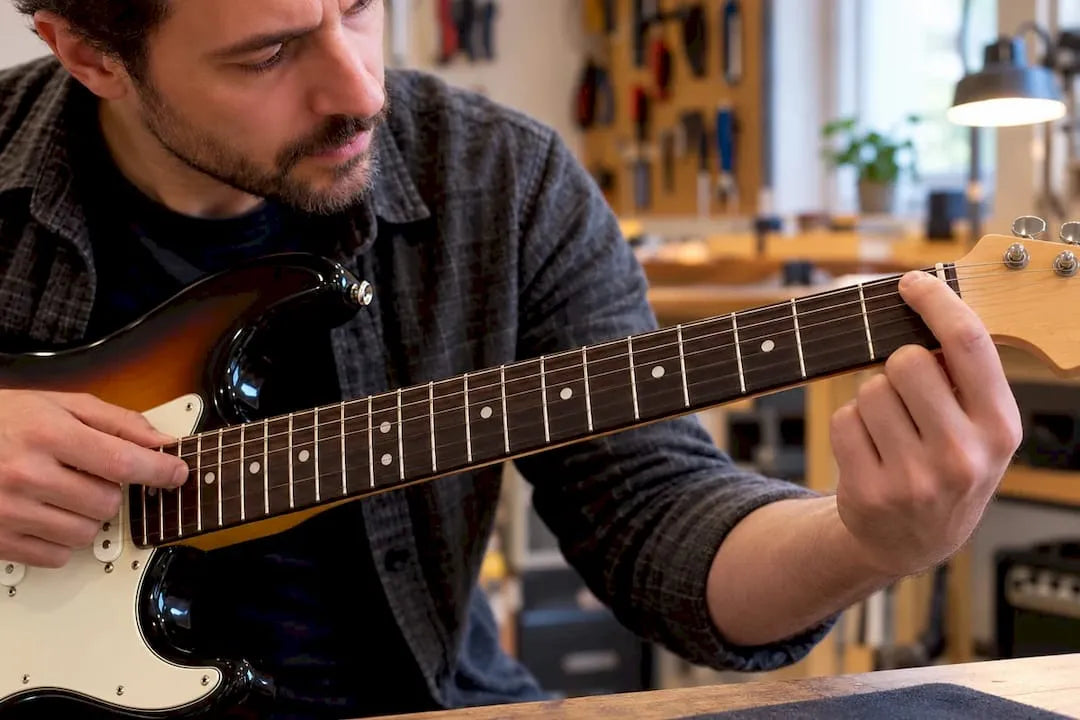
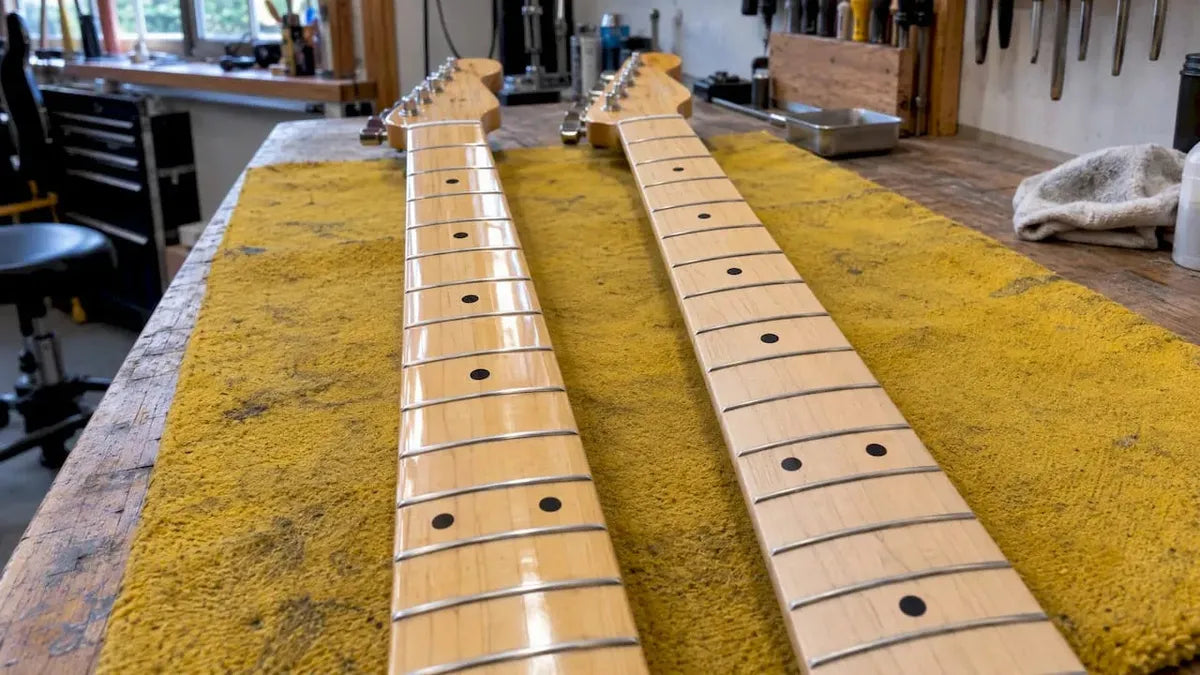
Understanding the joint also connects directly to playability. The angle of the neck, the depth of the pocket, and the tightness of the fit all contribute to how the guitar feels in your hands. If you have ever wondered why two guitars with identical specs feel completely different, the neck joint is often a key part of the answer. Exploring guitar neck shapes alongside joint types gives you an even clearer picture of how construction choices stack up to create the overall playing experience.
The neck joint is not just a structural detail. It is a design decision that shapes every interaction you have with the instrument, from the first chord to the last repair.
Knowing what type of joint your guitar uses also helps you set realistic expectations. A neck-through bass will not be repaired the same way as a bolt-on Stratocaster-style guitar. That context matters enormously when something goes wrong or when you want to make changes.
Comparing neck joint types: Bolt-on, set-neck, and neck-through
Now that you grasp its significance, let’s compare how different neck joint designs influence both feel and function.
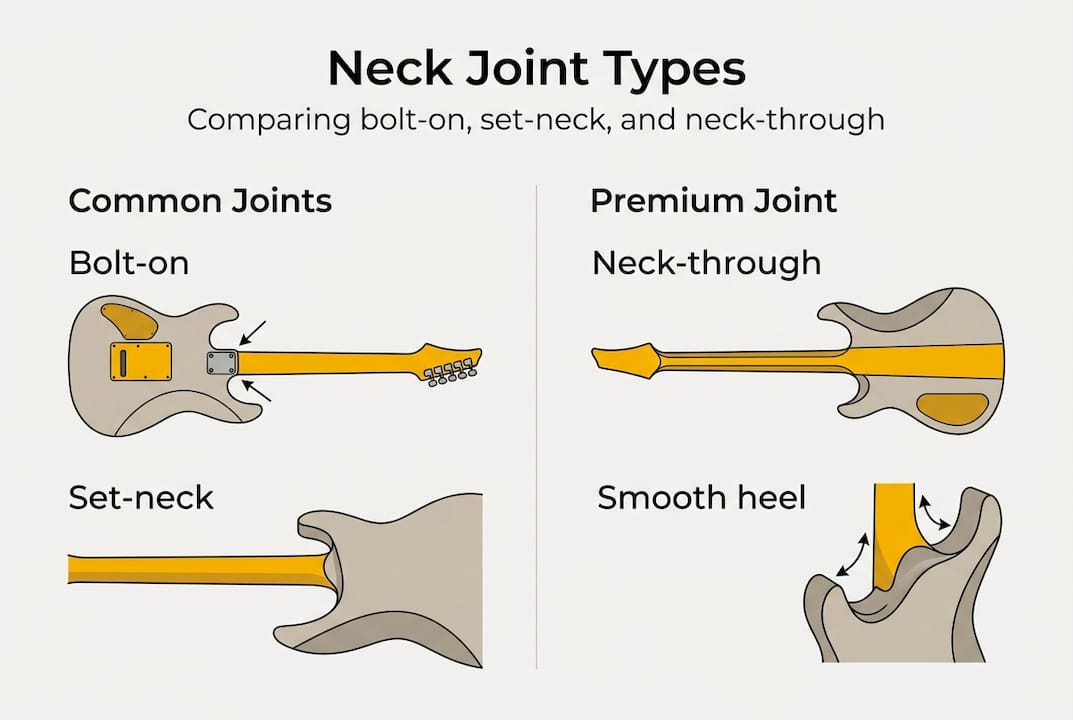
| Feature | Bolt-on | Set-neck | Neck-through |
|---|---|---|---|
| Repairability | Very easy | Difficult | Very difficult |
| Typical brands | Fender, Squier | Gibson, Epiphone | ESP, Rickenbacker |
| Upper fret access | Limited | Good | Excellent |
| Cost to produce | Low | Medium | High |
| Sustain (measured) | Similar | Similar | Similar |
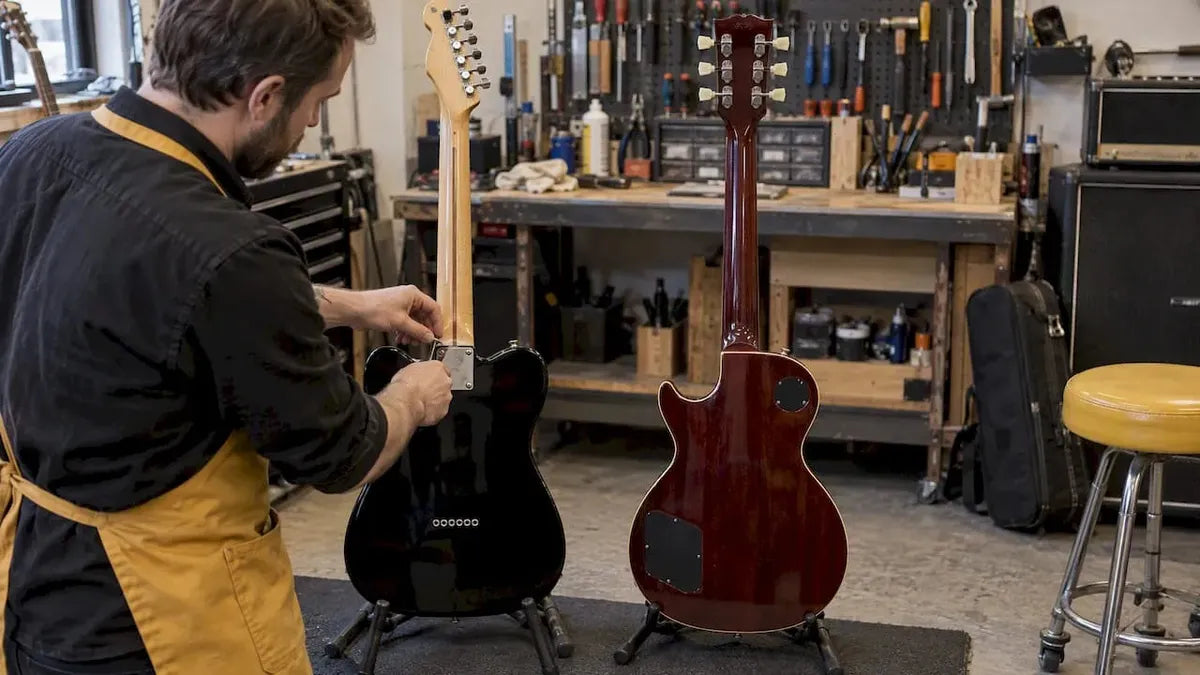
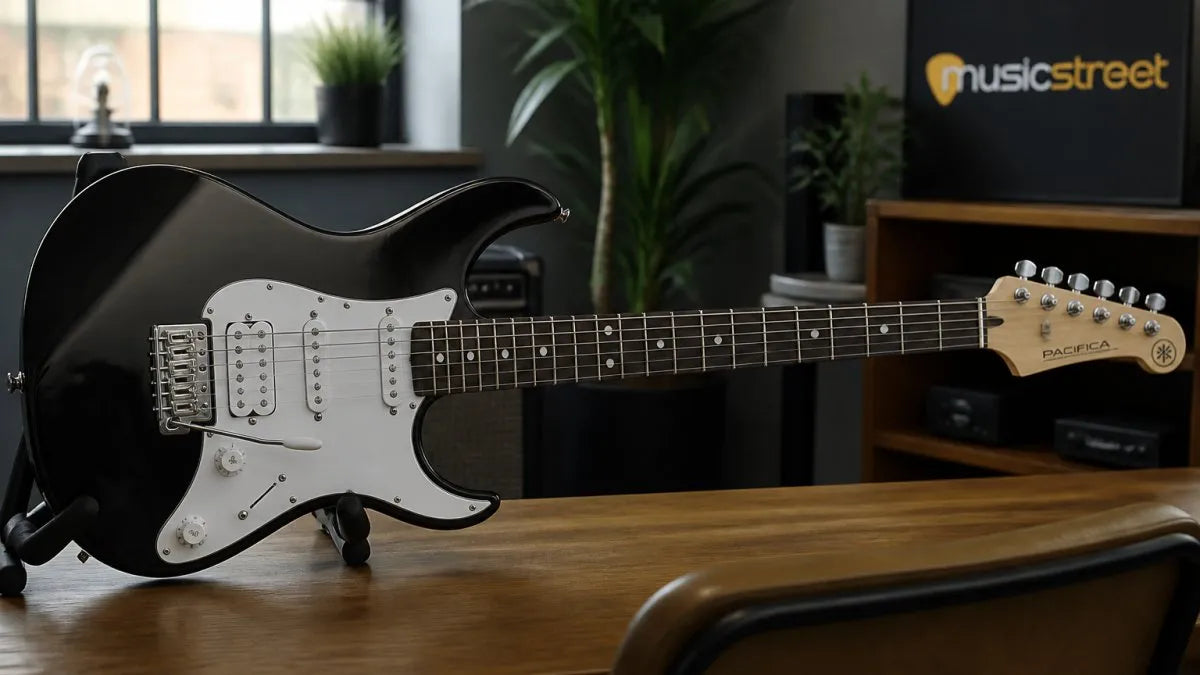
Bolt-on necks are the most common design in the world, used extensively by Fender across its Stratocaster and Telecaster lines. The neck slots into a routed pocket and is fastened with screws. This makes replacements and upgrades remarkably straightforward. Touring musicians and tinkerers love bolt-on designs for this reason. If the neck warps or gets damaged, you can fit a replacement without specialist tools.
Set-neck construction is closely associated with Gibson guitars. The neck is shaped and glued into the body, creating a seamless join that many players find visually and aesthetically appealing. The glued joint is often credited with providing smooth, stable sustain, though as we will explore shortly, the science behind that claim is more complicated than the marketing suggests.

Neck-through construction is a premium feature. As noted in neck-through body construction, the neck wood runs the full body length with glued wings, offering maximum sustain and stability but making repairs genuinely difficult. You will find this design on high-end guitars from brands like ESP and Rickenbacker, where the extended upper fret access and sleek heel design are key selling points.
Pro Tip: If you frequently change your setup or travel with your guitar, a bolt-on neck gives you the most practical flexibility. If you are building a forever guitar and prioritise aesthetics and upper fret comfort, neck-through is worth the investment.
Bridge choice also interacts with neck joint design. A tremolo bridge comparison shows how different hardware pairings affect overall feel, and the neck joint is part of that broader construction picture.
Key questions to ask yourself before choosing:
- How often do you expect to need repairs or adjustments?
- Is upper fret access important for your playing style?
- What is your budget for both the guitar and potential future maintenance?
- Are you drawn to a particular brand tradition or aesthetic?
Mythbusting: Do neck joints actually affect sustain?
Many players tie neck joints to tone and sustain. Let’s clear up common misconceptions with research-backed evidence.
The idea that neck-through guitars sustain longer than bolt-on instruments is one of the most persistent myths in guitar culture. It sounds logical: a continuous piece of wood should transfer vibrations more efficiently than a joint held together by screws, right? The reality is far more nuanced.
A 2007 empirical study found no measurable sustain difference between bolt-on, set-neck, and neck-through joints. In some tests, bolt-on necks actually sustained longer than their glued or continuous counterparts. Listeners in blind tests could not reliably detect audible differences between the three types.
“The neck joint type has no consistent, measurable effect on sustain. Players and builders who claim otherwise are largely responding to expectation rather than evidence.”
This does not mean all guitars sound the same. Far from it. But the variables that genuinely drive sustain include:
- String quality and gauge: Heavier strings vibrate longer and more powerfully.
- Nut and saddle material: Dense materials like bone transfer energy more efficiently.
- Body wood density: Denser woods tend to sustain longer under controlled conditions.
- Setup quality: A well-set-up guitar of any joint type will outperform a poorly set-up premium instrument.
Understanding guitar sustain in depth reveals just how many factors are at play beyond the neck joint. The joint matters enormously for comfort, repairability, and aesthetics. It does not, however, deserve its mythological status as the primary driver of sustain.
The practical takeaway is straightforward. Do not choose a neck joint type based on sustain claims alone. Choose it based on what genuinely affects your experience: how the guitar feels in your hands, how easy it is to maintain, and whether the construction matches your long-term plans for the instrument.
How neck joints influence customisation and maintenance
With myths out of the way, what does choosing one neck joint over another mean for maintenance or modification?
For many players, this is where the neck joint conversation becomes genuinely exciting. The joint type you have determines what you can realistically do with your guitar over its lifetime.
Bolt-on necks are the clear winner for customisation. Here is why:
- Neck swaps are simple: You can replace a bolt-on neck in under an hour with basic tools. Want a different profile, a different scale length, or a fresh fretboard wood? It is entirely achievable.
- Finish repairs are contained: If the body gets damaged near the neck pocket, repairs do not affect the neck itself.
- Upgrades are reversible: You can return to the original neck if a modification does not work out.
Set-neck and neck-through guitars require a very different approach. Neck-through body construction critically influences repairability and modification options, meaning that changes are often permanent and require skilled labour. A broken headstock on a set-neck guitar, for example, is a significant repair job that demands expertise and patience.
Pro Tip: Before buying a set-neck or neck-through guitar, ask yourself whether you have access to a trusted repair technician. These instruments reward careful ownership but punish neglect more harshly than bolt-on designs.
Custom builders think about this balance carefully. The benefits of custom guitars often include the ability to specify your preferred neck joint from the outset, tailoring the instrument to your exact maintenance preferences and playing style. Exploring the advantages of custom guitars further illustrates how joint choice sits at the heart of a truly personalised build.
For touring musicians, the bolt-on advantage is practical and real. Imagine a neck problem arising before a show. A bolt-on replacement can be sorted backstage. A set-neck issue means cancelling or playing through a compromised instrument.
Our perspective: What most guides miss about neck joints
Most articles about neck joints focus almost entirely on tone, sustain, and construction specs. That framing misses something important. The neck joint is not primarily a tonal decision. It is a lifestyle decision.
We have spoken with experienced guitar technicians and seasoned players who are refreshingly honest about this. The players who are happiest with their instruments are not those who chased the “best” joint type for sustain. They are the ones who matched their joint choice to their actual habits, their repair access, and their long-term goals for the instrument.
Spec chasing leads players to prioritise neck-through construction for theoretical resonance benefits that empirical research simply does not support. Meanwhile, they overlook the very real practical costs: expensive repairs, limited modification options, and instruments that punish minor accidents far more severely.
When evaluating any guitar, understanding guitar value evaluation means looking beyond construction prestige and asking what the instrument will actually demand of you over time. A bolt-on guitar that you can confidently maintain and modify will serve most players better than a neck-through instrument that intimidates you every time something needs attention.
Ready to find your perfect guitar?
With all the facts and a realistic approach at your fingertips, here is how you can put this knowledge into practice.
Knowing your preferred neck joint type is a genuine advantage when browsing instruments. It narrows your choices and helps you ask the right questions before you buy.

At MusicStreet, our team understands that construction details matter as much as brand names. Whether you are drawn to the practicality of a bolt-on Fender-style instrument, the classic feel of a glued Gibson-style neck, or the premium comfort of a neck-through design, our guitar shop carries carefully selected options across all three categories. We offer expert advice, professional setup, and genuine post-sale support so that your next guitar is not just a purchase but a long-term partnership.
Frequently asked questions
Which neck joint is easiest to repair?
Bolt-on neck joints are the easiest to repair or replace, as the neck can be removed and swapped with basic tools, making them ideal for players who value flexibility and straightforward maintenance.
Does a neck-through guitar really have more sustain?
Scientific studies show no measurable sustain advantage for neck-through guitars compared to bolt-on or set-neck designs, making sustain a poor reason to choose one joint type over another.
Which neck joint should I choose for a custom guitar build?
Consider your maintenance needs, budget, and playing style: bolt-on for flexibility and easy upgrades, set-neck for classic aesthetics and feel, and neck-through for superior upper fret access and a sleek heel design, as noted in neck-through construction.
Are neck joints important for beginners to understand?
Yes, even beginners benefit from understanding neck joints because it informs smarter decisions around repairs, purchases, and future upgrades from the very start.
What plays a bigger role in tone: wood type or neck joint?
Wood type generally plays a bigger role in tone than the neck joint, with current research consistently pointing to factors like body density, nut material, and setup quality as more influential variables.
Recommended
- Guitar Neck Shapes Explained: Playability Matters – MusicStreet
- Step by step guitar setup guide for optimal playability – MusicStreet
- Custom Guitar Build Guide: Achieve Your Dream Instrument – MusicStreet
- Mastering Guitar Setups – MusicStreet
- Guitar Bridge Tremolo vs Tele Tremolo Bridge: A Comparison – Stevie The Manager aka Stangr The Man






Share:
What is an effects loop? Optimise your guitar tone
Types of guitar finishes explained: pros, cons, best uses