


- Choosing between an acoustic electric and electric bass depends on your genre and performance setting, with acoustic basses offering natural warmth but needing more care, while electrics provide greater versatility and ease for beginners. Both instruments differ significantly in build, sound, and maintenance requirements, influencing their suitability for various musical styles and environments. Your choice ultimately hinges on your musical goals, preferred genres, and practice conditions, making it essential to try both before purchasing.
Choosing between an acoustic electric bass vs electric bass is one of those decisions that seems straightforward until you actually start comparing the two. They both have four strings, both sit in the low-frequency pocket of a band, and both go by the name “bass guitar.” But beyond those shared traits, they diverge in ways that genuinely matter: how they feel to play, how they sound in different settings, what gear they demand, and how well they serve your musical goals. This guide cuts through the confusion and gives you a clear, practical picture of both types.
Table of Contents
- Key takeaways
- Acoustic electric bass vs electric bass: construction compared
- Tone and sound: what each bass actually delivers
- Playability and the learning curve
- Maintenance and environmental sensitivity
- Choosing the right bass for you
- My honest take after years of watching players choose
- Explore bass guitars at Musicstreet
- FAQ
Key takeaways
| Point | Details |
|---|---|
| Construction drives tone | Hollow-body acoustic basses produce warm, woody resonance; solid-body electrics deliver punch and sustain. |
| Electric bass suits more genres | Rock, funk, jazz, and pop all favour the electric bass for its volume and tonal flexibility. |
| Acoustic basses need more care | Strict humidity control is required to keep hollow bodies stable and avoid costly damage. |
| Beginners face fewer barriers on electric | Lower string tension and flexible amplification make electric bass physically easier to start on. |
| Match the instrument to your goals | Genre preference and performance setting should guide your choice more than perceived difficulty. |
Acoustic electric bass vs electric bass: construction compared
The single biggest difference between these two instruments starts before you play a single note. It lives in how each one is built.
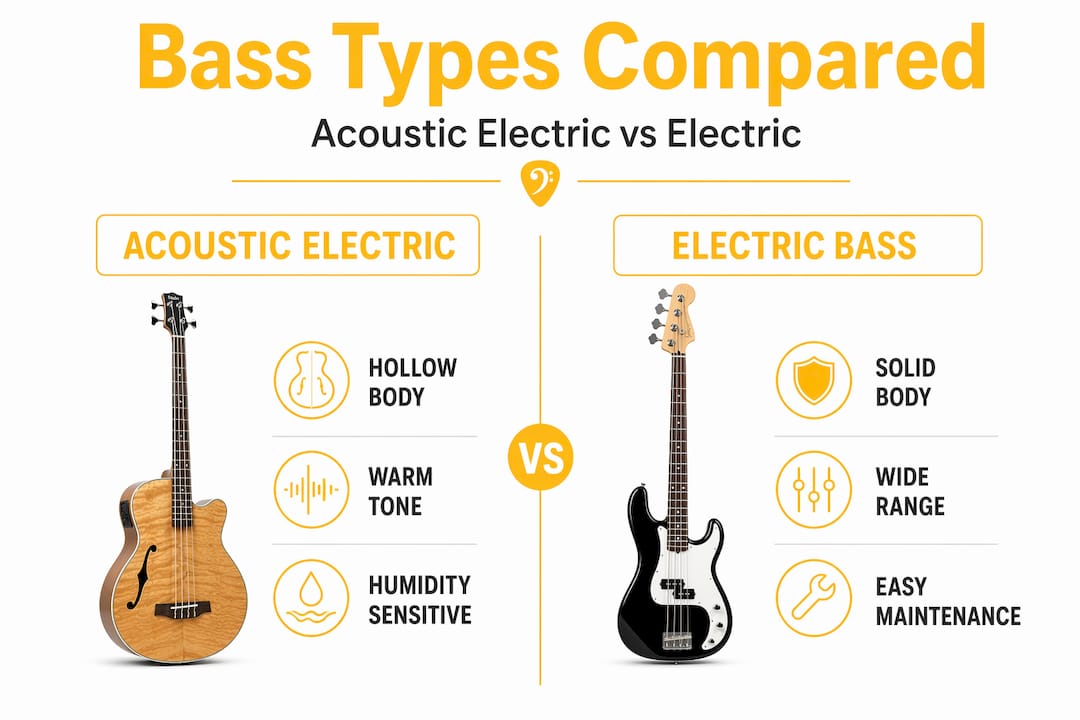
An acoustic electric bass features a large hollow body, much like an acoustic guitar scaled up for bass frequencies. That hollow chamber is the engine of its sound. Wood vibrates in response to string movement, amplifying the natural resonance through the body and out of a soundhole. Most acoustic electric basses also include a built-in piezo pickup system so you can plug into an amplifier or PA, but the instrument produces usable volume on its own without any electronics at all.
Electric basses are a different proposition entirely. A solid body means there is no resonant chamber. The instrument is essentially silent unplugged, relying entirely on magnetic pickups to convert string vibration into an electrical signal. That signal goes to an amplifier, which does the heavy lifting. The solid construction results in a denser, heavier feel in most cases, though modern lightweight body materials have changed this for several models.
| Feature | Acoustic electric bass | Electric bass |
|---|---|---|
| Body type | Hollow | Solid |
| Amplification | Built-in pickup, usable acoustic volume | Magnetic pickups, requires amplifier |
| Typical neck width | Wider | Narrower |
| String type | Roundwound or flatwound, heavier gauges | Wide variety, generally lighter gauges |
| Body size | Larger | Smaller to medium |
| Portability | Bulky but no amp needed | Compact body but amp required |
The body size of an acoustic bass is worth dwelling on. These instruments are genuinely big. Sitting with one feels more like holding an acoustic guitar than a conventional bass, and that physical presence affects everything from practice comfort to stage mobility. Electric basses, by contrast, tend to have slimmer necks and lighter string gauges, which changes how the instrument sits in your hands.
Tone and sound: what each bass actually delivers
This is where the comparison of bass types gets genuinely interesting, and where most buying decisions are either confirmed or upended.
Acoustic electric basses produce a warm, woody, organic tone. The natural resonance of the hollow body adds character that no pickup or effects pedal can fully replicate. Unplugged, that sound is intimate and rich, well suited to sitting around a campfire or practising in a bedroom. The problem surfaces the moment you need volume. Acoustic basses rely on hollow-body resonance to project, which simply cannot compete with a drummer or an electric guitarist at stage volume. Even with the built-in pickup engaged, feedback becomes a real issue at higher volumes because the hollow body acts as a microphone for the amplifier’s output.

Electric bass sound quality is built on a different foundation. Magnetic pickups capture string vibration directly and translate it into a signal that can be shaped, boosted, and coloured through amplifiers, preamps, and effects. The result is a punchy, sustain-rich tone that cuts through a full band mix with ease. Electric basses dominate contemporary genres for this exact reason: their volume and tonal flexibility suit rock, funk, jazz, pop, and everything in between.
Here is where the acoustic vs electric bass debate gets nuanced. When you plug an acoustic electric bass into an amplifier, it does not suddenly sound like an electric bass. An amplified acoustic-electric bass retains its woody, resonant character, along with its susceptibility to feedback. That distinction matters enormously for players who assume a built-in pickup bridges the gap completely.
Genre preferences by bass type at a glance:
- Acoustic electric bass: Folk, singer-songwriter, unplugged sessions, bluegrass, country
- Electric bass: Rock, metal, jazz, funk, blues, pop, R&B, reggae
- Either type works well in: Acoustic jazz (with care on volume), worship music, studio recording with appropriate treatment
Pro Tip: If you are recording in a studio, an acoustic electric bass can deliver genuinely beautiful low-end warmth on certain tracks. Run it direct through a DI box rather than miking an amp to avoid feedback problems.
Playability and the learning curve
Ask most bass teachers which instrument they recommend for beginners, and the majority will say electric bass. That answer is grounded in physical reality.
Electric bass offers lower string tension and action, which makes the instrument noticeably less demanding on your fingers. You can adjust the action to be very low, fretting notes cleanly without excessive force. The narrower neck suits smaller hands. And because your tone comes from an amplifier, you do not need to dig in aggressively with your plucking hand to produce a satisfying sound.
Acoustic basses present more physical resistance. The strings sit higher off the fretboard in most cases, string tension is heavier, and the body size demands a different posture. None of this is insurmountable, but it does mean a steeper initial adjustment. Here is the part that catches many beginners off guard: playing acoustic bass can encourage over-plucking to compensate for the lower natural volume. That habit becomes a liability when you eventually switch to an electric, where good tone relies on a light, controlled touch.
Steps to consider when evaluating playability for your skill level:
- Try before you commit. Pick up both types at a shop. Notice which neck feels comfortable without forcing your hand position.
- Consider your fingertip condition. Both types require callous development, but acoustic basses build it faster due to heavier strings.
- Think about your practice space. Electric bass played through headphones is silent and neighbour-friendly. Acoustic bass carries naturally through walls.
- Factor in technique goals. If fingerstyle nuance matters to you, an acoustic bass can sharpen your right-hand sensitivity over time.
- Be honest about your genre ambitions. If you want to play in a band within six months, electric bass will get you there faster.
Beginners typically find electric bass easier due to setup and physical characteristics, though experienced players successfully learn on either. The Musicstreet beginner bass guitar guide covers specific model recommendations if you are weighing entry-level options.
Pro Tip: If you are drawn to acoustic bass for its aesthetic or tonal character, start on electric to build technique, then add acoustic later. Your playing will be cleaner for it.
Maintenance and environmental sensitivity
Owning a bass is not just about playing it. How you look after it determines how long it performs well and whether it holds its value.
Acoustic electric basses demand strict environmental control. The hollow body is made of thinly carved tonewoods that expand and contract with changes in humidity and temperature. Acoustic instruments require humidity control at 45 to 50% RH and temperatures between 68 and 75°F. Stray outside those ranges consistently and you risk cracked tops, lifting bridges, and warped necks. A hygrometer in your instrument room and a case humidifier are not optional extras. They are necessities.
| Maintenance task | Acoustic electric bass | Electric bass |
|---|---|---|
| Humidity monitoring | Required constantly | Occasional check sufficient |
| String changes | Regular; heavier gauges cost more | Regular; wider variety and price range |
| Neck adjustment | Less frequent | Seasonal truss rod adjustments needed |
| Electronics care | Pickup and preamp battery checks | Pickup and pot cleaning as needed |
| Body care | Tonewoods need conditioning | Finish care; more resilient overall |
| Storage sensitivity | High; temperature and humidity critical | Moderate; wider tolerance range |
Electric basses are more forgiving. Electric basses tolerate a humidity range of 40 to 55% RH without significant structural risk. That said, the neck is still made of wood, and seasonal humidity shifts cause the neck to bow or straighten. Electric bass necks require periodic truss rod adjustments as a result, particularly between summer and winter. This is routine and inexpensive when caught early. The Musicstreet guide on acoustic guitar maintenance covers many of the same principles that apply to looking after a hollow-body bass.
Choosing the right bass for you
Now that you understand how each type is built, how it sounds, and what it takes to maintain, the question becomes: which one suits you specifically?
The honest answer is that your choice should align with your intended music genre and performance setting. Playing the “wrong” instrument for your genre will undermine your motivation faster than any technical challenge.
Consider these factors before making your decision:
- Genre fit. If your playlist is full of indie folk, country, or acoustic singer-songwriter material, an acoustic electric bass will feel at home. If you gravitate towards anything with a drum kit and distorted guitars, electric bass is the right tool.
- Venue and volume. Acoustic basses work beautifully in intimate, unamplified settings. Electric basses scale from bedroom practice through stadium stages without compromise.
- Portability. Electric bass requires carrying an amplifier to any session that is not at home. Acoustic electric bass is genuinely more portable for busking or campfire jams, but the instrument body itself is bulkier.
- Budget. Both types span wide price ranges. Factor in the cost of an amplifier if you go electric, or a quality humidifier and case if you go acoustic.
- Future growth. Electric bass gives you access to a wider array of effects, styles, and band opportunities. Acoustic electric bass is a more specialised tool that rewards players with a clear tonal vision.
If you can, try both types before buying. Musicstreet’s physical store in Huntingdon, Cambridgeshire gives you the chance to pick up instruments side by side, which no amount of online research truly replaces.
My honest take after years of watching players choose
I have spoken with hundreds of bass players at every stage of their journey, from beginners picking up their first instrument to touring musicians adding to their collection. What I have learned is that the acoustic vs electric bass question is almost never really about the instruments themselves. It is about the player’s self-image and their relationship with the music they love.
The most common mistake I see is someone buying an acoustic electric bass because they think it is “purer” or because they imagine it will make them practise more diligently. It rarely works that way. If the music you actually want to play lives in the electric bass register, the acoustic will end up in the corner of the room after a few months.
Conversely, players who genuinely connect with acoustic music and buy an electric bass because someone told them it was easier often find themselves less motivated, not more. The physical challenge of an acoustic is not necessarily a disadvantage if it suits your goals.
The connection between instrument choice and pickup character matters too. Tone is personal. What sounds right to you will shape how much you practise, how quickly you develop, and how much joy the instrument brings. Get that part right and the rest follows.
— Music
Explore bass guitars at Musicstreet

Whether you are leaning towards an acoustic electric bass for its natural warmth or an electric bass for its versatility and genre reach, Musicstreet has the stock and the expertise to help you find the right fit. The Musicstreet bass guitar buying guide covers everything from body types to pickup configurations, giving you a solid foundation before you buy. Browse the full range of premium instruments at Musicstreet’s main shop, where new and pre-owned basses from respected brands are available with expert setup and UK delivery. If you prefer to try before you commit, the Huntingdon store is open for in-person visits. The team there can walk you through both types, compare them side by side, and give you honest advice based on your playing goals, not just what is on the shelf.
FAQ
What is the main difference between acoustic electric and electric bass?
An acoustic electric bass has a hollow body that produces sound through natural wood resonance, with a built-in pickup for amplification. An electric bass uses a solid body and magnetic pickups, requiring an amplifier to produce usable volume.
Which bass is better for beginners?
Most beginners find electric bass easier to start on due to lower string tension, adjustable action, and amplification flexibility. That said, either type can be learned successfully with the right support.
Can an acoustic electric bass sound like an electric bass when plugged in?
No. Even when amplified, an acoustic electric bass retains its woody, resonant character and remains distinct from the punchy, sustain-heavy tone of an electric bass.
How much more maintenance does an acoustic bass need?
Acoustic basses need consistent humidity monitoring at around 45 to 50% RH to prevent structural damage. Electric basses are more resilient but still benefit from seasonal truss rod checks as necks respond to humidity shifts.
Should I buy an acoustic bass if I mostly play folk or acoustic music?
Yes, if your primary setting is acoustic or intimate gigs without a loud drummer. For any context requiring significant volume or a full band mix, electric bass will serve you more reliably.









Share:
Types of guitar tuners: a player's complete guide
Acoustic guitars that play like electric