


- Acoustic guitars designed to feel and sound like electric instruments are now a practical, well-engineered category.
- Key features include slimmer neck profiles, lower action, lighter strings, and magnetic pickup systems for authentic electric tones.
Most guitarists assume you have to choose. Acoustic or electric. Natural resonance or effortless playability. That assumption is outdated. Acoustic guitars that play like electric instruments are no longer a niche curiosity. They are a genuine, well-engineered category that lets you cover both worlds from a single guitar. Whether you want the warmth of acoustic tone with the fast neck feel of your Stratocaster, or a plug-in sound that holds its own on stage, the right hybrid acoustic-electric guitar can deliver it. This guide explains exactly what to look for and how to get there.
Table of Contents
- Key takeaways
- Acoustic guitars that play like electric: what actually changes
- Pickup systems and the electric-like amplified sound
- Standout hybrid models worth knowing
- How to set up an acoustic for electric-like feel
- Amplification and its effect on electric-like tone
- My honest take on choosing between these options
- Find your perfect hybrid at Musicstreet
- FAQ
Key takeaways
| Point | Details |
|---|---|
| Playability starts with the neck | Slimmer profiles, lower action, and lighter strings are what make an acoustic feel like an electric. |
| Pickup type shapes your amplified tone | Electromagnetic and combination pickup systems get far closer to electric-style sound than piezo alone. |
| Hybrid models exist at every budget | Instruments like the Taylor T5z and Godin A6 are purpose-built to cover acoustic and electric ground simultaneously. |
| Setup changes make a real difference | Adjusting string gauge and action on any acoustic can dramatically shift how it feels to play. |
| Amplification completes the picture | The amp you choose is just as important as the guitar when chasing electric-like tone from an acoustic. |
Acoustic guitars that play like electric: what actually changes
When electric guitarists pick up a typical acoustic, the complaints come fast. The neck feels chunky, the string action sits high, and the strings feel taut and stiff. None of that is accidental. Traditional acoustic guitars are built that way to maximise natural resonance and projection. Volume from the body is the priority, so neck profiles tend to be fuller and string height is kept higher to prevent buzzing under heavy fingerpicking.
Electric guitars are built around completely different priorities. The body is largely irrelevant to raw acoustic volume, so builders can slim the neck down, tighten the string spacing, and drop the action to near the fretboard. The result is an instrument that feels fast and light under your fingers.
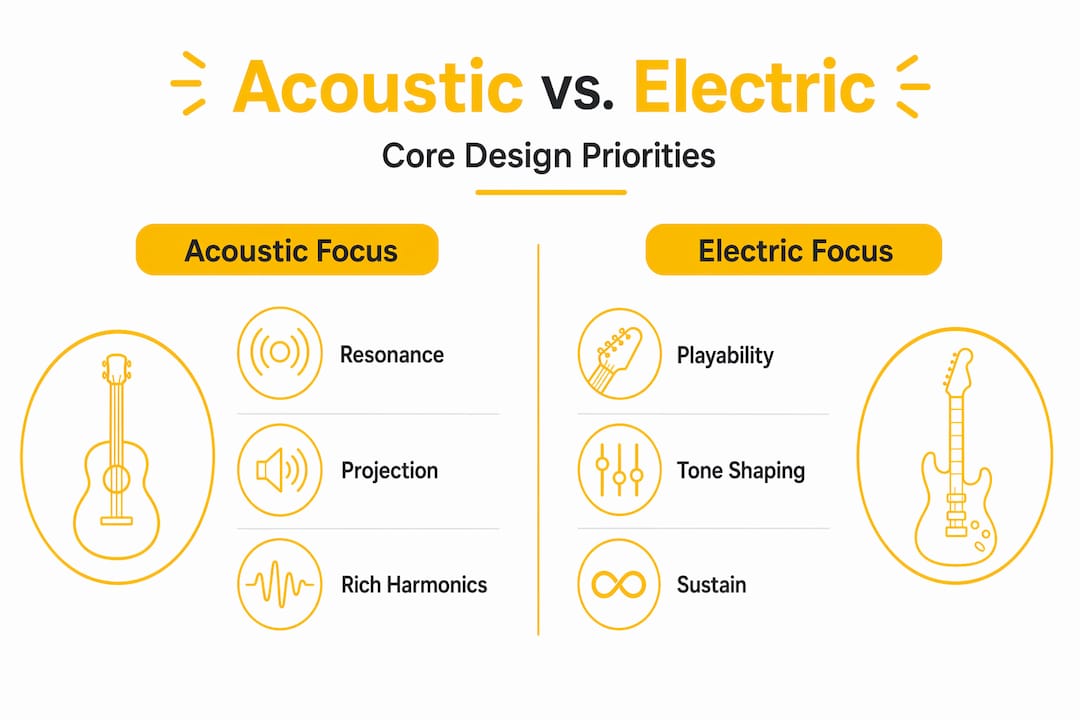
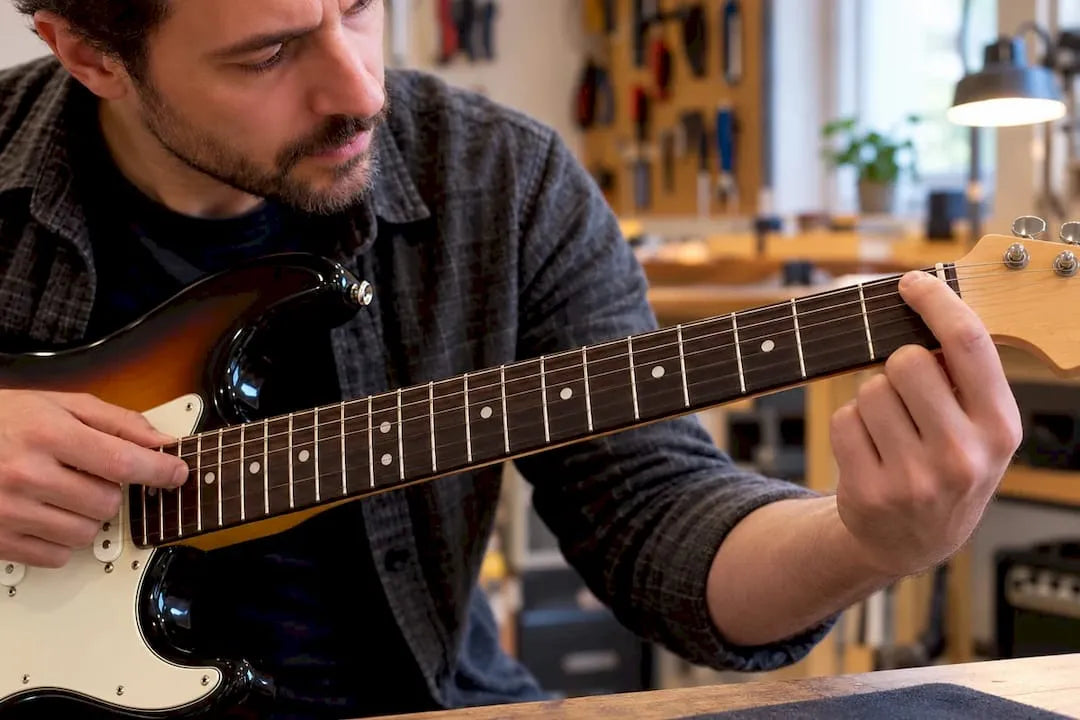
The factors that create electric-like playability from an acoustic come down to four things: neck profile, string action, string gauge, and fretboard radius. Flatter fretboard radii (think 12 inches and above) allow easier bending without fretting out. Slimmer C or D-shaped neck profiles reduce hand fatigue. Lower action lets you fret notes with less effort. Lighter strings, such as 11s or even 10s, respond with far less resistance than the 13s or 12s many acoustics ship with.
Hybrid acoustic guitars designed with electric players in mind address all of this. Cutaway body styles give access to the upper frets. Slimmer neck profiles borrowed from electric guitar design make chording and lead work more comfortable from the first session. If you are shopping specifically for an acoustic that plays like an electric, these design details are the first things to look for on any spec sheet.
- Neck profile: Look for slim C or D profiles rather than full V or U shapes
- Action: Factory setups can be lowered by a luthier; ask before you buy
- Fretboard radius: 12 inches or flatter is more electric-like
- String gauge: Moving to lighter strings is the quickest single change you can make
- Cutaway body: Access to upper frets matters if you play lead lines regularly
Pro Tip: If you are buying an acoustic specifically to complement your electric playing, take your electric guitar with you when you try acoustics. Play the same riff on both and notice exactly what feels different. That comparison will tell you more than any spec sheet.
Pickup systems and the electric-like amplified sound
Getting an acoustic to feel like an electric is half the task. Getting it to sound like one when amplified is the other half. This is where pickup systems become critical, and where most players make uninformed choices.

The most common pickup type in acoustic-electrics is the piezo transducer, usually fitted under the saddle. Piezo pickups are reliable, affordable, and resistant to feedback. The tradeoff is tone. Piezos capture string vibration mechanically and translate it to an electrical signal, which often produces a brittle, thin quality that sounds nothing like an electric guitar plugged into an amp. For players wanting electric-style attack and sustain, piezo alone rarely satisfies.
Electromagnetic or magnetic soundhole pickups are a different story. These work on the same principle as a standard electric guitar humbucker or single coil, reading the magnetic field disturbance caused by the strings. The result is an amplified tone with warmth, body, and that familiar electric character. You can even run effects through them. The limitation is that they do not capture the acoustic body resonance at all, so you lose the natural acoustic colouration.
The most capable solution is a combination system. Combining piezo and microphone pickups addresses the individual limitations of each and produces a fuller, more balanced amplified tone. Some systems blend a saddle piezo with a small body microphone. Others pair an electromagnetic pickup with a piezo so you can dial in as much electric character as you want while retaining some acoustic body. Several high-end instruments also offer a TRS output with split signals from humbuckers and piezo pickups, which lets you process the two sounds completely separately through different channels or effects chains.
The onboard preamp deserves equal attention. A quality preamp boosts signal, enhances tone shaping, and resists feedback, giving you more control over your amplified sound at the guitar itself rather than relying on external equalisation. When you understand how pickup types work in more detail, the choices become much clearer. The Musicstreet guide on acoustic pickup types is a useful reference before you commit to a model.
Pro Tip: If you already own an acoustic and want more electric-like amplified sound without buying a new guitar, fitting a magnetic soundhole pickup is often the most cost-effective upgrade. Many are passive, require no installation beyond slotting into the soundhole, and deliver a noticeably warmer plugged-in tone than a piezo.
| Pickup type | Tone character | Electric-like? | Feedback resistance |
|---|---|---|---|
| Piezo (undersaddle) | Bright, thin | Low | High |
| Magnetic (soundhole) | Warm, full | High | Medium |
| Microphone (internal) | Natural, airy | Low | Low |
| Combination system | Balanced, versatile | Medium to high | Medium to high |
Standout hybrid models worth knowing
The market for hybrid acoustic-electric guitars has matured significantly. Several instruments genuinely close the gap between acoustic and electric feel, each with a different approach.
The Fender Acoustasonic Stratocaster is the most radical interpretation. It uses Fender’s Stringed Instrument Resonance System with a combination of body sensors and a soundhole-mounted pickup to produce a range of tones covering acoustic, electric, and everything between. The neck is straight off a Stratocaster. If you spend most of your time on electric and want an acoustic that offers zero adjustment period, this is the nearest thing to a direct translation.
The Taylor T5z takes a hollow thinline body with a chambered design and pairs it with a Taylor Expression System 2, which positions pickups under the fretboard rather than in the soundhole. The result is natural-feeling acoustic tone when unplugged and impressively electric-like clarity when plugged in. The neck profile is slim and fast. It handles everything from clean fingerpicking to light crunch with pedals.
The Godin A6 Ultra combines a chambered spruce and wild cherry body with both a piezo bridge system and a Seymour Duncan mini-humbucker. You can blend the two signals or run them separately. Hybrid models like these each approach electric-like acoustic playability and tone from a different angle, making direct comparison genuinely useful.
The Ibanez Talman sits at the more affordable end of the category. It combines a traditional acoustic dreadnought body with an Ibanez AEQ210T preamp and a relatively slim neck profile. It does not reach the same tonal range as the Taylor or Godin, but for players exploring this category without a large budget, it performs well above its price point.
| Model | Neck feel | Pickup system | Best for |
|---|---|---|---|
| Fender Acoustasonic Stratocaster | Electric (Strat profile) | Sensor + soundhole blend | Electric players wanting acoustic range |
| Taylor T5z | Slim, fast | Expression System 2 (under fretboard) | Versatile stage use, clean to crunch |
| Godin A6 Ultra | Medium, comfortable | Piezo + Seymour Duncan humbucker | Blended electric/acoustic tone |
| Ibanez Talman | Relatively slim | AEQ210T preamp + undersaddle | Budget-conscious buyers |
How to set up an acoustic for electric-like feel
You do not necessarily need to buy a new guitar. Setting up an acoustic with lighter strings and lower action can significantly shift how electric-like it feels to play. Here is a practical sequence for doing it properly.
- Switch to lighter strings. Drop from 12s or 13s to 11s or even 10s. The feel change is immediate and significant. The guitar will respond with less tension and allow easier bending. Be aware that very light strings on a loud dreadnought may reduce some low-end presence unplugged.
- Lower the action. Take the guitar to a luthier or a trusted setup technician. Specify the action height you want at the 12th fret and ask them to match it as closely as possible to your electric’s setup. This single adjustment transforms playability more than any other.
- Choose and fit a pickup. If your acoustic does not already have a pickup, this is the moment to add one. Careful matching of pickup type to your guitar’s design is needed to preserve electric-style attack and sustain. A magnetic soundhole pickup will give you the most electric character. A quality undersaddle piezo with a decent preamp is the second choice.
- Consider a preamp with tone controls. Preamp controls that shape tone within the guitar help preserve electric-style clarity and warmth when amplified, reducing your dependence on external pedals or EQ.
- Adjust your amplification. Running your acoustic-electric through an appropriate amp completes the transformation. See the next section for specific guidance on this.
Pro Tip: Do not do all of these changes at once. Change strings first, play for a week, then assess action. Making multiple changes simultaneously means you cannot identify which one actually solved your problem or introduced a new one.
Amplification and its effect on electric-like tone
The guitar is only part of the equation. The amplification system you choose has a massive influence on whether your acoustic-electric delivers an electric-like tone or sounds thin and piezo-harsh.
- Acoustic amps are voiced to stay transparent. They reproduce what the pickup captures without colouring it significantly. This is useful for preserving natural acoustic tone but limits electric-style character unless your guitar’s pickup already leans in that direction.
- Electric guitar amps colour the tone and add overdrive options. Running a magnetic soundhole pickup through a clean tube amp gives a genuinely electric-sounding result. Add a touch of reverb and light overdrive and you will convince most listeners they are hearing a hollowbody electric.
- PA systems and DI boxes offer the most neutral signal path. For live performance, going direct into a PA through a quality preamp gives you the most control and avoids the feedback risk that comes with stage monitors and high-gain amplification.
- Effects pedals extend your range further. Chorus, overdrive, and compression applied to a magnetically-amplified acoustic can cover territory that blurs the line between the two instrument categories entirely.
The key decision is whether you want a genuinely electric sound or an acoustic sound that happens to share some electric characteristics. That intention should drive your amp selection before anything else.
My honest take on choosing between these options
I have spent a good deal of time with guitars across this category, and the advice I find myself giving most often is this: be honest about what you actually need the guitar to do.
A lot of players are drawn to hybrid acoustic-electric guitars because the concept sounds appealing. One guitar, two worlds. What I have found in practice is that the best hybrid models, the T5z, the Acoustasonic, the Godin A6, genuinely deliver on that promise. But cheaper instruments that market themselves as hybrids often compromise both ends. The acoustic tone feels thin unplugged and the electric tone lacks body plugged in. You end up with a guitar that does neither thing particularly well.
If you already have a solid acoustic you love unplugged, the smarter path is often a setup adjustment and a quality pickup rather than a new instrument. The acoustic versus electric comparison question is more nuanced than most guides admit. The real question is: what percentage of your playing time is acoustic, and what percentage is amplified? That ratio tells you which direction to lean and how much to spend on the hybrid features you actually need.
My favourite practical lesson from all of this: the neck profile matters more than almost any other single feature. A great pickup in a guitar with an uncomfortable neck is still a guitar you will not enjoy playing. Start with the neck, then work backwards through the electronics.
— Musicstreet
Find your perfect hybrid at Musicstreet
At Musicstreet, we stock a curated selection of the best acoustic electric guitars from trusted brands including Taylor, Godin, Fender, and Ibanez, covering every budget and playing style discussed in this guide.

Whether you are looking for an electric-like acoustic guitar for live performance, studio versatility, or simply to make acoustic playing feel more natural coming from an electric background, our team can help you find the right instrument. We offer expert setup on every guitar we sell, so it arrives ready to play at your preferred action. Browse the full range at Musicstreet and play something that genuinely bridges both worlds.
FAQ
What makes an acoustic guitar feel like an electric?
Electric-like playability comes from a slimmer neck profile, lower string action, flatter fretboard radius, and lighter string gauge. These four factors, when combined, produce a feel that electric players will recognise immediately.
What is the best pickup type for electric-like acoustic sound?
Magnetic soundhole pickups produce the most electric-like amplified tone from an acoustic guitar. Combination systems that blend magnetic and piezo pickups offer the best of both worlds for players who want versatility between acoustic and electric character.
Can you use effects pedals with an acoustic-electric guitar?
Yes, particularly if your guitar uses a magnetic pickup. Running effects through a piezo signal can sound harsh or unnatural, but a magnetic or combination system responds to overdrive, chorus, and compression in much the same way a standard electric guitar does.
Are hybrid acoustic-electric guitars good for beginners?
Hybrid models with slim necks and low action can actually make learning easier, as the playability of acoustic guitars designed with electric players in mind is often more forgiving for beginners transitioning between instrument types.
Do you need a special amp for acoustic-electric guitars?
Not always. An acoustic amp preserves natural tone, while an electric amp colours the sound and adds gain options. Your choice should match your intention. If you want genuinely electric-like sound, an electric amp paired with a magnetic pickup will get you there faster than any acoustic-specific amplifier.






Share:
Acoustic electric bass vs electric bass: which suits you?
What gauge strings are best for acoustic guitar